Few event directors are as diligent as Phil Evans in pre-riding the routes he creates for his events. Each year he spends weeks of his life riding as many of the stages as he can. At times it’s a frustrating business - trails that look perfect on a digital map might be overgrown or inaccessible on the ground. Or worse, they might not exist at all - a figment in the imagination of an AI-based cartographer. Other times, roads and tracks exist in real life that don’t appear on the map. Where do they go, will they link up, what condition are they in? Those were some of the questions Olly pondered as he joined the team to help reccie the route for Ride SriLankan 2027. Would they end up lost in the jungle, or would they find away-from-the-road nirvana? Keep reading to find out.
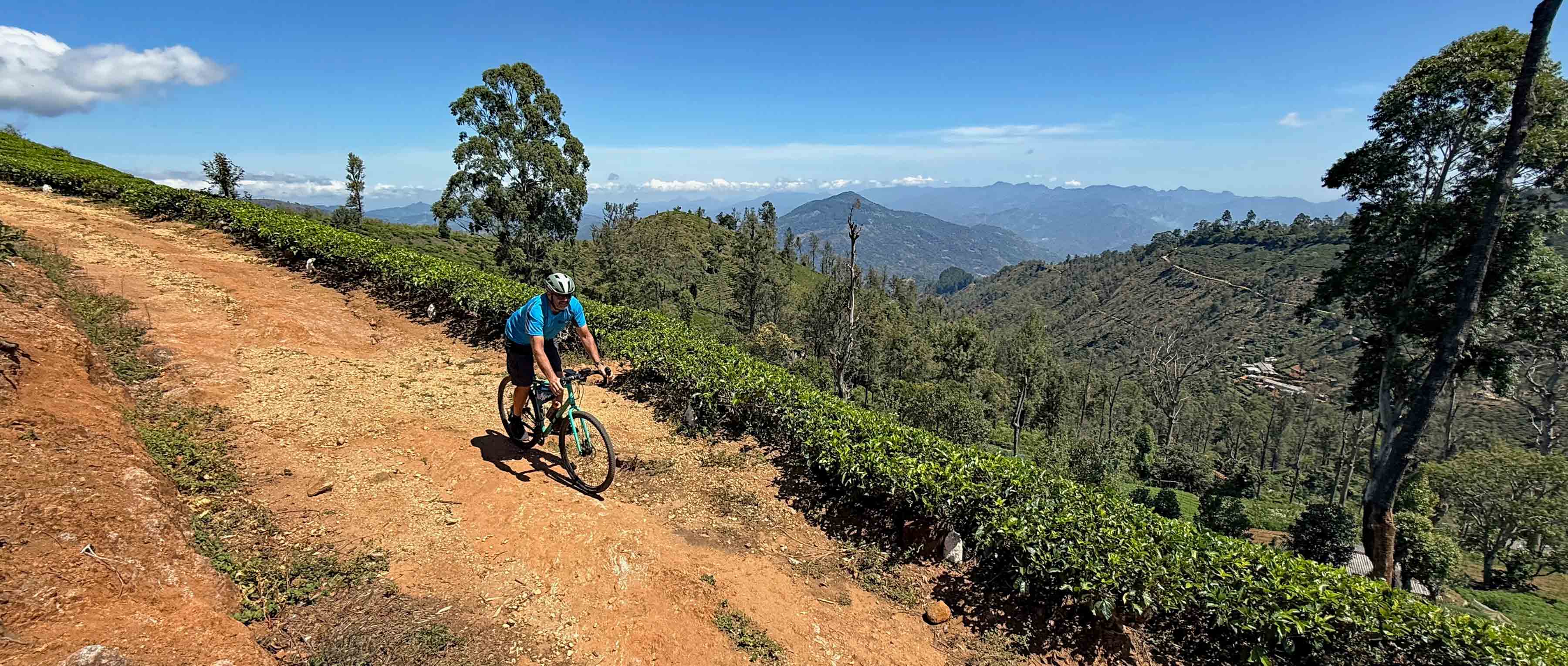
“A big part of my role is trying to find the right balance between what is safe for the riders and what is appropriate” said Phil Evans as we stood in the middle of a Sri Lankan tea plantation. We had spent the last fifteen minutes initially descending, and then climbing, on a rugged vehicle-width dirt track located at 1600m above sea level. The first part of the trail had been through deciduous forest and the dappled light filtering through the canopy was beautiful, but helped disguise the imperfections in the surface of the track. It was super fun to ride, but all the time I was thinking, ‘will this work as part of the overall route?’ Phil has got years of experience riding in some of the most exotic parts of the world, but while reccying the route, he is constantly thinking about whether each trail is appropriate for the participants that have signed up for next year’s Ride SriLankan. The event attracts riders with a huge range of backgrounds and aspirations and part of Phil’s role as chief route planner is to find tracks which are challenging, but not too challenging. If he makes the wrong judgment call, he risks everything from getting poor feedback from some of the riders to having to deal with a hillside incident/accident. Neither of those options holds much appeal for him, so the pressure is on for us to find the perfect combination of Goldilocks trails.
The initial couple of hours of riding since we had left our palatial hotel in Nuwara Eliya, a former colonial hill town dating back to the mid 1800s, were all on tarmac and the mountain biker in me was desperate to get some dirt under my tyres. That’s not so say that the riding hadn’t been incredible; quite the opposite, in fact – we’d ridden on some utterly stunning swoopy tarmac, with long sections completely free from traffic and with spellbinding views everywhere that you looked. But I also kept spotting intriguing-looking dirt tracks snaking off into the forest and I had hoped it would soon be time for us to test some of them out.
Phil does all the initial route planning from his base in North Wales using a mix of digital mapping tools, trail knowledge from previous events and getting advice from the Sri Lanka-based part of the event team. The rise in competency of computer-based route planning tools means a growing percentage of his route planning is now done digitally. He enters a start point and a finish point for each stage, along with any required access points, snack stops etc and the algorithm spits out a suggested route. This sounds amazing, but as anyone who has spent any time using AI will tell you, the initial output often looks great, but if you delve into the detail, you’ll often spot errors, which is why he (or one of the local team) needs to ride every centimetre of each of the stages of the different events that he runs.
The issue, of course, is that trails can change in a matter of a few hundred metres. The image above left looks perfect in every respect, but less than a minute later the same trail makes a 180-degree bend and cuts across the face of the hill, the surface littered with loose rock and the gradient, both in terms of steepness and in camber, is such that my tyres were instantly scrabbling for grip. I loved every single second and got to the end of this section with a huge smile plastered across my face. But I rode it with more than thirty years of mountain biking experience tucked under my metaphorical belt. If I had been a road-based cyclist trying out an overseas event for the first time and I was presented with this trail, my impression would have been very different. Although it’s not possible for Phil to cater to every level of rider experience, he has to try and always look for a happy balance. Sadly, despite the stunning views, the real wow factor of the trail and the fact that it’s unlikely that any cyclists have ever ridden through here before, it won’t make the cut and will end up being one of many that we ride during the course of our reccie that will be mentally filed under the “Nice, but…..” category.
The sheer variety of the riding that we undertake in the course of testing out the six stages and a warm-up/shake-down loop is quite hard to fathom. We ride everything from pan-flat sandy jeep trails to velvety climbs through tea plantations to concrete access roads running alongside railway lines. While there are sections where riders will encounter traffic – generally the start/finish of each stage – what is remarkable is how much of the time we have the roads and trails to ourselves. Even where there is traffic around, the drivers are generally courteous and understanding, giving us as much room as possible when they overtake. You do need to keep your wits about you when riding, though – both Phil and I had close calls with local people stepping into the road (or pushing a motorbike into the road, in Phil’s case) without looking and without giving a nanosecond’s thought to the fact that there might be anyone else bearing down towards them at high speed. Fortunately, a combination of our lightning-quick responses and total luck meant that both of us remained unscathed.
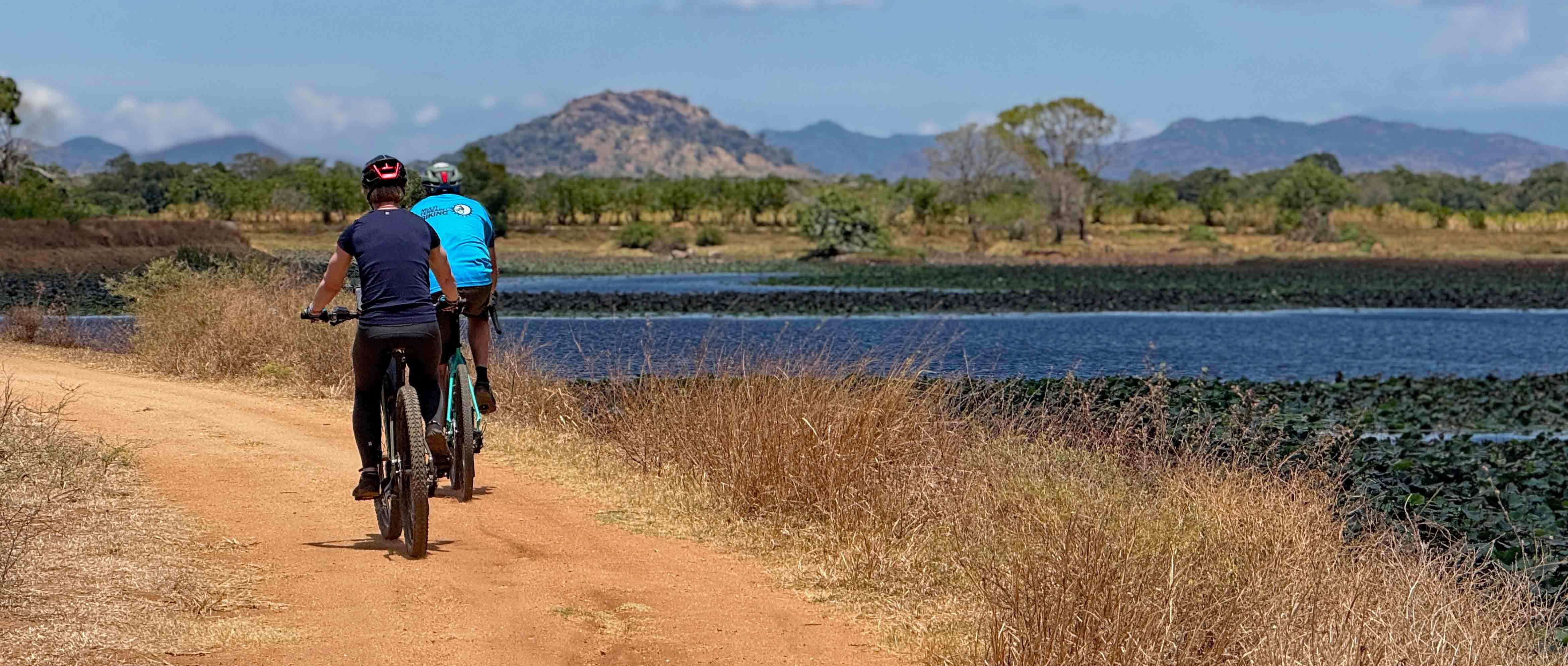
Event reccying can be a difficult task. Route finding is almost the easy part; it’s logistics and communication that can often put a bigger spanner in the works. On Day 3, things go awry not long after we set off. The support truck carrying our bikes gets delayed on route, so we have to stop for 30 minutes and wait for them to catch up. On some days this wouldn’t be an issue, but this was supposed to be the ‘queen’ stage – 140 km and 3500m of climbing are on the cards. Our late departure means the temperature right from the word go is a challenge - 32 degrees C, even in the shade. After 20 km of riding, we stop in the shade of a large tree. Out in the sun, it’s now touching 40 degrees.
Phil and I continue with Mahinda, our trusty motorcycle assistant, following in our dust tracks. The support truck isn't able to follow on the next section of our route, as some sections are too narrow. Unfortunately, things go wrong pretty much straight away. The driver doesn’t know the area and has some IT issues, which means he loses the route. He stops to ask villagers if they’ve seen a pair of crazy white guys cycling through, but it takes an age for him to figure out where we’ve gone. Phil and I regroup with the minibus team at a pre-planned spot and enjoy drinks in the shade of some huge trees. Almost Phil’s first reaction is to dig out some dog treats and medication that he has brought from the UK from his top tube bag. While I refuel, rehydrate and try to reduce the temperature of my overheated body, Phil is busy looking after the neighbourhood’s dogs.
After 30 mins of waiting, there’s no sign of the bike support truck, so we set off. We arranged to meet the minibus team around 20 km later. The next section of the rider’s route is mainly off-road, so the minibus team go a different way. Our track is fantastic – fast and flowing, with constant variations in surface. Patches of very welcome shade alternate with open sections through sugarcane plantations. We have to tackle a rickety-looking bridge over a small river at one point, but other than that, this section works out perfectly.
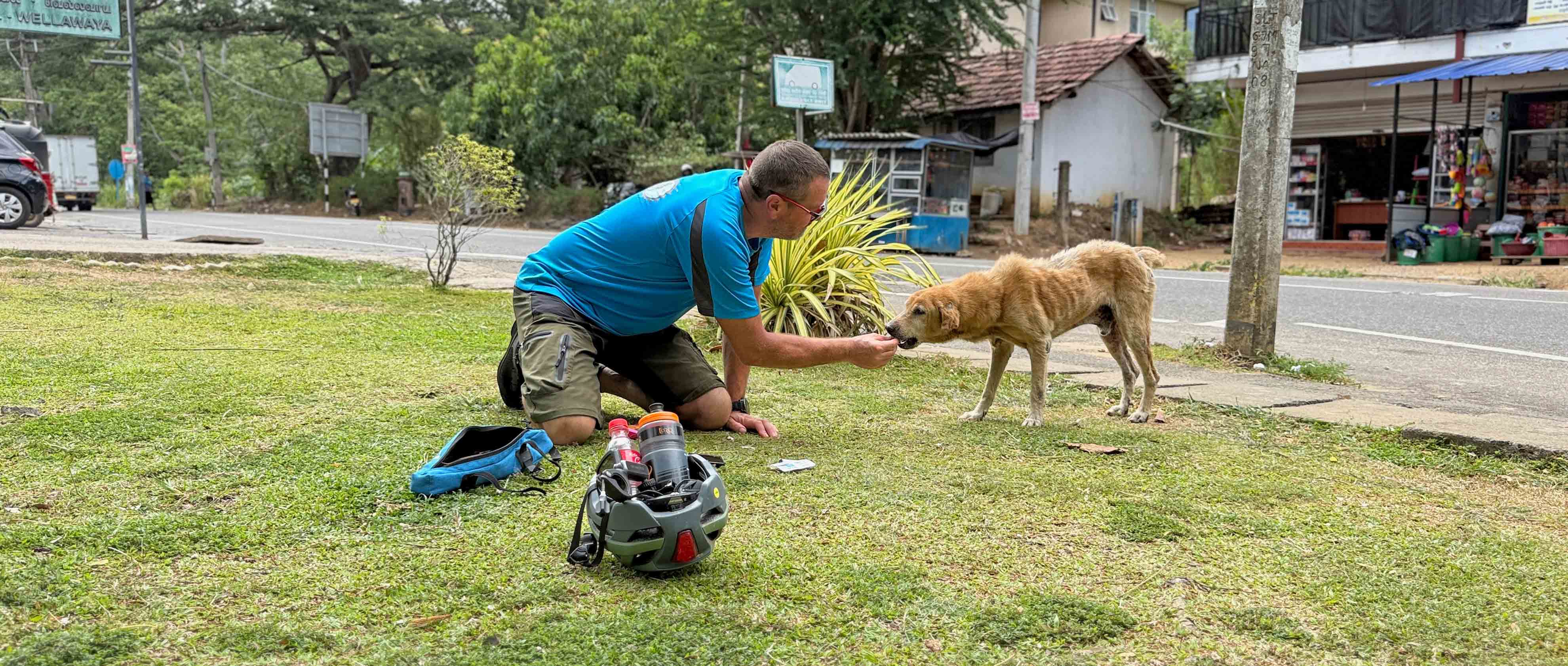
At our next rendezvous point, the bike support truck crew have re-found the route and are there to greet us, but there’s no sign of the minibus team. Mahinda crosses the road to a small shop and buys Phil and I some cold drinks and some crisps. We sit on a handily positioned grassy area and wait. Phil digs out some more dog treats and medication for mange and starts treating an inquisitive street dog. After 30 minutes, a series of frantic calls are made between teams to try and figure out where the minibus crew are. We can see time ticking by and the chance to do more riding decreasing by the minute. Eventually the minibus team arrive, but strangely, from completely the wrong direction. It turns out there had been a communication breakdown and the minibus crew had thought they were picking us up another 15 km further on than we did. By this time the mountains are sheathed in ominous-looking cloud and we’ve basically run out of time, so we decide to drive the rest of the route rather than ride it. The fact that this means we ‘miss out’ on climbing more than 2000m had no bearing whatsoever on our decision to climb into the minibus of course….
The riding, though, is only part of the story of an event reccie. One of the major marketing points of the event is how amazing the accommodation is. While other events might have participants stay in a tented village or a mountain top refuge, Ride SriLankan aims at a slightly different end of the market and each of the hotels used on the trip are either 4* or 5*. As you can imagine, being forced to ‘test’ out such incredible accommodation is only possible if you sleep in their (amazingly comfortable) beds, try out the (wonderfully appointed) bathrooms and taste the (utterly delicious) food that they have on offer. Sometimes, being a bike journalist is pretty tough, you know, but I guess if someone “has” to do it, then I could have my arm twisted….
In a change from previous years, the 2027 version of the event is based on staying two nights at each hotel. The organisers have achieved this by creating an A-B route on Day 1 and then a loop ride from the hotel on Day 2. This pattern is repeated throughout the tour. The benefit of a two-night stay is a reduction in hassle – less packing/unpacking; but it also means that guests get to make the most of the great facilities at each hotel (which includes everything from a swimming pool to a snooker table to a spa at the different locations); plus it means that anyone who would like a rest day can easily do so. From the hotel’s perspective, having guests stay for two nights is much more cost-effective, which means they can offer better rates, which ultimately helps keep the headline price for the event as low as possible.
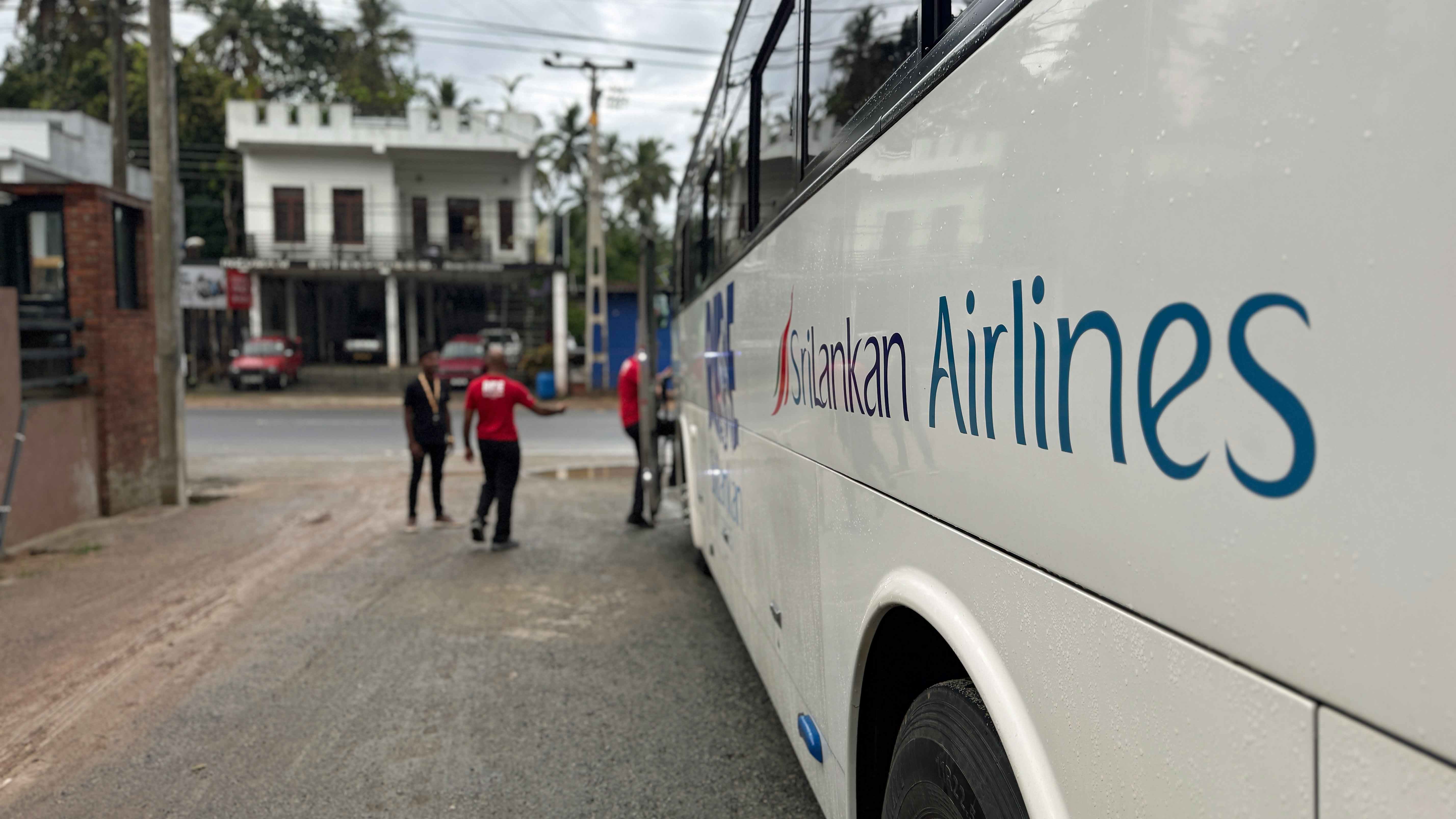
“Do you think we can fit the coaches down this driveway?” asked Phil. We had finished the second day of our reccie and were sitting in the ocean-fronted grounds of a hotel, eating some fantastic post-ride food. It had been a long day and we were all pretty tired, hot and dirty. It would be exactly the same for the event participants next March, so finding a location where they could get changed and have some decent food before boarding an air-conditioned coach for the transfer to the accommodation for the next couple of nights was critical. Phil thought he had found the perfect venue, but moving up to 100 participants around requires a small fleet of full-sized coaches and the driveway to the hotel included a very tight 90-degree bend with a low concrete wall on one side and a building on the other – not ideal. Fortunately, after a quick discussion with our support vehicle driver, who drives full-sized coaches too, a different way of accessing the hotel’s grounds is identified and Phil was assured that there would be space to park both the coaches and the support trucks which carry the rider’s bikes and luggage. Something as simple as ‘where can we safely park the buses to collect the event participants?’ might not be high up your list of things you would consider, but it’s yet another item for Phil to give serious thought to.
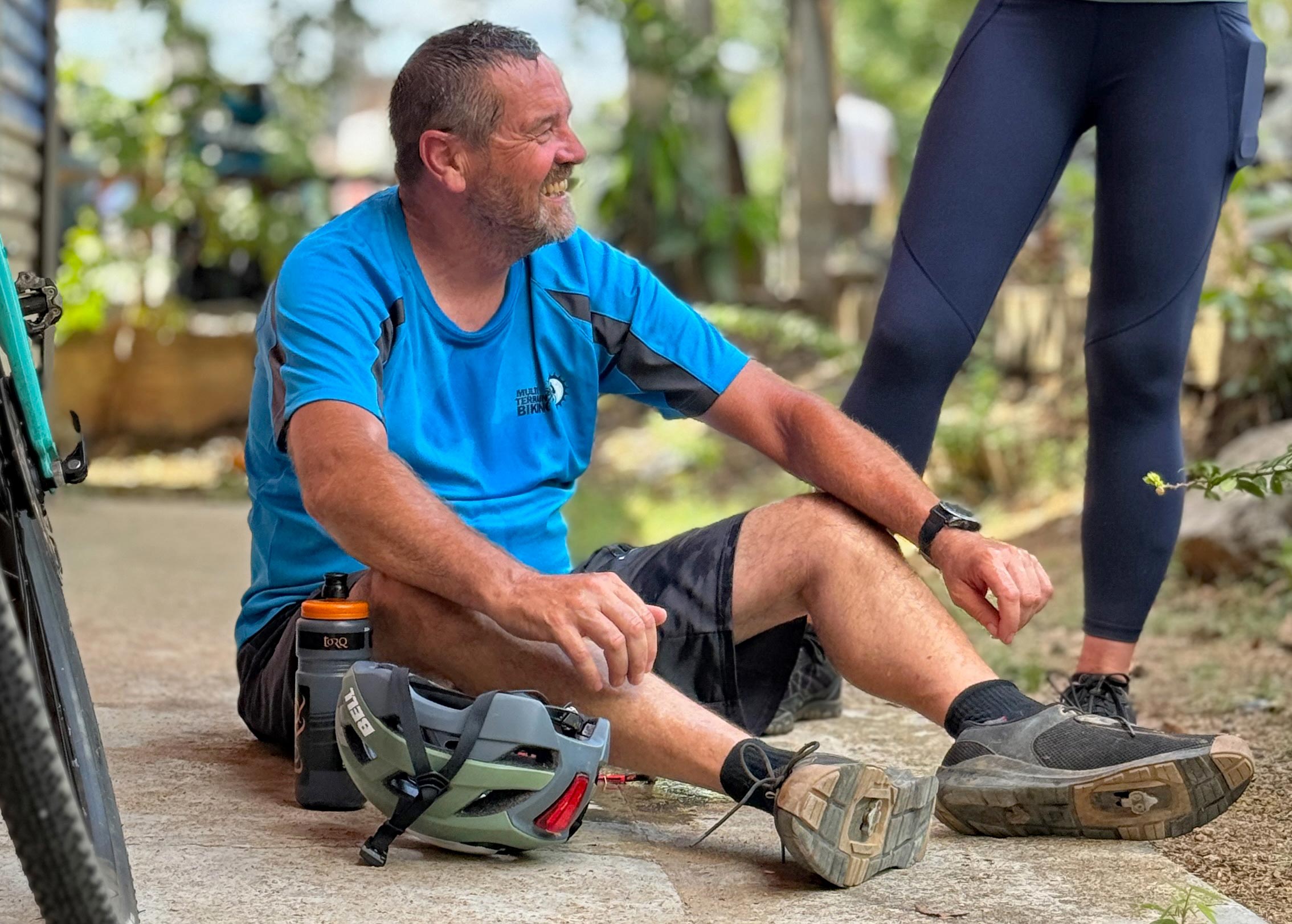
“I'm not going to ride the last stage. I’ve done it a couple of times before and know it pretty well” said Phil, sitting on the floor outside the local Post Office, pouring a bottle of iced water over his head. It had been the hottest stage of our reccy, with long sections where my Wahoo registered temperatures of 40 degrees and above. Phil was pretty cooked and although he was happy we had made it safely to the end point of the stage, I could tell that he was looking forward to a few days of R&R. I, on the other hand, was desperate to cram in as much riding as I could before heading home to the grim prospect of the long northern winter ahead. I asked Nilina, Sri Lankan Airline’s Manager of Corporate Events & Promotions and our erstwhile ride buddy, if he fancied joining me for one last ride? Without a second’s hesitation, he said yes. He had volunteered to become the airline’s in-house expert on all things cycling and he had joined the reccy to discover from an insider’s perspective exactly what goes on. This is highly commendable on the part of the airline: they want a member of staff to be as knowledgeable as possible about all the sporting activities that they are involved with, but also, from Nilina’s perspective, he had been thrown in at the deep end, but was still up for another 40-degree roasting with me as his wingman.
In the end, Nilina made the wise decision that he had already got his money’s worth of riding, so he joined Mahinda as a pillion passenger on the back of the support motorbike and was also instantly promoted to chief photographer and cameraman. I decided that as it was my last day of riding, I would go out in a blaze of glory. The proposed route for the final stage is 85 km long, mainly flat, and mostly off-road on smooth, fast-rolling sandy jeep trails. My schedule for the following day was to sit on a comfy airline seat with my legs up, so I figured I would push myself a little and see whether my body had acclimatised as well as I had thought. Despite an early start time, it was already mid-30s by the time we set off, but weirdly I felt absolutely fine and with a healthy tailwind I set off at a decent pace, averaging just over 30 kph for the first hour of riding. I figured this might bite me in the bum eventually, but I was having fun, pushing my body and bike to their limits and making the most of bone-dry, traffic-free trails.
The loop was over way too soon. I had completely underestimated quite how strong the headwind would be in sections and the sustained tarmac climb right near the end was an unwelcome finale, but I finished with legs coated in red dust and an enormous smile plastered across my face. I sat on the steps outside our amazing hotel, drinking a cold bottle of pop and thinking about how lucky I was to be given this opportunity. With every molecule of my body, I love visiting and riding in Sri Lanka. This was my fourth trip in the last few years and in case you can’t already tell, I am totally hooked.
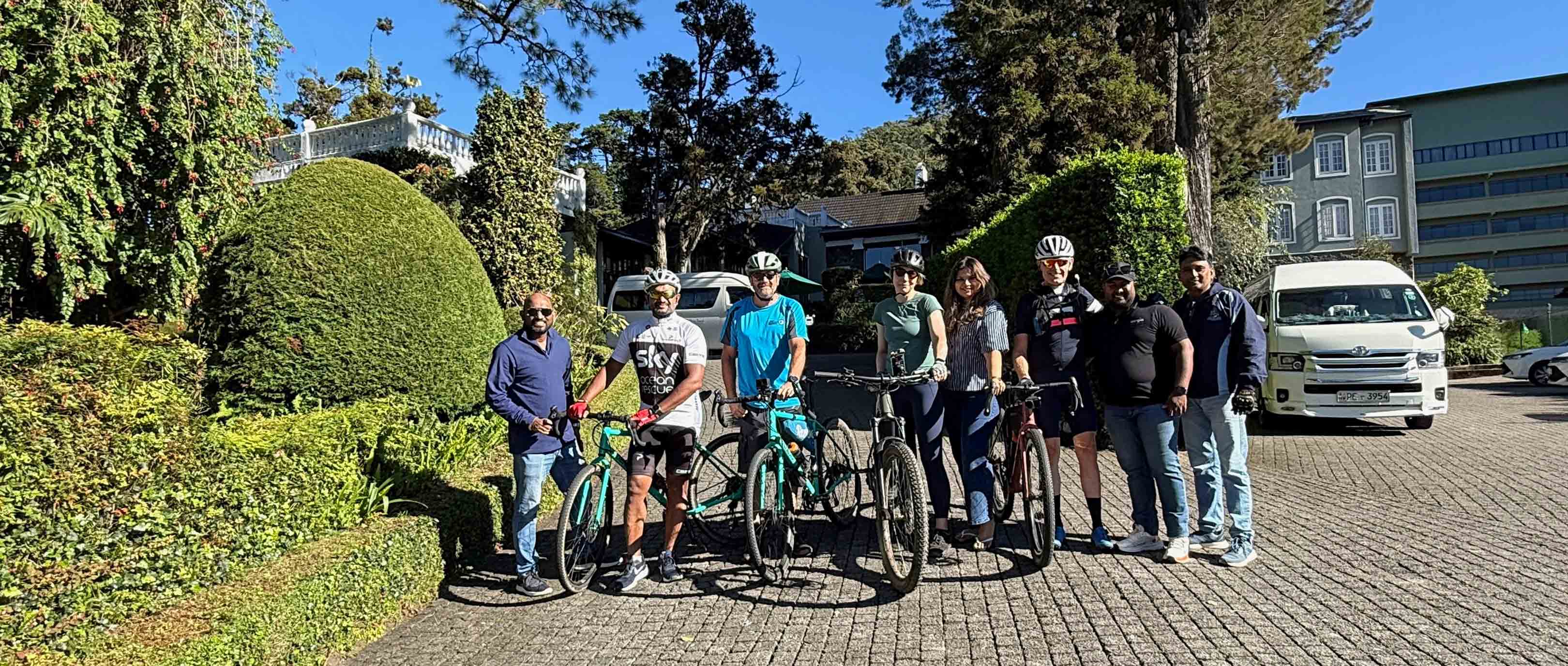
Getting to join the team behind Ride SriLankan and get a ringside view of what goes on behind the scenes was a real privilege. It gave me a real insight into how much energy, thought, care, passion and professionalism are poured into the event. Anyone who signs up for next year’s event is in incredibly good hands and based on what I saw the first couple of weeks in September, you should be in for the trip of a lifetime.
Olly’s trip to Sri Lanka wouldn’t have been possible without the incredibly generous support of SriLankan Airlines. They operate regular direct flights between London and Colombo and are one of the most cycling-friendly airlines he’s ever had the pleasure of travelling with!
Image gallery
I shot a crazy amount of images during the reccie, but there is a limit to how many I can shoehorn into the story. Rather than let them gather metaphorical dust on a hard drive somewhere, I wanted to showcase some of my favourites. They are in roughly cronological order.