Back in April, the inaugural version of a new multi-day gravel event, the Garden Route Giro, was held in South Africa. Jorge Padrones was booked to be there on the start line until a last-minute family emergency forced a change of plan. Although he couldn't be there in person, he’s managed to put together a recap of what happened. Read on if you’d like to find out more.
In an almost saturated calendar of one-day gravel races, a new multi-stage gravel race saw the light of day back in April, bringing some new ideas and routes to the worldwide gravel scene. The Garden Route Giro gravel stage race was held in South Africa, which is always a good bet when we speak about off-road cycling in general and about gravel in particular. To be more precise, the region the racers travelled through is known as the “Garden Route” and is located on the south-east coast. It’s one of the most popular tourist destinations in South Africa thanks to its spectacular beauty and landscapes, which include everything from the Indian Ocean to the desert-like Karoo landscape. It was undoubtedly an interesting region for gravel racing.
The ‘parcours’ the Garden Route Giro organisers proposed for this first edition comprised six stages covering a total of 684 kilometres and including 11,300 meters of elevation gain. It was a challenging route, with some stages including more than 2000 meters of ascent. The course had been designed for elite-level racing, but also to entice all types of riders to sign up and experience the gravel riding in the area.
The race took place across a wide variety of settings, ranging from coastal and forested areas to the interior of the Klein Karoo. The organisers announced stages linking locations such as Mossel Bay, George, Riversdale, Calitzdorp, Prince Albert, De Rust, Knysna and Wilderness, forming a sort of arc from the coast to the desert and back. Among the toughest points were legendary pass crossings like Garcia Pass, Rooiberg Pass, Swartberg Pass, which was climbed in both directions, and Prince Alfred’s Pass - one of the most beautiful passes in South Africa.
When it comes to multi-stage races, one of the most important things to get right is the accommodation. The organisers of GRG solved it by giving different options depending on your preferences (and budget). Racers could choose from being in the camp in a tent to a luxury hotel-based accommodation. From a racer’s perspective, being able to race hard for the whole day in the middle of nature and afterwards rest in a decent hotel with a proper shower, bathroom and bed is an absolute luxury!
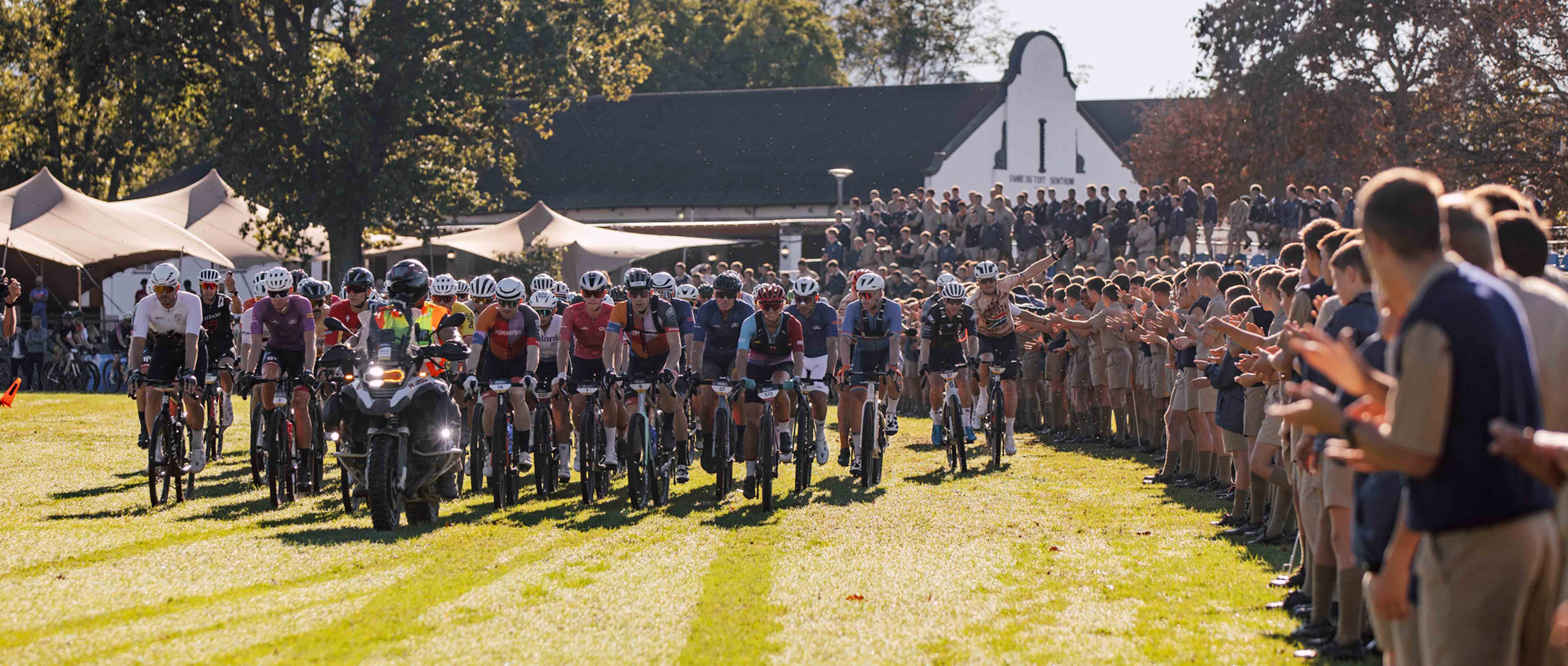
The race was structured to move from one place to the next every day. The organisation was in charge of moving the bags from one camp to the next one, or from accommodation to accommodation, so participants just had to leave their bags ready in the morning before starting the stage and the organisers took care of it. The organisers also offered lunch and dinner packages, which made life much simpler for racers, especially for anyone going for the camping option. The organisers did their best to offer a multitude of options, so racers could choose their level of support and luxury.
The inaugural edition of the race confirmed it was a true test for all-rounders: the most successful racers seemed to be endurance climbers who were capable of maintaining a high pace in small groups, but also absorbing the cumulative fatigue of a multi-day stage race. The victories of Mariëlle Trouwborst and Cronje Beukes showcased that essential mix of power-to-weight and consistency on stages where the unpredictable terrain could reshuffle the GC (General Classification) at any moment.
The format of the GRG meant the race leader wasn't simply the rider with the highest peak power, but was the one who mitigated time losses and treated every ascent as a tactical opportunity. As well as the demands on the riders’ bodies, by alternating between fast-rolling sectors, loose gravel, sustained climbs and neutralised paved ‘transfers’, the race forced riders into constant equipment management. Racers needed to balance tyre pressure and rolling resistance while managing energy expenditure. They frequently had to employ different drafting strategies than you would typically see in a standard XC or marathon MTB event. This made the GRG a draw for both gravel specialists and ultra-endurance riders who excelled at reading the ‘road’.
The podium results for the inaugural Garden Route Giro were as follows:
## Elite Women
1. Mariëlle Trouwborst (Winner)
2. Yolande de Villiers
3. Catherine Colyn
## Elite Men
1. Cronje Beukes (Winner)
2. Alex Miller
3. HB Kruger
If you would like to find out more about the plans for the 2027 Garden Route Giro, then check out the event website.
Event photographic gallery