“Based at Karoocible, we spent four days riding gravel that blended endurance, landscape, culture and community - a journey less about ticking off routes and more about being in the Karoo, fully present and alive.” That’s how Anna-Rosa le Roux started off her story about riding in the incredible Karoo region of South Africa. If you’ve ever wondered what the riding would be like in this amazing place, then read on.
Riding Into the Klein Karoo
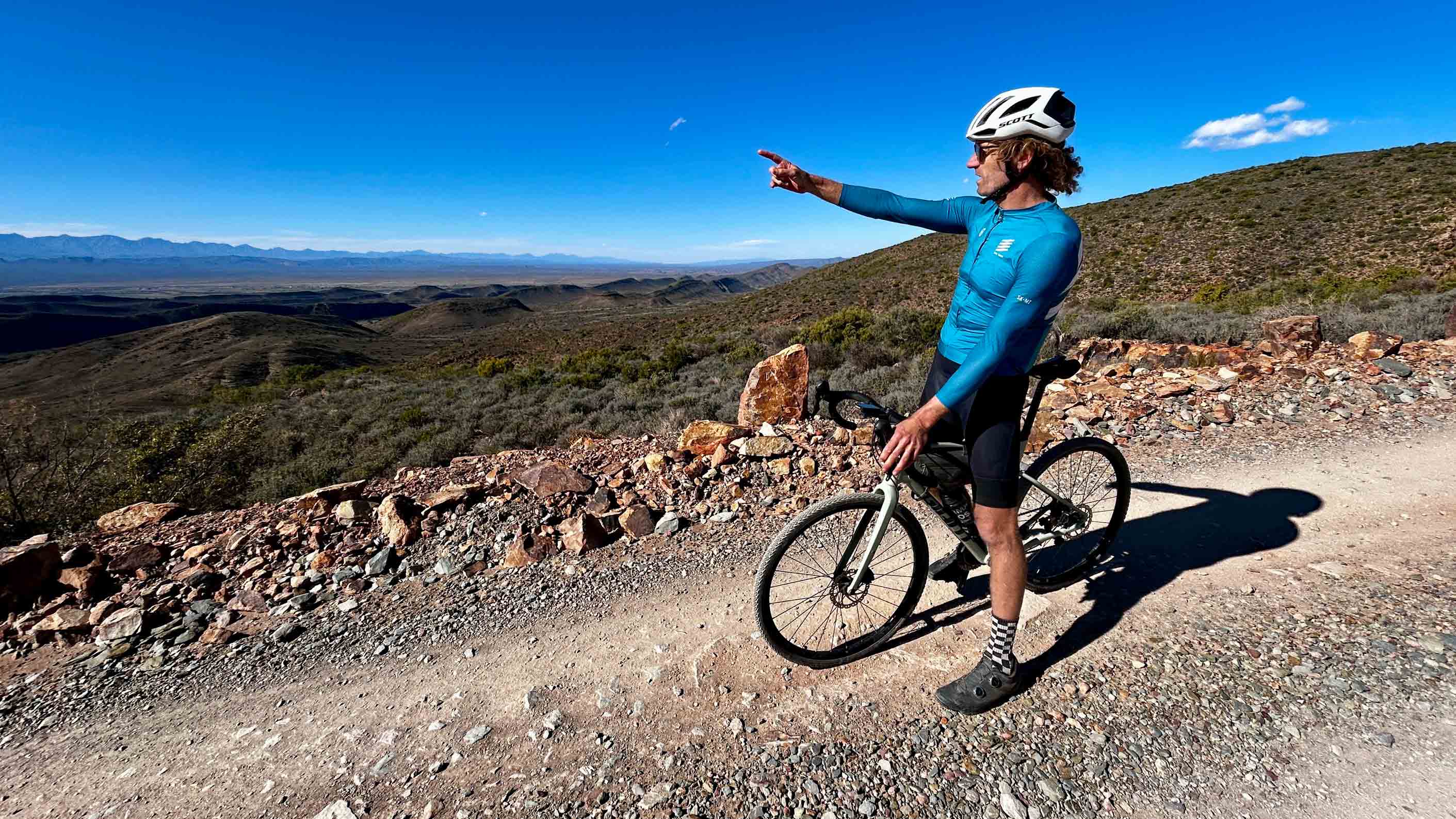
When I first rode in the Karoo, I didn’t know how to place it. It wasn’t a desert in the cinematic sense and it wasn’t fertile countryside either. It was vast, semi-arid and sparse - a high interior basin of South Africa ringed by ancient mountain ranges, where water was scarce, distances were long and the land felt more expansive than empty. In many ways, it had more in common with parts of Nevada or the high desert of New Mexico than with the green, productive landscapes many people associate with South Africa.
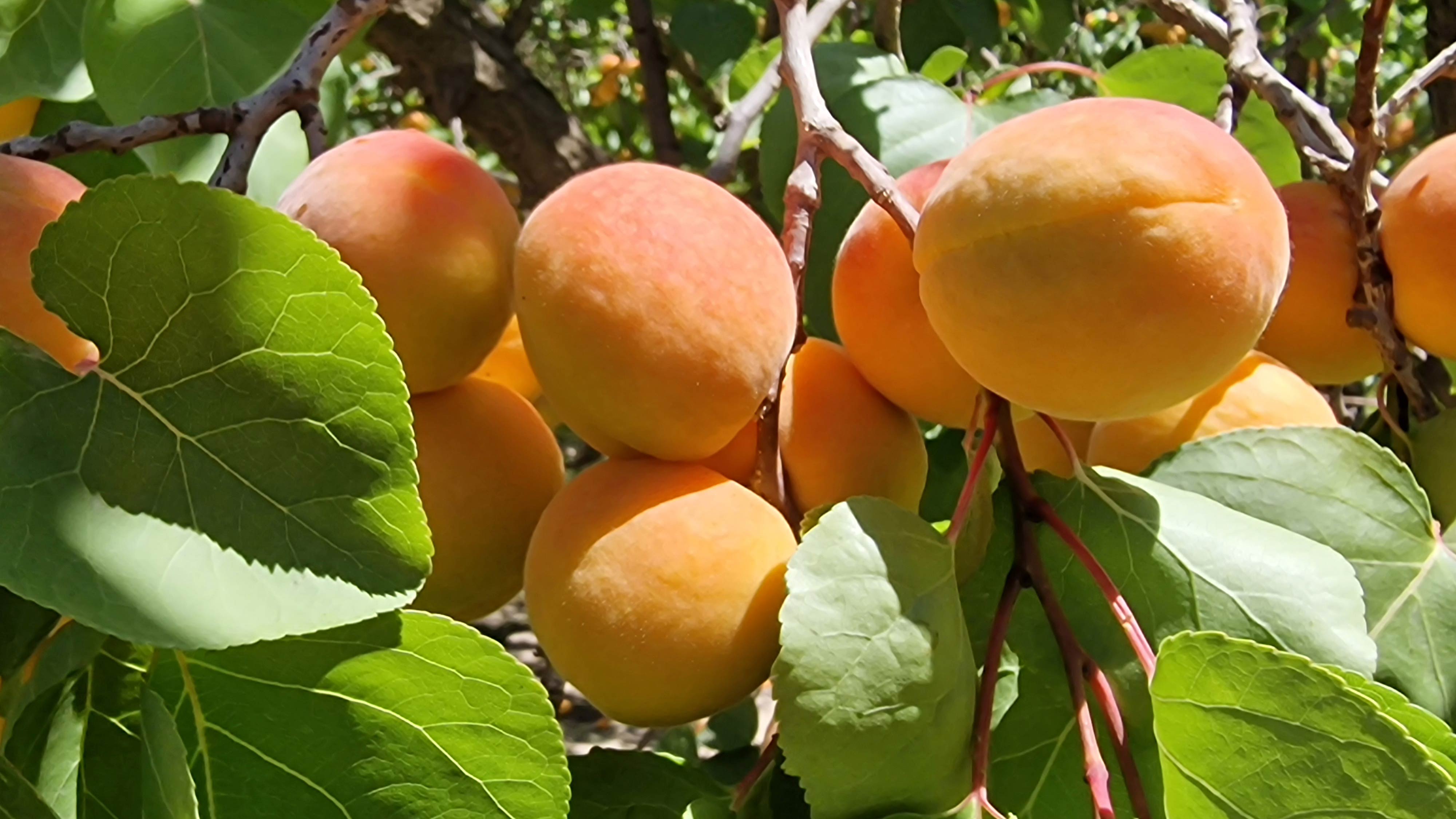
The Klein Karoo (literally “Little Karoo”) lies within that larger interior. It runs east to west between two mountain systems and is held together by gravel roads, dry riverbeds and small farming towns that exist because people have learned, over generations, how to live with very little water and a lot of patience. Farming here isn’t abundant; it is precise. Olives, stone fruit, grapes and cheese come from careful water management and deep local knowledge.
The First Encounter
I didn't arrive here deliberately. My first encounter with Ladismith came midway through a five-day bicycle trek from Knysna to Cape Town, which I rode with Andreas, my long-time riding partner and accomplice in endurance-heavy decisions. Most people arrived in Ladismith via Route 62, often called the world’s longest wine route, winding roughly 850 km from Cape Town to Gqeberha (formerly Port Elizabeth). We arrived by bike, somewhere between day two and day three of the trip, dusty and focused on nothing more than getting through the day.
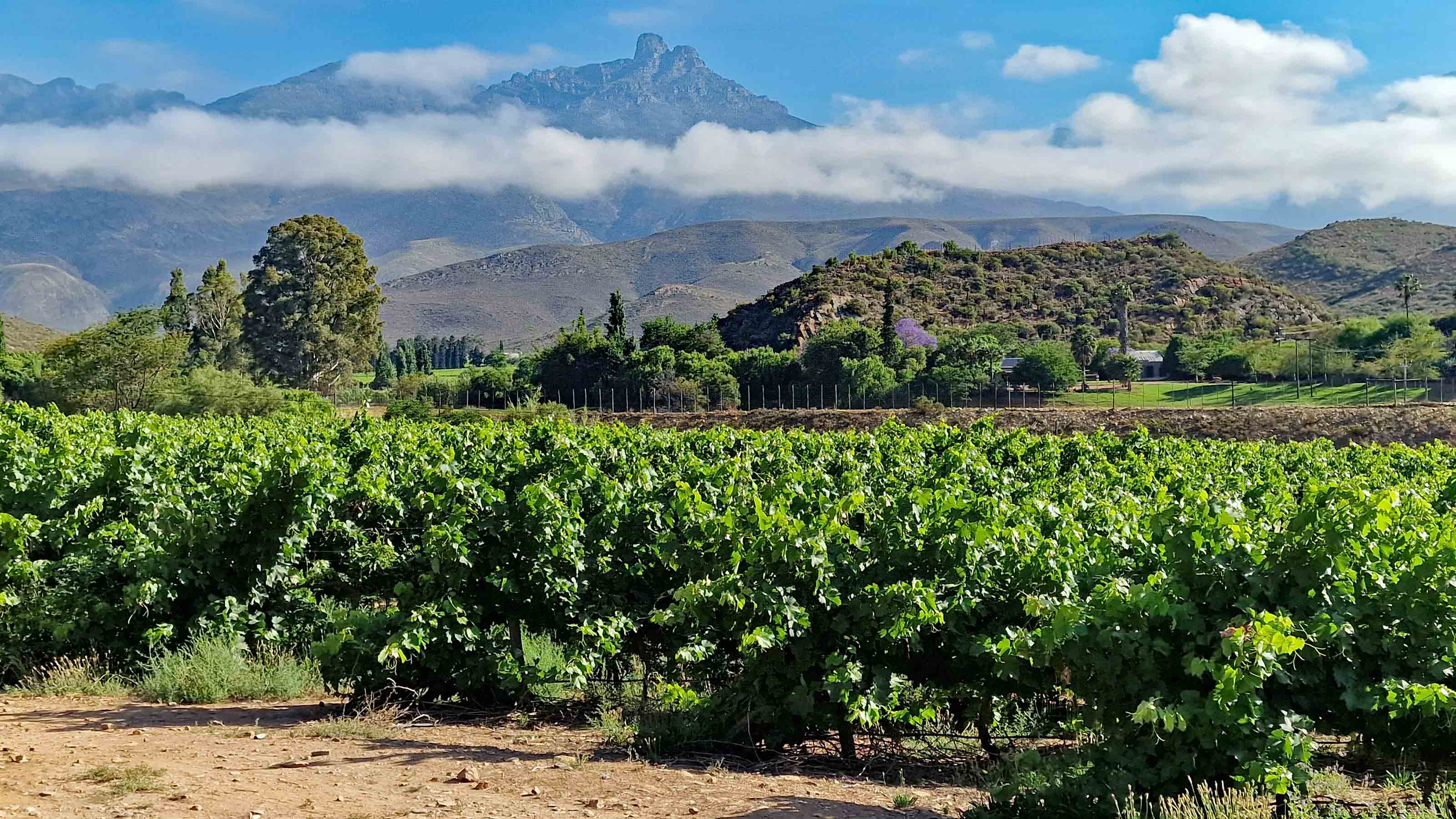
Ladismith itself is a working farming town in what initially looks like an unforgiving environment and is quietly productive: fruit, olives, wine and cheese. Behind it rises Towerkop, emerging sharply from the Klein Swartberg range, a split summit dominating the skyline. There was a local legend about a witch striking the mountain in anger, splitting it in two. The name Towerkop translates loosely to “Magic Peak” or “Bewitched Peak” and standing beneath it, the legend doesn’t feel far-fetched. At 2,189 metres, it’s impossible to ignore, a quiet signal, not of arrival, but of transition.
We rode on, but Ladismith lingered in my mind.
Coming Back - and Staying
That brief encounter left a deeper impression than I expected. I went back to the openness and old gravel roads and what began as a return visit slowly became a commitment. We fell in love with this part of the Klein Karoo so completely that we decided to buy an old 18th-century house (originally known as Gert’s Junk Stall) and began renovating it as a place for cyclists to stay. The house became Karoocible.
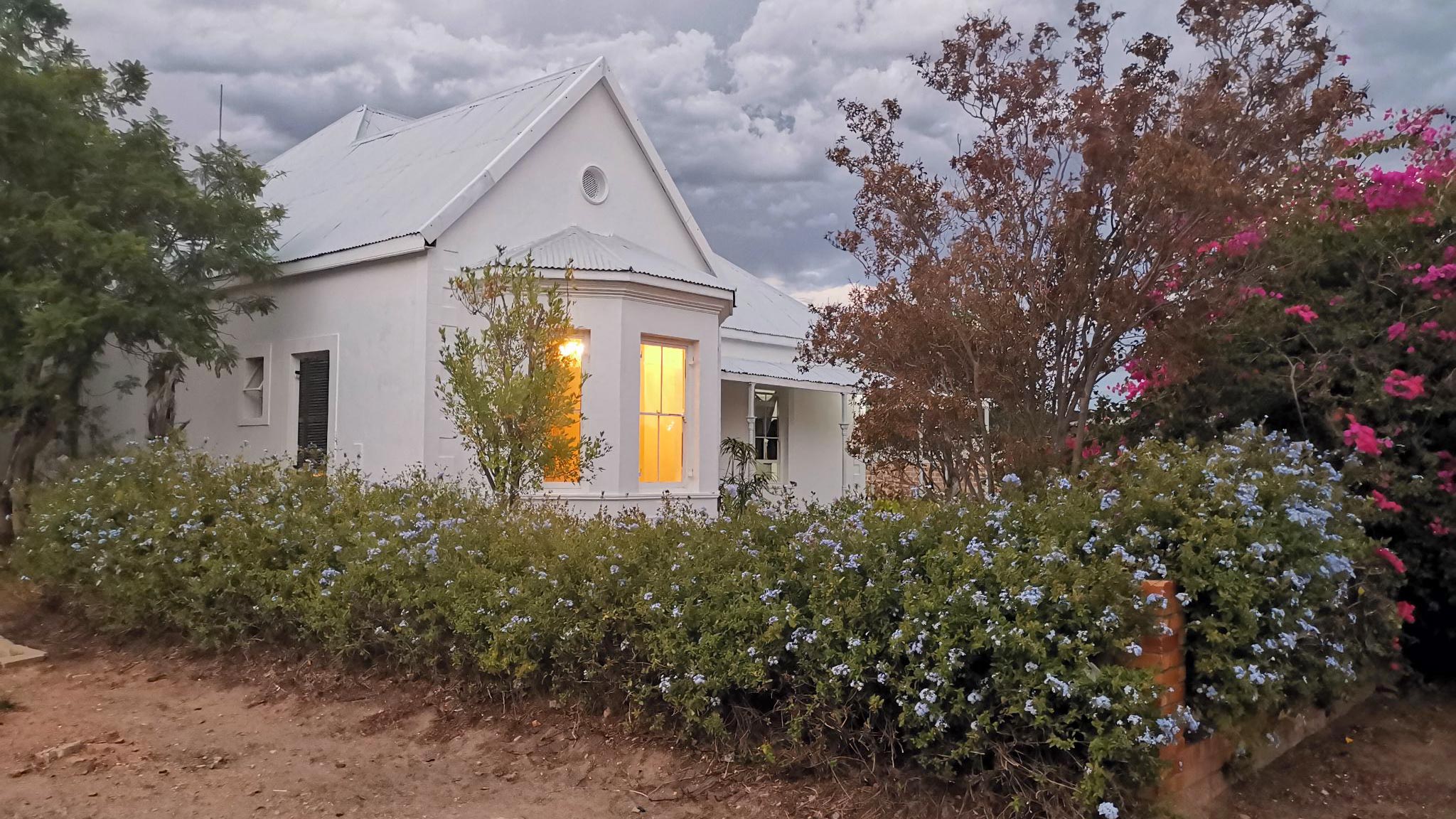
While Karoocible was being renovated, we stayed nearby at the Mymering wine farm (English: murmuring), where evenings slowed into braai [Ed – archetypal South African BBQs] and good wine. One night, with glasses of Dr Hillock’s Hedonistic in hand - a shiraz-only MCC (Méthode Cap Classique, a South Africa wine making term coined in 1992 to honor the method while celebrating our own terroir), we watched Rooiberg Pass burn red in the sunset. We heard about a friend, Luke Powers, who was alone on the mountain, riding the pass unsupported into the dark with nothing but his gravel bike, a headlamp and a crazy determination to explore by himself. Eventually, he became a riding partner. Together, we began talking seriously about what this place offered and how rarely riders from outside South Africa ever saw this part of the country by bike.
The First Rides
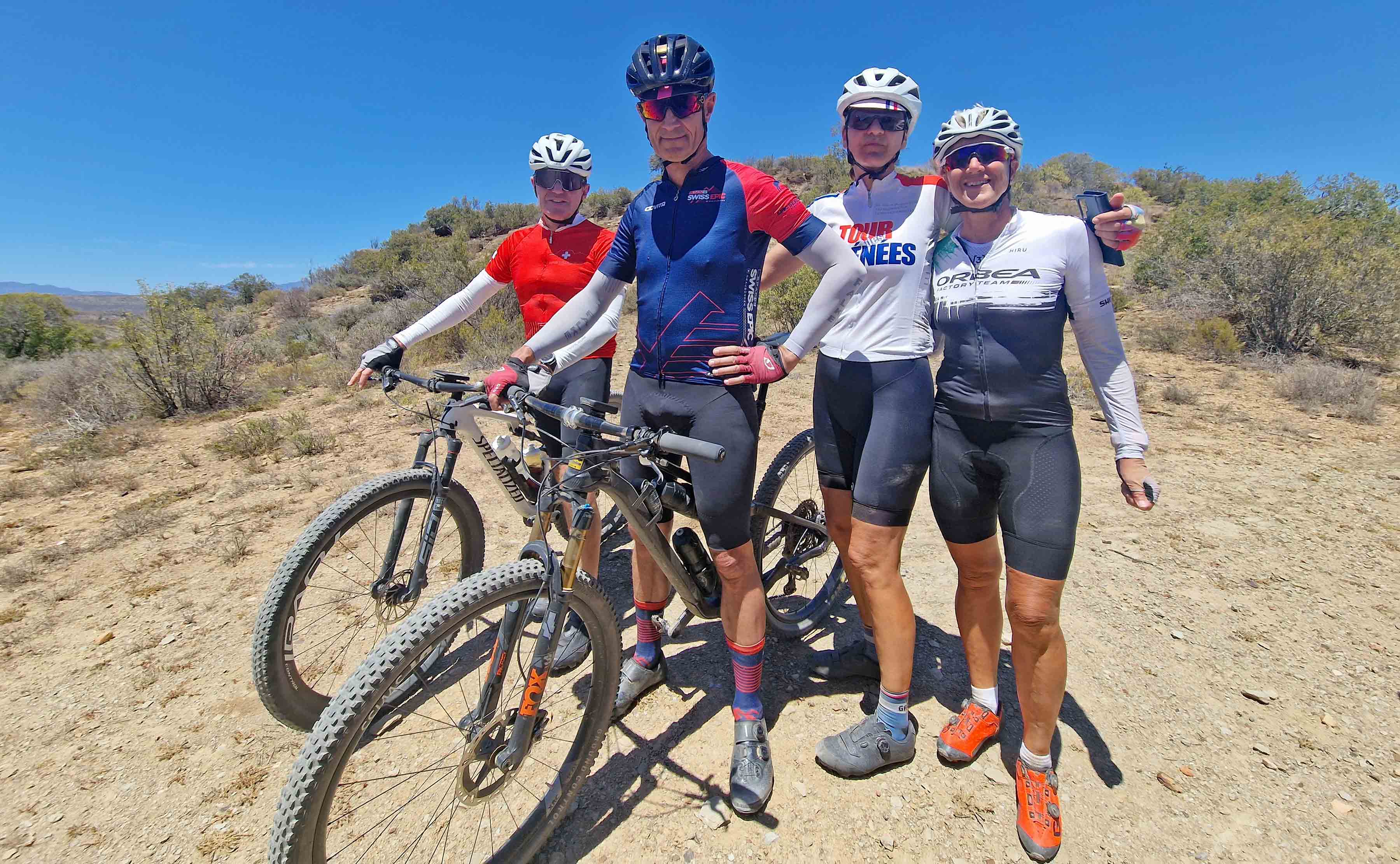
We decided to open up guided journeys for riders willing to engage with distance, heat, silence and scale with Karoocible as a starting point. Over four days, we explored gravel riding and our souls were captured by the beauty and solitude of this world. The Klein Karoo held hundreds of kilometres of rideable gravel - historic passes, valleys, gorges and backroads that linked small towns and working farms. These roads were built not for recreation, but for survival.
This is what we found on those clover-leafed trips.
Day 1: Entering the Mountains - 95 km | 1453 m elevation
The opening day was about commitment. We began deep in the desert, where the road ended, at Gamkapoort Dam, a literal dead end with signage along the route reading: “The Road to Nowhere.” From here, there was only one way forward: into the mountains.
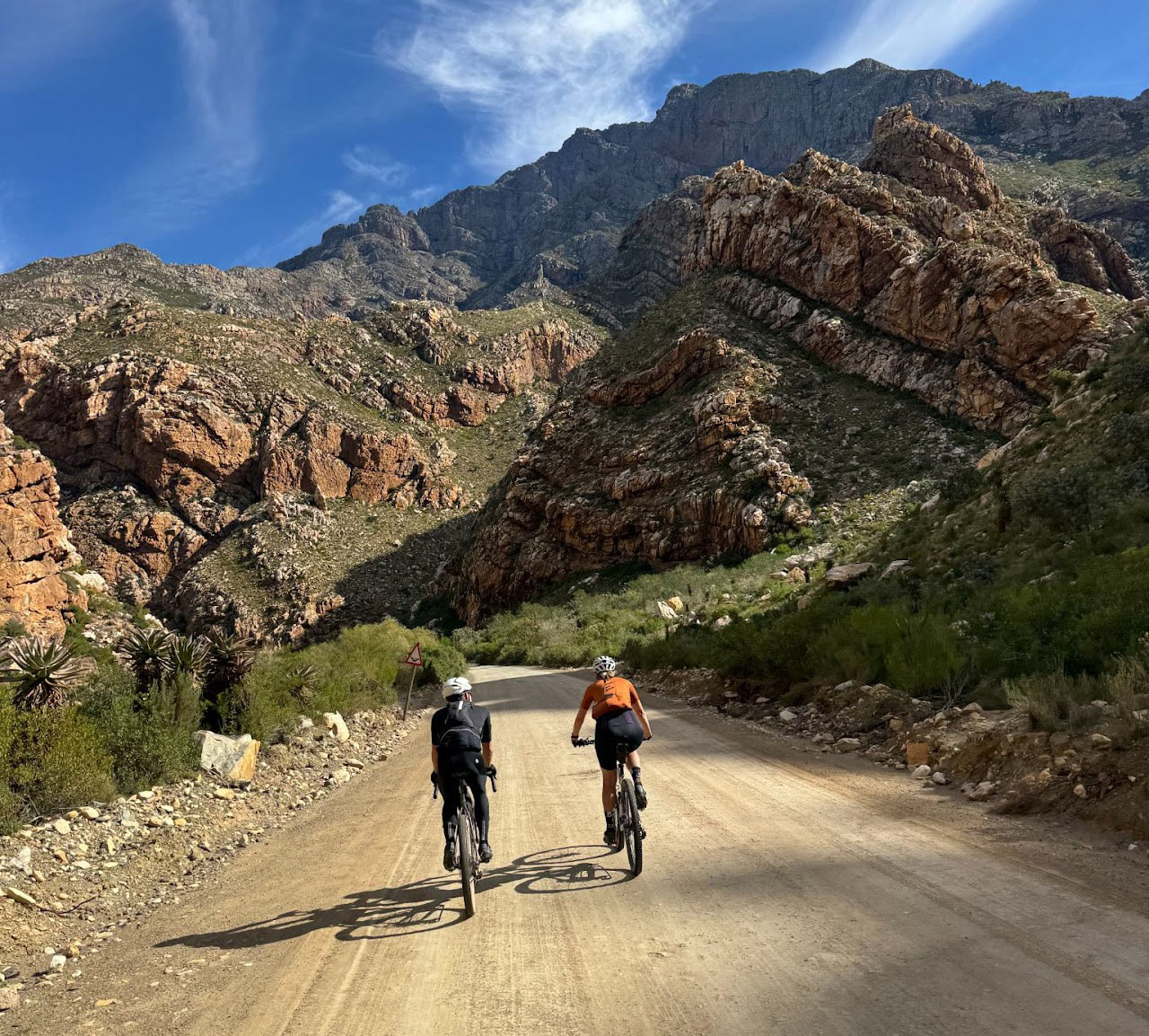
We rolled out and immediately began climbing Bosluyskloof Pass, a 24 km stretch of gravel stitched with 60 tight bends that twisted through towering rock and rugged terrain. Built in 1862 by Adam de Smidt, brother-in-law to Thomas Bain, the pass felt wild and untamed. It was so quiet that some klipspringer - small, agile and shy antelope native to southern Africa’s rocky mountain regions - moved undisturbed across the slopes, watching us riders sweating it up the pass.
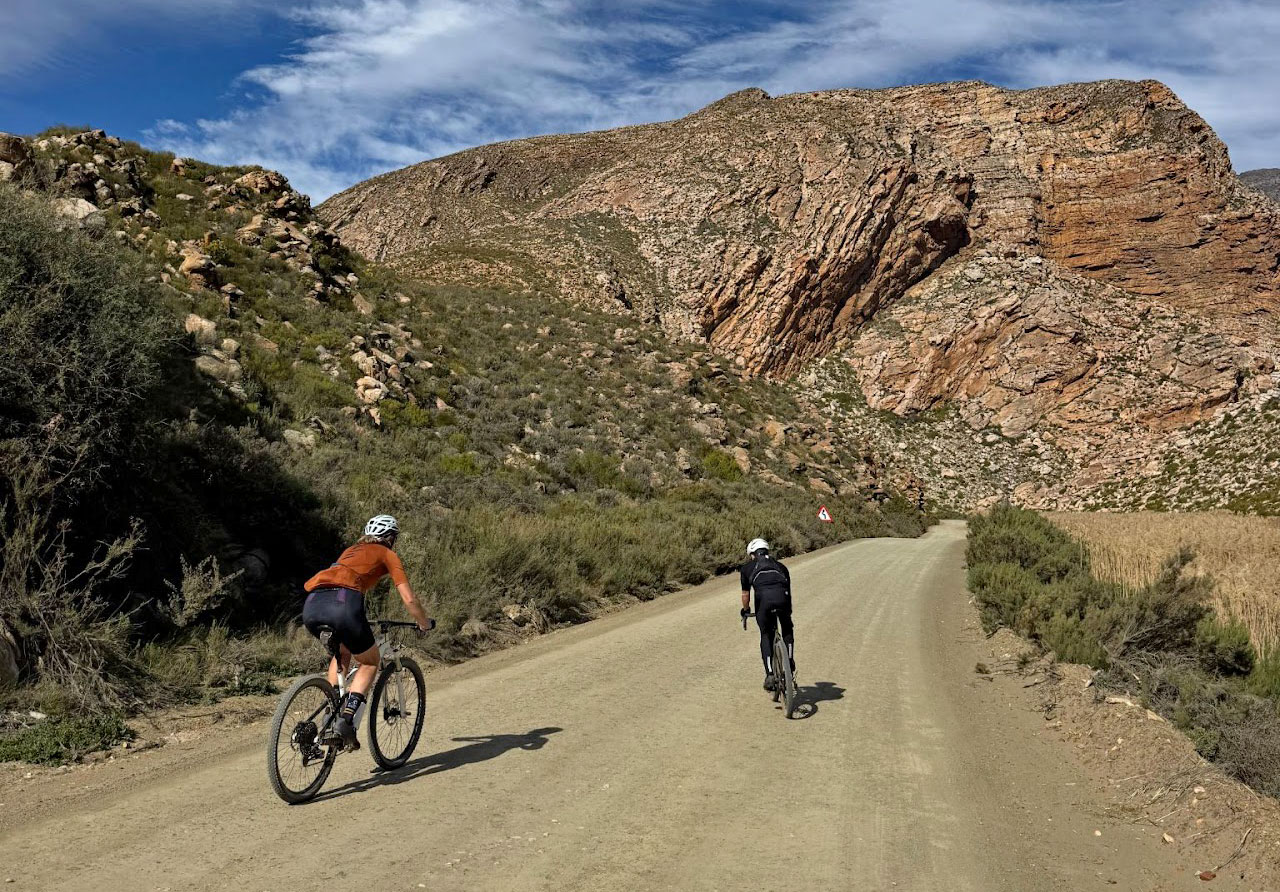
“Gravel riding at its purest: wild, challenging and quietly addictive.”
At the top, the ride opened into Seweweekspoort. The gradients softened, small rivers crossed the road and massive sandstone cliffs rose above us. Riding through it felt almost unreal. We passed through Amalienstein (established by the Berlin Missionary Society and named after Frau Amalie von Stein) and Zoar, also a former German mission town.
We stopped briefly at the Evangelical Lutheran Church, completed in 1853 - marked by its two bells - for a quiet moment of stillness and reflection.
The final stretch wound through the Hoeko Valley, where orchards and weathered farm homesteads, marked by Ladismith’s distinctive architecture, framed the closing kilometres. By the time we rolled back toward town, our legs were spent and our minds were full.
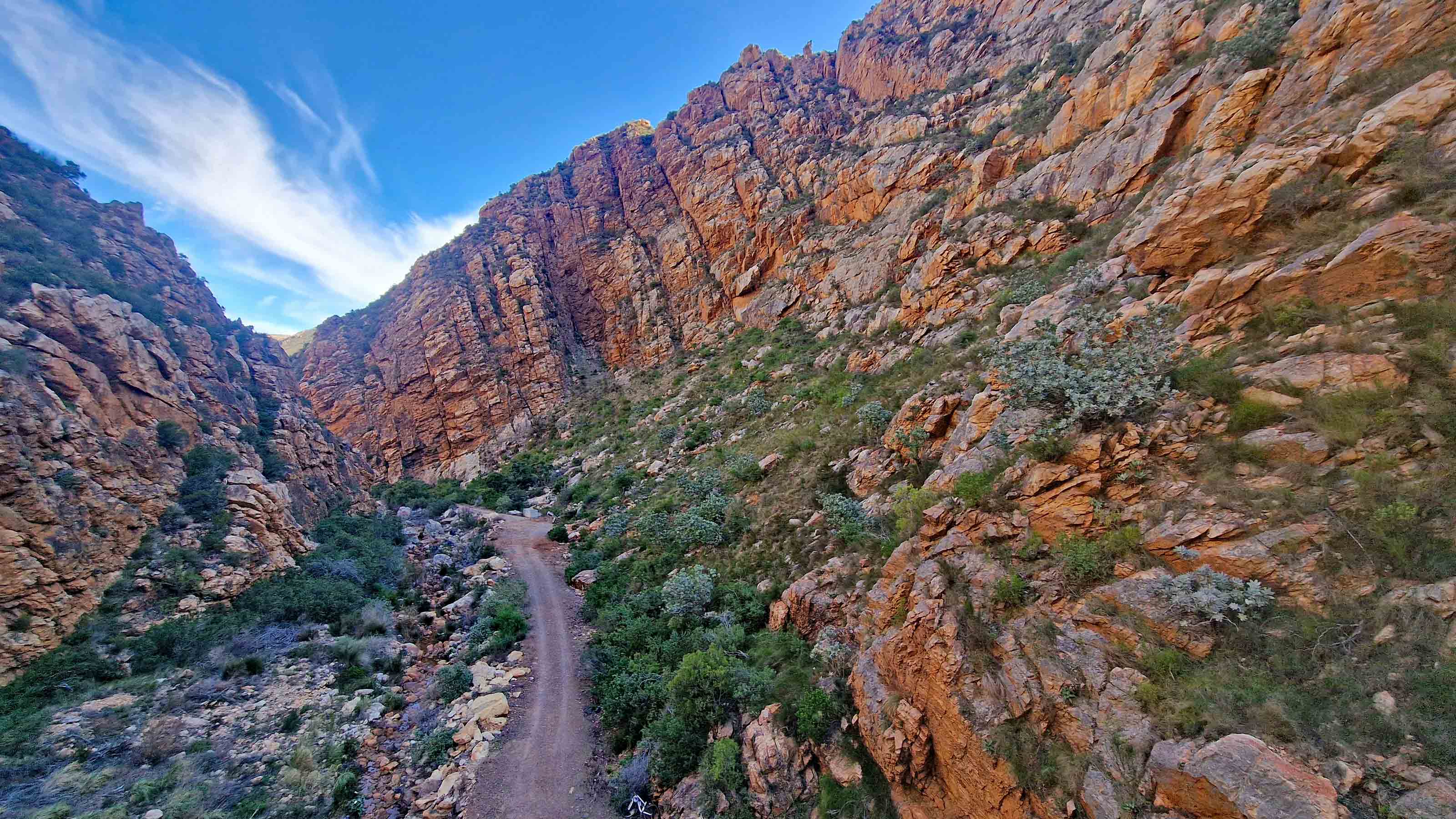
"Geological awe: mesmerised by the twisted rock formations of Seweweekspoort and the surrounding Cape Fold Belt."
We finished at The Willow Tree, overlooking Route 62, spare ribs and cold beer for some, wraps for others, but everyone paused to take in the view and celebrate a first day well earned.
Day 2: Endurance and Reward - 92 km | 1477m elevation
The second day was defined by patience. Long, exposed riding toward Van Wyksdorp was followed by the sustained climb of Rooiberg Pass. Van Wyksdorp felt untouched by modern life, only dust, sun and sky dominating the landscape, punctuated by succulents and quiet farms. A stop at the Van Wyksdorp Mall added a touch of local colour before the climb began.
The legendary Rooiberg Pass rose from the valley floor, 69 bends and six hairpins carved into the mountain since 1928. It was a sustained push, demanding rhythm and focus. We were determined to get everyone to the top - sometimes with the aid of tow ropes for riders who needed an extra push - ensuring no one was left behind.
At the summit, the view stretched endlessly north and south, ridgelines and valleys draped in fynbos. The pass lay within the Rooiberg Conservancy, a 60,000-hectare wilderness where three biomes met - one of the world’s biodiversity hotspots.
The descent was fast and dusty, adrenaline in our wake. We were met for pickup and transferred to Die Kranz Cellars, where a bistro-style lunch, award-winning wines and post-ride recovery awaited. Thirty minutes later, we were back in Ladismith, legs tired, spirits high and reflective about the day’s riding.
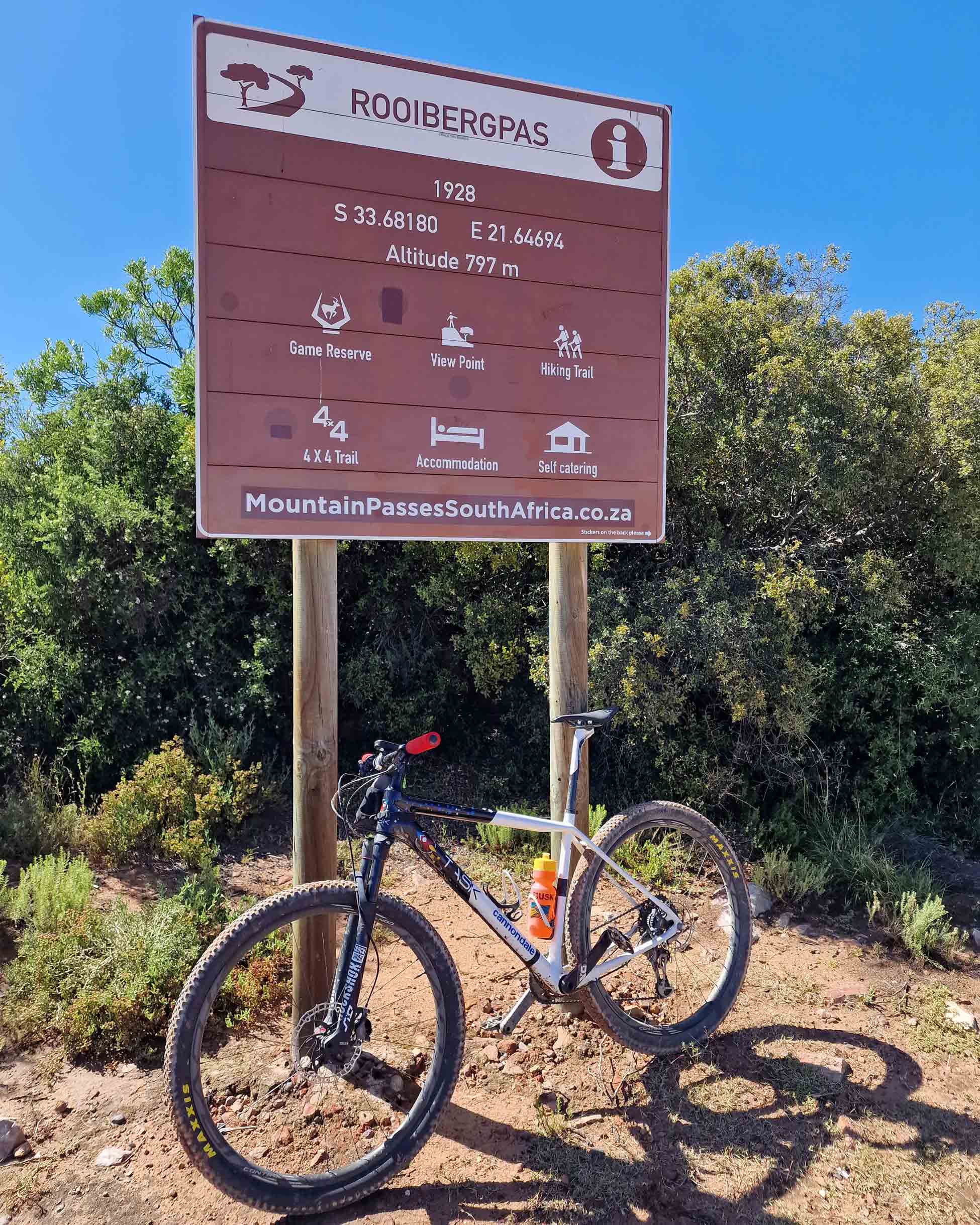
"Twisting bends, hairpins,and endless ridgelines - Rooiberg Pass delivers Karoo exhilaration at every turn.”
Day 3: Immersion - 68 km, 1167m elevation
Day three was quieter. We rolled onto gentle gravel roads at the foot of the Swartberg Mountains. Orchards and ostrich farms gradually gave way to open scrubland and the vastness of the Karoo became immediate.
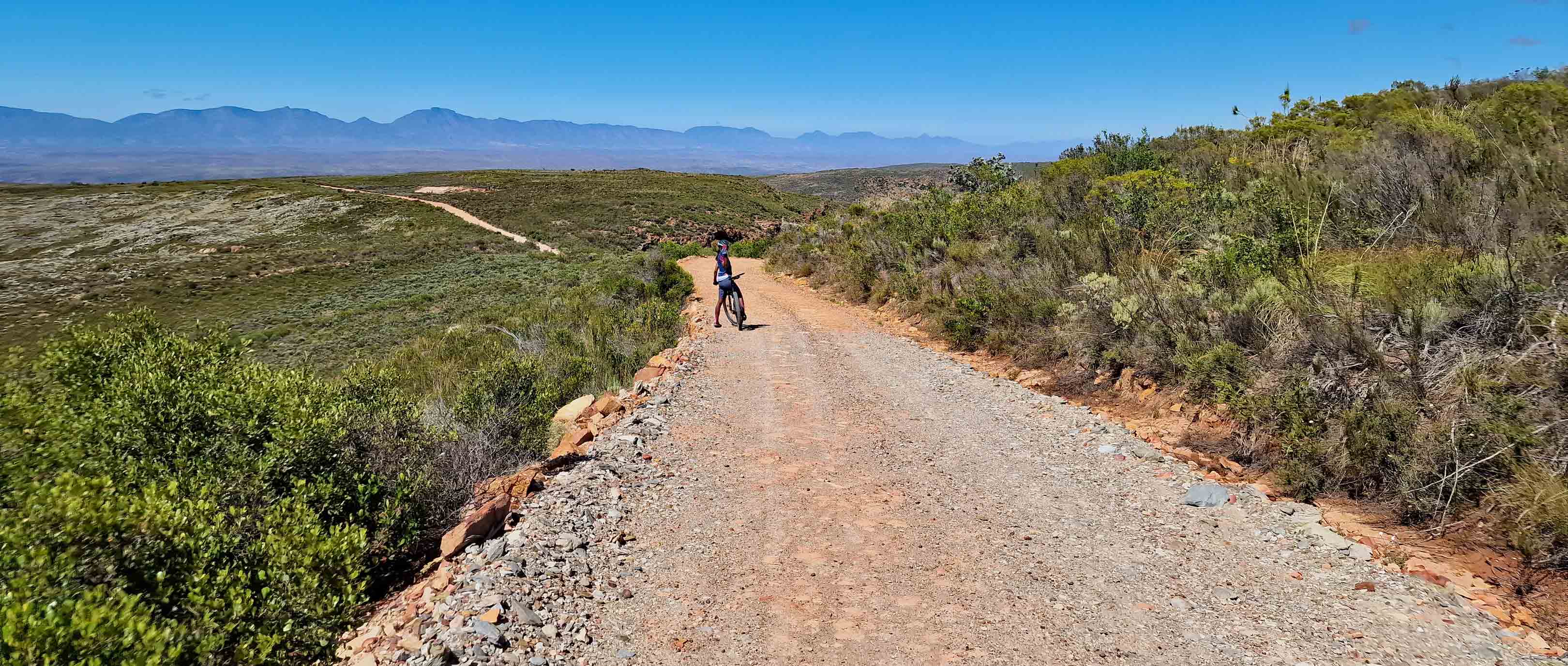
“Hidden valleys, winding gravel, and sunlit vineyards - Karoo riding at its rawest and most unforgettable“
The route threaded through Groenfontein Valley, a corridor of sandstone ridges, dry riverbeds and remote homesteads. Each turn revealed raw beauty: koppies rising and falling, dust hanging in the air, fynbos lining the road. Calitzdorp appeared almost unexpectedly, vineyards marking a soft return to cultivation.
Lunch was at Giovanni’s with wood-fired pizza and ice-cold beer, followed by a relaxed drive back to Ladismith in the support vehicle. It was a day of sun, dirt and Karoo solitude, ending without urgency.
Day 4: Flow and Familiarity - 56 km | 490m elevation
The final day felt like a conversation rather than a challenge.
We eased into the morning with a gentle ride west of Ladismith. Our first stop was Touch of Plaas, an active olive farm where breakfast fueled both legs and spirits. Over coffee and fresh local produce, Tannie Rina shared a quick overview of olive pressing, introduced her smoke-infused jams and offered her natural wisdom on co-planting crops to build immunity against pests. It was the perfect blend of local knowledge and the Karoo’s slow rhythm.
From there, we followed the Groot River, flanked by towering rock walls, where gravel twisted and dipped through fertile riverbeds. Along this stretch, clusters of farmhouses, barns and working structures scattered along the roadside, a settlement pattern shaped by centuries of life in the Klein Karoo.
Dry river crossings and flowing gravel carried us deeper into the Buffelsdrift Conservancy, where wide-open Karoo riding stretched to the horizon. As we bent back toward Ladismith, Towerkop came into view, the same mountain that had welcomed us days before, now quietly signaling home.
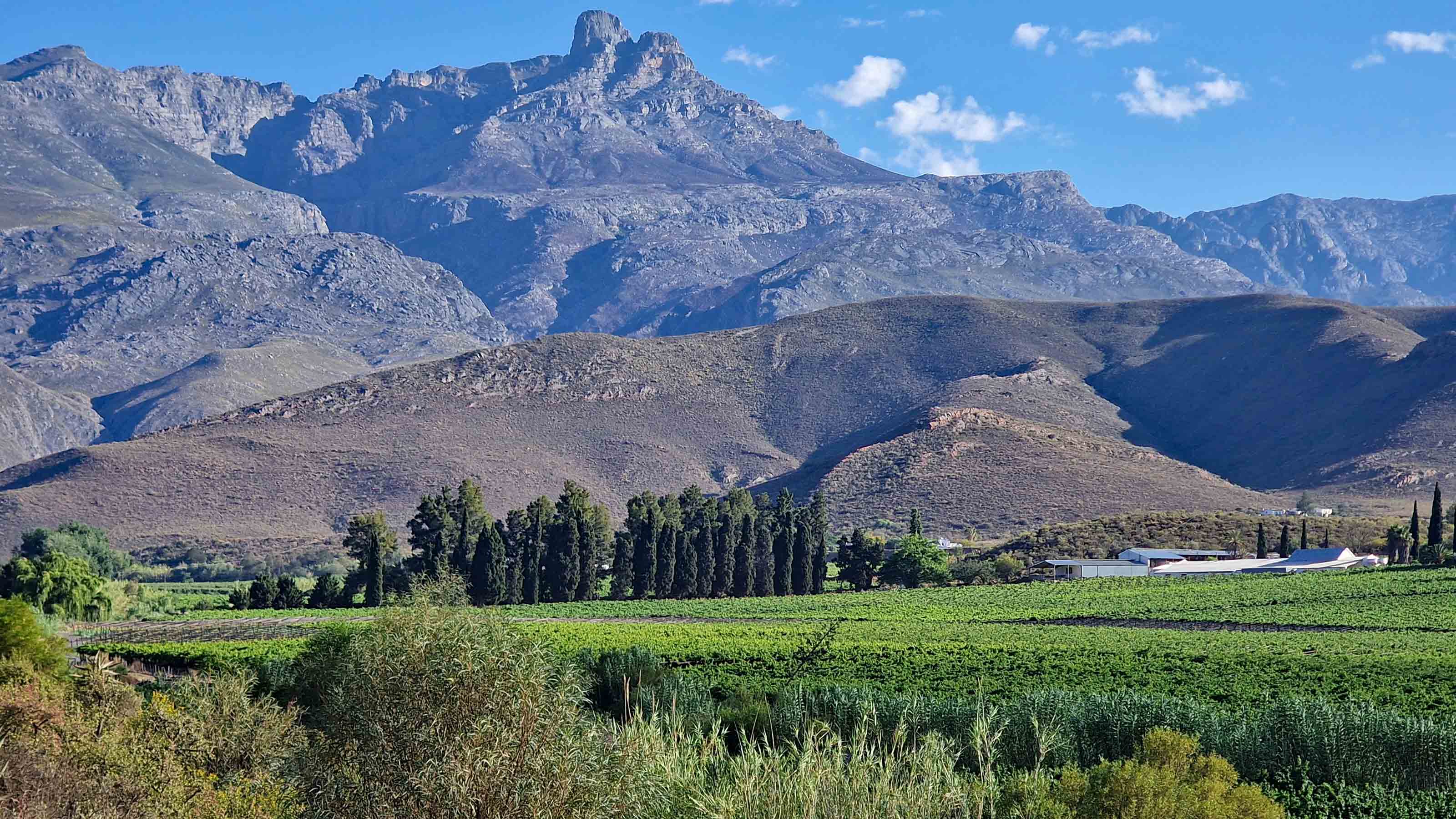
“Wide-open Karoo, dust on our skin and Towerkop guiding us home - pure gravel bliss.”
The legend of the witch and the split peak lingered in the imagination, and the ride closed with a deep sense of connection to the land.
What Remains
The roads haven’t changed. Towerkop still splits the skyline. The gravel still stretches outward, indifferent to who rides it. What changed was the relationship: from passing through, to returning, to opening the door for others.
The Klein Karoo doesn’t announce itself. It doesn’t reward rushing. For riders willing to give it time, it offers something rare: space to breathe, effort that connects and a quiet satisfaction of moving through a landscape that invites raw endurance.
If you would like to find out more about the gravel riding holidays that Anna-Rosa runs from Karoocible then you should head to the Karoo Gravel website, which you can find here. You can also follow along via Instagram if you would like some more inspiration from the Karoo.