Guidebook author, adventure filmmaker and event organiser Markus Stitz has lived in Edinburgh since 2009, so it might seem like an obvious idea for him to have created a guidebook of his favourite local gravel riding routes. Having already written (or co-written) five gravel/bikepacking books so far, it’s not until his sixth (and most recent) offering, Gravel Rides Edinburgh, Fife & The Lothians, that he features his local patch. We chatted with Markus about the inspiration for his latest book. Read on to find out more.
Early riser
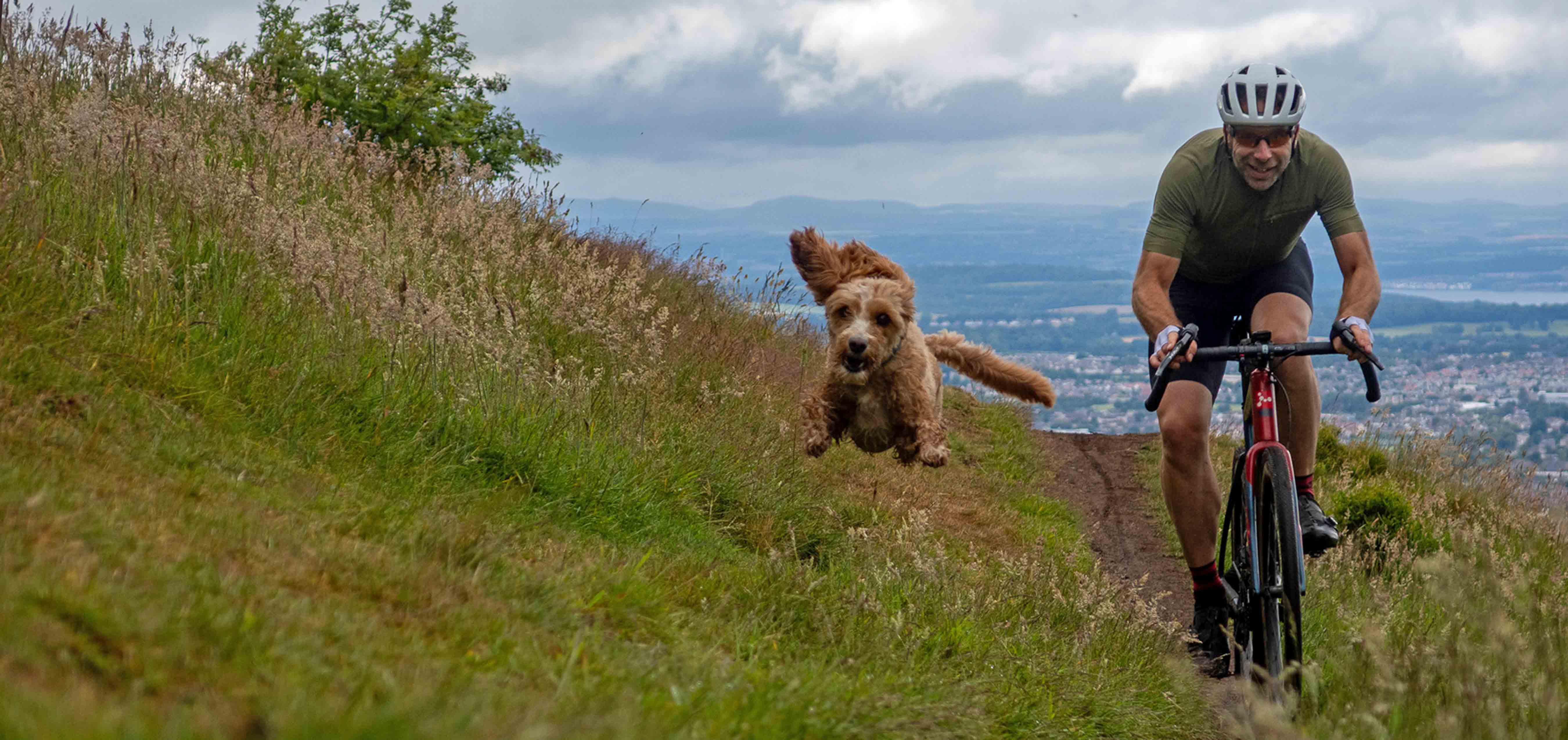
“The idea of a big bunch ride in a club is not my cup of tea. I wouldn't say it scares me, but I just don't think it's enjoyable.” Markus and I had been chatting about the Edinburgh Dawn Patrol and how the concept of exploring bits of somewhere/anywhere by bike that other people wouldn’t normally get to see. “I first heard of it in Oslo. I joined my first one there and it felt a lot like a bunch of people riding really fast early in the morning. It’s probably not what I would have chosen to do, but I actually really enjoyed it. You get to see the city in a totally different angle at that time in the morning as there’s just no traffic. There’s also some interesting psychology around it. You get up really early, but realistically, you're not going to do anything much more productive between 5 and 7 in the morning other than sleeping anyway! I’m a very individual person. I just don't like the idea of being part of a club - it never really worked for me. But I also wouldn't describe myself as antisocial - I love having other people there and the Dawn Patrol rides feel like the right balance. It's also a really good commitment to kind of get up regularly. I joined a couple of times in Oslo when I was staying there and it gave me the idea to bring it back to here to Edinburgh. The two cities have roughly the same population, roughly the same geography – Edinburgh sits on the sea and both places have plenty of hills. The Dawn Parol rides really sparked the idea of doing the Edinburgh book.”
“When you think about gravel riding, Edinburgh might not be your top destination, but the reality is that there are lots of people coming into the city AND loads of cyclists already living here. The Dawn Patrol rides take you to places that are either totally off the beaten track or that normal visitors wouldn’t see. They’re a very different way of seeing a city. I hope that the guidebook does something similar – it shows you a side of the city where locals probably wouldn’t go on their bikes and that was really the whole idea. At the same time, I realise there are probably two audiences for the book – people who already live in the city and people who come to the city as visitors. If you come here as a visitor, you want to see some of the tourist attractions – it’s a UNESCO World Heritage Site after all, so I tried to strike a fine balance in the book of having those UNESCO sites, but also taking people into places which are totally quiet.“
Mapping the world
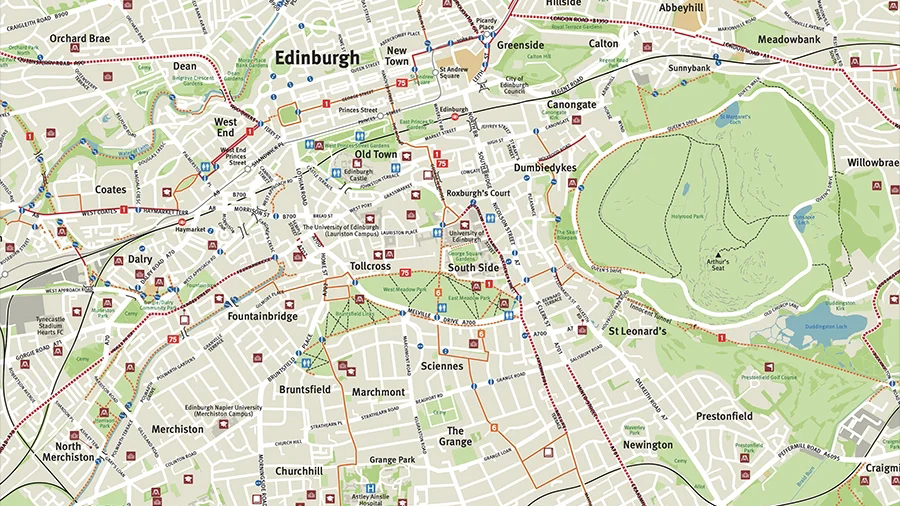
Image courtesy of Pindar Creative
Next, we moved on to chatting about the Edinburgh cycle map. Markus has been working recently with a company called Pindar Creative , who describe themselves as “mapping and content experts”. Markus’ role has been to survey all the cycle paths in the city so that a new “single seamless base [map] covering the entire network” could be created. Markus told us “It ties in with the book really well, as it gave me a much better understanding of how the cycle paths are distributed in Edinburgh.”
He continued, “The north of the city used to have quite a nice network of railway lines. Once they were abandoned, a lot of them actually became safe cycle routes. The south of Edinburgh, though, is very different because there's not so many, or the old routes have already been converted into something else. I really enjoyed working on the project, because I basically surveyed all the routes and had a look at what things had changed since the last survey was done around ten years ago. In the UK, when we talk about cycling, there's always like often a really negative connotation. It’s a common opinion that there are not enough people cycling because the infrastructure is poor, which is often a fair point. But I think this is where gravel riding is such a great potential - we might not have the perfect infrastructure, but especially in Scotland, we've got so much other stuff we can utilise to get people cycling instead. This is why I like the smaller-scale guidebooks as well. Because it's a good opportunity to kind of point out to people that while it might not be like the Netherlands here, because historically, everything is just very different, we do have the potential for really nice routes combining a mix of quiet roads and gravel trails. I think that's why the whole gravel cycling scene is interesting, because it means many things to many people. The reality in the UK is that we don’t have those full-on 100% gravel routes, but we do have a mix of on-road and off-road stuff. I think it's actually quite nice and something that fits well for a lot of people.”
Our final topic of conversation was about how some of the routes in Markus’ book were inspired by his old commute to work. This sounded intriguing, so we asked him to elaborate “Between 2010 and 2015 I worked as a marketing manager for two different organisations based in Stirling. During that time, I normally commuted one way – I would generally take the train to Stirling and then cycle [roughly 65km/40 miles] home. There are two routes in the book which are partly based on my old cycle commute and they’re routes that I’ve cycled a large number of times. It means that I’ve got quite a close connection with Fife and the Forth Bridges. The Queensferry Crossing road bridge was built during this period. It was really interesting to witness that. Initially, I wasn't convinced about it at all. I thought it was quite ugly, but I like it now. It's a totally different view now. If you had stood on the old road bridge back in the days when I was commuting, there were only two bridges and you didn't have that nice approach.
But it also shows you how places change over time. That particular area of Fife has seen so much change. Back in the day it used to be a huge coal mining area, but none of it exists any longer. That's the thing I found quite interesting about doing this book, where most of the routes are so close or sit within an urbanised area. You have stretches of open land in East Lothian, for example, but at the end of the day, it's all very much cultivated and not wild at all. But you've got this amazing history to explore.
I think it's interesting from a local perspective because you probably don't think about those places too much. You probably see them as an ugly abandoned coal mine somewhere. Which is perhaps true, but that used to be the bread and butter of loads of people who lived in the area. What is also interesting is to see how nature claws back a lot of that after a certain time. Creating the routes for the guidebook gave a much better understanding of the area. For me, stopping and exploring those places means a lot. If someone's not interested in that, they might just want to go for a gravel ride, and that's cool. But hopefully some of them at least will think about the history and the socioeconomic development of where they're going through because it is unique to the area you're riding in.”
Giving people an idea of what they could do
“I always see guidebooks as giving people an idea of what they could do.” That was one of Markus’ comments which really stuck in our minds. His view was that guidebooks are designed to inspire and to help stimulate ideas, but he doesn’t expect readers of the book to follow every route religiously.
The press release for the book describes the contents like this: “Covering Edinburgh, East, West and Midlothian and crossing the Firth of Forth into the Kingdom of Fife, the rides range from 17 to 89 kilometres, plus a challenging 244-kilometre bonus route. The routes explore charming fishing villages and the industrial heritage of the Fife coast, follow Scotland’s oldest railway, the 1722 Waggonway in East Lothian, or venture into the Pentland and Lomond Hills.”
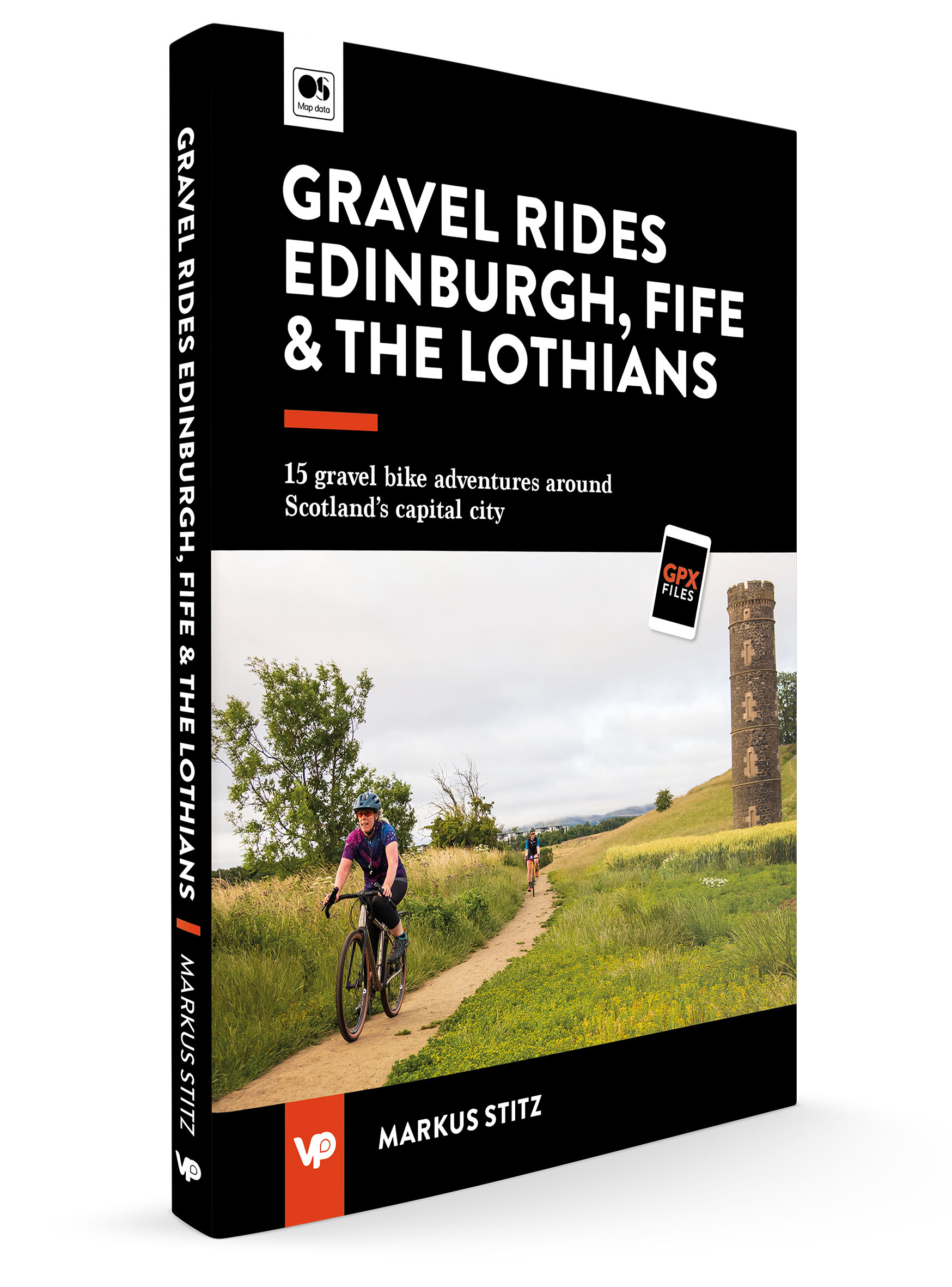
The book contains a total of fifteen routes and all of them are accessible by public transport. Each route has a detailed description, suggestions for café stops, useful information about accessing the route/local bike shops, etc., beautiful photographs and detailed Ordnance Survey map extracts. You can also download a GPX file for each route to make navigation more straightforward.
Gravel rides Edinburgh, Fife & The Lothians is available now, priced at £15.95. You can buy it directly from Markus (and if you live in Edinburgh, he may well hand-deliver it to you using his cargo bike) or from the publisher or in good bookshops.