“Gravel riding in La Mancha is not meditative cruising — it’s controlled chaos.” Steep climbs, freezing river crossings, trails so technical that you’re better off walking. You could be tricked into thinking that Timo Rokitta bit off more than he could chew when he signed up for the recent Gigante de Ruidera ultra marathon. Luckily, there was plenty of payoff for the required hard effort.
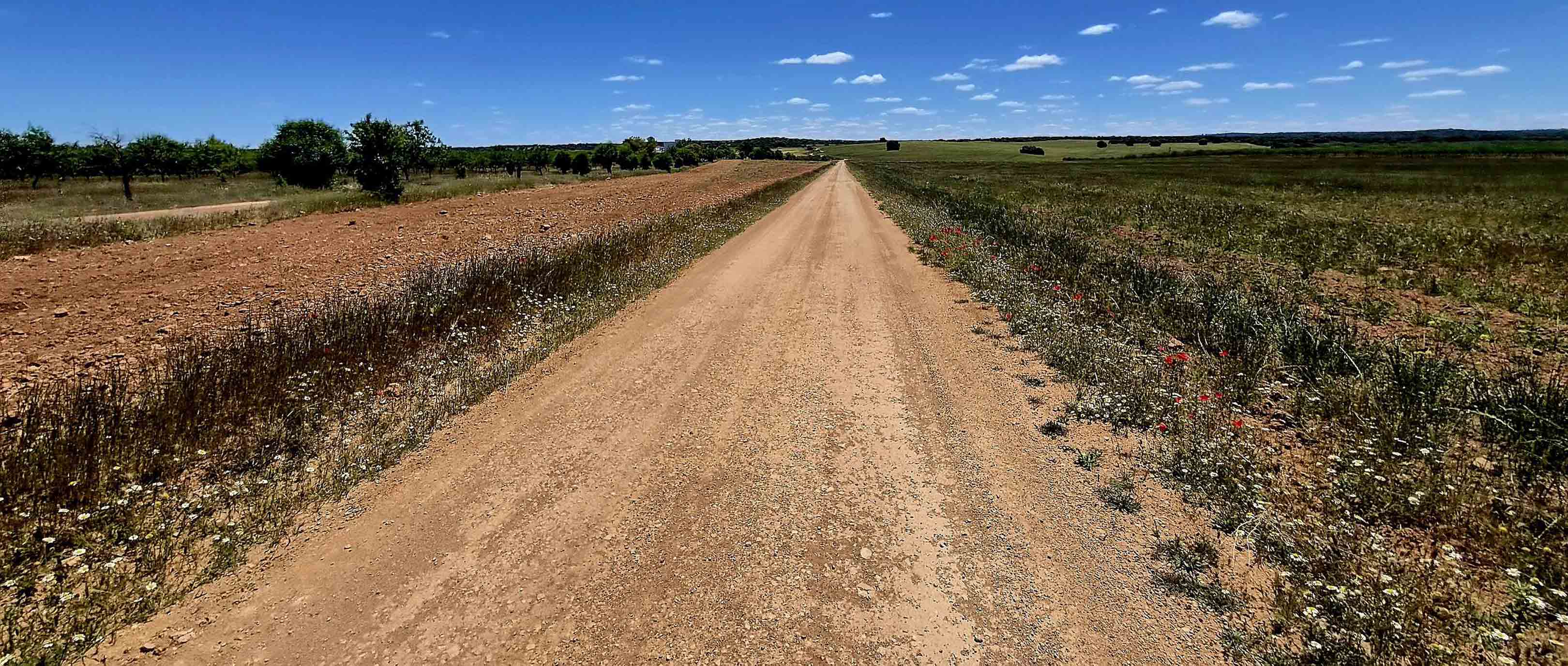
Dawn over La Mancha has nothing romantic about it. It is cold, harsh and empty. The wind sweeps across the barren plateau as if trying to erase even the last remaining thought. Right here, somewhere between dusty fields, twisted olive trees and villages that seem half abandoned, Don Quixote once rode against windmills and imaginary giants. Today, different figures fight their own battles here: gravel riders against climbs, loose rocks and their own heart rate.
La Mancha feels as though it was made for gravel bikes. Remote, rugged, immense. Roads disappear somewhere on the horizon while gravel tracks vanish in every direction like forgotten trade routes. Those who ride here won’t get Alpine scenery or café stops serving oat milk lattes. Instead, they get solitude, dust and the feeling of having stumbled into an adventure.
In the middle of this landscape takes place the gravel race Gigante de Ruidera — an event that has long since achieved cult status. Nearly 700 riders gather for the different race distances around the famous Lagunas de Ruidera, that surreal natural paradise of turquoise lakes, small waterfalls and dense reed beds. A strange contrast: a lush watery landscape in the middle of the dry Castilian wilderness. The highlight of the weekend is the 150-kilometre course — a route that feels less like a race and more like an expedition.
“The bike bounces violently, the handlebars twitch nervously in your hands and every glance at the scenery is punished immediately.”
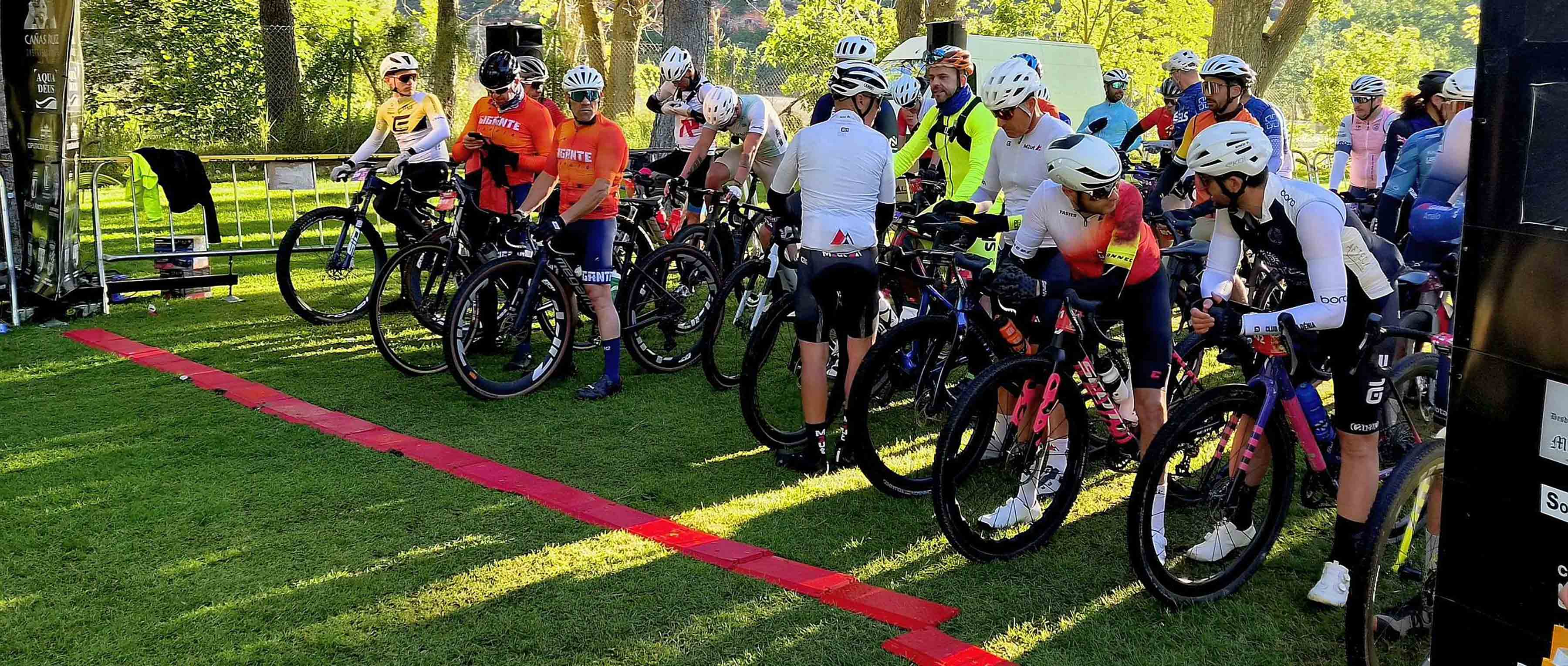
On the morning of the start, the temperature barely rises above freezing. Even so, an astonishing number of riders stand at the start line in shorts and short sleeves, as though someone had once claimed that Spain simply doesn’t have winter. At 8:30 a.m., the race begins. At first, the riders roll calmly through Ruidera behind a lead vehicle. The first nine kilometres feel reasonably relaxed, but at the edge of town, the lead car suddenly stops. And just like that, a casual rollout turns into a fight for survival.
A brutal gravel ramp shoots straight up the mountainside. Rough terrain, cold legs and gradients well above 20% — a combination designed to humble people efficiently. Spectators line the top, cheering on anything still moving. Many riders fail exactly at that point. Rear wheels spin out, riders lose balance and slowly topple over in what feels like slow motion. The race sorts people out mercilessly before it has even properly begun. At the top of the plateau, the field is already completely scattered. The next section demands total concentration: a rough track covered in fist-sized rocks. The bike bounces violently, the handlebars twitch nervously in your hands and every glance at the scenery is punished immediately. Gravel riding in La Mancha is not meditative cruising — it’s controlled chaos.
Before reaching Ossa de Montiel, the roads suddenly become faster and smoother. Perfect gravel, endless lines, dust clouds glowing in the morning light. Speed comes naturally. At the edge of town, a bizarre sight appears: in the middle of a roundabout stands a giant bicycle. Perhaps something to do with Oscar Sevilla? The former Spanish pro cyclist is from here after all. Then again, in La Mancha even a life-sized knight statue riding a gravel bike wouldn’t seem particularly strange.
Shortly afterwards, the route descends again toward the Lagunas de Ruidera. The terrain constantly changes character: muddy sections, narrow singletracks, fast gravel roads. After nearly 50 kilometres, the first feed station appears like an oasis. There’s hardly time to enjoy it, though, because immediately afterwards a brutal, rocky trail forces riders out of the saddle again — first steeply uphill, then just as violently back down.
And then comes one of those moments that make people love gravel racing. The course snakes directly along the lagoons. Deep blue water sparkles through the trees, small waterfalls rush beside the path and for a few minutes, everything feels almost peaceful.
“Without saying a word, everyone dismounts and wades through the freezing water. Shoes soaked, legs numb, onward they go.”
Until the trail suddenly ends. Ahead of the riders lies a small river — knee-deep. Without saying a word, everyone dismounts and wades through the freezing water. Shoes soaked, legs numb, onward they go. Barely dry again, the next cruelty is already waiting: a steep gravel ramp climbing back up onto the plateau. At the top, brutal headwinds blow across the landscape. The terrain is as open as an ocean — just without water. And with significantly worse catering. In the small village of Carrizosa, the second feed station naturally sits at the highest point in town. Probably out of principle.
Afterwards, fast gravel roads and demanding singletracks lead through utterly remote terrain. For hours, there is almost nothing to see except fields, rocks and sky. Then comes the next challenge in Alhambra: a climb into the old town with gradients exceeding 25%. The ascent feels like a direct assault on the calf muscles. At the top, the route actually descends again via a staircase — a line choice that must surely have been invented under the influence of Spanish red wine.
Then the landscape opens once more. Dreamlike gravel roads stretch through La Mancha, perfectly compacted white gravel beneath deep blue skies. Only patches of loose sand in some corners provide occasional jolts of adrenaline. These are the sections where you suddenly forget how badly your legs hurt.
“Gravel riding in La Mancha is not meditative cruising — it’s controlled chaos.”
Near Castillo de Peñarroya, things become technical once again. The trail is eroded, rocky and unpleasantly rough. Common sense beats ego here: walking a few meters is very obviously the better option. But the following kilometres make up for everything. Endless gravel roads roll through the hills, white tracks cutting ruler-straight through the landscape. One could almost think they were riding somewhere in Tuscany, were it not for the complete isolation and the wild Castilian character of the region. A gravel dream par excellence.
The final twenty kilometres once again follow the lagoons. Perfect terrain, fast corners, low evening sunlight. And even the river crossing can now be bypassed, which at this stage is probably the best news of the entire day. As one final gift, a flowing singletrack descends toward the finish line.
And so ends a long day at the Gigante de Ruidera. A race full of dust, water, rocks, and magnificent landscapes. And perhaps even Don Quixote himself would have appreciated it. Because anyone riding a gravel bike here is also fighting giants — only today they come in the form of steep climbs, headwinds and loose gravel.
If you would like to follow in Timo's tyre prints, you can find the route here: