Jorge Padrones is an experienced gravel racer who has competed across the globe, from the southern tip of Chile to the flatlands of northern Europe. Through a combination of determination, fitness and skill, he earned his place in the Masters 50 category at the 2026 UCI Gravel World Championships. Unlike previous editions, which had all taken place in Europe, the 2026 Championships headed to Nannup, Western Australia. Jorge travelled halfway around the world to take on the challenge and has shared this excellent first-hand account of his experience.
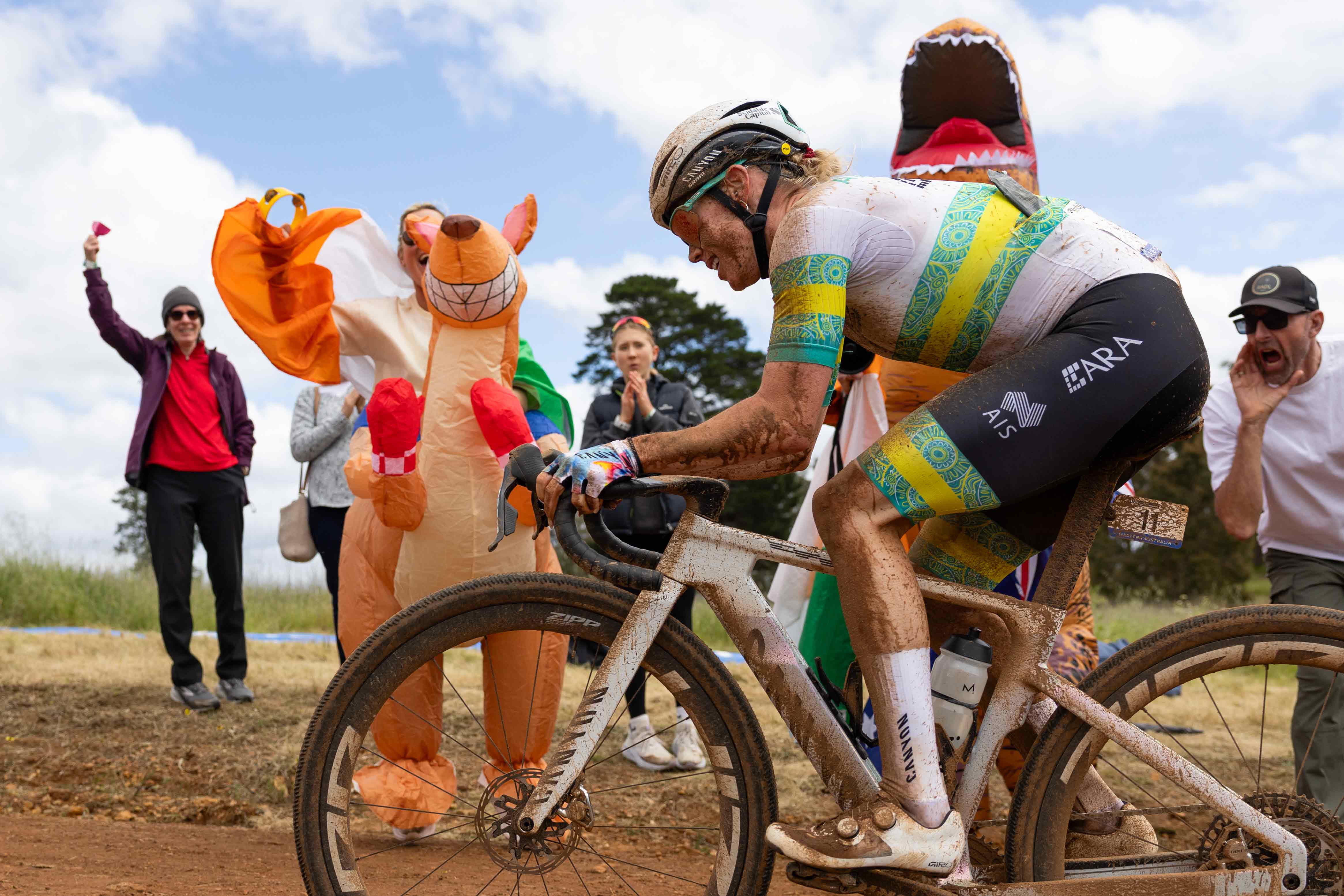
The UCI awarded Australia the opportunity to host the 2026 UCI Gravel World Championships, taking the event outside Europe for the first time in its five-edition history. The organisers chose one of Australia’s most prestigious gravel events, The Seven, as the foundation for the World Championships, sharing both the course and the organisational infrastructure. It proved to be an excellent decision, helping deliver a highly successful event.
The Nannup region offers some of the finest gravel roads we have ever seen: wide, fast tracks covered in what appears to be a new gravel concept — pea gravel, a term that refers to the small, rounded stones making up the surface. This got us thinking: could this be the first Gravel World Championships held on a truly authentic, almost perfect gravel course? Judging by some of the memes circulating on social media, we were not the only ones asking that question.
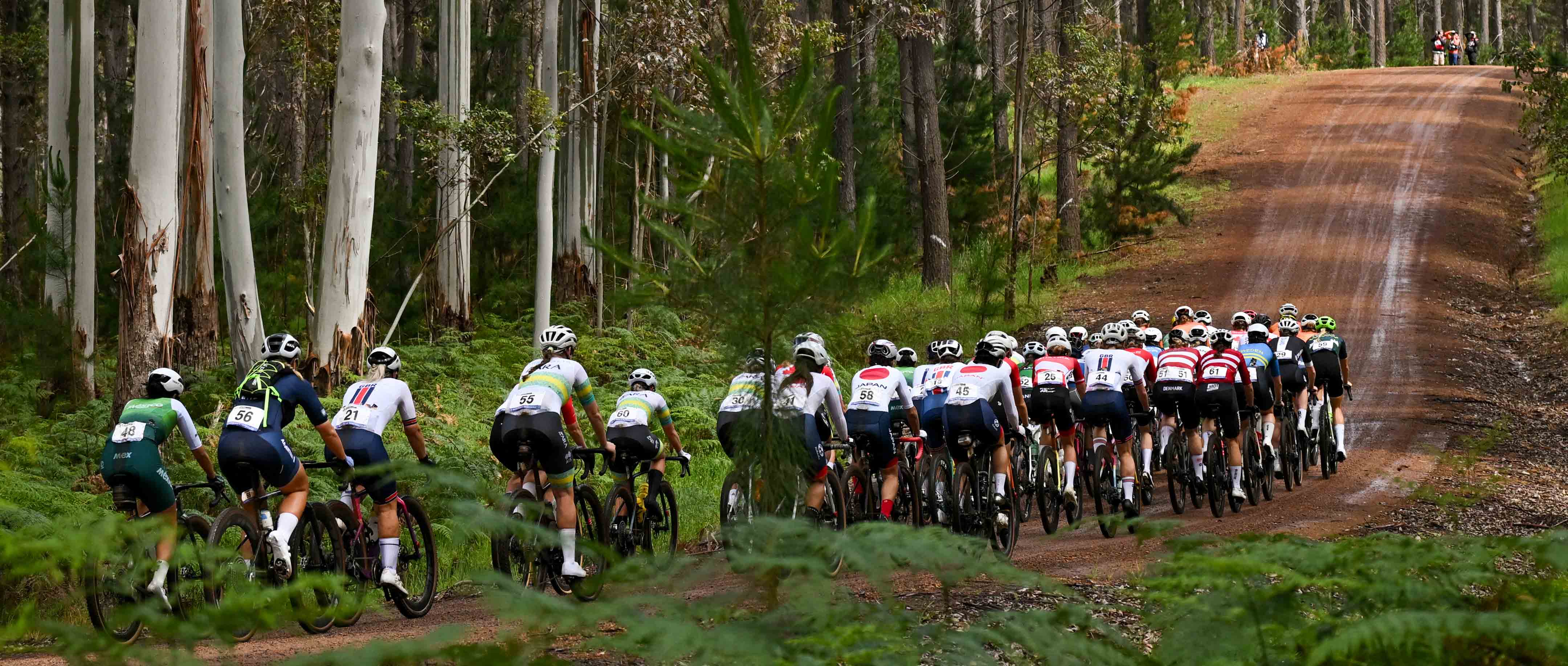
The organisers designed a brutal course worthy of a World Championship. The Elite Women and participants in the older age-group categories faced 127 km of racing with 3,200 metres of elevation gain, while the Elite Men races and participants in the younger age groups tackled 160 km with 3,700 metres of climbing.
What made the course particularly demanding was the absence of long climbs. Instead, the elevation was accumulated through a succession of short and medium-length ascents, making it a relentless challenge from start to finish.
And if the course itself was not hard enough, the weather decided to make things even more difficult. Rain fell on race day and continued throughout the event, turning an already demanding course into a real test of endurance. Sections that were supposed to be fast and straightforward became unexpectedly technical, with muddy and slippery patches appearing on the descents.
When we arrived in Nannup early on race morning, we found a small, picturesque town dressed up for the occasion. Rainbow signs were everywhere and the entire community seemed to be involved in the event. There was a wonderful atmosphere, complemented by nice coffee shops and local businesses that added to the welcoming feel of the place.
From the very beginning, it was clear that this was not the organisers’ first rodeo! Everything ran smoothly, from race-number collection to all the little details that can make or break an event. The experience was seamless, allowing riders to focus on what they had come to do.
The ‘gravel specialists’ take centre stage
The elite fields were incredibly strong, featuring what could fairly be described as the biggest stars of gravel racing. Nannup also seemed to be the birthplace of a new term. The privateer might no longer be the defining label in gravel racing, as a new concept appears to be taking over: the Gravel Specialist. This term describes riders whose racing calendar is primarily made up of gravel events, rather than road professionals who occasionally venture off the tarmac.
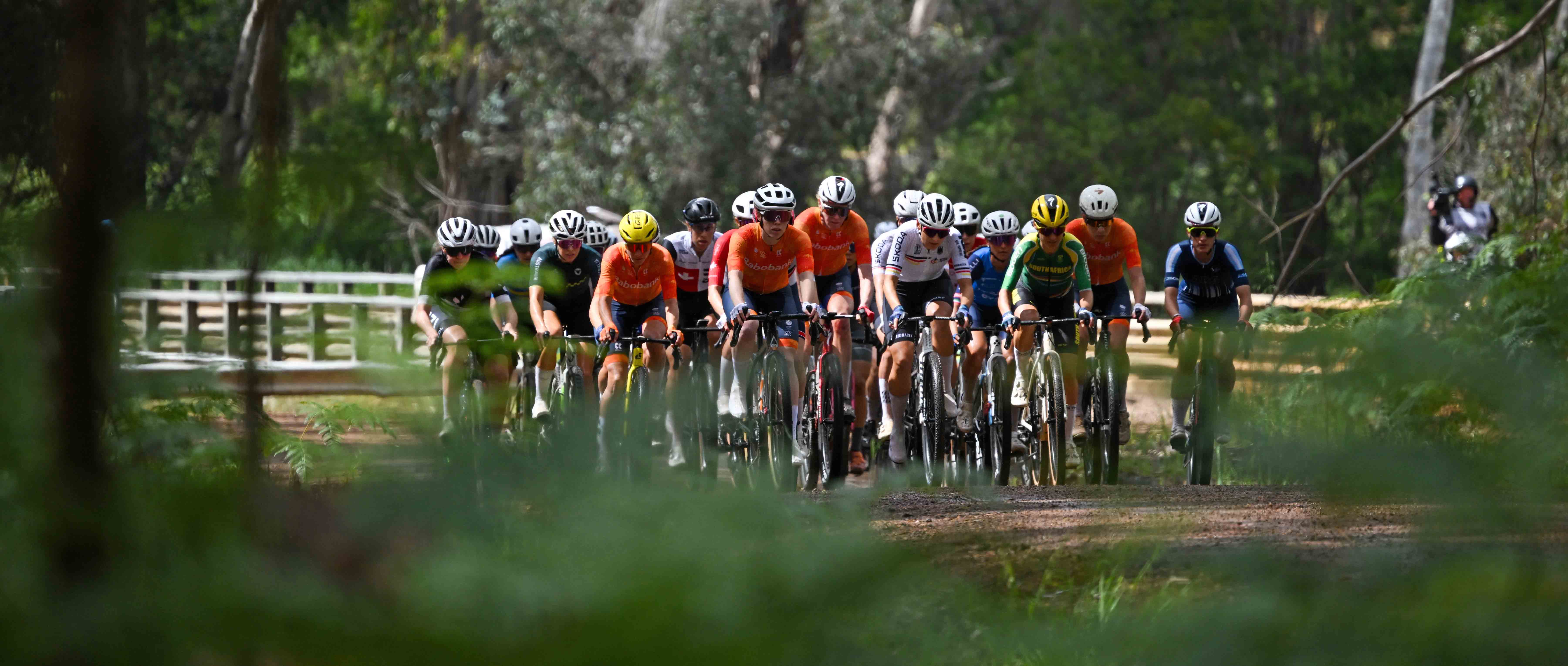
Both the women's and men's races became elimination contests. The demanding course took its toll as the kilometres passed, with groups gradually shrinking and riders being dropped on climb after climb. There was no hiding from the pace, the terrain or the weather.
Women's Race: Vos claims another rainbow jersey
In the Elite Women's race, Marianne Vos and Rosa Klöser reached the final climb together. Shortly after the final descent began, Vos attacked, seemingly confident that her descending skills could give her the advantage. Unfortunately, Klöser suffered a minor crash at the first corner, leaving Vos alone at the front.
From there, the Dutch rider rode towards her second Gravel World Championship title. Klöser managed to finish just seconds behind, while Larissa Hartog completed the podium.
Elite Men's Race: A sprint decides the title
In the men's race, the large group that started together gradually disintegrated until only four riders remained in contention during the closing kilometres. Mads Würtz Schmidt looked to be the strongest, attacking repeatedly in an attempt to break away. However, he also suffered a minor crash, forcing him to make an additional effort to regain his position.
The final four riders stayed together into the closing kilometres, setting up a sprint for the rainbow jersey. Magnus Bak Klaris proved the fastest, narrowly beating defending champion Florian Vermeersch in an incredibly close finish.
In my opinion, this is excellent news for gravel racing. Someone who actively follows the gravel calendar has won the World Championship, meaning we should finally see the rainbow jersey competing regularly in gravel events next season. That is exactly what many gravel fans want to see.
My Race: The so-called queen category
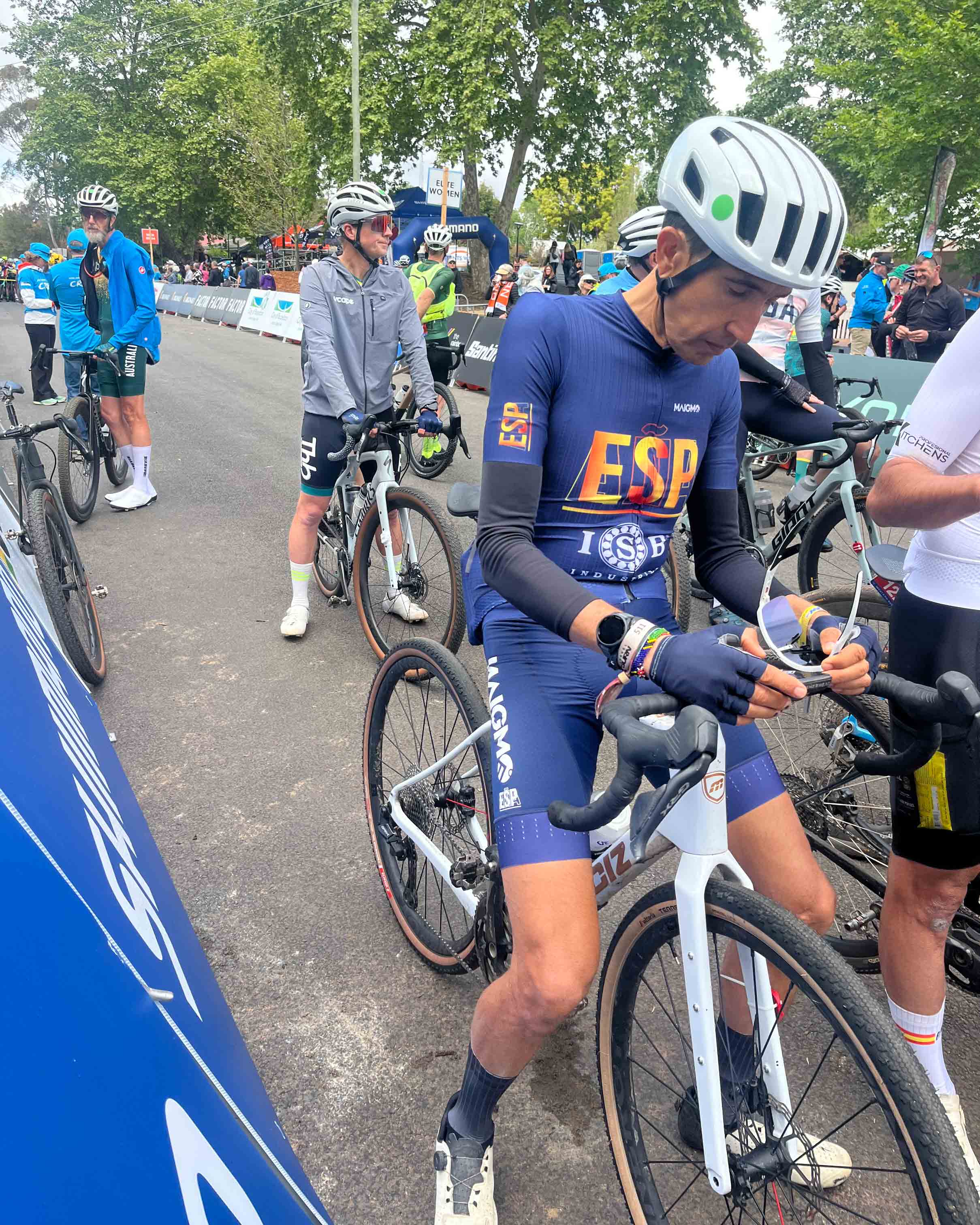
Images courtesy of Susana del Amo
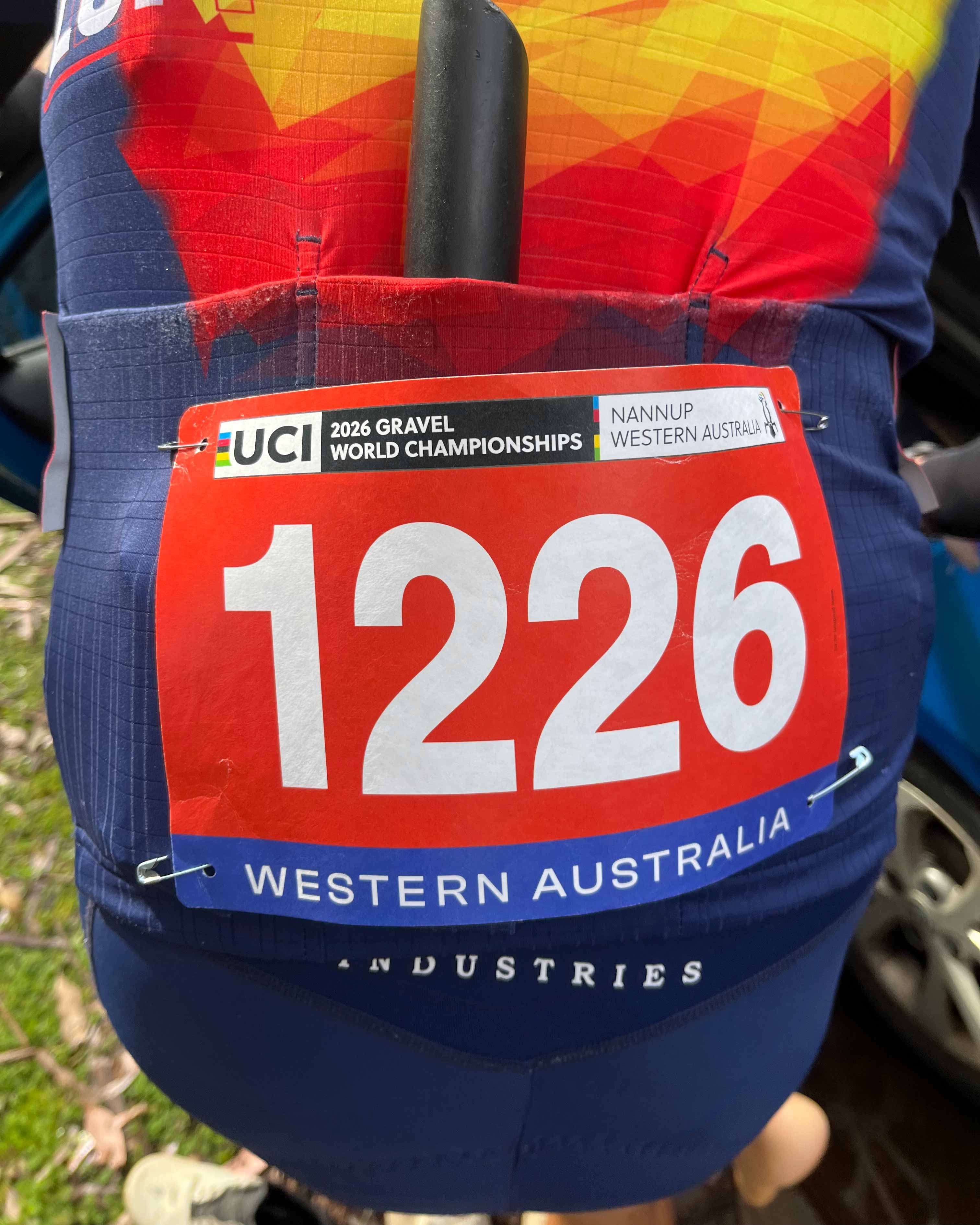
I competed in what some people jokingly refer to as the queen category: Masters 50. For me, every World Championship is a special occasion. I know perfectly well that I am unlikely to win, but that does not change the respect I have for the race. I always try to give my best and I spend months training with the goal of arriving on the start line ready to deliver a good performance.
We started in a group that I managed to stay with for the first 30 kilometres. When we reached the first major climb, I decided to settle into my own pace. There was still a long way to go and I knew that starting too aggressively could come back to haunt me later.
As a Spaniard, the cold and rainy conditions were certainly not in my favour. My body simply does not seem to work as it should in those conditions. In previous races, I had struggled during the final hour, watching my power output drop significantly. Given that experience, pacing myself seemed like the sensible strategy. And, for a while, it worked well.
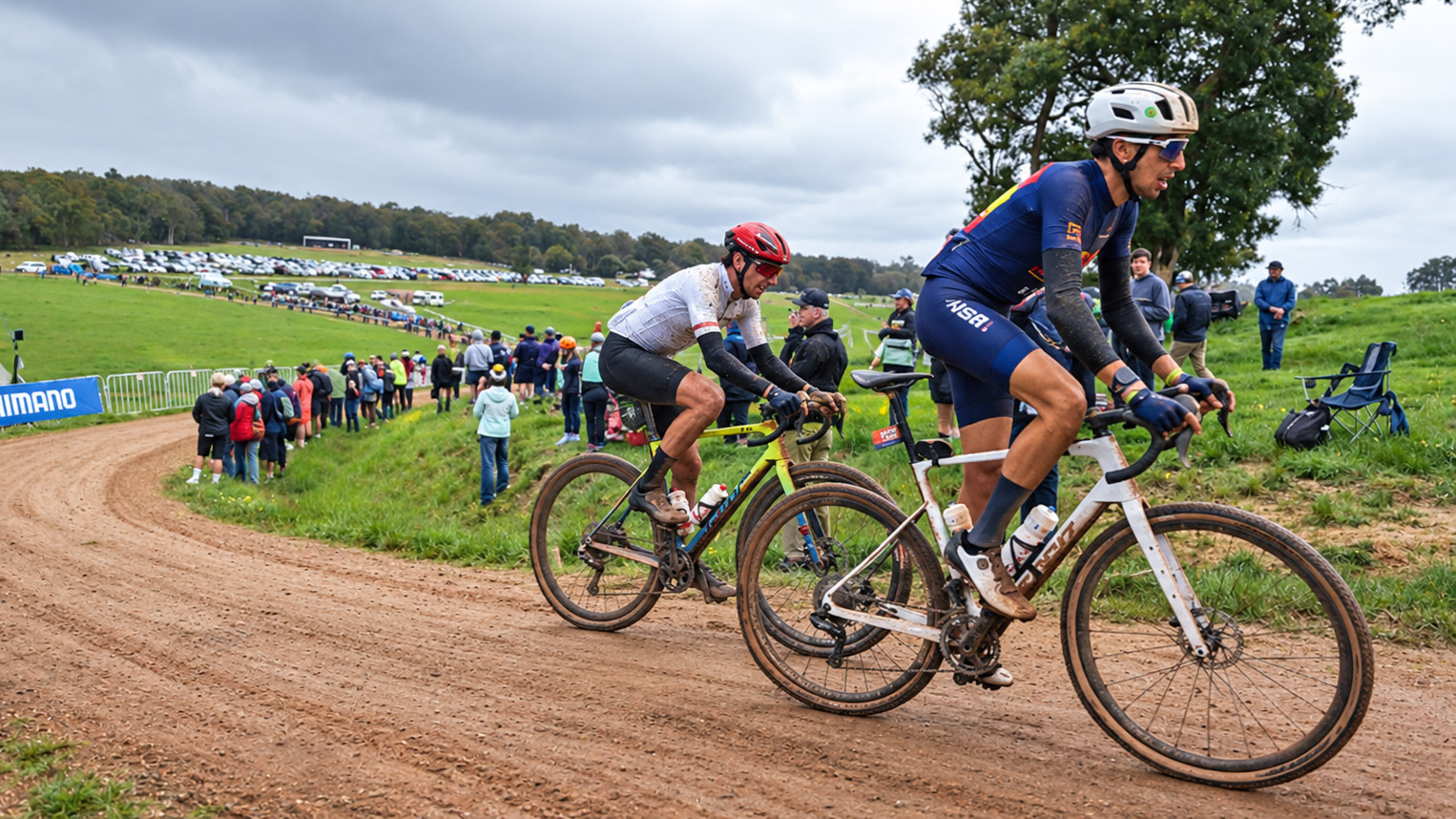
Image courtesy of Susana del Amo
Unfortunately, while riding in a good group, I dropped my chain. With all the mud and sand accumulating around the drivetrain, it was hardly surprising. I had to make a considerable effort to catch the group again. As I was working my way back on a descent, I spotted another rider lying on the ground, shouting in pain after what appeared to be a serious crash. Naturally, I stopped to check on him. I tried to call the emergency services, but there was no mobile signal. As he did not appear to be in immediate life-threatening danger, I told him I would continue to the next checkpoint and report the crash so that help could be sent.
There is something that has stayed with me ever since that moment. I saw several riders pass someone who was clearly injured after what looked like a nasty crash. Nobody stopped. Nobody even seemed to ask whether he was okay. We were not fighting for the win. We were somewhere in the middle of the field, where a few positions would make very little difference to the final result. Finishing 55th rather than 62nd in your category is hardly going to change your life.
So, is this really the kind of gravel racing we want? Is this the kind of cycling culture we want to promote? I think it is a question worth taking seriously.
Once I continued, I tried to work my way back into the race. My original group was long gone, of course, so I focused on recovering as many positions as possible. Eventually, with 26 kilometres remaining, I managed to join a good group. There were several riders from my category and I started thinking about how to approach the final kilometres. The plan was simple: save as much energy as possible and make my move on the last climb. The strategy was perfectly planned, but the execution was another story. When the time came to push, my legs simply refused to cooperate. They were completely empty and there was nothing left to give.
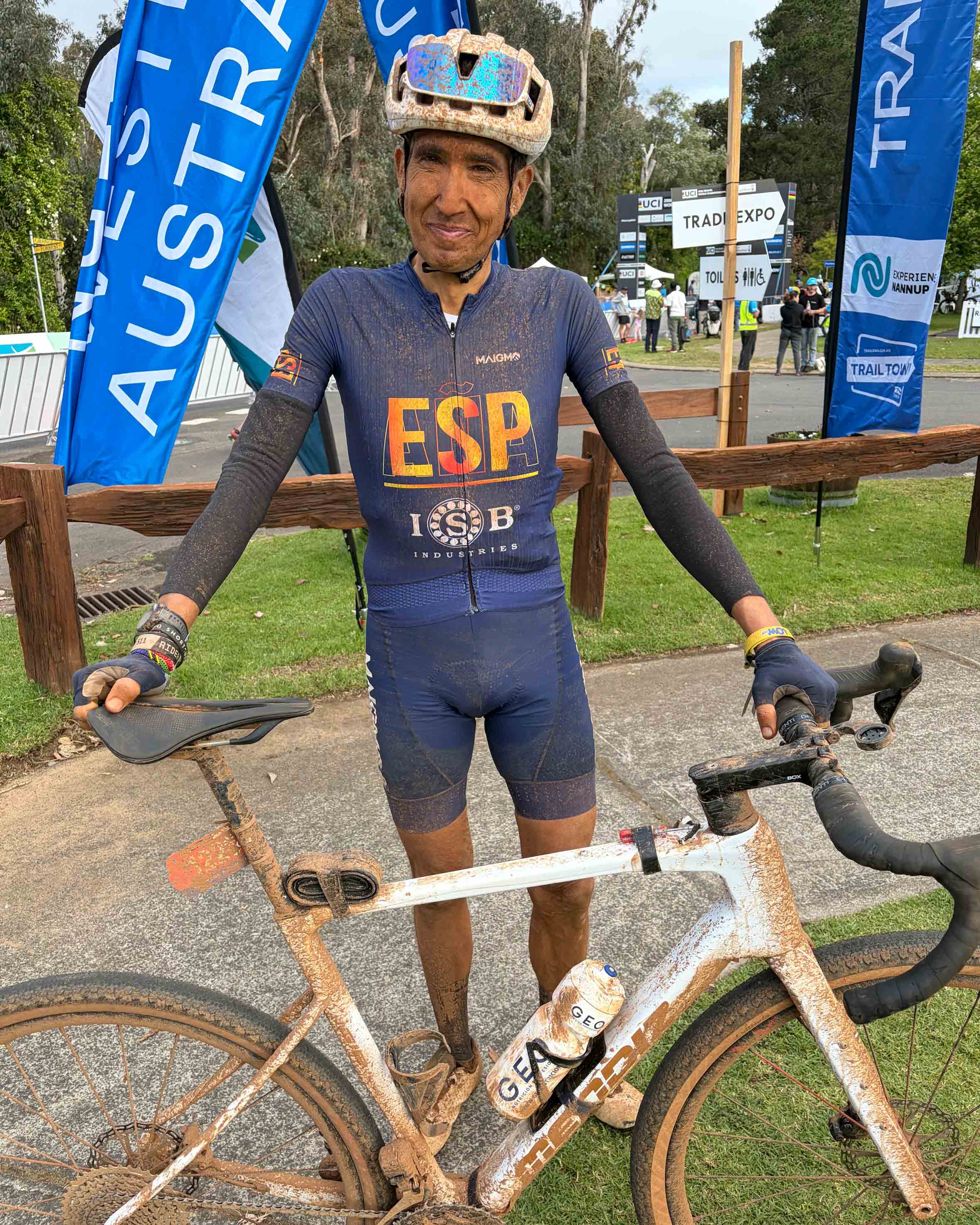
Image courtesy of Susana del Amo
Eventually, I made it to the finish line. This time, I was able to enjoy the final kilometre, taking in the moment and realising that I was about to complete another World Championship. As I approached the line, I found myself thinking about my father and how proud he would have been of me, wherever he was. I like to think he was watching.
For those interested in the numbers, I averaged almost 260 watts of normalised power to finish 60th in my category. I consumed around 90 grams of carbohydrates per hour and three 750 ml bottles during the race. Those figures give you an idea of just how demanding the event was — and of the remarkably high level of competition even within the age groups.
A World Championship to remember
Overall, these World Championships were a tremendous success. Australia showed us that exceptional gravel racing is not exclusive to Europe. The Nannup region delivered wide, fast gravel roads that were close to perfect for the discipline, with pea gravel seemingly emerging as a benchmark for what a great gravel surface can be.
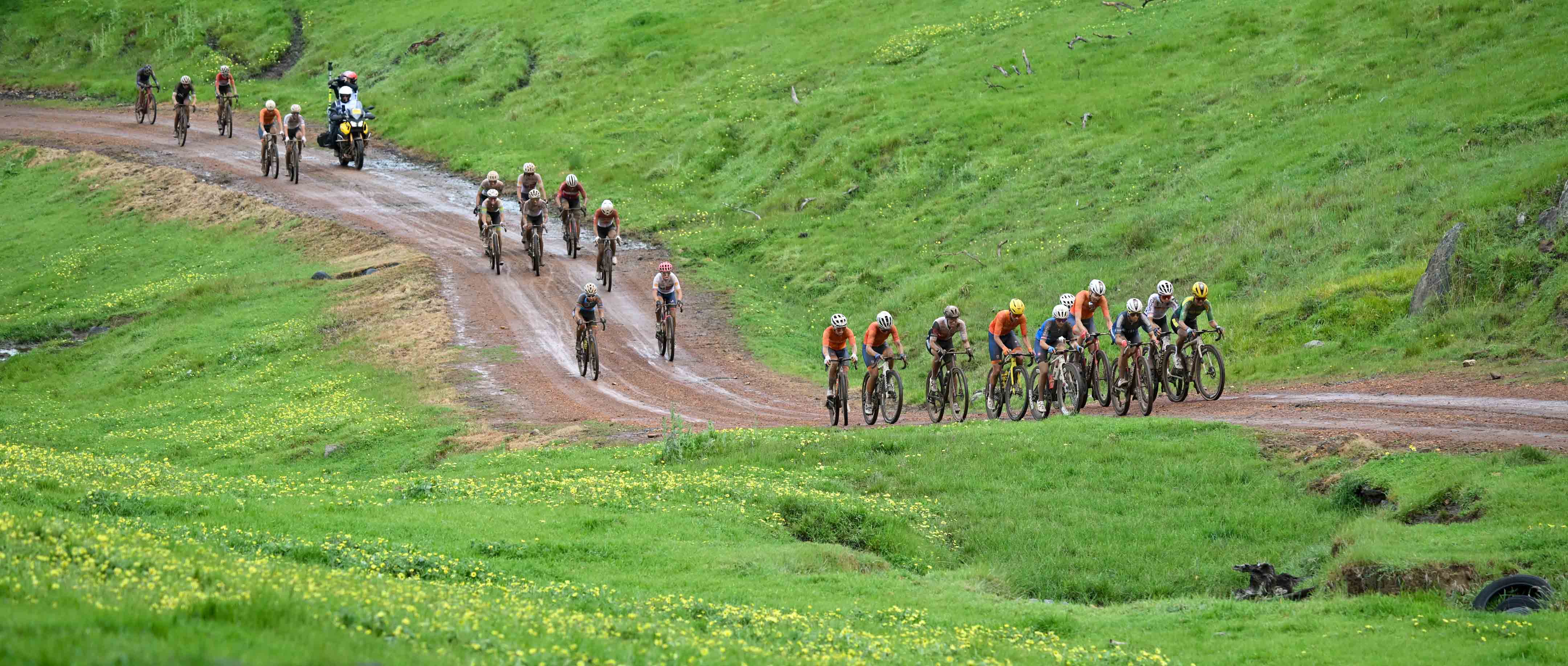
The event also demonstrated that a dedicated ‘gravel specialist’ can beat riders from the professional road circuit, reinforcing the idea that gravel is becoming a discipline in its own right, with its own specialists, racing strategies and competitive hierarchy. And, perhaps most importantly, we can look forward to seeing the rainbow jersey on the gravel circuit next season.
So, it is a 10 out of 10 for Australia — and for its pea gravel.
Images courtesy of SWPix except where credited