Until fairly recently, capturing drone footage of a gravel rider winding along a forest trail required either an exceptionally skilled pilot with countless hours of flight time, or an elaborate overhead cable rig designed to mimic a drone shot. Both options were expensive, complex to organise and time-consuming to set up. Fast forward to today and thanks to modern engineering, you can carry the equivalent of an entire film crew in your pocket. Olly has been testing DJI’s latest drone, the minuscule Neo2. Is it something you should consider bringing on your next gravel ride or bikepacking trip?
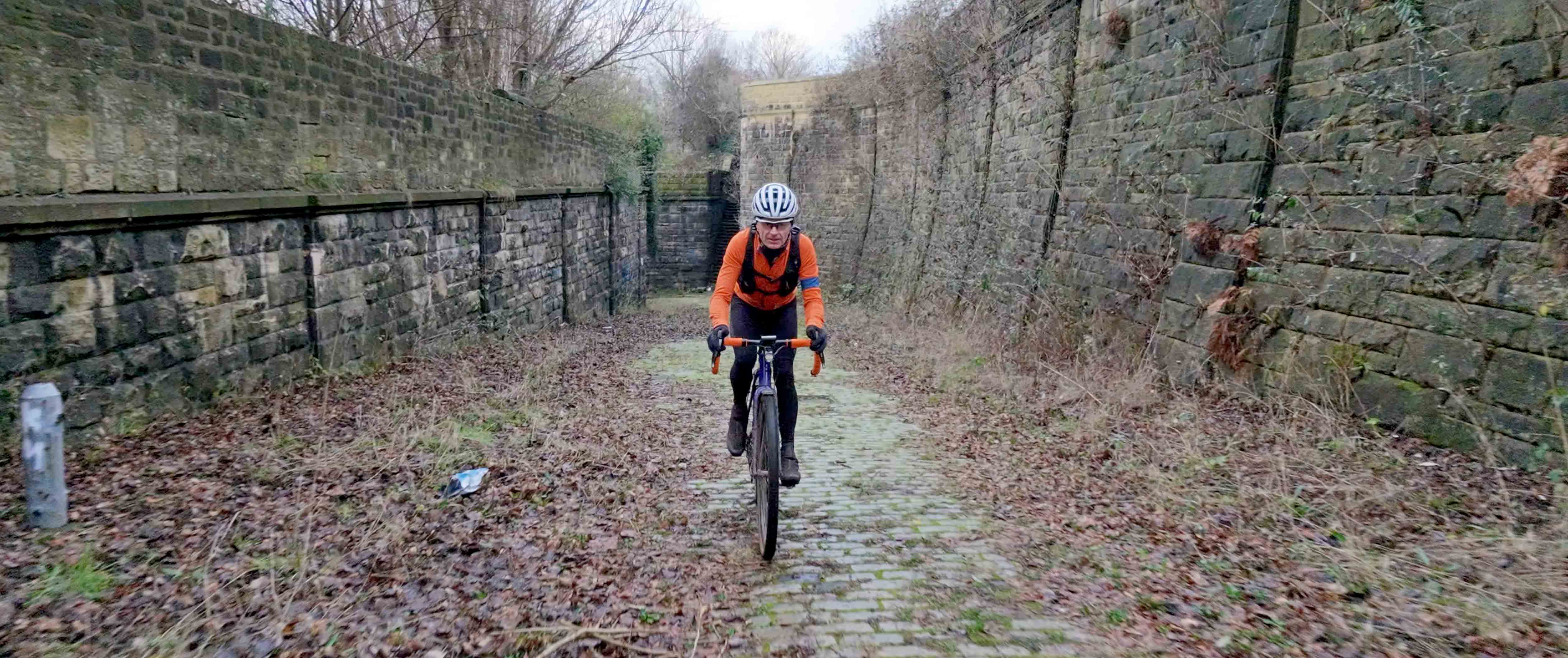
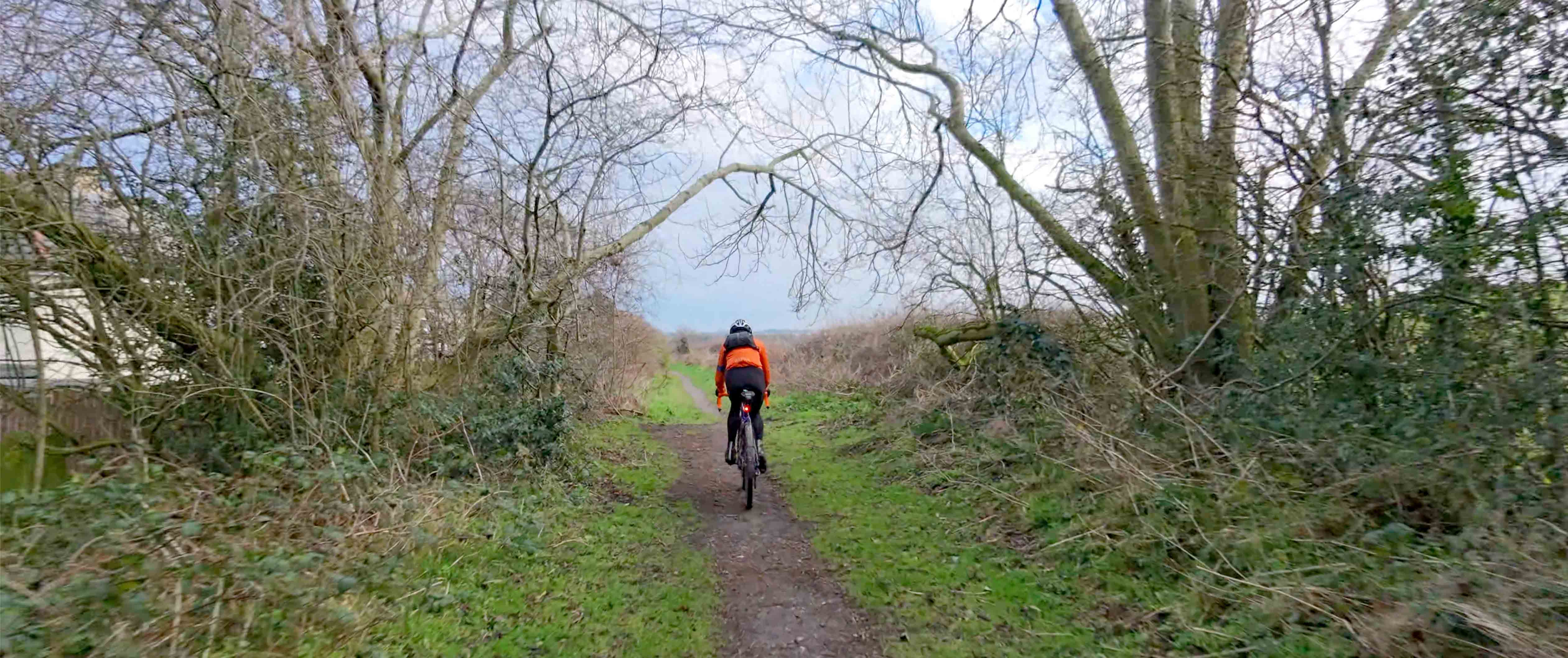
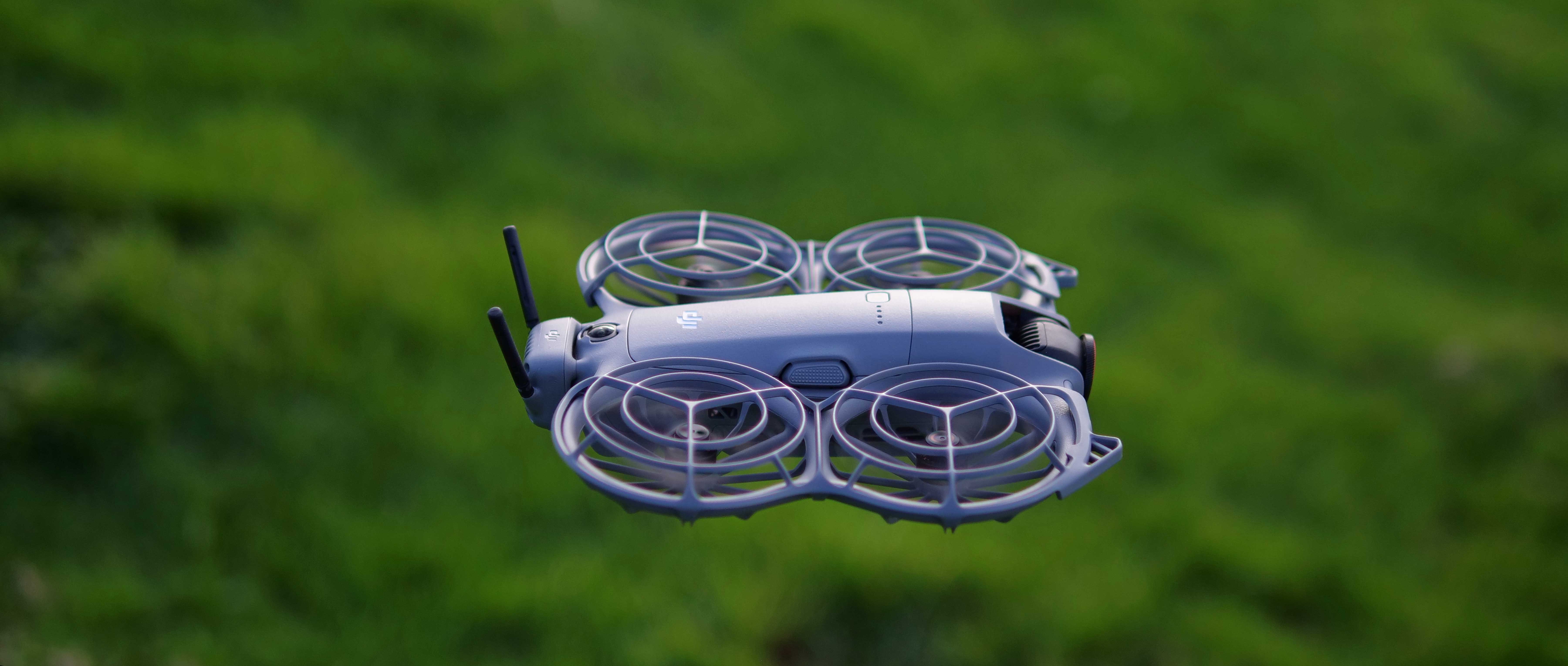
If you trust that the data from my Wahoo head unit is accurate, in the image above I was riding up this 7% gradient cobbled climb at 17 kph and was pushing around 400 watts through my pedals. So what, you might well say? Well, if you could view this same image from above, you would see that a short distance in front of me is 150g of mind-bendingly tiny aerial filming technology. This miracle of science and engineering is flying backwards, avoiding obstacles, keeping me perfectly in focus, constantly adjusting the exposure and judging precisely how fast I’m climbing so that it can maintain a steady gap between me and it. The DJI Neo2 weighs roughly the same as a large bag of crisps, is 147 x 171 x 41 mm in size and costs just over £200. How is this possible?
Back in 2017 I successfully passed a two hour practical flight exam which then meant I could legally fly a drone weighing up to 7kg as a commercial drone pilot. Since then I’ve owned a multitude of different drones (or Unmanned Aerial Vehicles, UAVs, as they’re properly known), weighing between 900g and 3.5kg and have logged more than 100 hours of commercial flying time. All of these drones had one thing in common – they relied almost entirely on the pilot to control them and to obtain appropriate video and still images. The more recent ones had an element of automation built-in, but the majority of the time I was manually controlling the drone to get the shots that I needed. Each year I had to renew my permission to fly commercially (which was quite complicated and ever-more expensive), I had to obtain expensive commercial insurance cover and I was restricted to where I could fly.
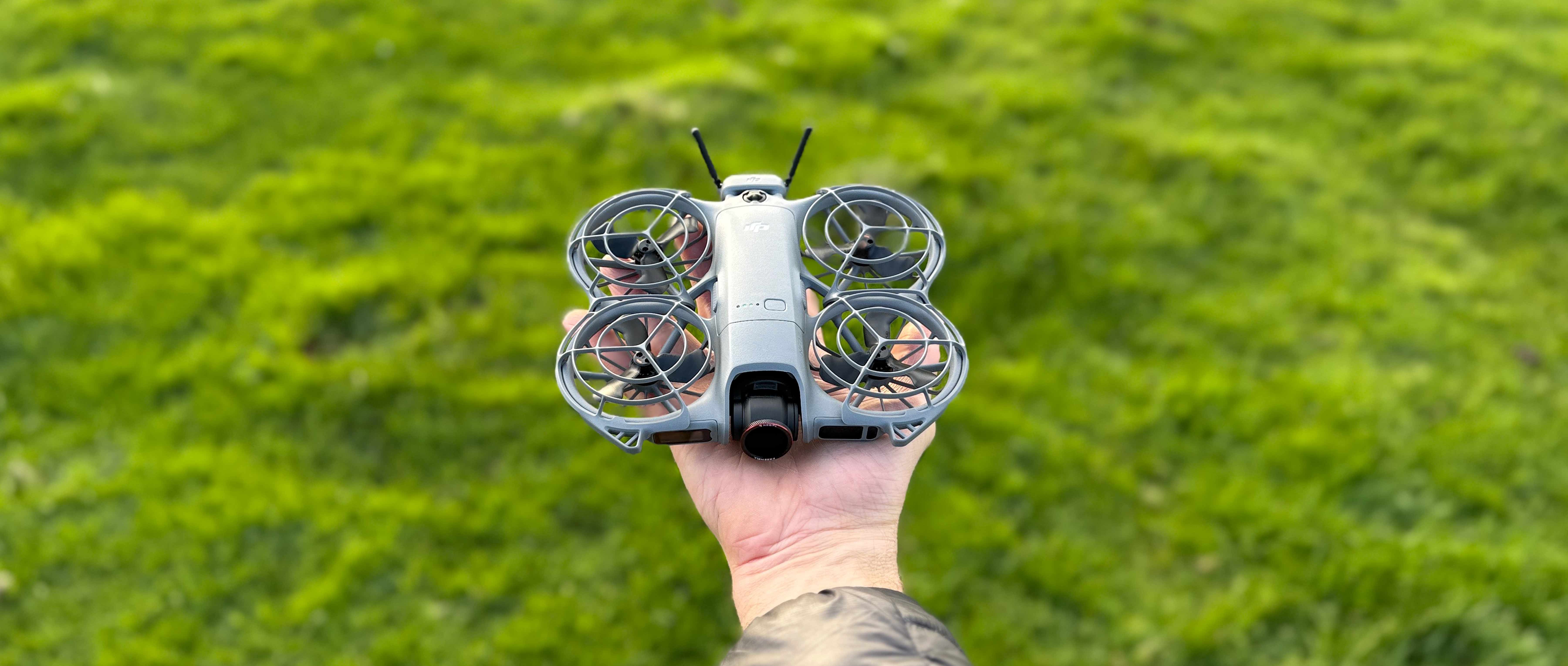
Skip forward to the present day and the arrival of DJI’s Neo2. In the palm of my hand I can now hold a drone which is designed to essentially get rid of the biggest risk with flying – the pilot. This tiny scrap of high-tech plastic will replicate (or better) the majority of the video and still images that I used to shoot manually, but it’s a 10th of the price of my biggest drone, is significantly quieter, you don't need a commercial drone pilot's licence to fly one*, it can be flown legally in more places and allows me to get shots I could have only dreamt of previously.
* As of the start of 2026, even for drones as small as the Neo2, you do need to register with the Civil Aviation Authority and pass a short theory test. Details available here
The amount of technology that DJI have managed to shoehorn into this tiny package is mind blowing:
- Omnidirectional obstacle sensing
- Palm takeover and landing
- Gesture and voice control
- Manual control option via smartphone, remote control, motion controller or Apple watch
- Fast, smooth tracking with ActiveTrack
- Intelligent pre-programmed video shooting modes
- Easy image capture with SelfieShot
- 4K resolution landscape orientation video/2.7k portrait orientation video
- High quality stills capability
- Lightweight, portable design with full-coverage propellor guards.
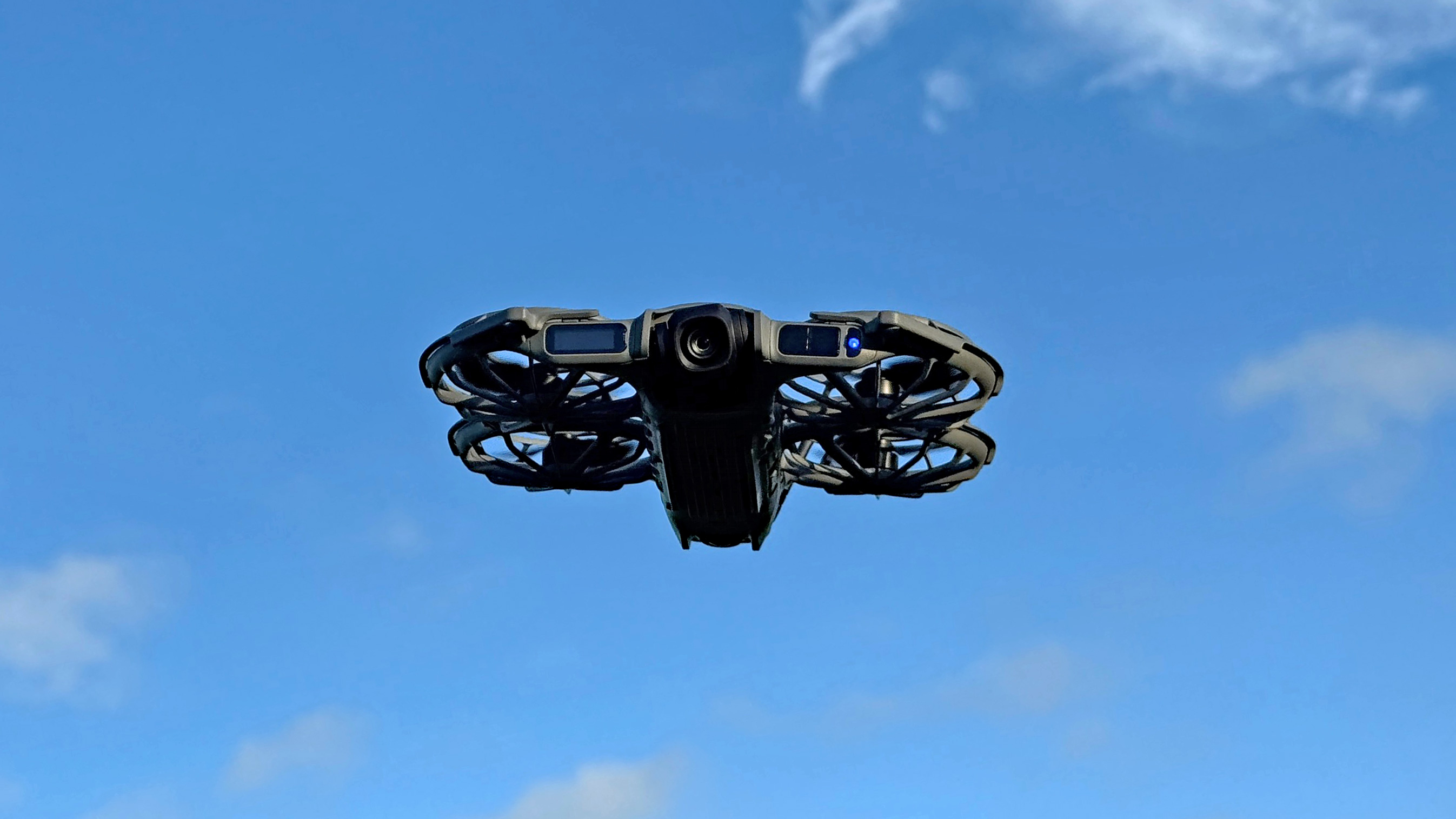
I suspect the majority of you won’t actually be all that bothered by a list of technological wizardry. What you are most likely to want to know is what is the Neo2 like to use, how simple is it to fly and what benefits does it bring a typical gravel rider or bikepacker? When the Neo2 first arrived from DJI, I initially spent a couple of hours flying it completely manually. I headed to an area of open space that I’m fortunate to have practically on my doorstep, connected the Neo2 to the remote controller and treated it like a tiny version of the drones I’ve flown for the last nine years. I practiced manual take-offs and landings, I tested all the different camera modes, I checked out the different flight speed settings and I went through the emergency procedures that have imbedded themselves into my brain. Perhaps not surprisingly, the Neo2 was brilliant to fly and behaved 99% the same as the other DJI drones that I’ve flown. The only real difference was its tiny size and low weight, which meant it was harder to visually spot/track and it was more affected by the wind than the larger/heavier drones I’d been used to.
Manual flight, however, is not the raison d’etre of the Neo2, though. DJI have gone to enormous lengths to design a drone that can be flown with no piloting skills whatsoever and which uses cutting-edge technology to allow it to capture video shots that would be almost impossible to get manually. So, after my initial test flights, I waited for a half-decent weather window, persuaded one of my riding buddies to come and join me and we headed out onto the network of local gravel riding trails to put the Neo2 through its paces.
Initially I was a little dubious of the Neo2’s tracking and obstacle avoidance capabilities, so the first couple of test flights were completed on tracks with very few trailside obstacles and plenty of clear space for the drone to move around. For the first flight, I set the Neo2 to fly in front us, so that it would be flying backwards, scanning for hazards and attempting to predict/account for our changes in speed. This is probably the hardest of all the settings for the Neo2 to cope with and the initial try didn’t go perfectly smoothly. For the subsequent two shots, I set the Neo2 to either follow behind, or to track us from the side and these were faultless. The drone tracked us perfectly, managing to negotiate the various twists and turns of our chosen trails, dealing with varying wind conditions and avoiding the small number of trailside hazards that it encountered.
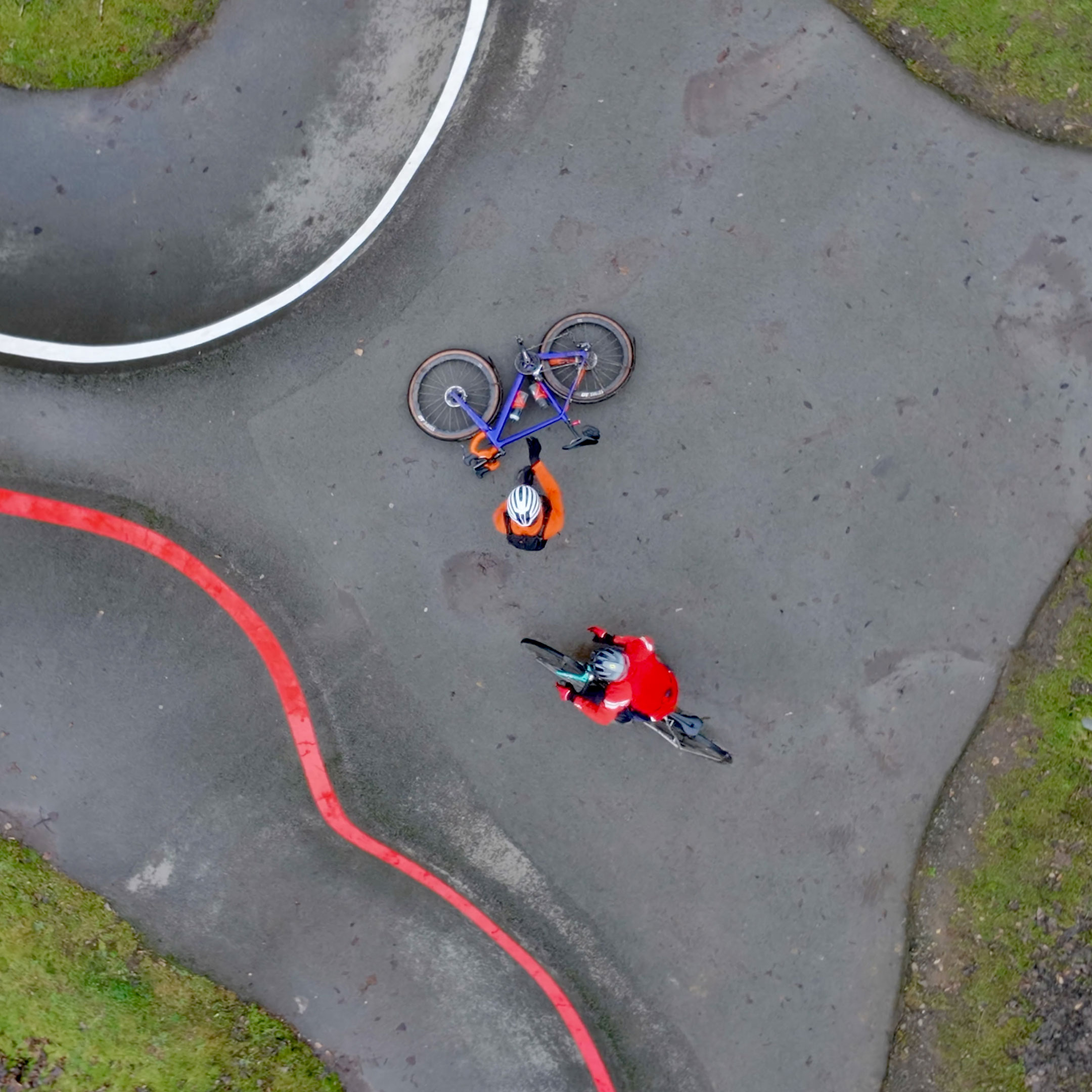
Over the next couple of hours we tested the Neo2 in a variety of different settings and flight modes – wooded trails where the Neo2 was flying in front or behind us in roughly a straight line, wooded trails which weaved between trees, fast descents (up to 30 kph), slow climbs, different light conditions, varying wind conditions and a mix of scenery (wooded, open space and our local pump track). At each location we were only flying for 2-3 minutes at a time, but the capabilities of the Neo2 became more apparent each time it took off. After each flight, we reviewed the footage on my smart phone which I had connected to the Neo2 before taking off. The quality of the video was spectacular. Despite the generally dull, grey conditions the colours popped nicely, the exposure was pretty decent and the whole image had a high-quality feel to it.
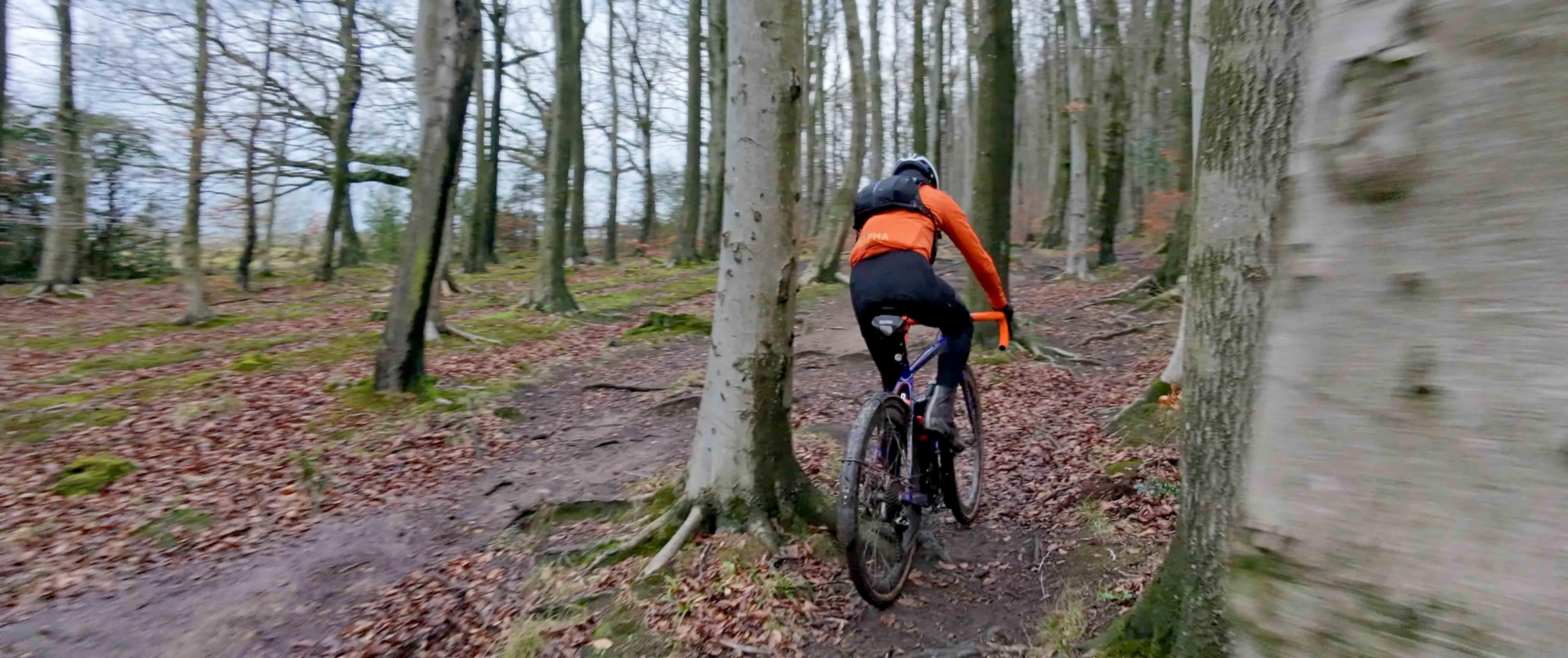
What was utterly remarkable was just how easy the Neo2 was to operate and how clever the built-in obstacle-sensing and avoidance technology was. In the old days, when I was manually flying a drone, trying to get a shot flying between tightly spaced trees would have been almost impossible. Some of the more modern First-Person-View drones can do this, but only at the hands of a skilled pilot who is wearing a set of goggles to help them maintain a better perspective. Miraculously, no matter how tree-infested my route was, the Neo2 managed to navigate its way safely around them. Sure, at times it slowed down and then changed course, but it steadfastly stuck to my wheel no matter how twisty my course was. The shot above was taken on a climb where I was going relatively slowly. Later, I rode significantly faster on a woody descent (albeit one with more widely spaced trees than this) and the drone followed perfectly even at speeds of up to 30 kph.
It would be lovely to say that the whole thing went perfectly smoothly and the Neo2 coped with every situation we threw at it, but that would be a total lie. Although the built-in obstacle sensing/avoiding technology is remarkably clever, the Neo2 doesn’t ‘see’ small diameter tree branches very well. Anything below a couple of centimetres in diameter were problematic, although it depended on the lighting conditions – in spots with good light and not too many other branches around, the Neo2 avoided smaller branches perfectly.
I pretty quickly came up with a ‘system’ to make sure each flight went as smoothly as possible:
- Remember to remove the plastic gimbal guard before switching on the drone.
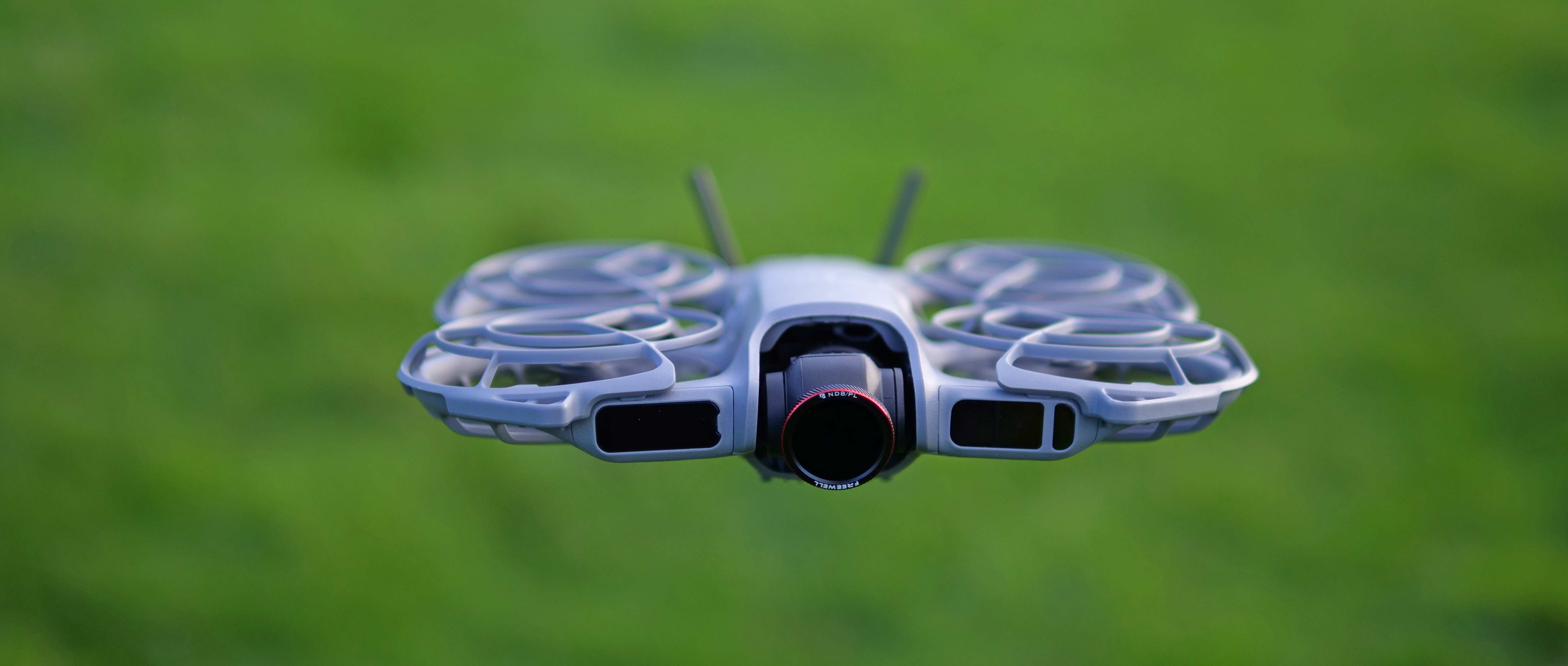
- I was using a mix of Natural Density (ND) and Ultra Violet (UV) filters on the front of the lens, which attach via a small magnetic ring. Despite the claims of the filter manufacturer, I found it safer to remove these before switching on the drone, otherwise the built-in gimbal initiation protocol didn’t work properly.
- If you are going to be getting the Neo2 to fly behind you, set it to Cycling Follow mode and adjust the distance to “far”, otherwise the rider is too big in the frame
- If you are going to be flying with Neo2 in front of you, before you launch the drone, make sure you are facing the direction you will be setting off riding and have the camera on the Neo2 facing you before it takes off. I found if I (or the Neo2) was facing a different direction before setting off, it seemed to confuse the Neo2’s sense of direction and it tried to fly beside us, rather than in front.
- If you’re riding with gloves on, the built-in “land on your hand” technology didn’t work reliably. As soon as I removed my glove and showed my upturned palm to the Neo2, it returned to me and landed like a well-trained Border Collie dog coming to heel.
The Neo2 was absolutely remarkable and considering the (relatively) low cost and the diminutive size, its capability and the quality of the output are incredible. There are, however, a few additional functions that (in my view) would turn it from outstanding, to mind-blowing:
- At the minute, if you film in 4K resolution (the highest quality level available), the frame rate options are 30/50/60 frames per second. In a perfect world, DJI would add in a 4k 24 fps mode too, to give the video a truly cinematic feel to it.
- It’s only possible to shoot video (not still images) when using any of the autonomous/follow-me modes. All of the stills that I’ve used in this article are ‘frame grabs’ taken from the video. In an ideal world, you would be given the option to shoot stills (even if it was only a small number of frames per second) as the quality of the images would always be better than a frame grab.
- The actual battery life is closer to 10-12 minutes than DJI's claimed 18 minutes. Not the end of the world, but worth factoring in to make sure you have enough batteries.
- Finally, it’s not possible to use the follow-me mode and have the camera pointing directly downwards. For the footage shot at the pump track, it would have been fantastic to be able to film a ‘top-down’ view while tracking the riders.
My only other comment was the noise. Although DJI don’t release official figures for the Neo2, there are test videos available on YouTube which show the Neo2 produces approximately 74 dBA of sound. The noise isn’t unpleasant, but the distinctive ‘drone’ of the Neo2 is slightly distracting and would be quickly spotted by any other trail users. It’s good practice not to fly when there are non-involved people around you, but this is normally from a safety perspective, rather than a noise one. Negatively impacting on someone else’s enjoyment of the area you’re in is worth avoiding, so think carefully about where, when and how you’re using the Neo2.
Those are very minor, nitpicking points and for many people will not be important. Considering the low price-point, the ease of use and the quality of the output, the DJI Neo2 is a gravel-rider’s dream accessory (assuming you’re interested in capturing some of your two-wheeled adventures anyway). By adding a Neo2 to your filming kit, you will open up a vast array of other perspectives and angles. It might take a little practice to get 100% perfect shots, but the Neo2 does the majority of the heavy-lifting for you.
There are some bigger-picture/moral questions to consider about what the gravel riding world would be like if everyone had a Neo2 following them around (not to mention the even bigger picture question about whether we need to document all of our rides in such detail?) If you are selective about where and when you use it, the Neo2 offers a perspective that would have needed a Hollywood film crew (and budget) to achieve only a matter of a few years ago.
If this has piqued your interest and you would like to see an in-depth tech review of the Neo2’s functionality from the perspective of a cyclist, I can highly recommend this one by DC Rainmaker.
The DJI Neo2 starts from £209 (or equivalent local currency). You can find all the details over on the DJI website.