A few years ago, it seemed impossible to browse a cycling website or scroll through social media without encountering story after story about Iceland. With its otherworldly landscapes, seemingly limitless gravel roads and relatively easy access from Europe, the island quickly became the destination of choice for bikepackers and gravel racers in search of adventure. While Iceland may have slipped slightly from the cycling spotlight in recent years, the sense of adventure certainly hasn’t gone anywhere. Towards the end of summer, lifelong friends Mark Livesey and Graham Markham set off on a bikepacking adventure across the island. Mark has since shared this beautifully illustrated account of their journey.
Only some people are cut out for this
I first met Graham many years ago while serving in the British Army. It must have been fairly impactful for me as I can remember the exact time, conversation and location when we first met. I’d just been posted into a new unit as the regiment’s Army Physical Training Instructor. One of my team said, “I’ll introduce you to Captain Graham Markham; you’ll like him,” he said. His prediction was spot on, but then everyone likes Graham. He became one of my most trusted and loyal friends and was my best man at my wedding. We have had some adventures together over the years, but I am not sure I would have believed you if you had told me that 25 years after that first meeting, Graham and I would set out to bikepack unsupported across Iceland.
These past few years, we have had an annual bikepacking pilgrimage, usually with a few other ex-military friends. We have so far stayed in Spain for these incredible trips and there is still so much to explore there. But with Graham now 66 years old, he wants to have some more extreme travel adventures while he still can. We’d looked at Romania and the Atlas Mountains as possible locations, but a few searches later I discovered there was something called the Iceland Divide. It immediately caught my full attention.
But it’s cold?
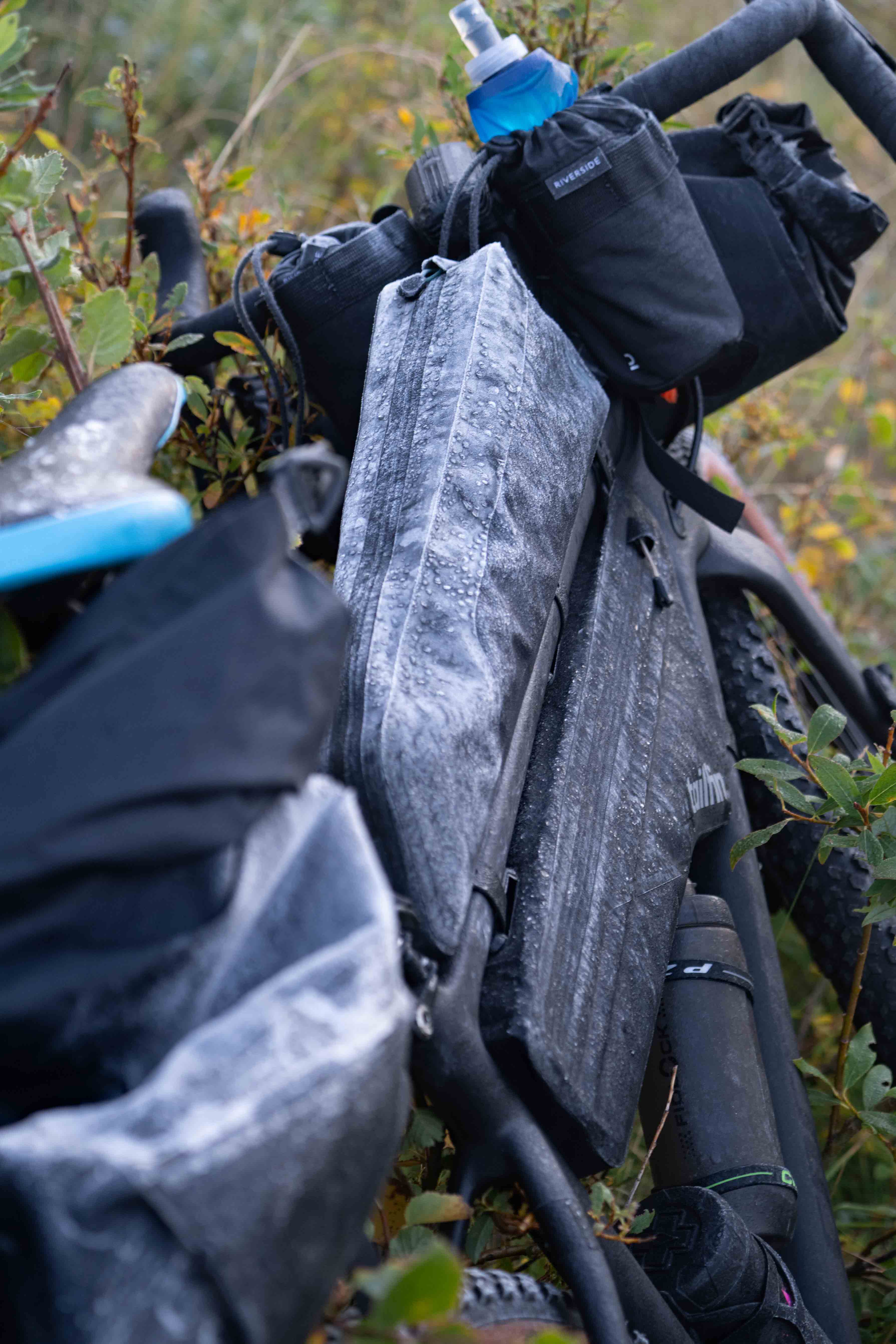
We wanted a challenge, not just in the type of riding, but in the style of being truly self-supported for days in much more challenging conditions. Graham and I have lost count of how many times we’ve been out on long military exercises in difficult weather conditions. We had friends ask, ‘Haven’t you had enough of being cold and wet?’ But I suppose that’s part of the challenge. Of course, being cold and wet isn’t a pleasant experience, but the challenge is to be prepared and organised enough that you never get to that point. We were actually strangely looking forward to being tested in Iceland’s unpredictable environment.
The dates that we could make work meant we were headed there at the end of August. Despite being the end of summer, the weather can still be severe. This meant we needed to research, prepare and try to get the right kit. I bought a new tent for the severe winds, a better sleeping system for the cold nights and more reliable cooking equipment. In the end, our bikes and kit (with food) weighed around 40kg to 45kg fully loaded. As this was our first experience riding with this kind of load it was a trial and error process working out how share the weight over the frame in a way that didn’t hinder riding. I lost count of how many times we moved kit around, altered systems, and couldn’t find what we needed in the first couple of days.
Travel
Getting to Iceland from Europe is not too difficult; many airlines have flights to Reykjavik. We flew from the UK, arriving the day before we planned to take the short internal flight to Akureyri, our start point at the north of the island. I would recommend doing this for a number of reasons. There is a bit of logistics to sort out before your big trip and we solved that like this:
- We caught a small local bus from the main airport to the Reykjavik campsite. It takes boxes, so you can pop your bike, still boxed up, on it and it is an easy journey to the campsite.
- The campsite in Reykjavik is the perfect place to stage your journey from. You can build your bike there, check all your kit, stay in your tent for a night and if anything is problematic, you are near a big town where you can find most things.
- The campsite also allowed us to leave our bike boxes there while we did our expedition – saving a lot of faffing.
- The campsite itself is a hub of people walking and cycling the Iceland Divide and a good place to meet other travellers and share stories.
- It is only a 5km ride from there to the small internal airport where you will catch your flight to the north of the island. For this 40 min internal flight, they allow you to fly with a fully built bike. We just removed a few of the bigger bags and they literally just popped a tag around the handlebars.
As many of you will know, Iceland is an incredibly expensive country, so Graham and I had travelled out with most of the food needed for the trip, including all our dried goods. I would highly recommend doing this as buying things in the supermarkets of Iceland is not a cheap option. As an example, after the ride we spent a couple of days in Reykjavik and buying just two coffees and a small snack each was upwards of £40.
The Route
There is a classic and well publicised North to South Iceland Divide route which starts at Akureyri and finishes at Vík and originally that was what we planned to do. But as our plans firmed up we decided we wanted to ride back to Reykjavik (to the campsite) as part of our journey, so we plotted a route that headed southwest towards the end. Depending on the route you choose, the distance and elevation vary, but generally you’re looking at around 400 to 500km, with 4,000m to 5,000m of elevation. I would really recommend being flexible with the route. Don’t fall into the trap of thinking, ‘This is the route we planned, so we must stick to it.’ We changed our route at least four to five times, taking advice from rangers and locals about possible hazards ahead, specifically river crossings. This won’t undermine your adventure; on the contrary, it adds to the unknown outcomes and keeps you focused.
We had given ourselves plenty of time, with an extra few days to allow for any storms that might come through and prevent us from riding, and for strong headwinds if these materialised. The gravel conditions are far from perfect too. It’s rough, gnarly, corrugated, with long sections of sand. This is important for appreciating the time it takes and how you plan each day.
We didn’t want to be too ambitious with this ride. We didn’t want to be chasing the kilometres every day and be left totally exhausted and not having the time to really appreciate the surroundings. So we looked at an average of around 70km per day. This may not sound like a lot, but with heavy bikes in tough gravel with potentially strong winds, we felt like it was plenty to give us room for manoeuvre.
Underway
While I was learning to be a canoe instructor in the military, I had learnt the technique of the ‘short stop camp’. This is what the early European pioneers did in North America before setting out into the unknown for weeks on end, exploring down a river. With a short camp just an hour or so away from home, they could have a practice night’s camp and if anything had been forgotten or didn’t work they could easily send someone back. On our first day, Graham and I did the same. The flight had landed in the afternoon, so we set off late from Akureyri, riding just 15km out of town to set up a wild camp.
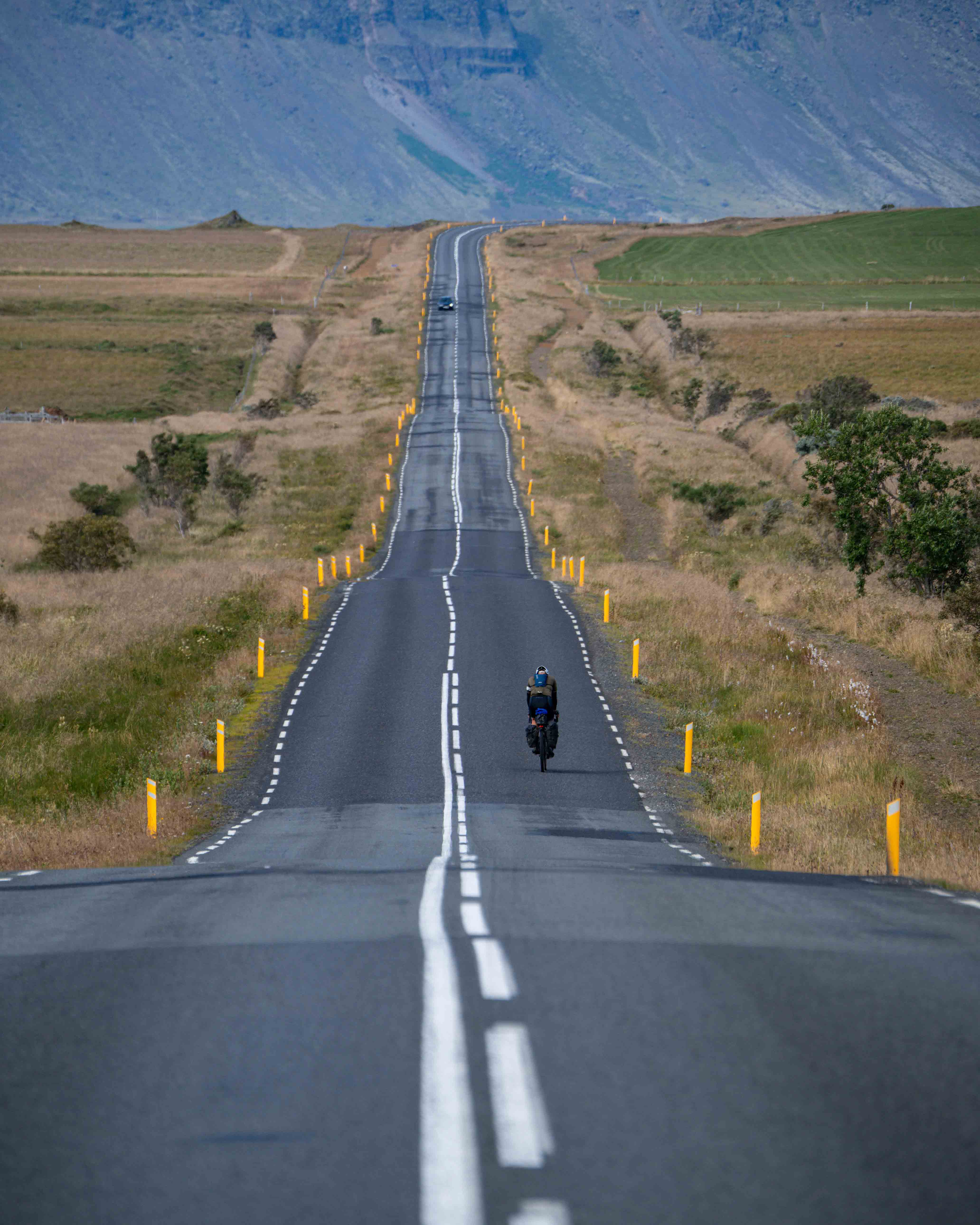
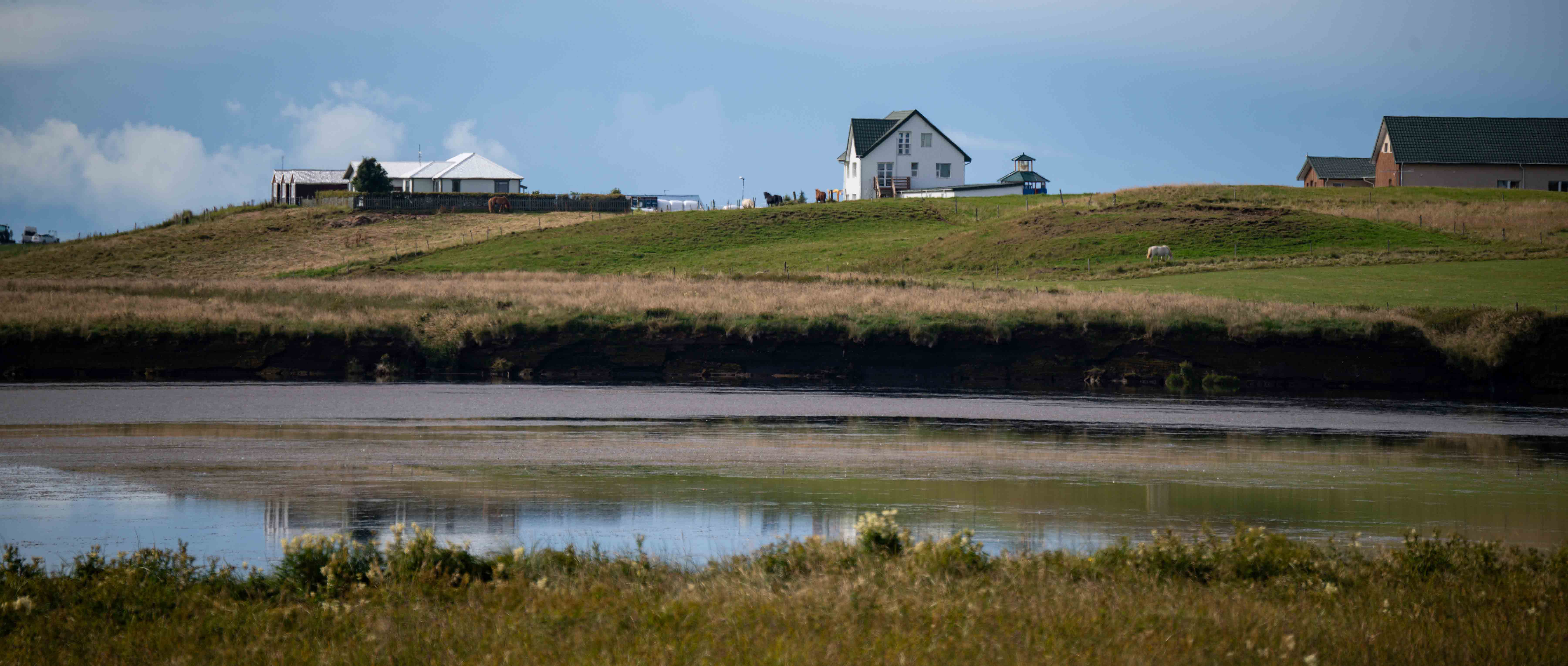
The next morning the weather was on our side, clear blue skies, with a gentle tailwind to push us up the valley to start the 800m climb. For the first 40km, you’re lulled into a false sense of security. You’re riding on tarmac with farmhouses dotted around and only the occasional vehicle driving past you. The early part of the route was almost like riding through the Scottish Highlands, with green rolling hills, hardy sheep and small tributaries leading into the river we were following. At 40km, we stopped to rest and to dry our tents out after a heavy frost the night before. This is a tip I’d strongly suggest if you plan to do this kind of adventure. For the days going forward, Graham and I would set off early and schedule our daily tent-drying stop with breakfast and coffee while the sun was up and warm enough to dry them.
The wilderness
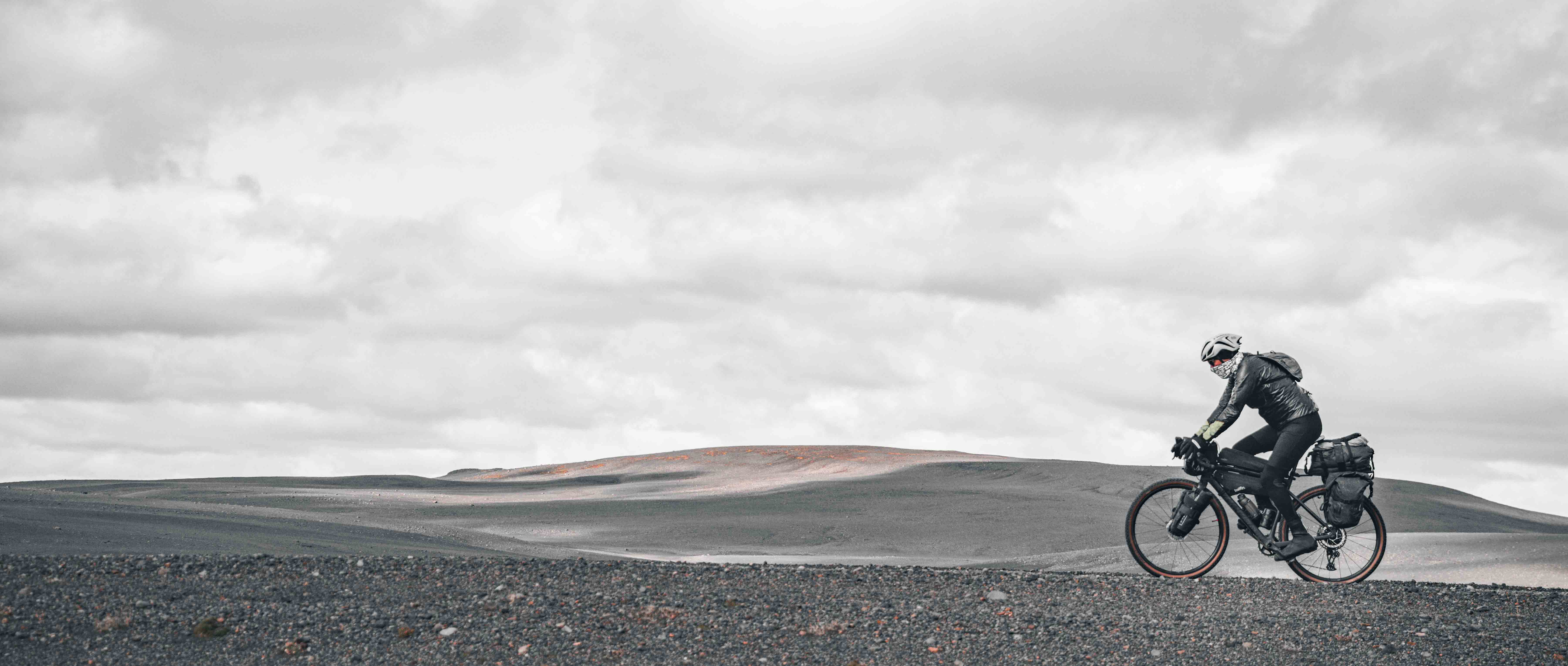
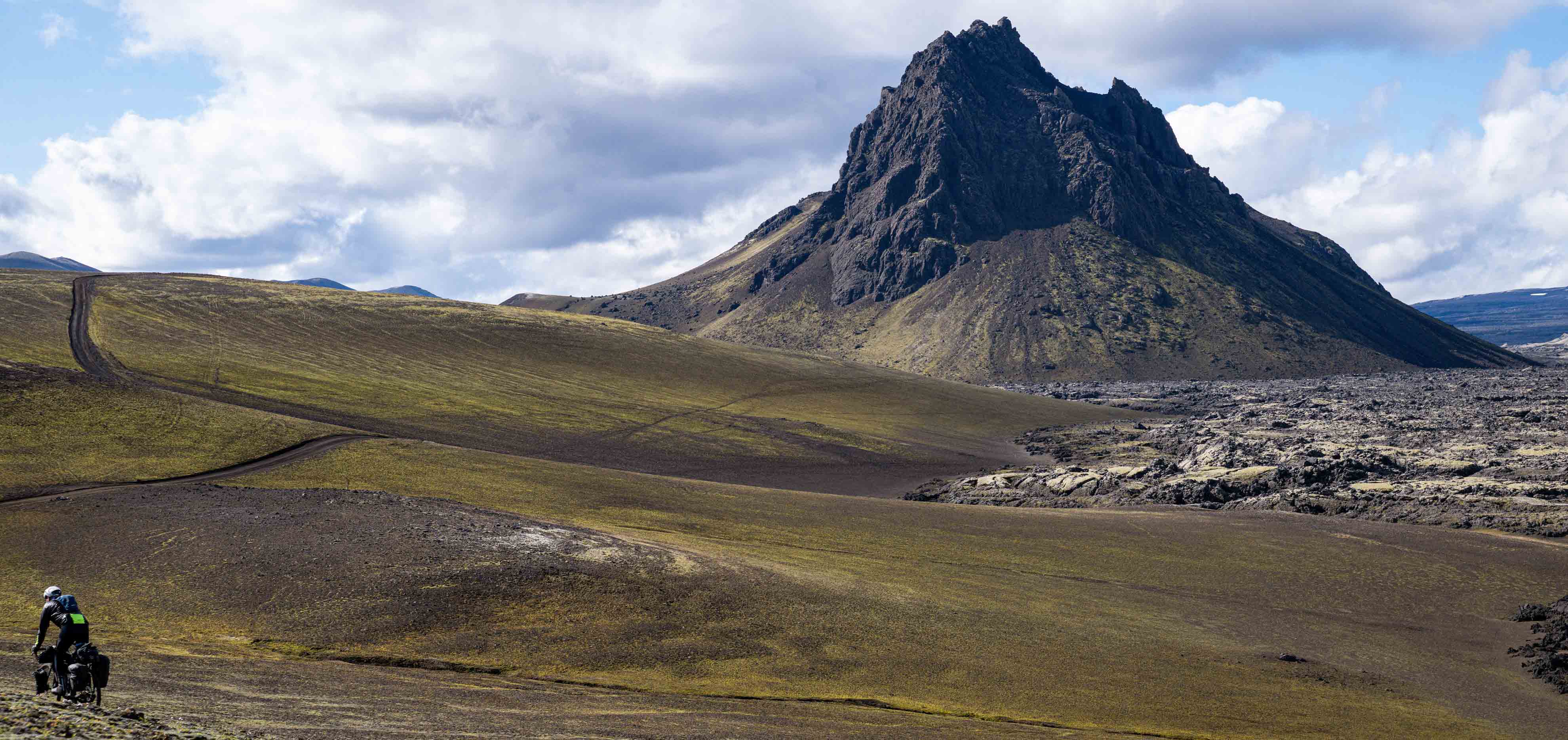
Shortly after this, the main climb got steep, far too steep for us to ride the last section. So, like any good bike packing adventure, there was a little hike-a-bike, at least for us. And as with all big mountains, this one didn’t disappoint, delivering at least three false summits. What struck me immediately when we reached the top was how the scenery changed. Looking ahead, there were no more green, lush hills and rivers. We faced a landscape of grey, bleak, endless wilderness as far as the eye could see and zero evidence of humans. It was at this point I had a slight sense of foreboding and excitement in the same measure. Looking out at the vast gravel road ahead was intimidating, but at the same time I felt exhilarated that we’d be heading out into the interior of the island with just what we were carrying.
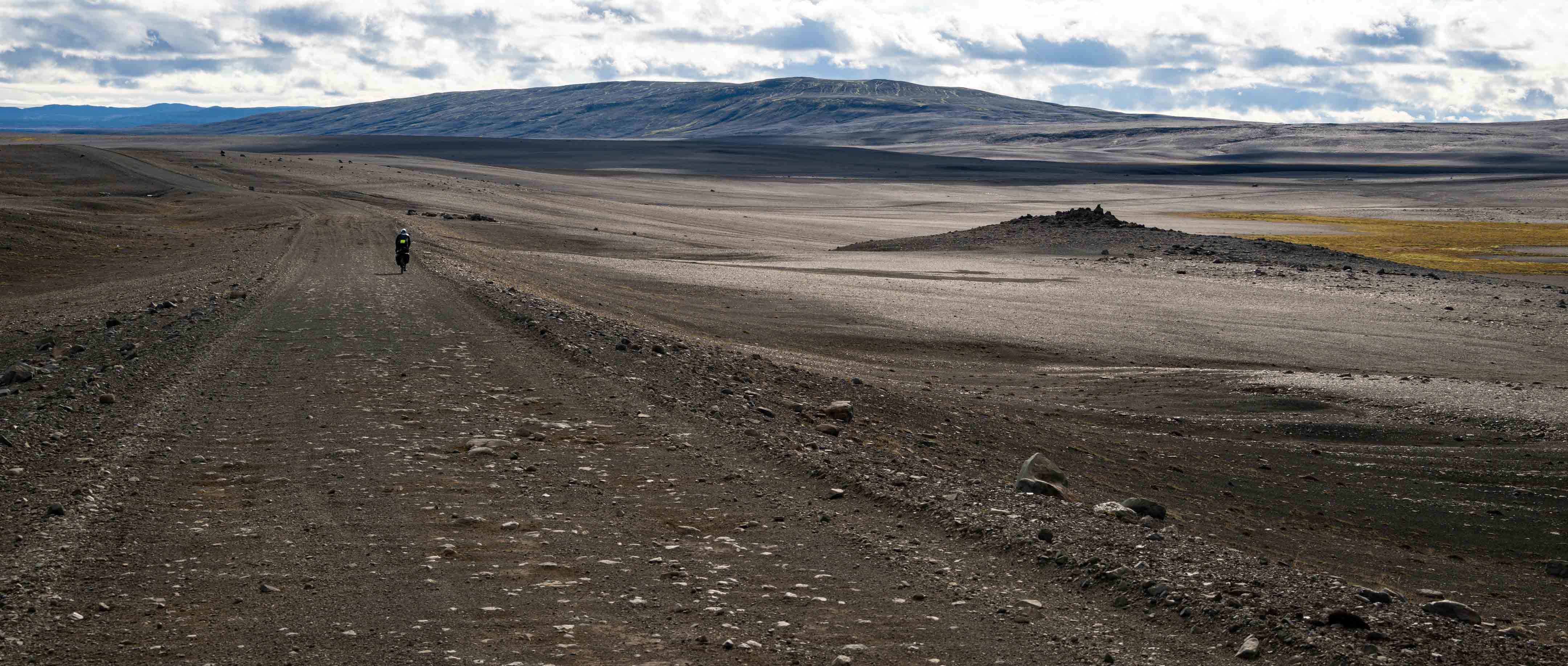
From a distance, the road looked like champagne gravel; however, I’d describe it more like home-brew gravel. The roads are not maintained well and are constantly battered by extreme weather conditions, off-road vehicles, wind and ice. The surface is far from smooth. In fact, I’d describe it like trying to ride over hundreds of golf-ball-sized rocks, with the odd cricket-ball-sized rock thrown in for good measure. It is certainly worthwhile riding the widest tyres you can and setting them up tubeless so that you can run them with low pressure.
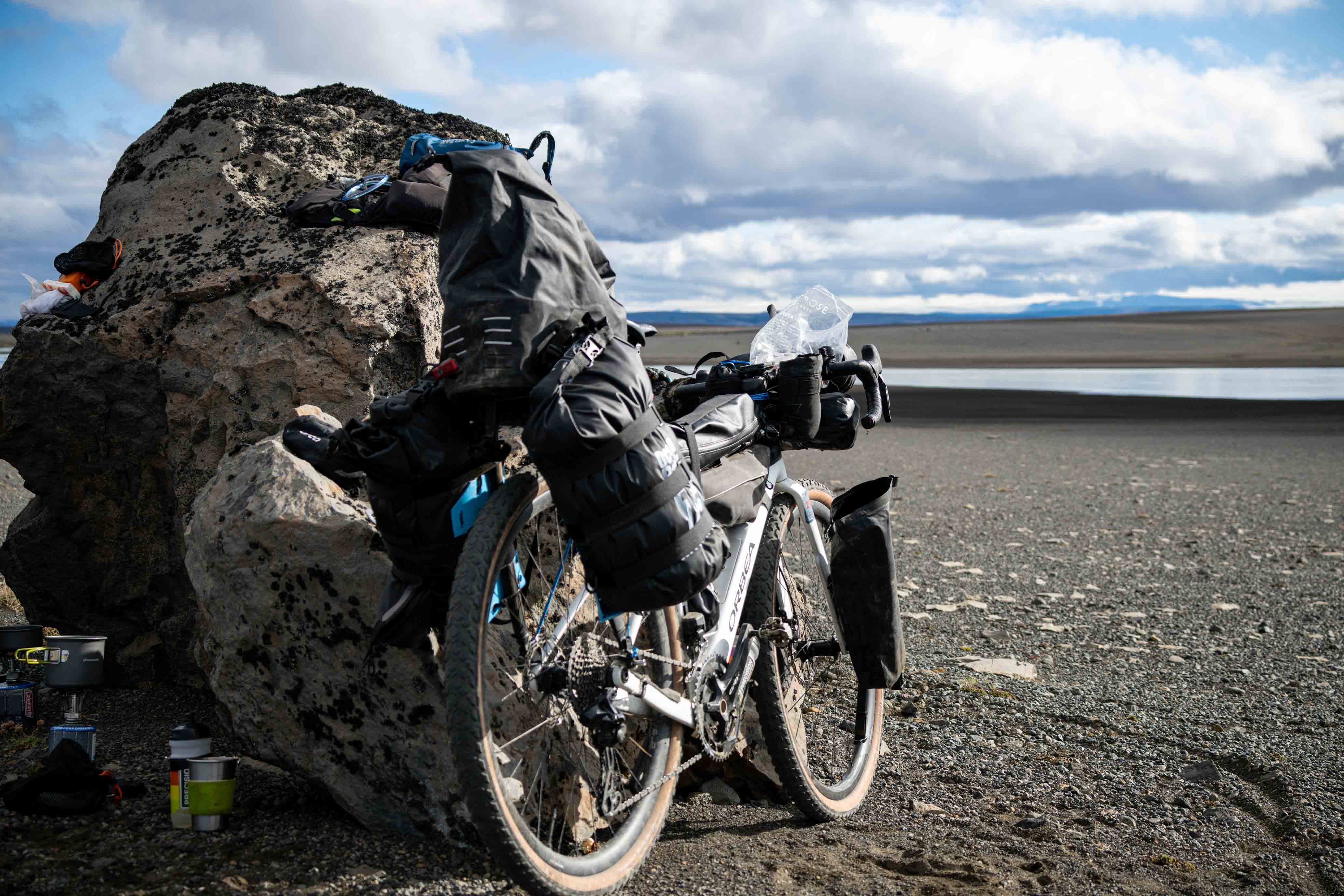
With a heavily loaded bike, riding this type of ground takes constant concentration. I found my bike suddenly had the reaction time of a sloth and a turning circle of a P&O ferry. It was slow going, but it was our first day and we thought the roads would surely improve.
Weathering the storm
Our first campsite was quickly located and set up behind a low ridge that offered a little protection from the wind. On that vast open landscape there was no real cover, but we were close to a small river for fetching water for cooking at least. That night we were working against the clock to set up, eat and wash before the weather turned nasty. This was now going to be the real test of our equipment; would our tents protect us, keep us warm and dry during the heavy rain and wind that was forecast in just a few hours?
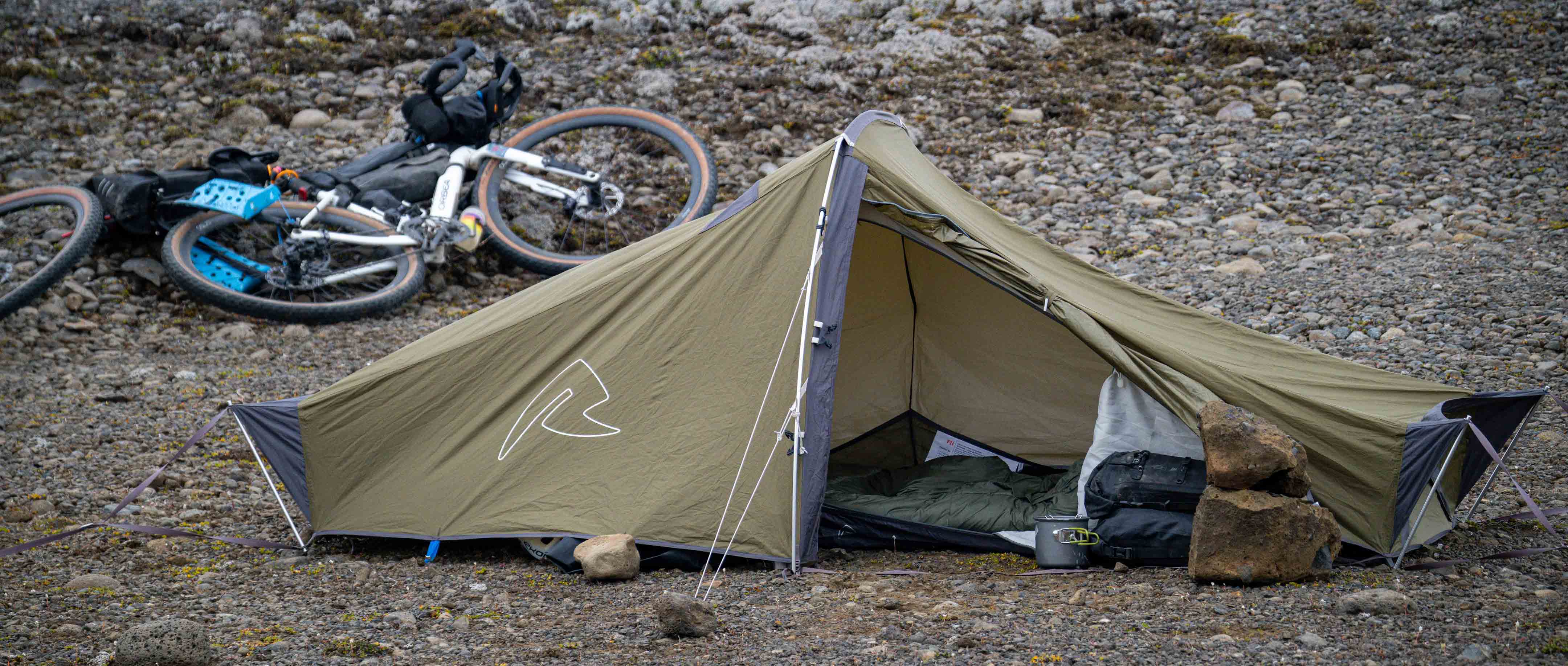
During my Army days, I would always feel a sense of satisfaction sheltering under a poncho and hearing the rain. That night in Iceland took me back 30 years, lying in my tent, hearing the raging storm, feeling warm, dry and fairly confident that my kit would do its job well. I’d chosen a single-man tunnel tent, which was lightweight, but came with a downside. There was very little space to do ‘admin’ - once you were in, you were in. So although the tent kept me dry and warm, I did have to be alert not to touch the inner layer, which would then drip condensation. I was really fearful of getting my sleeping bag wet; the nights were below freezing a lot of the time and you really needed a warm and dry place to sleep. One tip I would offer is the “wet and dry drill”. This was a practice that was stamped into me during my Commando course many years ago and is all about keeping your sleeping clothes dry and clean. The idea is to never cross-contaminate your kit, for example, climbing into your dry sleeping bag with wet or dirty bike shorts on. Keep the two separate, making sure you always have access to your clean and dry sleeping clothes for the night times.
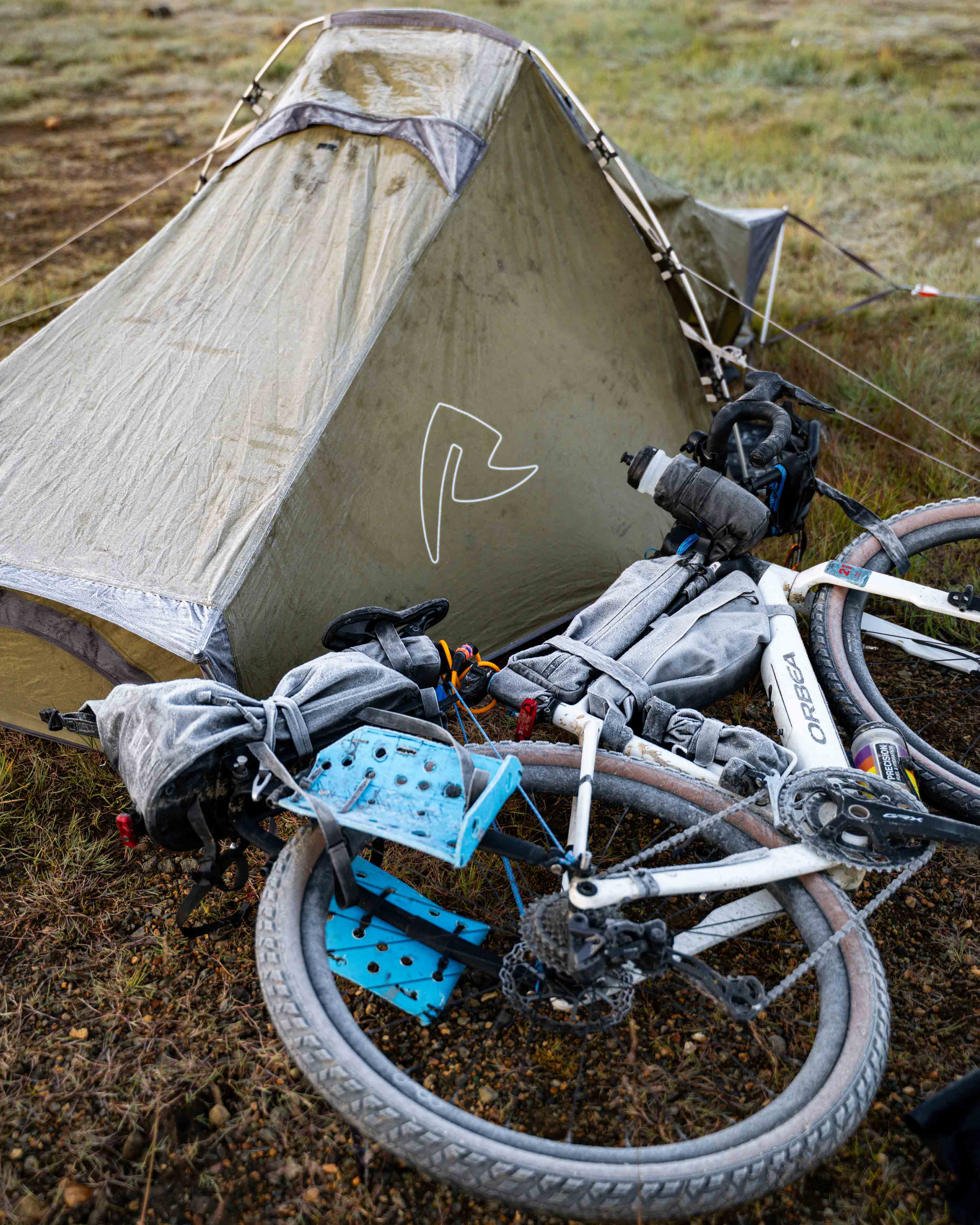
We were lucky - the storm came through overnight and cleared before we started riding the next day. I think it galvanised our confidence to have survived our first real wild camp in tough conditions. We quickly fell back into a disciplined and organised routine. It was also the point where we had sort of passed the point of no return. We were now fully committed, no turning back.
The next few days crossing the flatter, higher altitude section went well. We had the Nordic gods’ favour with a gentle tailwind each day and fairly sunny weather. The only real struggle was the gravel, which never really allowed you to look up and relax. We took short breaks to look around and enjoy where we were.
Gravel moonscape
This part of the journey wasn’t spectacularly beautiful, more surreal. It was like riding on the surface of the moon. One particularly impressive thing, however, was the Langjökull glacier, which was absolutely huge. I thought it was the sky at first, with its colours blending into the sky above. What I did notice was the lack of colour, just a grey expanse of gravel slopes all around.
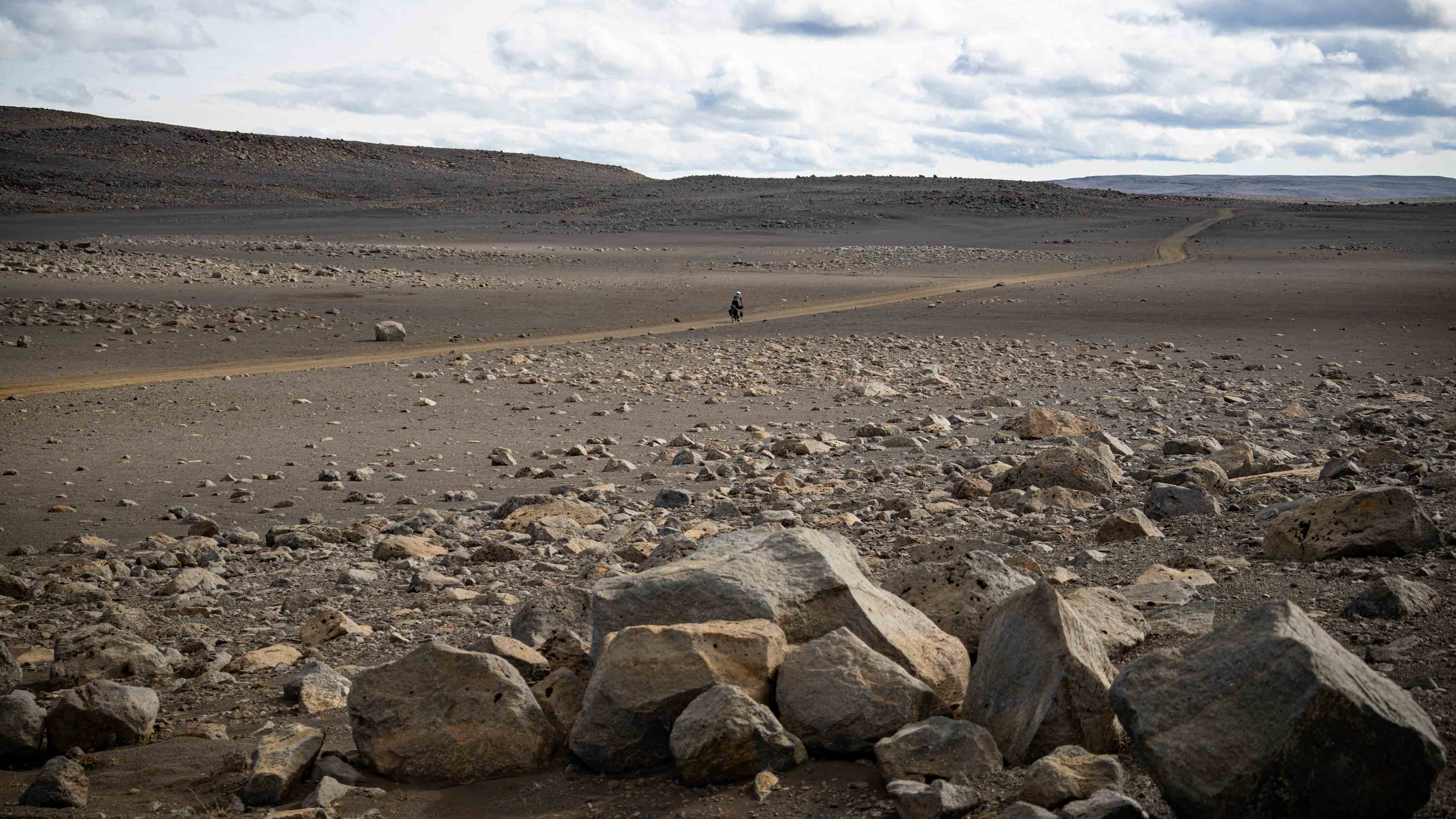
After three days of riding, we were pretty much in the centre of the island. This was the most vulnerable and exposed I felt for the whole journey. So when a white 4x4 vehicle appeared on the horizon driving towards us, it was kind of peculiar, even more so when the driver stopped and asked us if we needed anything. Craving real coffee, I asked him for a flat white, much to his astonishment. After he realised I was not serious, Noah was out of the vehicle, presenting me and Graham with a full box of cereal bars. “Take as many as you like,” was his command. So we did, four bars each; what a treat to add these to our dwindling food stores. Noah was travelling with Lindsey; they were a young couple from New York. Both thought we were crazy to be riding across Iceland. We chatted and swapped a few stories about our experiences. They were heading to a hot spring which we had passed (but not stopped at) earlier that morning. The interaction had a profound effect on me, so much so that after we’d finished our ride, I left them a voice message to thank them for their simple but very kind act of stopping to make sure we were both OK.
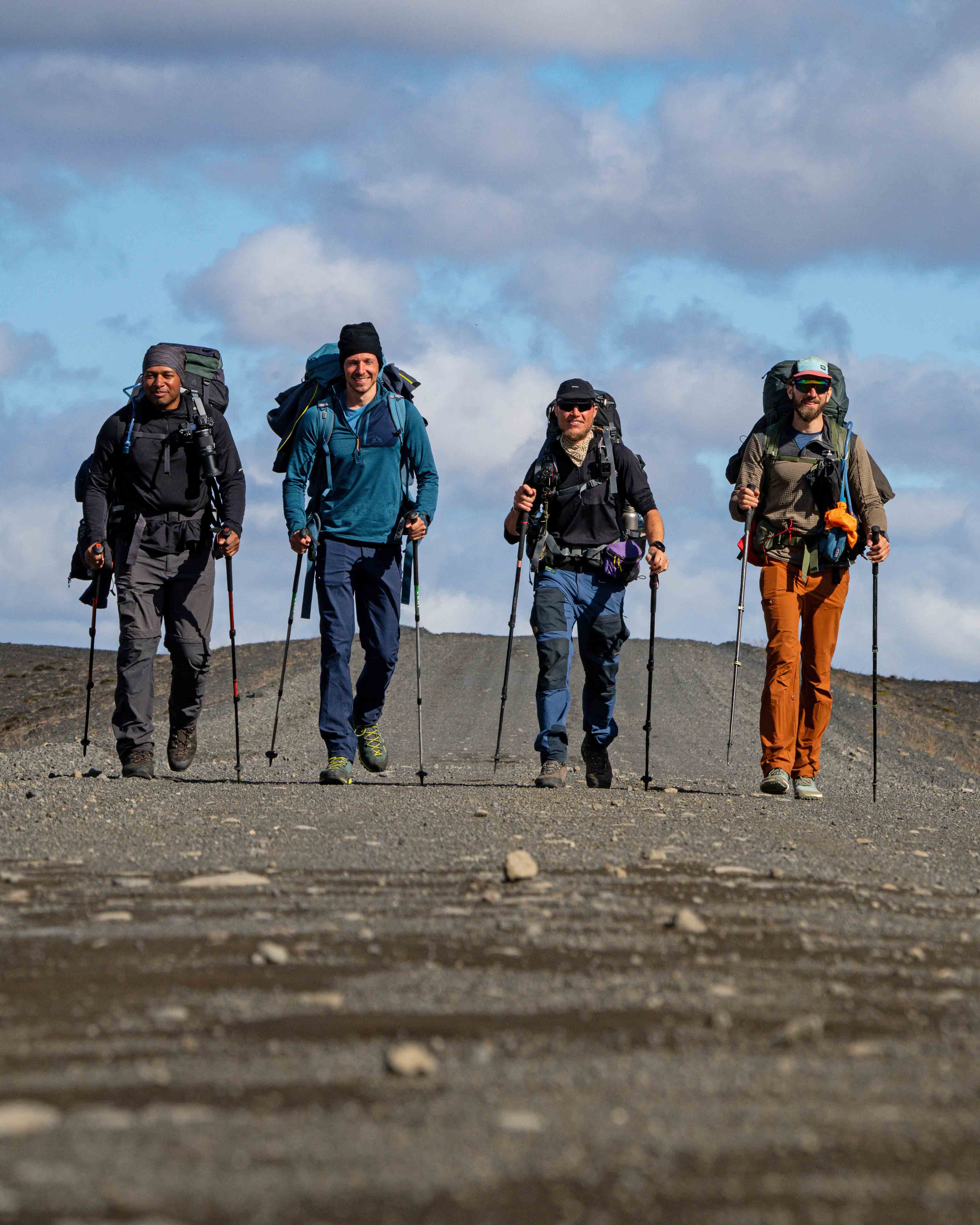
We met more people along the way, other riders coming from the south and a number of walkers who were doing the Divide on foot. We’d always stop, chat a little and often I’d take a few photos to send to them later. Meeting like-minded people from all corners of the world in that wilderness was a memorable part of the trip for me.
Hot Springs and colour
As I alluded to, earlier in our ride we had purposely taken a shorter route, which meant we had missed the opportunity to go a hot springs. So on night 3 we decided to stop at the Landmannalaugar hot springs. This meant a slight detour, but it was well worth it. The official campsite is well equipped, so we took the opportunity to supplement our food and to enjoy the hot springs. The hot springs were a unique experience and it was something we wanted to experience while in Iceland. But we both felt that after days alone in the gravel expanse, it was a bit of a shock to see so many people there with 4x4 vehicles.
The day after we left the hot springs was when the scenery started to change significantly once more. There were more mountains, lakes and vibrant colour. Instead of the gruelling vast grey expanses from the first three days, you were now excited to see what was around the next corner or hill. This area was still barren, but you could see life starting to establish in the extreme environment. The volcanic rock is dark black, so you can see where the hot lava flows had halted and a blanket of soft green moss and small flowers taking hold. I now understand why Ridley Scott filmed Prometheus here, it was surreal to ride through this prehistoric environment.
Mechanicals
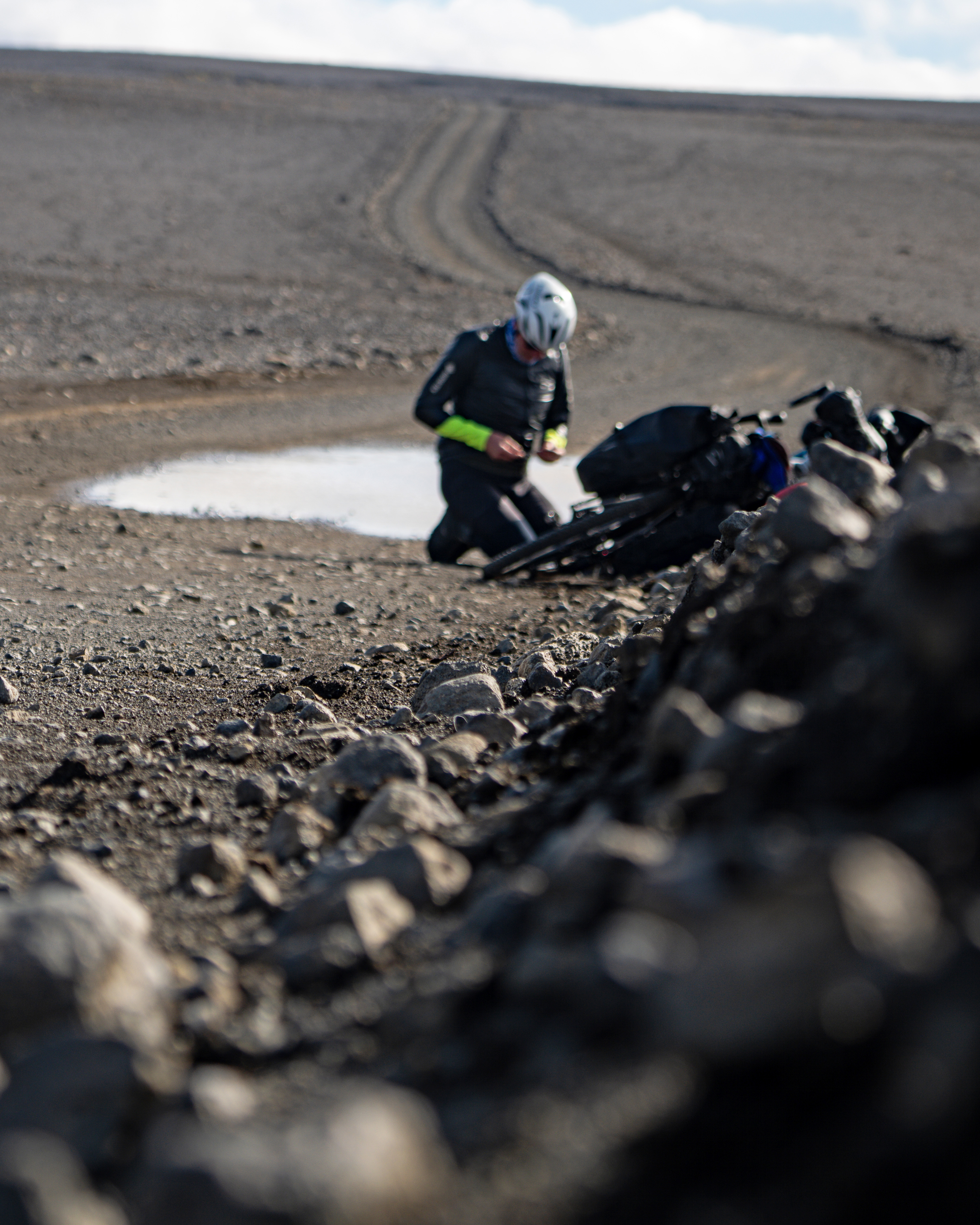
On the whole, we had very few mechanical problems or issues with our equipment. But in the final days, I did have a few Di2 failures. On the final day, having exhausted all the options, I had to ride 60km with just two gears. Far from ideal, but luckily manageable for that section. While the situation wasn’t catastrophic, it did bring home that being so far away from any help means you can quickly get into trouble. It is paramount to be self-sufficient, having tools and spares at your disposal for most eventualities and knowing your way around your bike. Graham and I also had a tool and kit merger before we headed out. It didn’t make sense for each of us to carry the same tools and spares.
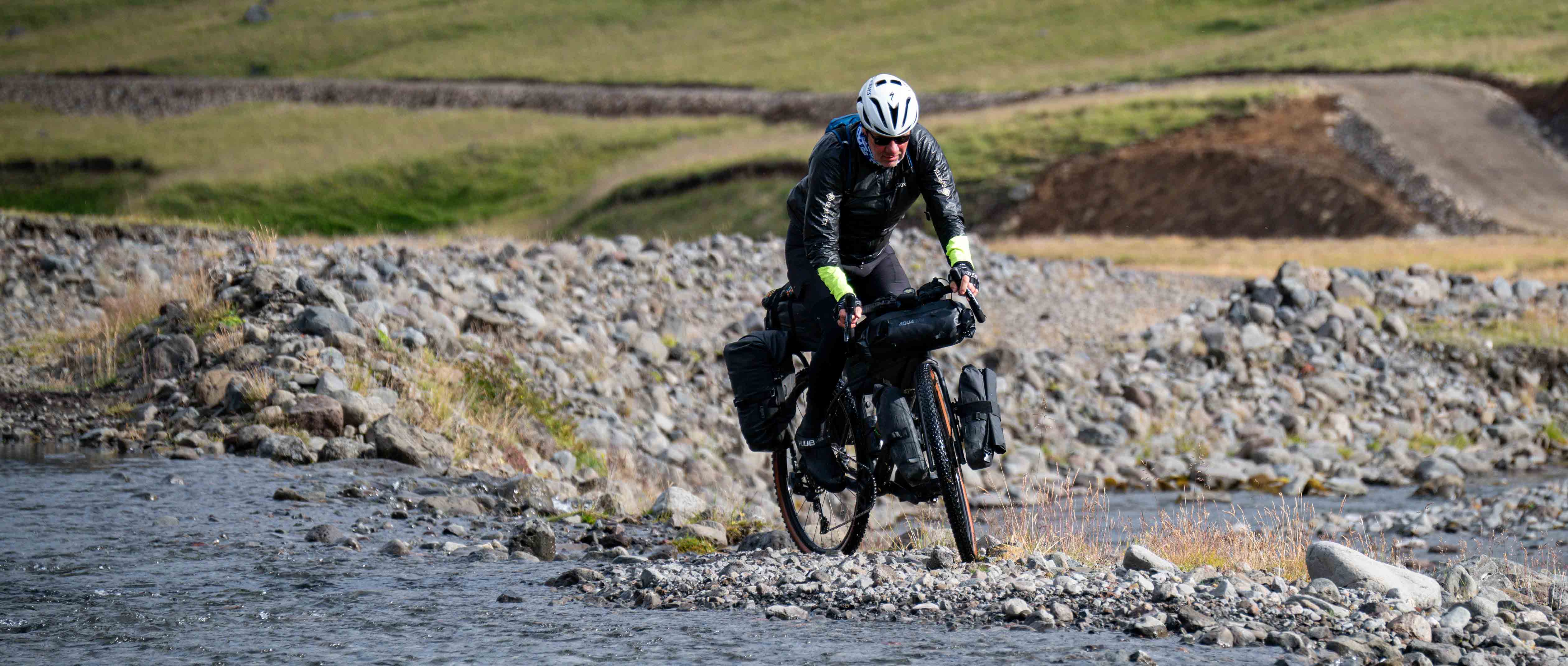
Some of the spares I’d recommend would be: chain splitter, mushroom plugs for tubeless tyres, tyre wall patch, sealant and a solar panel to charge things. I also carried an electric pump that doubled up as a power bank. This pump was perfect for this type of ride. Changing tyre pressures to suit the ground conditions was essential to avoid punctures, snapping a spoke or damaging carrying systems.
Final surge
Due to fantastic weather conditions (mostly a tailwind) at the start of day five, we were just 140km from Reykjavik. We kept our plan flexible on that day, thinking that if the wind and surface conditions were favourable we could ride this all in one day. But we also gave ourselves the option to wild camp again and not feel pressure to race to the finish. We had all the food and water we needed and we had planned to finish in 7-8 days.
I found that, with the whole trip, the key question that gave me confidence was: can we survive out here for another two to three days without any support? The answer was always yes, so we didn’t need to panic or race the route. That enabled us to relax, be flexible and enjoy the journey.
In the end we did ride the whole 140kms on our final day, enjoying the challenge of it and also cruising on some smooth tarmac towards the end of the day. We arrived back at the campsite in Reykjavik utterly exhilarated, exhausted and ready for a hot shower and a good sleep. We then had a couple of days to enjoy looking around the fascinating city and making more connections with other travellers. It had been everything we had hoped, an incredible experience that we will both remember forever.
Friendship
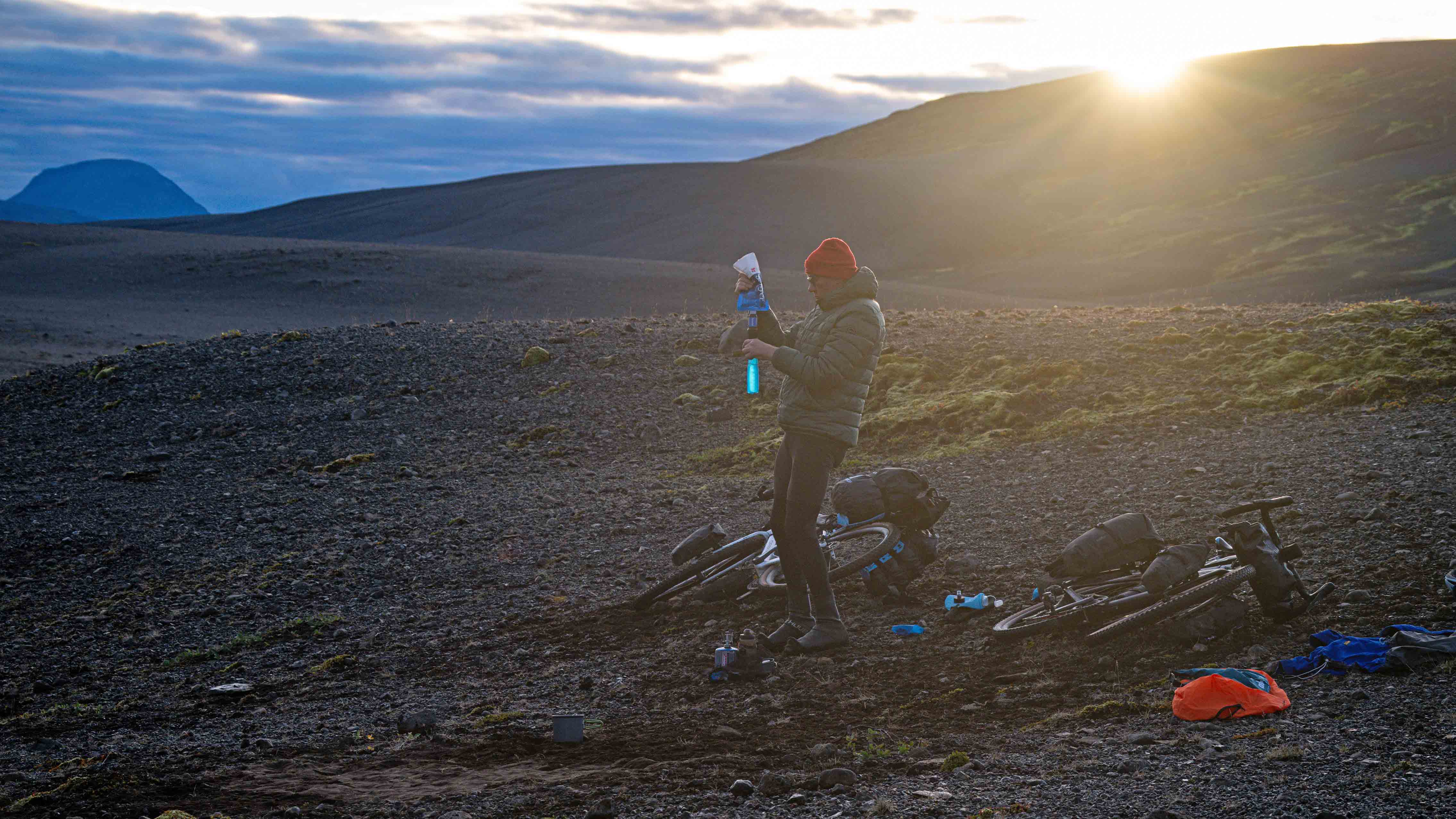
As always, adventure is about far more than the physicality. It often becomes apparent how important a strong friendship is when sharing a challenge like this. There were points of high stress and anxiety, so knowing how to “read the room” was important and something we could do with the backdrop of our years of friendship. Graham and I continuously battered each other with unfiltered banter that only a strong relationship can endure. But we also both had points during the ride where genuine advice, guidance and support were needed. I can 100% say that this adventure has strengthened our friendship even further and we are already planning the next one.