Anne Lassere regained consciousness lying flat on a stretcher, securely strapped inside an emergency evacuation helicopter. The crash she had endured was so devastating that her recovery took months. Throughout that long, difficult period, the thought of competing in Unbound—the world’s largest gravel race—kept her spirits up. After a year of healing and intense training, she finally stood at the start line beside her best friend, Ally. Would they reach the finish safely? Read on to discover their journey.
A slate grey sky transitioned sharply to metal, which I recognized as the ceiling of a helicopter. I was strapped to a back board. “What happened?” I heard myself asking. “You were in a bike accident,” a medic said. It was apparent from her tone that she’d already repeated this answer many times before. She sounded serious, so I thought this might be a good moment to insert a joke. “I gotta toof sticking outa my nostril,” I tried to say, because I thought this apparent fact - evidenced by what I could feel with my tongue - was absurd and hilarious. A little spray of blood puffed out when I laughed, which made me laugh harder, but the medic didn’t seem to get my sense of humor.
I tucked my chin to my chest and saw that I was wearing a ridiculously colorful Hawaiian shirt. A glance through the helicopter’s door in the moment before we took off revealed another woman - who I vaguely recalled as my friend, Ally - gripping the buttons on her matching Hawaiian shirt against the wind of the propellers. “Why we wearing party shirts?” I gargled through my bloody mouth. The medic ignored me. She probably didn’t know the answer. The Hawaiian shirts, like many of my choices, were silly for silly’s sake. I turned my head and spat out a pebble of gravel.
If you’re a bicycle enthusiast, you’ve probably heard people talk about the spirit of gravel. What is it? Many would have you believe it’s pure grit, like you’re going to tattoo the letters g-r-a-v-e-l on your knuckles. Is it the spirit of adventure?
"The flint hills, while accessorised with wildflowers, offer absolutely no refuge from the elements: sun, dust and the relentless vacuum of your own spiraling emotions."
Months later, while I was still recovering, Ally turned to me with a spark in her eye and said, “I’ve been telling everyone we’re doing Unbound 200.” I shrugged and said, “That’s because we are.” I had no actual notion of what I’d agreed to - but Ally wanted to do it, so I was in. She’s my best friend. The kind of person who brings a costume box on vacation. The kind of person who thinks her dog is beautiful, even though it looks like a bat had a baby with a possum and contracted mange. So just like that, I found myself training for the toughest athletic challenge of my life.
What I now know is that Unbound 200 is the biggest gravel race in the world, and it takes place in a tiny town called Emporia, Kansas. It’s apparent when you’re there that for the rest of the year besides this one weekend, Emporia gets about as much action as that Italian pasta maker my mom got me for Christmas. For one weekend in early June, thousands of nerdy gravellers and professional cyclists descend upon the quarter-mile Main Street and flaunt their spandex and transition lenses in the sparkling Kansas sun.
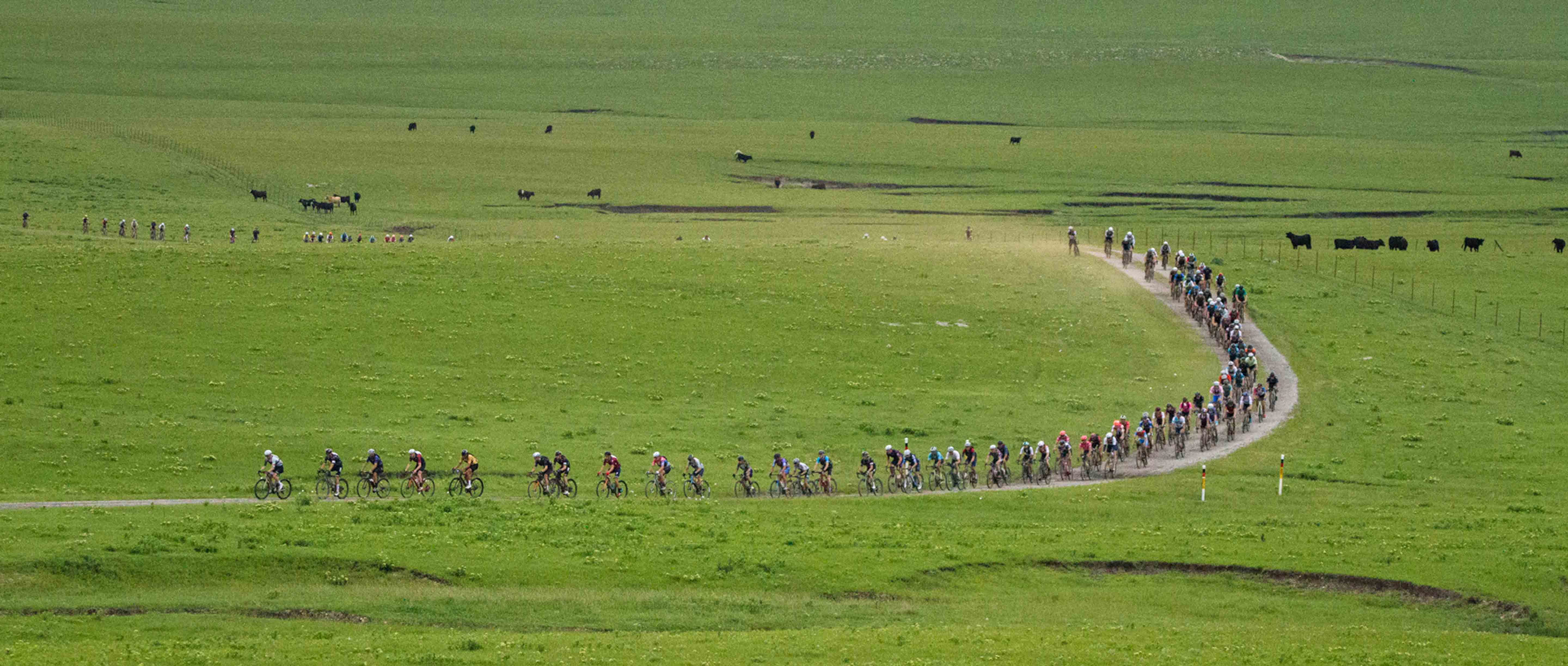
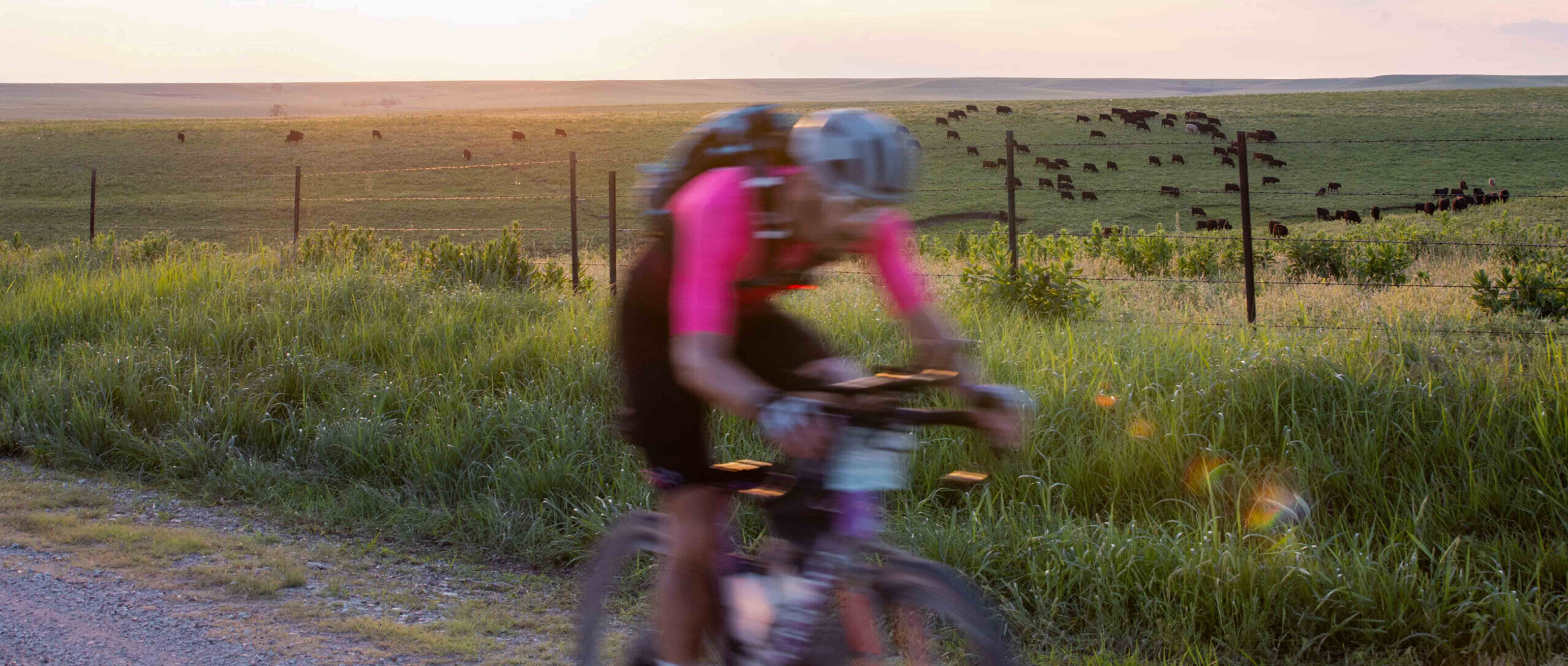
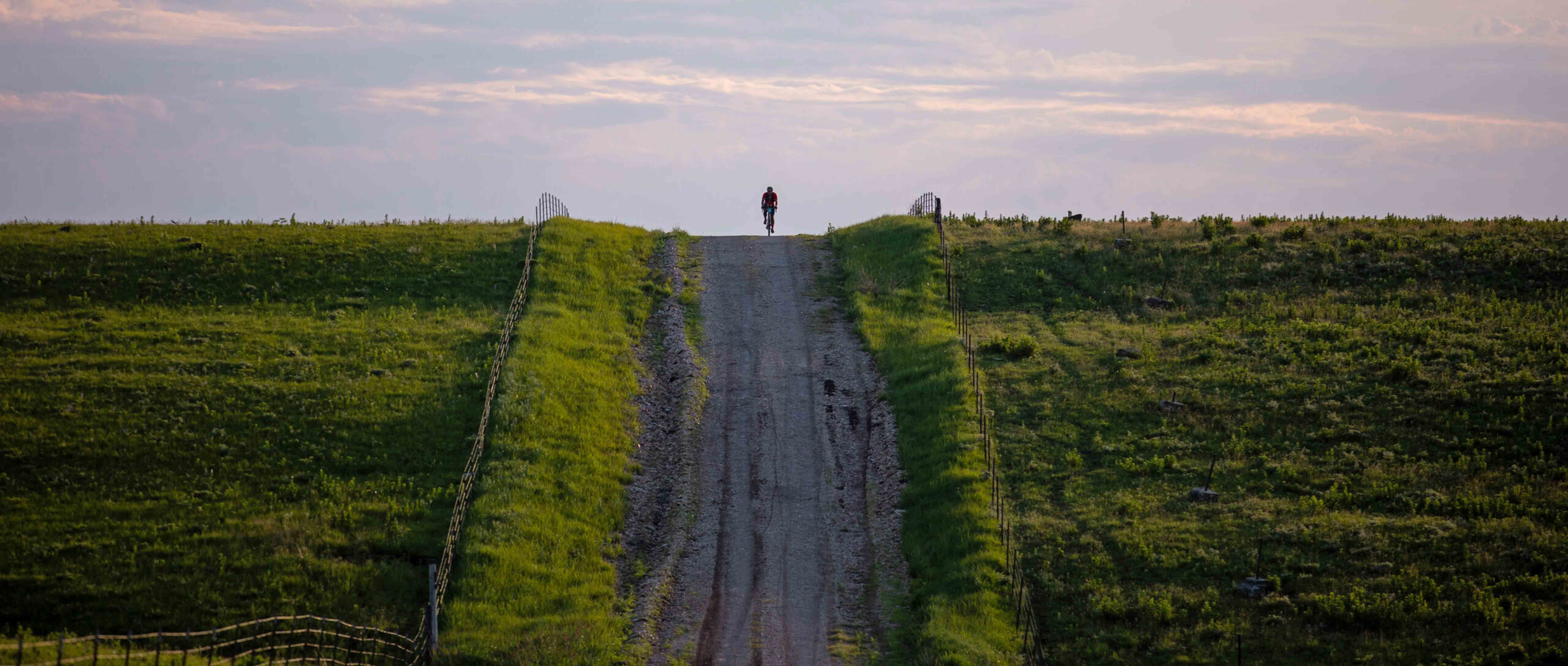
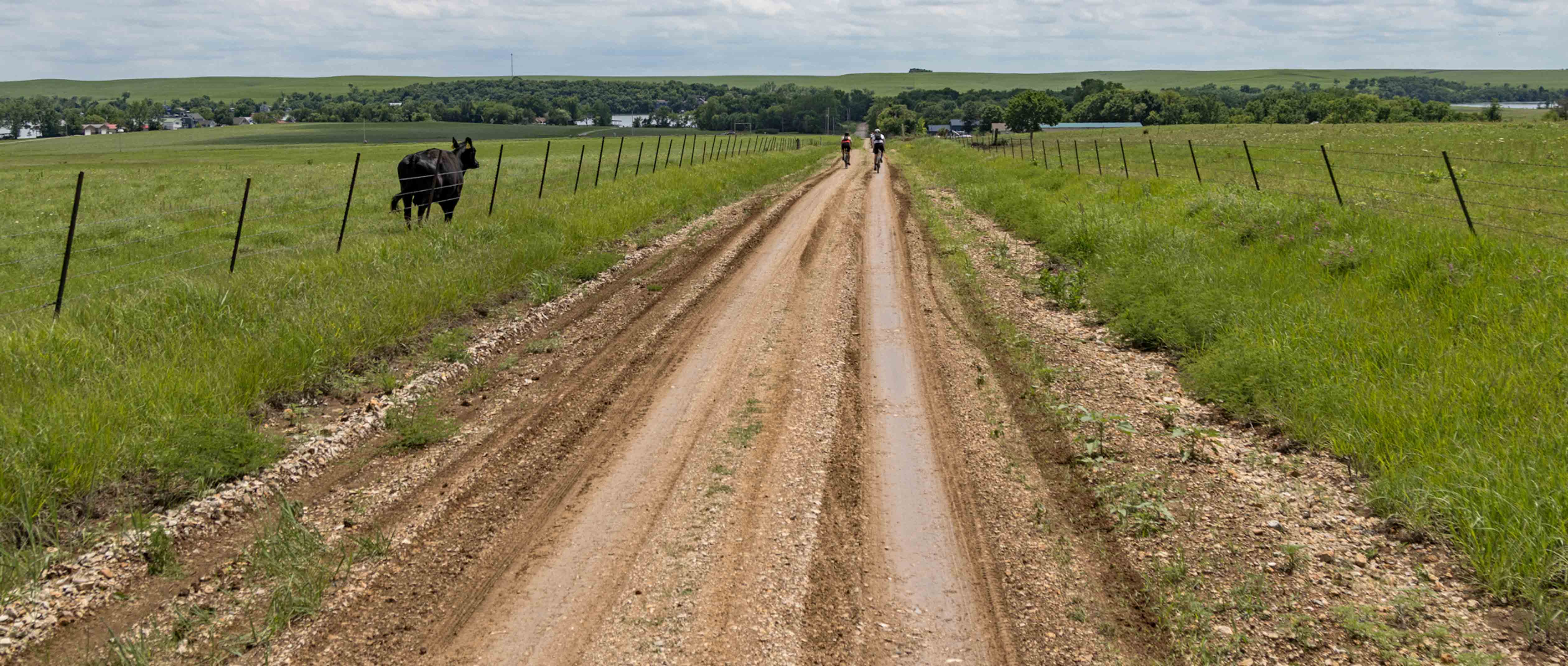
Speaking of which, there is no shade in this landscape. I don’t know what you remember from the Wizard of Oz, but there are basically no trees in Kansas. The flint hills, while accessorised with wildflowers, offer absolutely no refuge from the elements: sun, dust and the relentless vacuum of your own spiraling emotions. If it’s a "mud year" the gravel roads become thick ribbons of peanut butter that your wheels will give up and die in. You’ll end up hoisting your bike over your shoulder and squelching through the course while questioning every decision you ever made up to that point in your life. If the conditions don’t break your bike, they’ll probably break your soul, because for every crummy inch you gain, you’ll be reminded that this race is two hundred miles long.
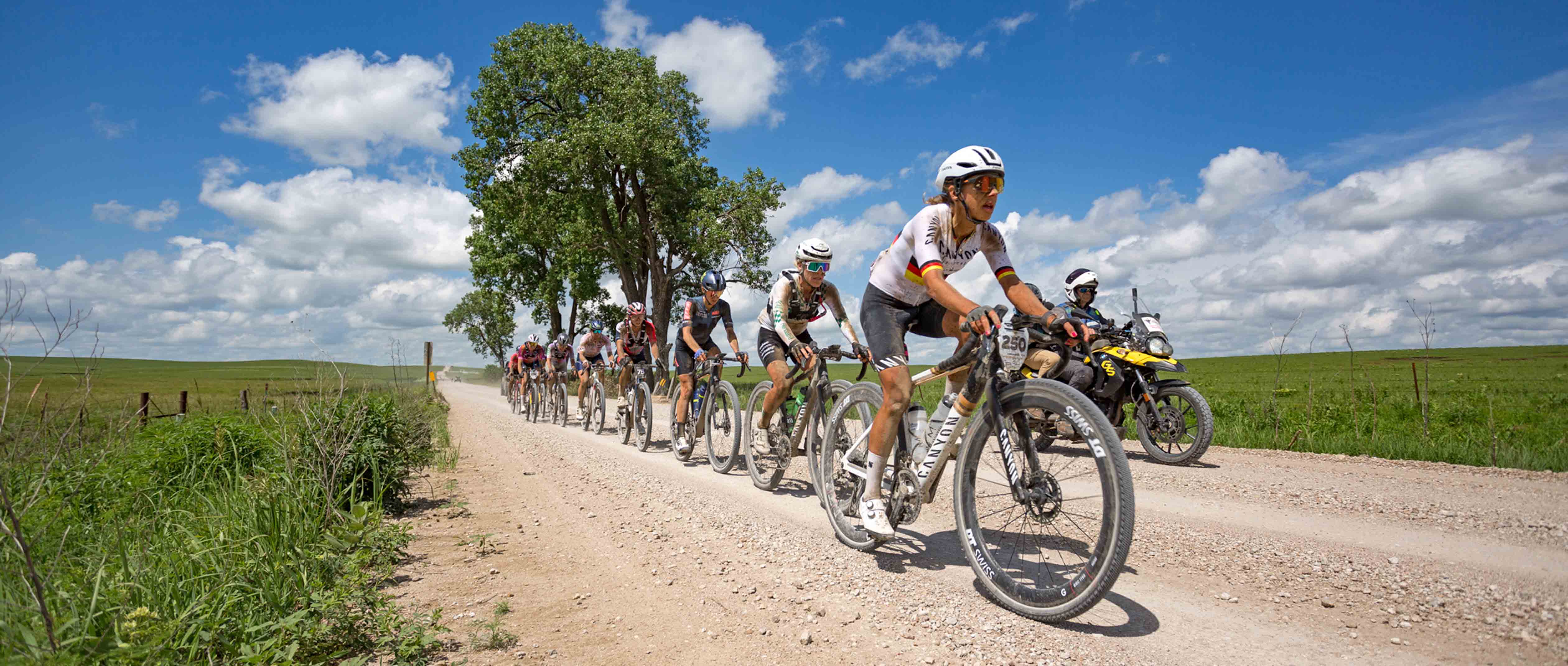
Depending on the weather, professionals finish this race in as little as eight hours. The rest of us hope to beat the sun before it sets. Many regretful participants roll back into town in the dead of night, after over fifteen hours of re-hashing their priorities. A huge percentage of racers never actually make it to the finish line.
To train for this remarkable opportunity, I spent my weekends getting my hindquarters torn up by a bike saddle for six months straight. Finally, we packed up our bikes and flew to Kansas. Ally’s coach met us there. Coach Alex was a marine helicopter pilot who understood aerodynamics better than most mortals. She was also going pro and had been "heat training” by riding her bike in a parka, a wool hat and gloves so thick she could barely work her shifters. It was June. I found her both mysterious and intimidating.
Since there were only about a dozen or so houses in Emporia, the lodging was booked solid. Our Airbnb was a shockingly dusty bungalow a forty-five-minute drive from the starting gate. Some hosts go crazy with theme and this one’s seemed to be dead animals. Taxidermic wildlife littered every room, their marble eyes peering down at us from the walls wherever we went. We posed for photos with a stack of turkeys. Yes, they were stacked - a male standing on the back of a stoic female.
We shoved aside a few deer in the living room and built our bikes. Then we prepared our nutrition. I was instructed by Alex that I needed to consume at least seventy-five carbs per hour. Throughout our training, on long rides especially, I’d had a really hard time with “flavour fatigue.” At a certain point, everything I put in my mouth was like a repulsive paste of rotten fish, no matter how delicious it was in the beginning. I’d recently discovered these fruit bars that didn’t gross me out. I glanced at the nutrition facts and confirmed they had a lot of carbs. I dutifully counted my snacks and packed them in my feed bag.
"I now have a scar that runs from my lip to the inside of my nose and my nose isn’t the same shape it was when I was born."
I couldn’t sleep the night before. I kept thinking about how just a year ago, almost exactly to the day, I thought I’d never be able to ride again. We’d been bikepacking when a bag got caught in my wheel, sending me over the bars with shocking violence.
For a few hours, there, I had no memory of the previous year of my life. I have no recollection of leaving the helicopter. My memories start up again sometime later when I was lying in a hospital bed. Ally was curled up in the chair beside me.
She watched the ER surgeon stitch up the hole in my face with unabashed curiosity. We laughed at the absurdity of it all. Because, in our friend group, a lot of us have scars on our faces. Ally, who is absolutely stunning, has a deep half-moon scar on her jawline from when her face slammed into a rock. I now have a scar that runs from my lip to the inside of my nose and my nose isn’t the same shape it was when I was born.
I’ve come to learn that an accident itself is only the catalyst for the real crisis that follows. There’s a transformation that unfolds in the weeks and months after that less-than-a-second-long-impact. Surgery on my face, new teeth. Weeks of lost work and days of lost memory. I couldn’t eat solids for months. When anyone asks about the crash, I tell them the simple truth: I remember stopping to look at a waterfall and then getting loaded onto a helicopter. I’m told that many hours passed in between those two events. I was transported on an ATV that navigated a washed-out road before reaching the landing zone. None of that experience is accessible to me. It’s like I wasn’t really there. In fact, I didn’t experience the crash at all. Only Ally did.
I thought about that a lot while staring at the ceiling in the hours before we embarked upon Unbound. My alarm went off at 3:30am. We moved about the house with silent purpose. A stuffed jackrabbit watched me fill my water bottles. I hung my hydration pack on moose antlers and loaded it with all the items I’d carefully selected. It was going to be a long day.
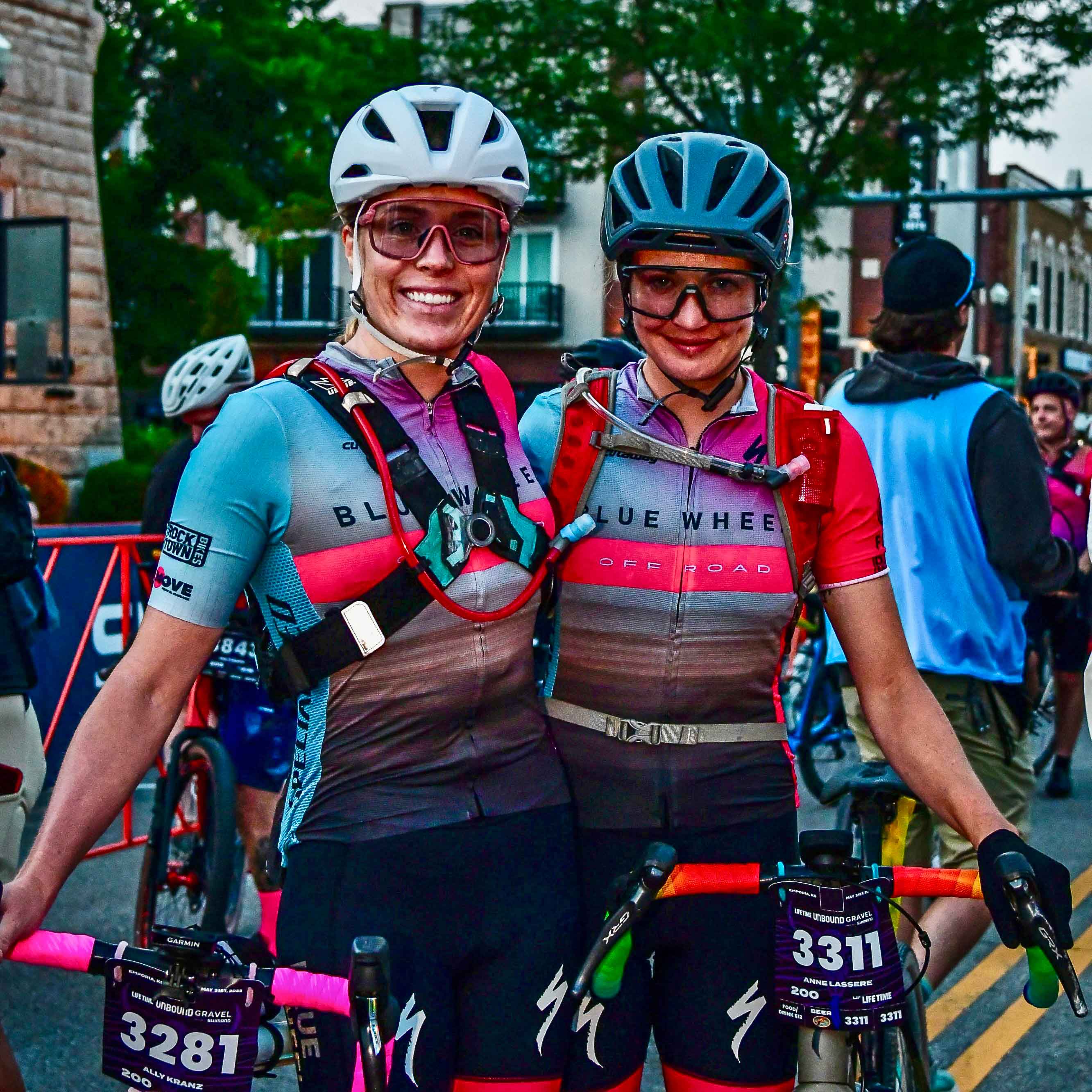
Image courtesy of MarathonFoto
"During those first few miles, I could feel the other riders sneering at us while they pedaled furiously past us on the climbs."
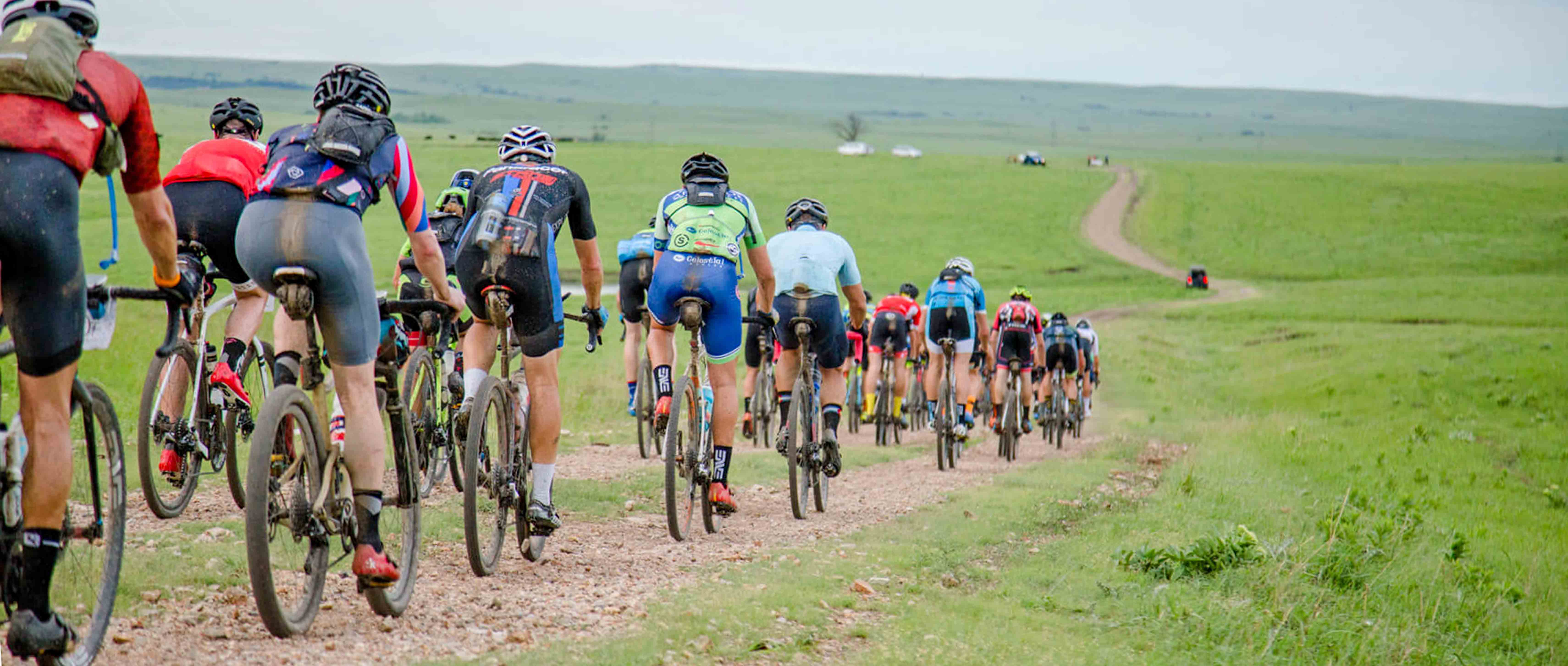
The starting line was a mass of nervous people straddling their bikes. We waited for the clock to tick down in the pre-dawn darkness with over two hundred and fifty other riders. When the race officially began, we all lurched forward in an awkward roll. Once the peloton got going, it was tight and fast and I focused all my attention on trailing Ally’s wheel as she navigated. We had a strategy. We would remain within a consistently disciplined power output. That meant we would go slowly up the hills and pedal through the descents.
During those first few miles, I could feel the other riders sneering at us while they pedaled furiously past us on the climbs. It felt like we were moving in slow motion - backwards, even. It was hard not to take the bait and chase the other riders, but we had a plan and we would stick to it. It wasn’t until we’d bagged the first hundred miles that our plan started to pay off. Suddenly, we were whizzing past all those riders who’d previously taken us over with smug confidence. They attempted to cling onto our wheels and soon we were collecting stray riders like flies, but they couldn’t hold on for long. They’d get blown off the back and we remained, steady, going exactly the same pace as we had from the start. Our strategy was working!
The baking hot Kansas sun and gravel the size of tennis balls wreaked havoc on our vulnerable opponents. It began to feel like we were climbing Everest, leaving bodies behind with each mile gained. A man stopped on the side of the road, lifted his bike over his head and threw it into a ditch. There was carnage on all the turns. People were crashing left and right, exhausted and unable to control their bikes any longer, probably hallucinating about clicking Dorothy’s ruby slippers and going home. Their defeat spurred us on like sharks after the scent of blood in the water. No longer were we the slow pokes. No, we were the ones still pedaling! And according to the live tracking, we were in the top ten for our age group!
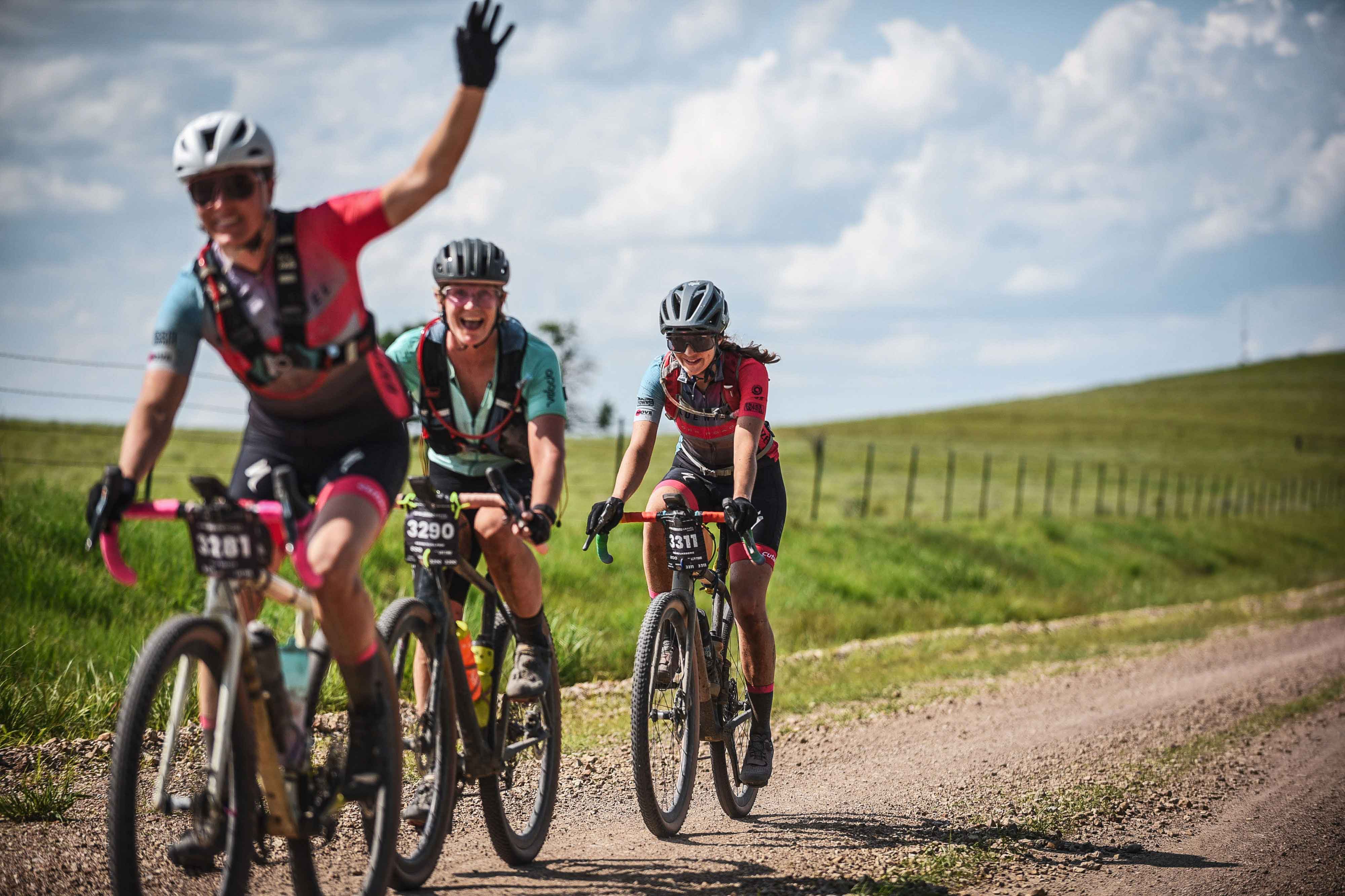
Image courtesy of MarathonFoto
"After a strained moment, I decided it was a false alarm. We kept riding. But something was not right."
Then the sweating started. My hands got clammy; not the kind of moisture that resulted from overheating, but the kind that came from something intensely wrong with my insides, which were liquifying in angry rebellion with each turn of my crank. Maybe I needed more fuel. I ate a dozen fruit bars. I started to slow down. “Ally!” I called to her when I spotted a hay bale in a field. I knew this might be my only chance for a modicum of privacy. “I just need a minute!” I ditched my bike and ran toward the relative shelter of the hay, where I dropped my shorts. After a strained moment, I decided it was a false alarm. We kept riding. But something was not right.
My intestines felt like they were being squeezed in a fist. I pushed myself hard, nearly doubled over on my handlebars trying to hold onto Ally’s wheel while she pulled us through the worst part of the course: the infamous mile 130 section, where the flint hills forced you up and down, up and down. Other riders were breaking all around us. Walking. Muttering indecipherably. I was starting to believe I would be next. Mind over matter, I told myself. We made it through the most heinous part of the day and we were finally coasting at top speed on a straight, flat road, when my mind could no longer hold sway over the matter.
“Ally!” I yelled. I was already slowing to a stop. She turned to look at me. “What’s wrong?” “It’s happening!” My voice cracked. “Like, right now?” “Right now!” I abandoned my bike in a ditch and high-kneed it through the tall grass, where I did what needed to be done. A nice man rolled to a stop. “You gals alright?” “We’re fine!” I yelled hoarsely, waving him on. “Ride on! Ride on!” Several more nice men stopped to inquire of our wellbeing. I covered my face with my hands while Ally politely urged them to keep going. “Ally, you have to leave me,” I told her. "What? No!” She yelled back from a respectful distance. “You have to go on without me,” I cried out dramatically. “There’s no coming back from this.” “You’ll probably feel better now,” she insisted. “Come on. Just try riding again.”
I had doubts, but I mustered whatever dignity that remained to me and got back on my bike. I barely made it two more miles before the gastrointestinal distress started again. I knew I was done for. Luckily, we’d reached a turn where a family had set up a tent at the end of their driveway. See, there’s not a lot going on in rural Kansas, so the locals make a day of spectating. They fan themselves in lawn chairs, or on the back of a tailgate, while cyclists covered in mud and blood accept their refreshments, not quite making eye contact but looking through them with haunted expressions. It was hard to convince Ally that she needed to leave me. We’d trained so much together for so many months and we’d already made it through the toughest part of the race. But my clammy pallor and buckling knees were more convincing than my words. I watched Ally ride off, wishing her a strong tailwind. Only thirty-eight miles remained.
“I have a bathroom emergency.”
I still had to go to the bathroom. I made a quick scan of my options: field, ditch, another field. There were a couple trees in the distance, but to reach them I’d have to run past the family and trespass on their farm, which would probably lead to a pursuit and a sudden silencing of questions as my purpose became obvious. “Do you want some water?” My frantic strategizing was interrupted by a little girl - about nine years old - offering me a paper cup. “I have a bathroom emergency,” I told her. Her eyes widened with understanding. She ran to her father, reclined in a lawn chair. His gaze flickered to me while she whispered in his ear. He scrunched his nose, then waved his hand in a motion that meant go ahead.
“Come on.” She nearly skipped as she led me toward their single-wide. Clearly, she was excited to have some action; a weird stranger to introduce to her abode. She led me through a kind of shed, where we had to step over farm equipment and a half dozen kittens to reach the front entry. “In here,” she said. “It ain’t got no door.” She opened an adjacent bedroom door that acted as a partition to the bathroom. I thanked her and sat down. There was a tall mirror hanging on the door that almost covered the open frame, and I was caught by a stark picture of my own reflection: slumped on a pink toilet beside a pink bathtub in a stranger’s house, a dark streak of gravel dirt forming a unibrow at my helmet line. It was hilarious.
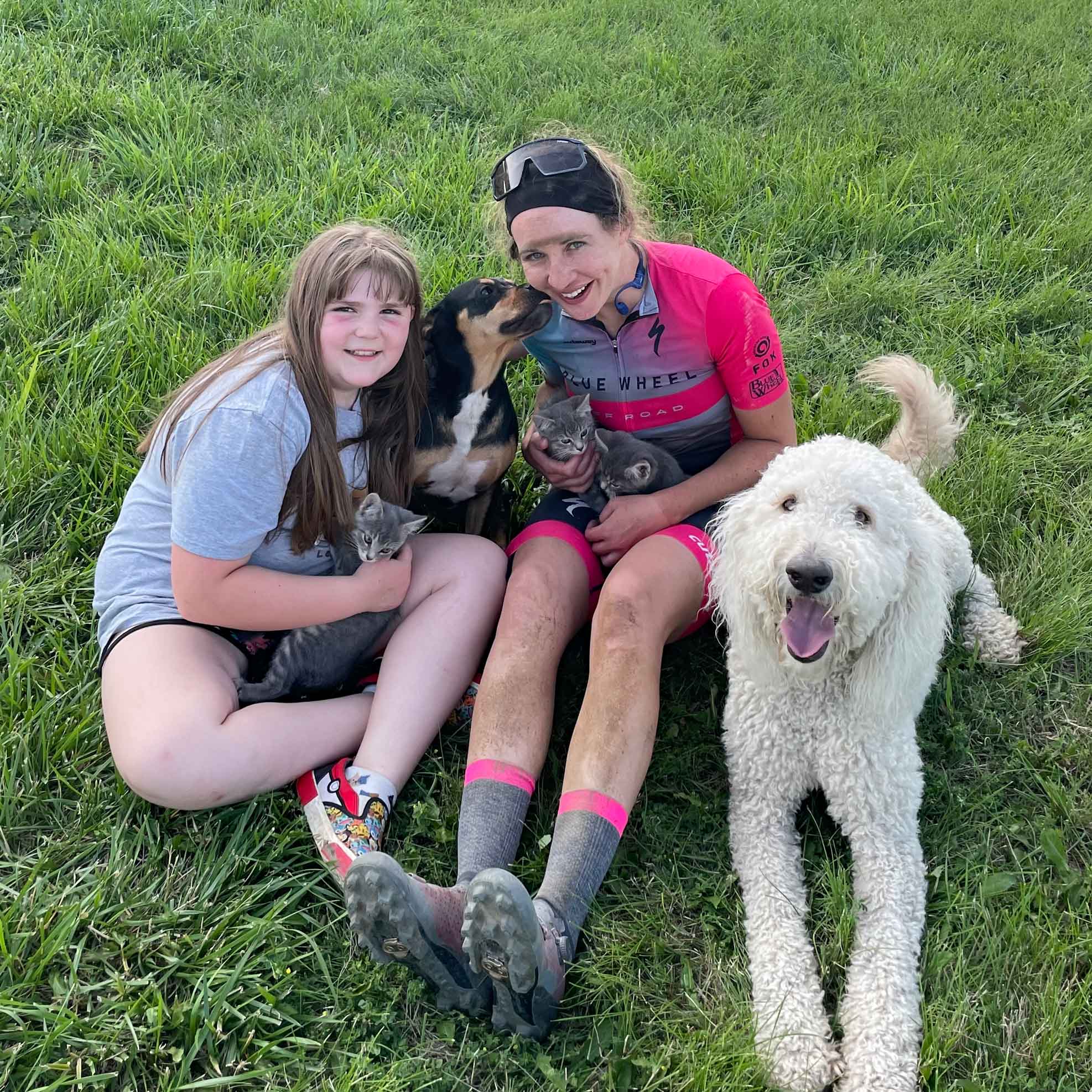
Image courtesy of Anne Lassere
When I left the bathroom, the girl’s grandma was waiting for me. She apologized for her messy home. I apologized for my intrusion. She asked if I wanted some Pepto Bismal. “Oh, yes,” I nodded. “Thank you.” She poured the pink liquid into a spoon, which I accepted with trembling hands. Then I promptly needed to run outside, hurry across the road and projectile vomit into a ditch. I called for a pickup and sat down in their yard. The little girl, who introduced herself as Jordan, approached me with an armful of kittens. Two rambunctious dogs trailed at her heels. We talked about how she was going to see the rodeo later that evening. I just sat in the grass with Jordan, playing with the kittens and dogs while I waited for my ride back to Emporia. It was glorious.
Later, when I started telling people the story about the indignity I suffered, I was pleasantly surprised by how many reciprocated with their own similarly undignified histories. Turns out it happens a lot in endurance sports. Like many before me, I had made a mathematical miscalculation with regards to my nutrition. During the course of the race, I’d consumed over a hundred and fifty times my daily allotted value of fiber. It was the fruit bars.
I got dropped off in town just barely in time to watch Ally cross the finish line. She came flying in at a full sprint, and I cheered so loud my voice cracked. She’d beat the sun. When dusk fell upon Emporia that evening, it softened the battle-worn scene. Everywhere, riders washed off bloody knees and the thick layers of dirt with their water bottles. We changed clothes, cleaned up in the rental van and went out for a well-earned beer. That’s when I learned that Alex, too, suffered an unexpected DNF (did not finish) in the pro category. Less than fifteen miles into the race, her wheel got caught in a hardened rut and she crashed.
She’d spent the day with her cousin, chilling in the next town over and getting tattoos. She lifted the corner of her shirt to show us the freshly inked ladybug on her side. Even though she’d devoted the last six months of her life vigorously training for this race, she wasn’t upset. “We had a pretty nice day,” she said. “You know what? I did too.” I lifted my beer and we all cheers’d to laughing in the face of the unexpected. That is the spirit of gravel, I decided right then and there. It’s not about being the fastest or being the best at toughing it out. The spirit of gravel is the resilience you can only achieve from not taking yourself too seriously.
Images courtesy of Unbound Gravel, except where credited