In the northern hemisphere, the days are slowly starting to get a little longer, but the chances are you’re still stuck with around 15 hours of darkness every day. For many of us, that means it’s dark before we go to work and it’s dark when we get home, so if you want to head out on your gravel bike, you’re going to need some decent lights. In Part 1 and Part 2 of our recent ‘Gravelling in the dark’ series, we looked at handlebar lights, but this time it’s all about the peripherals. Read on for our latest illuminating guide to gravel night riding.
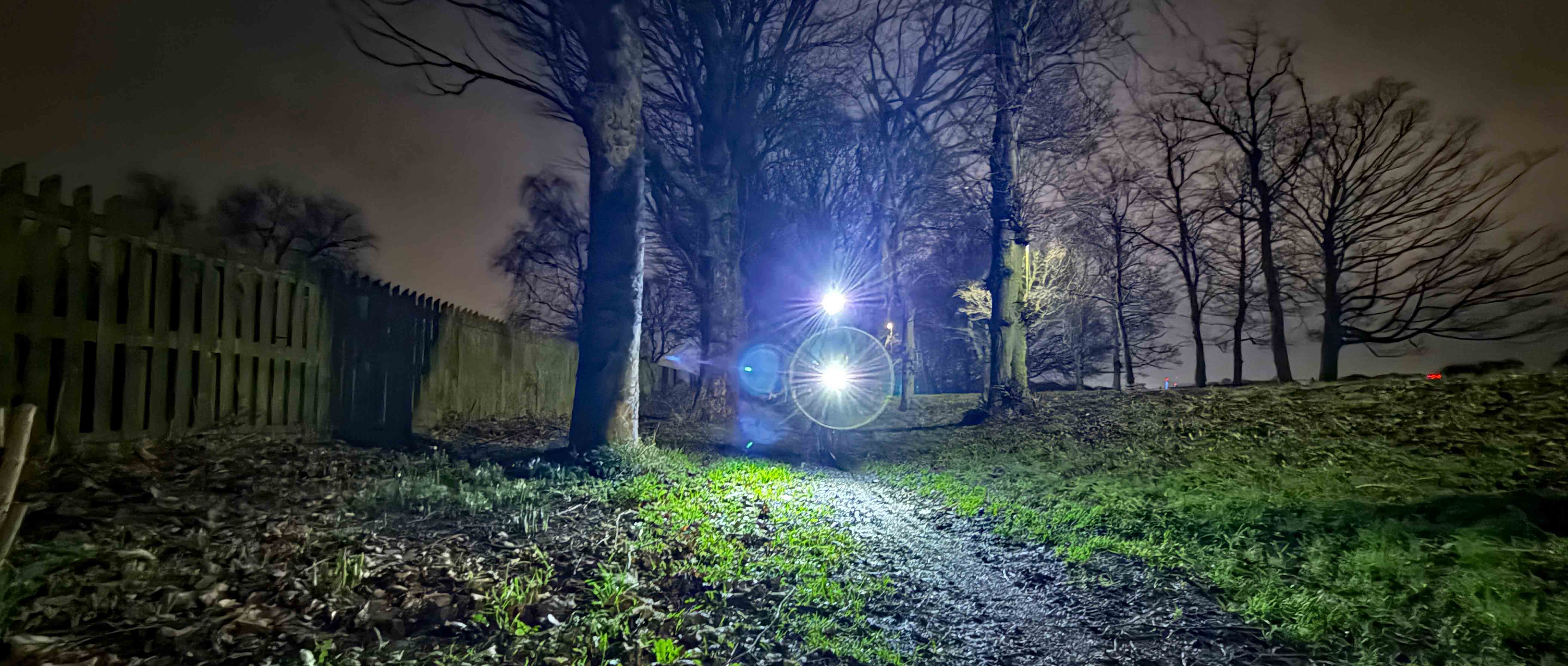
In an ideal world, we’d all follow the sun and spend our lives migrating to a land of constant dry trails and balmy summer evenings. Sadly, this utopian vision isn’t achievable for anyone without an enormous lottery win or a trust fund set up by a long-expired wealthy benefactor. So, if we can’t follow the sunshine, we’ll have to bring the light to us instead! Since they first burst onto the scene more than 20 years ago, Exposure have consistently set the gold standard for battery-powered lights for everyone from cyclists to deep-sea divers. Each year their products seem to include cleverer tech and offer increased reliability, while somehow also being simple to operate and user-friendly. We’ve been testing out some of their latest lights, the Sirius 11 front light and the TraceR 3 rear light.
The Sirius 11 is frankly a miracle of miniaturisation. It measures 100mm from end to end and is 28mm in diameter at its widest point. It weighs in at a paltry 90g. It’s fitted with a single white XHP35 LED and a 4,000 mAh Li-Ion battery (offering up to a claimed 130 hours of runtime on the lowest power setting). Exposure say that the “8° collimated spot lens gives the Sirius11 exceptional LED throw, meaning you have greater long-range clarity compared to other products with similar outputs, illuminating the path ahead with precision and control.” The unit is charged with a USB-C port on the rear, covered with a tight-fitting rubber cap to seal it from the elements and to help the light obtain an IP67 rating for weather resistance.
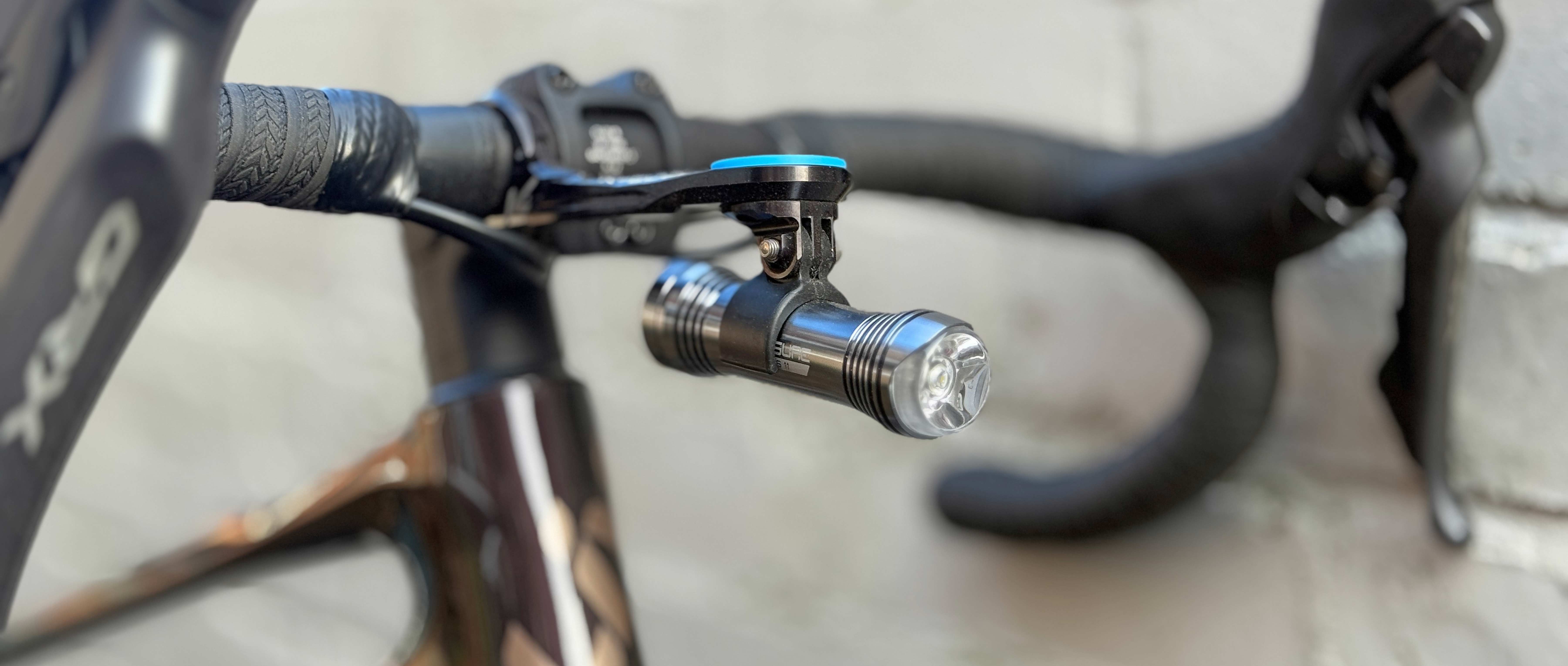
As standard, the Sirius 11 comes with a rubber handlebar mount (and a USB-C charging cable). If you already have an out-front computer mount fitted on your bike and you want the ultimate in clutter-free set-ups, Exposure sell a Go-Pro style action mount, which means you can mount the Sirius 11 (or any of their other small-bodied front lights) tucked away under your bike computer. This has the advantage of centralising the light over your front wheel and leaving your bars clear for any other accessories/luggage you might need/want to mount there.
However, seeing as we’ve already featured a bunch of handlebar-mounted lights, we decided to use the Sirius 11 as a helmet-mounted light instead, which meant buying one of Exposure’s helmet mounts. Once fitted, the Sirius 11 is so light that it’s barely noticeable. The only thing to be wary of is if/when you are riding in wooded areas, your helmet has essentially grown 4-5cm in height, so you need to duck slightly lower if there are any overhanging branches. Exposure used to sell a tiny cord ‘leash’ which you could fit through an eyelet on their range helmet lights and then loop through one of your helmet vents. This gave you an extra layer of security in case you were unlucky enough to clonk your head on a branch. The Sirius 11 doesn’t have this facility, so you’ll have to remember to duck a little lower! Exposure do however, offer a mind-blowing range of light mounts and accessories, so no matter which of their lights you go for and where you want to mount it, they should have something available to suit.
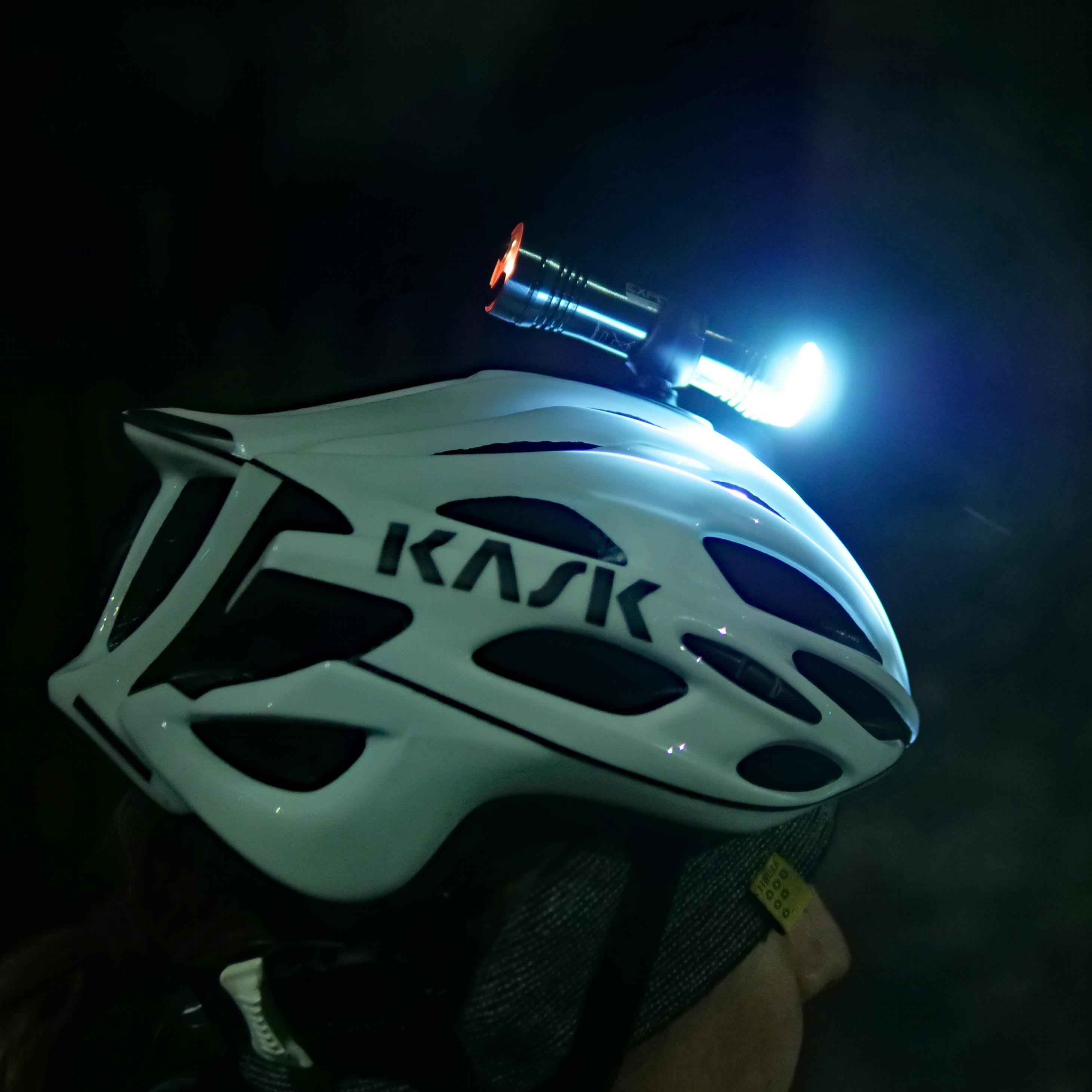
The shape of the Sirius 11 includes a small ‘hood’ on top of the light lens, designed to guide the light beam downward to avoid dazzling oncoming cyclists or other trail users. The sides of the lens are clearly visible to help offer additional visibility to the user when riding on the road.
In use, the light is a crisp white colour and the beam pattern offers a focused spot, neatly illuminating the trail in front of you. We suspect the low weight and long burn times will mean many commuter cyclists will choose to just use the Sirius 11 (mounted on their bars) during their winter commutes, but for nighttime gravel riders, it offers the perfect secondary light source to help illuminate the trail in front of you. On anything other than perfectly groomed gravel trails, the ability to illuminate (by turning your head slightly) the exact line that you want to ride makes a massive difference.
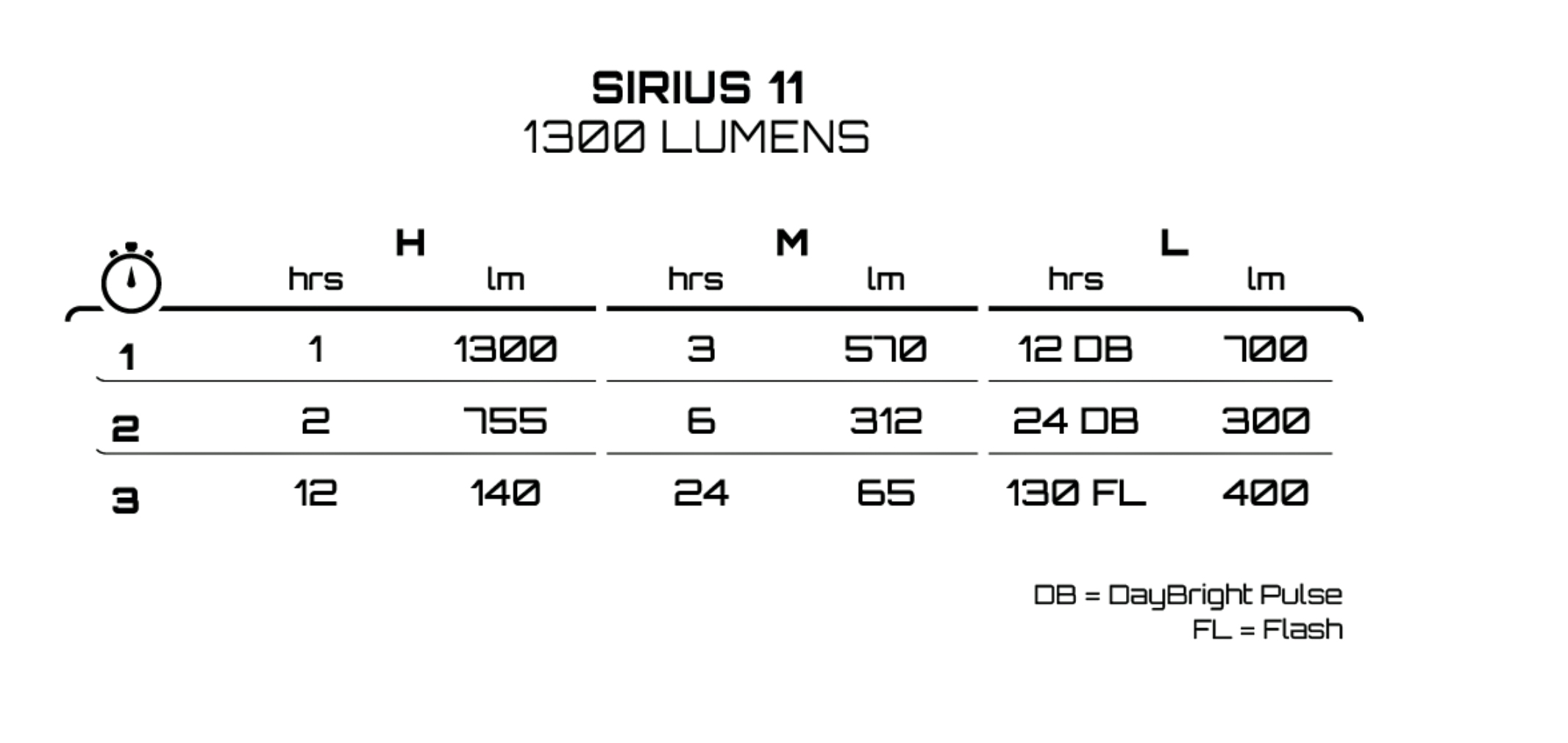
We ran the Sirius 11 almost exclusively in Mode 2 – this offered a high power mode of 755 lumens (with two hours of burn time), a middle power mode of 312 lumens (with six hours of burn time) and a Daybright flash mode of 300 lumens with an astonishing 24 hours of promised burn time. You might not think that 755 or 312 lumens was very much, but don’t forget that we were using the Sirius 11 as a bolt-on to a much brighter bar-mounted light. On all but the gnarliest off-road trails, the 312 lumen option was perfect and we didn’t get anywhere close to exhausting the battery.
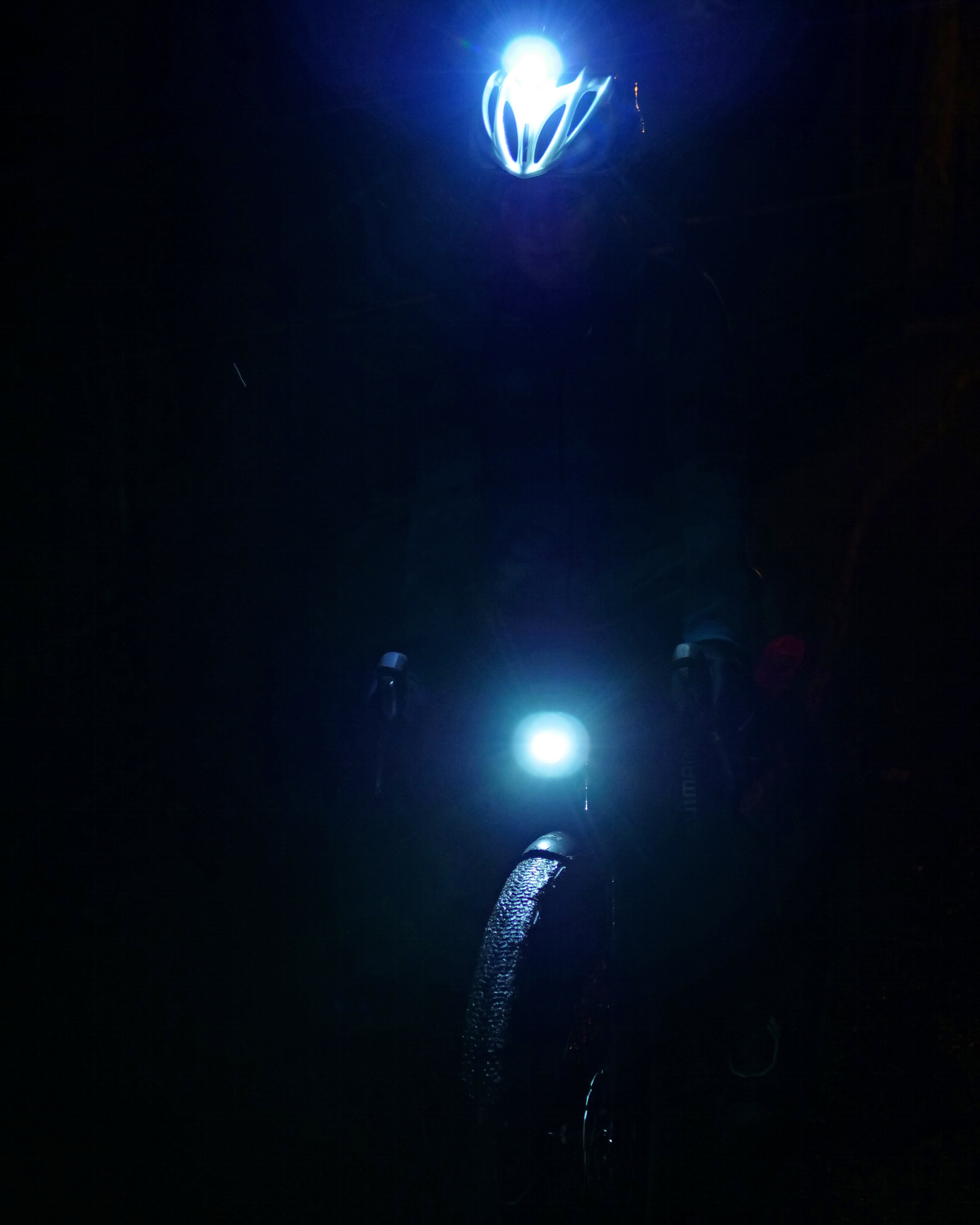
In conclusion, when used in combination with a higher-power bar-mounted ‘flood’ light, the Sirius 11 makes the perfect companion for every type of nighttime gravel-riding adventure. The low weight, durable and weatherproof construction make it perfect for gravel riders looking for a fit-and-forget helmet light. The Sirius 11 will double up perfectly as a bar-mounted light for non-gnarly away-from-the-road duties or as a perfect commuter light. With Exposure’s impressive warranty and servicing backup, if you look after it, the Sirius 11 should last practically forever!
Exposure TraceR 3
At a blink-and-you’ll-miss-it 35g, Exposure’s TraceR 3 rear light is so small, light and durable that there’s really no reason not to run it on your gravel bike all the way through winter. Even if you squeeze enough daylight out of a ride to never need to switch it on, the extra 35g is completely imperceptible. But when you do need it, it can make all the difference.
The TraceR 3 is designed to be mounted on your seatpost and comes with a rigid plastic ‘holster’ and a durable silicone strap which stretches around most seatpost sizes. The holster is designed so that when fitted correctly, the lens of the TraceR 3 sits perpendicular to the ground. The TraceR 3 has six different settings – three different brightnesses of flashing and three different solid options. Run time varies from three hours on the brightest solid setting to 24 hours on the lowest flashing setting. Switching between the modes is pretty simple and it’s well explained in the comprehensive user guide. The TraceR 3 is recharged using a USB-C cable (included with the light) and takes around 1.5 hours to fully charge it from empty. The light is rated to IP65 standards, which means it will cope with the worst that winter weather can subject you to, but it’s not fully waterproof. The TraceR 3 has a built-in ‘fuel gauge’ which gives you a colour-coded impression of how much battery life is left when you turn the unit off.
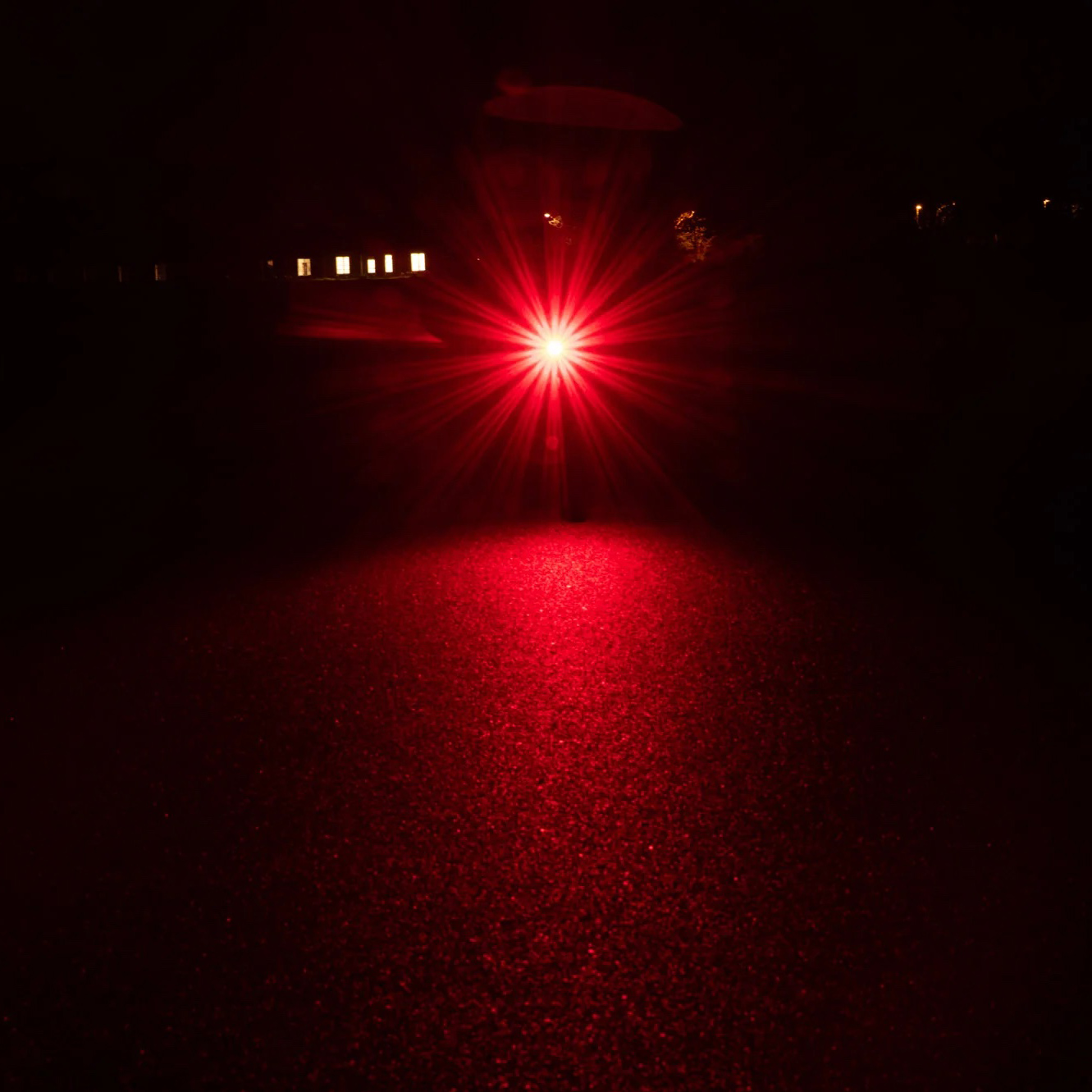
Image courtesy of Exposure
The whole point of a rear light is that it makes you visible to other road users and there’s no getting away from the fact that even on the lowest power setting the TraceR 3 is BRIGHT. If you’re riding solo, this is absolutely ace as you’re practically lit up like a Christmas Tree and there’s no excuse for other road users not being aware of your presence. The downside is that when you’re riding in a group of cyclists, your rear light is so bright it’s almost guaranteed to dazzle anyone riding behind you. Particularly if you’re descending off road (without much ambient light), it can be problematic. Luckily, there are a number of easy fixes:
- Make sure your TraceR 3 is set to the lowest power output when riding away from traffic
- Turn the TraceR 3 into solid (non-flashing mode)
- If you’re riding away from the road, you can easily reach down and rotate the light 180 degrees around your seatpost so that it faces forward (just remember to rotate it back as soon as you get back onto a road)
- Or finally, you can run the plastic holster upside down so that the lens of the TraceR points more towards the ground.
You might wonder what the point is of having a rear light that is so bright, but we’d happily trade a few simple setup tricks to make sure you don’t dazzle fellow riders and have the ability to still be attention-grabbingly bright when you need it most.
For those of you who regularly take part in group rides and would like a more high-tech approach to reducing dazzle for the riders around you, Exposure also sell the TraceR 3 Reakt. This sibling of the TraceR 3 is fitted with Exposure's "Ambient Kinetic Technology", which automatically changes the intensity of the light depending on the ambient light conditions. It "flares up to 120 lumens under braking or entering brighter environments", but when run in "PELOTON mode, the TraceR 3 Reakt dims when the light from the rider behind is detected."
There are a few situations where the standard seatpost mount won’t be ideal. Riders with less exposed seatpost may find the TraceR 3 gets obscured if they’re also running a seatpack and the same is true for anyone riding in full bikepacking mode - large saddlebags will almost certainly block a seatpost-mounted light. Exposure offers a wide range of alternative brackets, allowing the TraceR 3 to be mounted to a rear rack or an M5 fixing point on the frame.
If you’re running mudguards, however, there’s an elegant solution available from 3bits. Their impressively neat 3D-printed mount bolts directly to your rear mudguard, positioning the light lower down - perfect for bikes with minimal exposed seatpost, rear bikepacking bags, or a carrier rack. It’s rock-solid in use and looks super into the bargain.
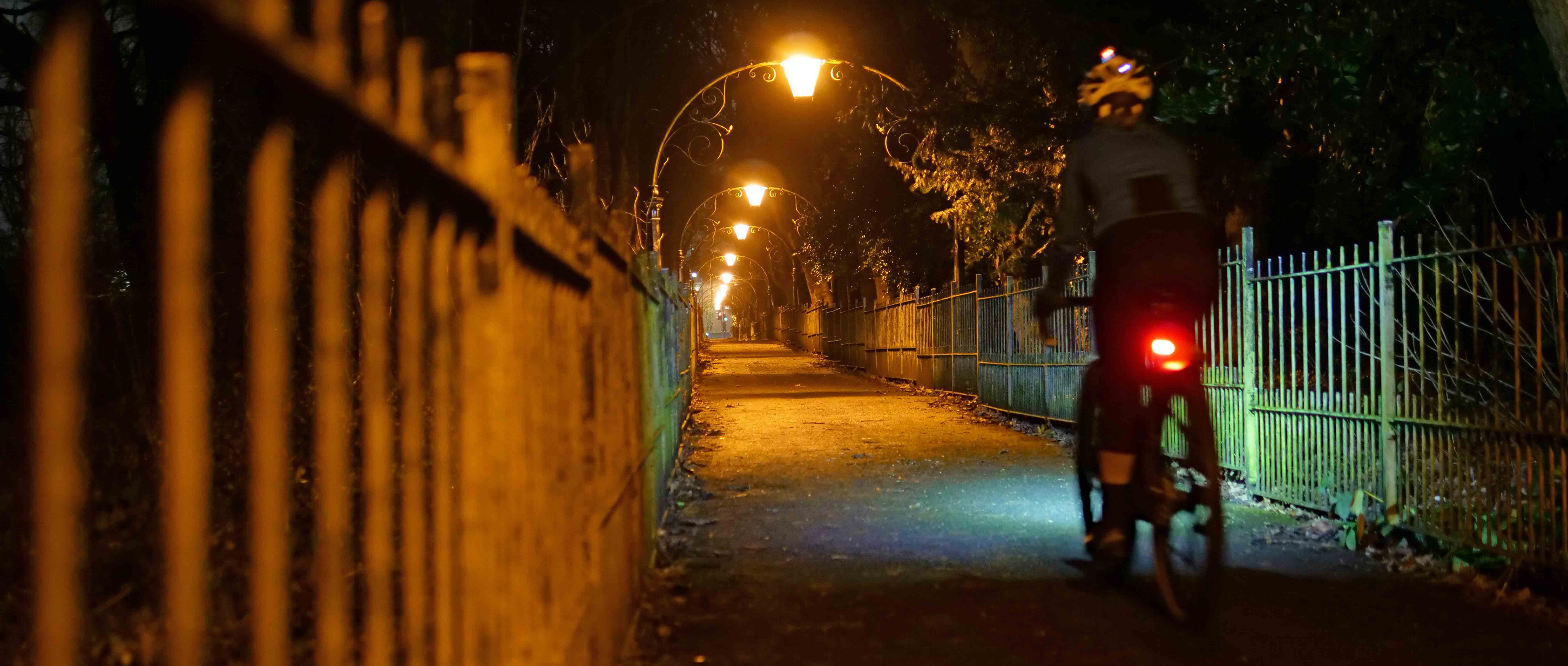
Although you need to pay a bit of attention to how you set it up to avoid dazzling other people, once you’ve got your set-up dialled, the TraceR 3 is an absolutely amazing light. We’ve been running them since they were first launched back in 2014 and they’ve been absolutely bombproof. With Exposure’s legendary back-up and service, you should be able to get years of life out of a TraceR 3.
The Exposure Sirius 11 costs £120 and is available direct from Exposure or in many good bike shops. The TraceR 3 costs £55 and again is available direct or in bike shops. The 3bits mudguard mount for the TraceR 3 is available direct from the manufacturer and costs £28.