An American cartoonist, Bob Thaves, apparently coined the phrase about the film stars Ginger Rogers and Fred Astaire. “Sure he was great, but don’t forget that Ginger Rogers did everything he did...backwards and in high heels.' If you took that quote but changed the context to the life of a gravel riding tour guide it would still be just as applicable. Last year Olly joined a PhD qualified archaeologist and a former circus performer as they guided a tour group through the Sardinian countryside. Here he spills the beans on what life is like behind the scenes as a gravel guide.
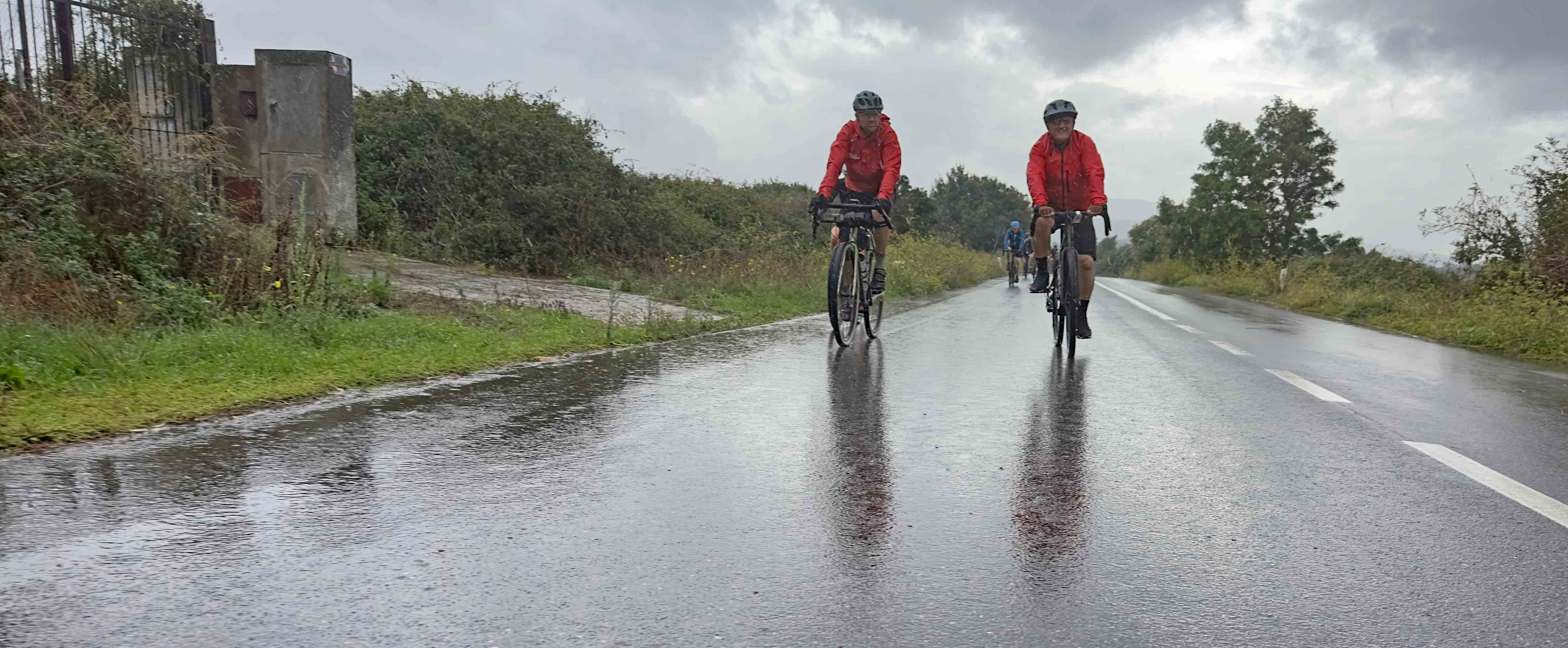
The clouds had been bubbling up all morning and the air felt heavy and oppressive. It was obvious that our luck had run out after three days of picture-postcard perfect weather. It was Lieven’s turn to be on the bike and Mirko was on van duty. Both roles had their pros and cons, but as the sky became increasingly dark, I suspect that Mirko was quite happy to be safely cocooned inside the Saddle Skedaddle support vehicle. The first rain drops fell within a few seconds of leaving the shelter of our lunchtime café. Lieven suggested that everyone stop and put waterproof jackets on and we all duly followed his advice. Sardinia is infamous for its scorching summer temperatures and many parts of the island suffer from low levels of rainfall, with all the associated problems that brings. Today, however, was not a typical day. The rain bucketed out of the sky in biblical volumes. Visibility was instantly reduced. An evil-looking sheen appeared on the surface of the tarmac and suddenly Lieven’s job became exponentially more demanding.
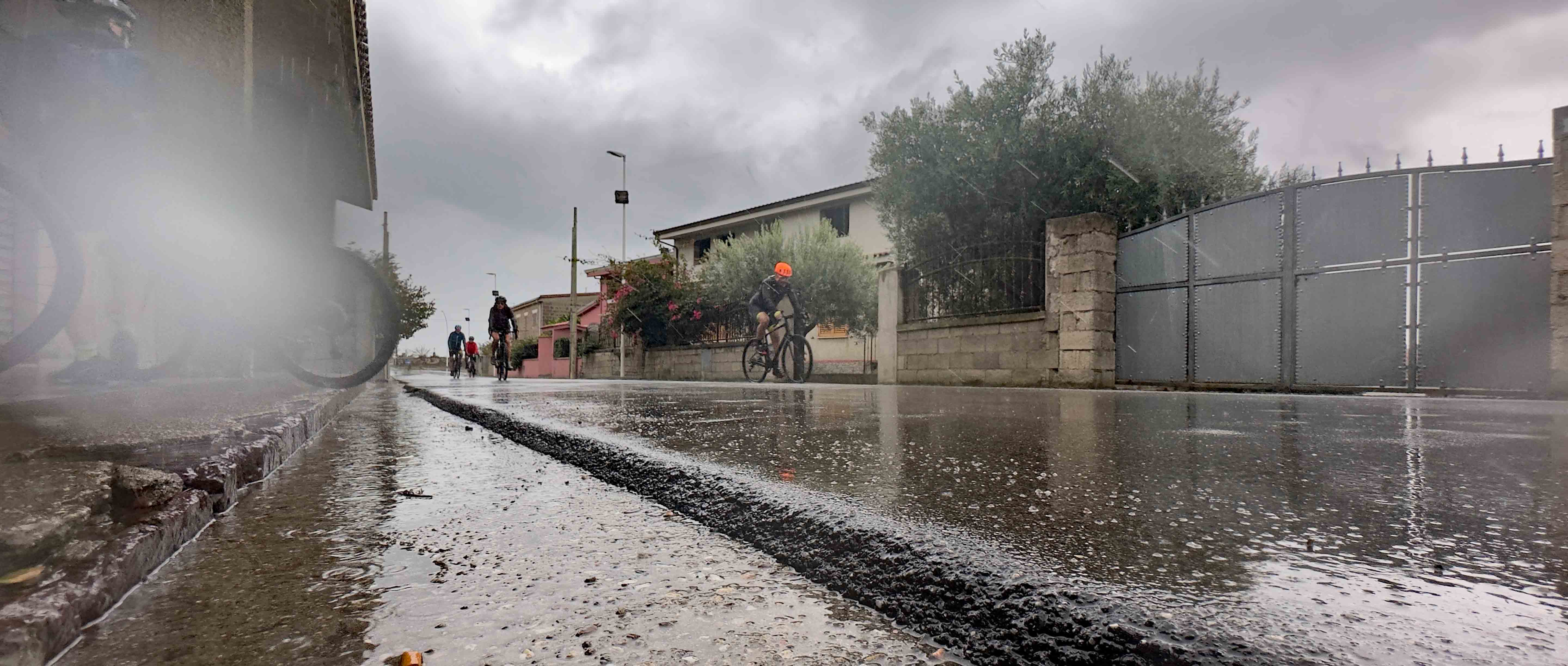
Fortunately the temperatures were still warm and the rain wasn’t unpleasant in the way that northern European rain can be, but it still wasn’t a lot of fun. After an hour or of riding, with water continuing to pour out of the sky, Lieven found an appropriate place for us to stop, regroup and take shelter. “I’m going to alter the route for the next section” he told us “Instead of taking the off-road trails shown in the GPX file, we’ll stick on the tarmac. The geology around here is mainly limestone which means the trails will be incredibly greasy and unpleasant to ride, so we’ll bypass the sections that I think will be the most problematic. It means that everyone needs to ride together as a group for a while.” Purportedly, the boxer Mike Tyson once said “Everyone has a plan until they get punched in the mouth." He was obviously wasted as a boxer and should have become a gravel guide instead, as the metaphorical punches can arrive on a regular basis when you are looking after a group of gravel-loving cyclists. Thinking on your feet and coming up with a Plan B (or C or D…) is one of the most critical skills that cycling guides need to possess. So if that’s the case, how does it fit with the backgrounds of Lieven, a PhD qualified archaeologist, and Mirko, a former circus performer, marketeer and filmmaker?
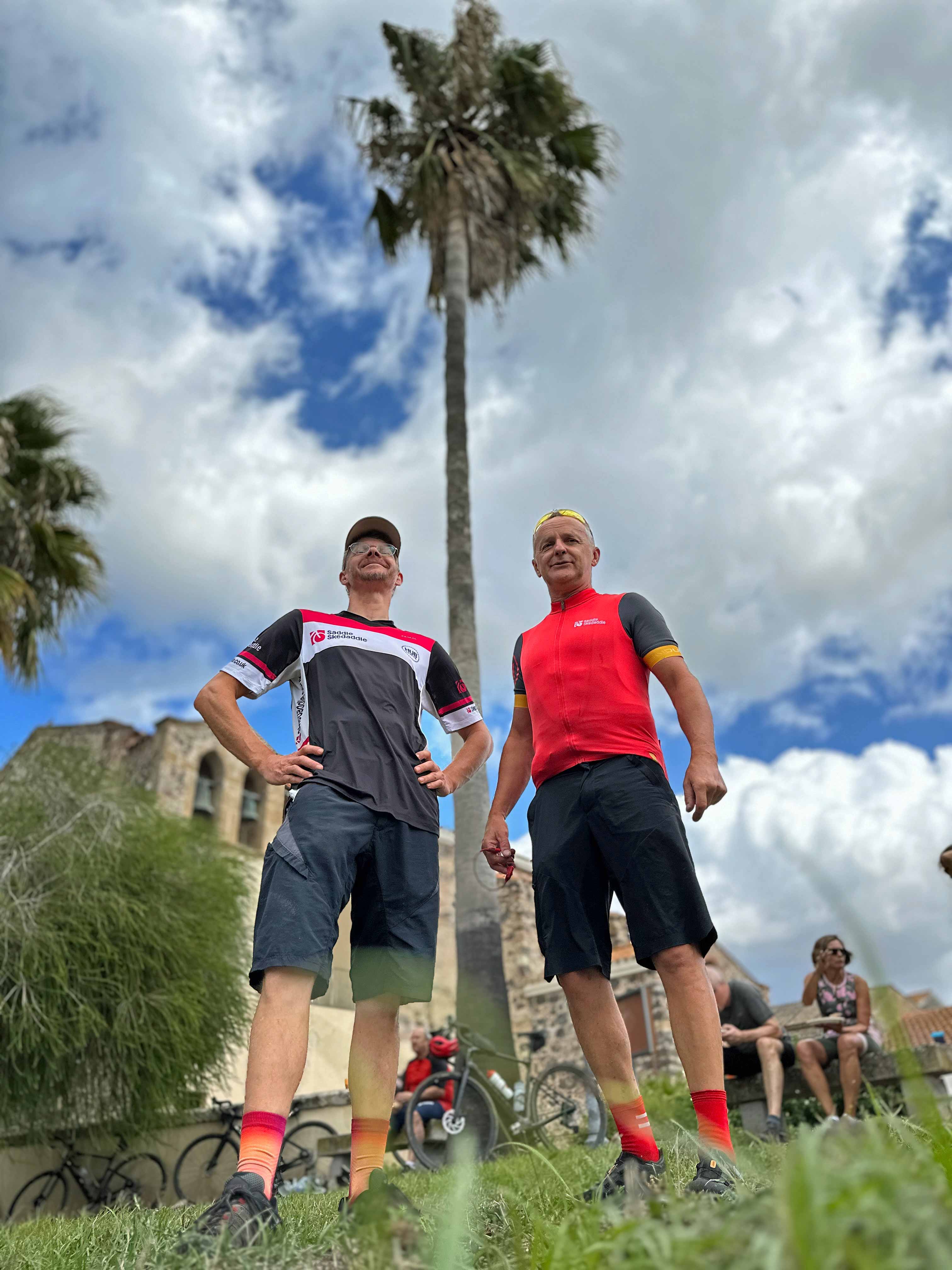
Lieven, left in the image above, comes originally from Belgium, but has lived on Sardinia for more than a decade and puts his skills as a polyglot to use daily whilst guiding, often needing to switch languages between sentences when talking to both clients and local people. Mirko, right, has an equally impressive command of different tongues. One of my first impressions of him was hearing him converse cheerfully in Russian with one of the members of staff of a hotel we were staying in. “Where did you learn that?” I asked him “Oh, I used to work in the tourism business in my home town of Turin and we had a high proportion of Russian visitors to the city. I thought I should learn it so that I could converse with them and help answer their questions.” Both of them speak English with a level of fluency that is practically native and manage sarcasm, irony and understatement with an ease that made me feel very inferior. It also made me realise that working as a professional cycling guide is about a heck of a lot more than just having the ability to ride a bike.
Allen keys. Pedal spanner. Torque wrench. Tape measure. Lieven carefully goes through the tool box for the trip and double checks the contents against the kit list. Being imbedded on a cycling tour as a journalist is a really interesting experience – you get to peer behind the curtain and witness the unbelievable amount of work that goes into making a tour run smoothly. Before the customers have even boarded their flights from home, Mirko and Lieven are at Skedaddle’s workshop, prepping the bikes, double checking the vast amount of kit they take on tour, packing the trailer, completing a safety check on the vehicle and double (or triple) checking the arrangements for each day. Attention to detail, self-reliance, mechanical aptitude. My list of required skills for being a tour guide seems to grow ever longer.
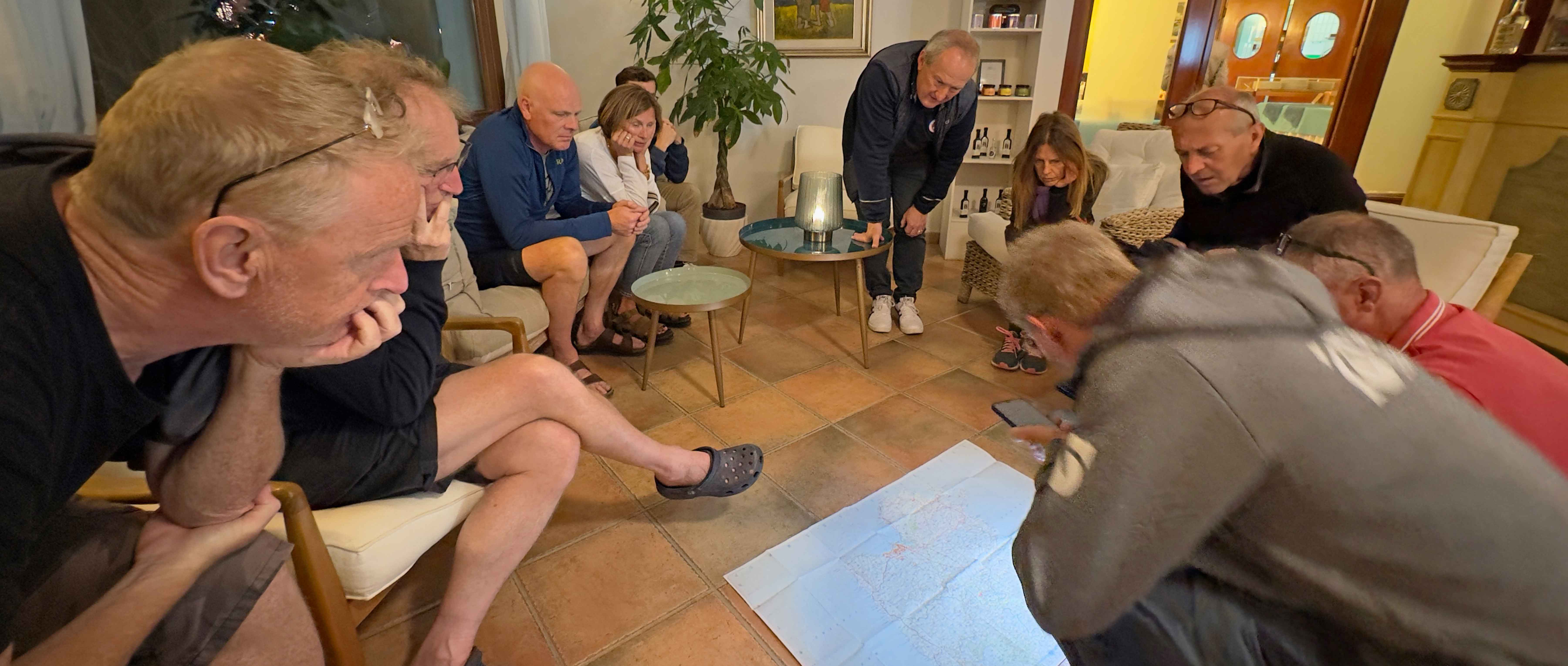
“What time is breakfast tomorrow again?” The question made me wince slightly, as it was only two minutes earlier that Lieven and Mirko went over the plan for tomorrow. But the customers on the trip are tired. Some got up before 4am in order to get to the airport to catch their flight out to Sardinia. The guides quickly summarise, again, the plan but also confirm that everyone has been added to the WhatsApp group for the trip. “We’ve set up two chat groups” said Mirko “One, is where all the useful information – timings, practicalities etc will be posted. The other is for everything else. If you’d like to share your photos from the day, the chatty group is where to put them.” I add patience and IT skills to my list.
The timings for each day generally follows an identical pattern. Breakfast is taken at the same time every day. Customers are asked to bring their bags to reception at the same time. The group rolls out at the same time. Consistency and simplicity are the key to making things run smoothly. Each day the guides swop roles. A day of driving the support vehicle and a day guiding the group on the bike. Both are equally demanding, but in different ways. Whoever is driving manages all aspects of the logistics – completing a daily safety check on the vehicle and trailer, loading the bags into the trailer, helping get the customer’s bikes ready for departure, collecting the cool boxes and ice packs from the overnight accommodation’s storage, double checking that all keys have been handed in and passports collected, doing any shopping that is necessary, driving the vehicle to the first food spot and setting up cold drinks and snacks, driving to the lunch spot and preparing a picnic, driving to the afternoon food spot, rushing on the hotel, unloading the bags, checking everyone in. I add stamina, driving skills, physical strength and the ability to multitask to my list.
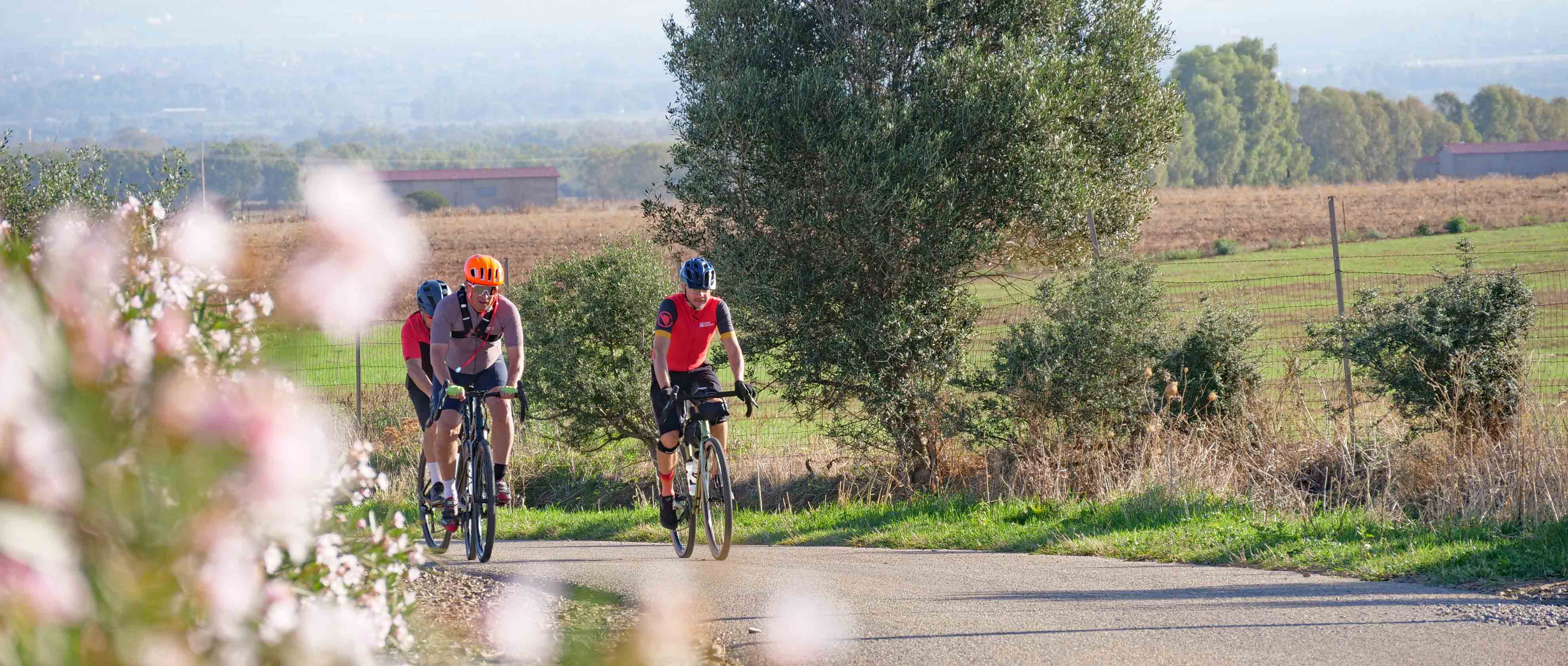
In comparison, the cycling guide’s role might look like the easier of the two. There’s obviously the buzz from getting paid to ride your bike (hopefully) in the sunshine, but the practical parts of guiding are more demanding than you might expect. The customers are given the option to have a GPX file of each day’s routes, which should make navigation simpler, but there are always IT glitches. Guides soon learn how to get the best out of recalcitrant GPS units. Once you’re rolling, guides spend their time being a two-wheeled sheep dog – constantly checking where everyone is, riding with different people to make sure they’re ok, managing the group at difficult junctions, giving out nuggets of useful information about the landscape that we’re passing through, dealing with any incidents (mechanical or first aid wise), choreographing group photos at suitable locations, translating coffee orders at the mid-morning café stop. When a day is running smoothly and everyone is happy, a day of bike guiding is right up there at the top of the “perfect job” list, but when you’ve mended your 10th puncture, your group are hot/hungry/tetchy and you’ve answered the same question for the Nth time, having the patience of a saint become essential skills to possess.
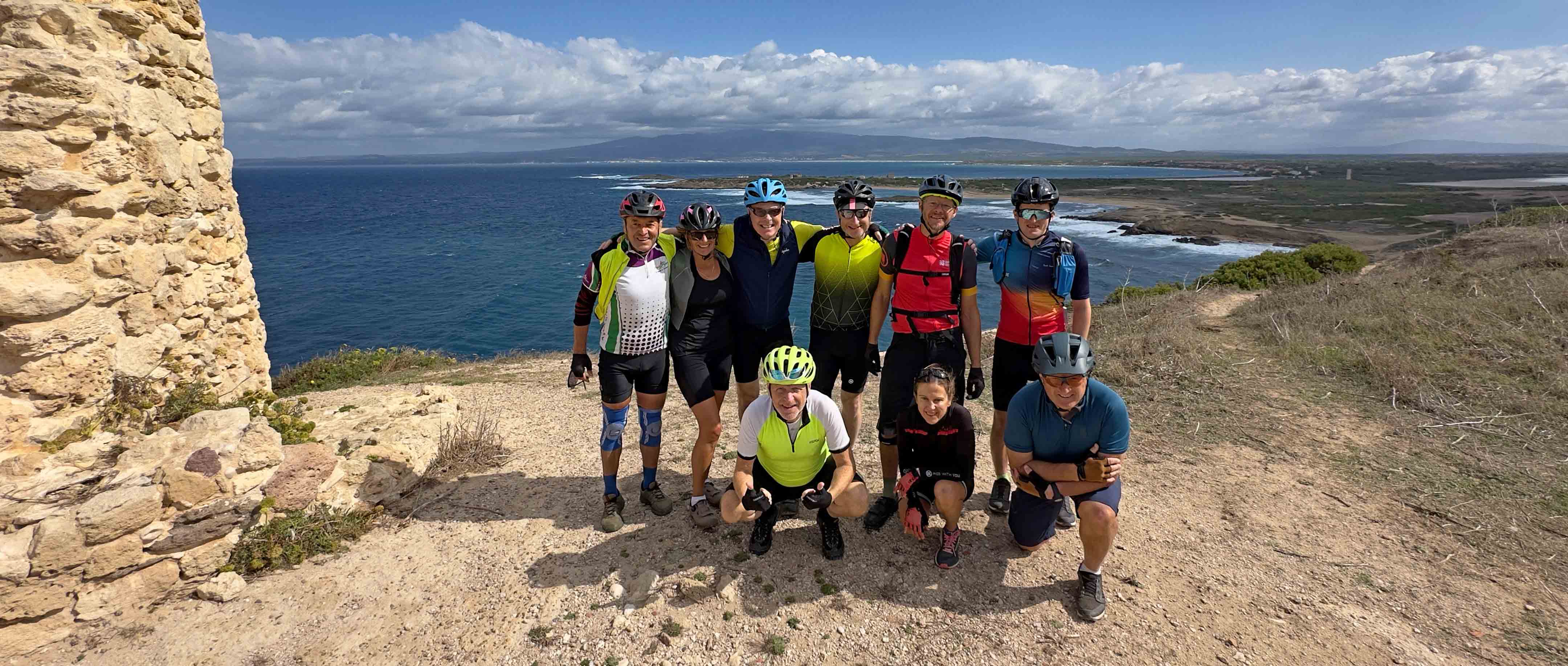
A group of cyclists is always going to be diverse in nature. The bigger the group, the greater the chance of disparity in fitness, ability, experience, skills and desires. Trying to homogenise a disparate group doesn;t always work, but when successful, it makes the tour run more smoothly and helps everyone to have a better experience. It’s not always easy to do, but fortunately having a shared physical experience has a remarkable ability to help a group bond. The initial few hours on the first morning are often a bit daunting, but generally by lunchtime everyone is starting to relax and the group bonds are developing. The best guides help facilitate this, even if they’re doing it subtly. It’s a bit like being the perfect party host crossed with being an international ambassador crossed with being a psychologist. More attributes for the skills list.
Which café will let us use their covered terrace for a picnic in bad weather? What do the strange indentations in the bedrock at the Neolithic burial ground mean? How long is the sandy section? Even with detailed “guide notes” and GPX files, having an incredible memory for places, local history and trails are the things which set an amazing guide apart from a good guide. Each of the them comes with their own particular skill set and they will subtly tweak the tour to suit their strengths – an impromptu skills session in the sand, a lesson in Italian coffee culture at the morning café stop or an unofficial guided tour of a site of interest. Each guide has their own peculiar specialism and the best ones impart their knowledge, passion and skills in a way that enhances the customers’ experience without making them feel they’ve gone back to school.
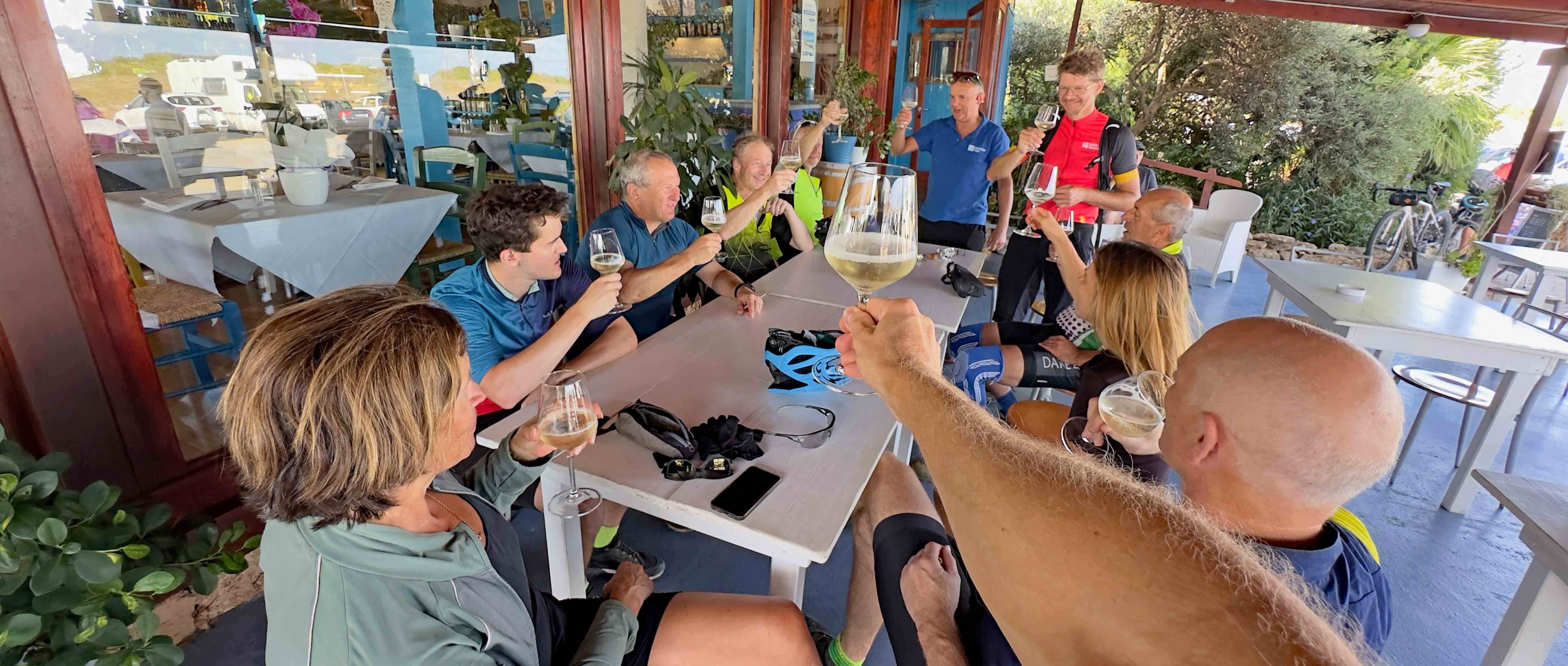
Even if the goal is the same – get your group safely and happily to the end of the trip, there isn’t one ‘perfect’ way to do it and every guide seems to take a different approach. Some shepherd their cycling flock quietly (but efficiently) from the rear, some run a benign dictatorship, some use their naturally bubbly character to inspire their group to the finish line.
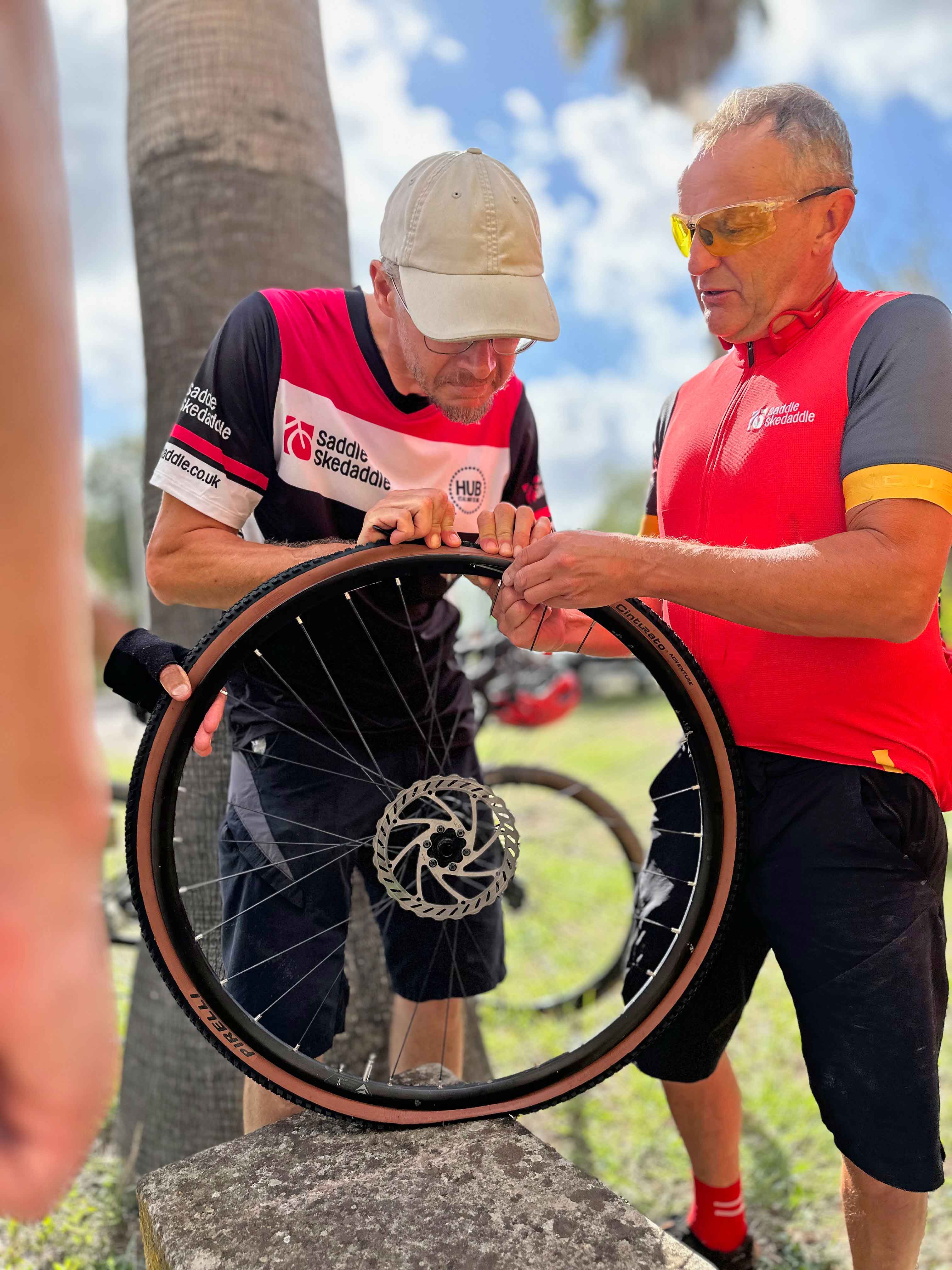
Working as a cycling guide isn’t a job for everyone. You work long hours, it's never going to make you rich, you will be physically and mentally 'cooked' at the end of each trip and you have to juggle a myriad of different tasks simultaneously. But it’s also one of the best jobs you could ever have. The ‘buzz’ of getting a group of total strangers safely through a trip, teaching them some riding skills, imbibing them with new knowledge and helping turn them from strangers into friends is difficult to understand unless you have experienced it. It’s not a job you would want to do for ever, but for the right person, the life of a gravel cycling guide is unbeatable.
If you would like to find out more about the life of a Saddle Skedaddle cycling guide, head over to their website. They will start recruitment for the 2026 season towards the end of this year.
If you would like to find out more about their range of guided (and self-guided) cycling trips, check out their website here.