Over the years, we’ve shared plenty of stories from the viewpoint of riders and, from time to time, the event organisers themselves. Far rarer are tales from those working behind the scenes. In this article, pro photographer Sean Benesh provides a fascinating and philosophical take on what elevates some gravel events into unforgettable experiences, while others are simply… a bit meh.
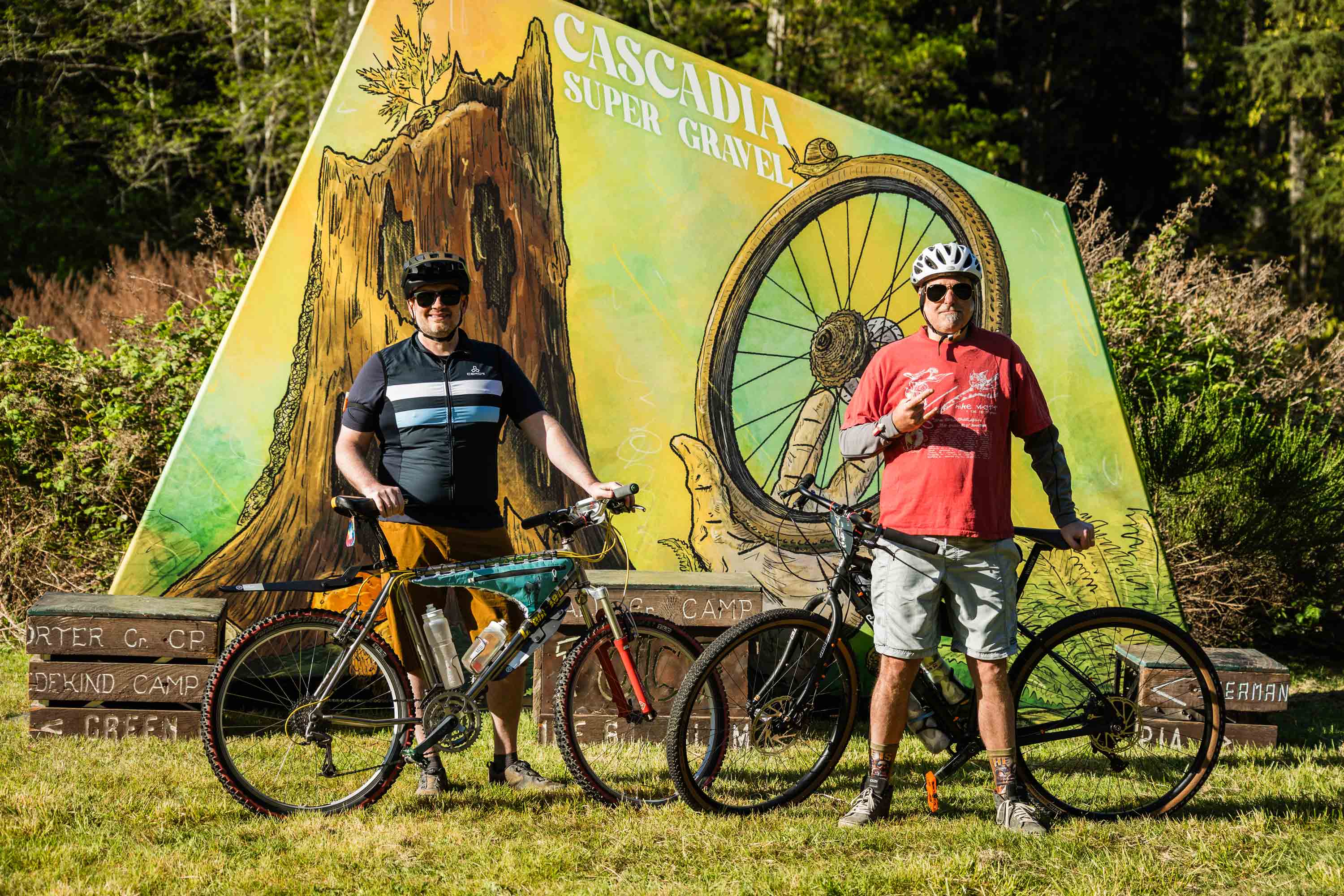
I’ve been a part of more gravel races than I can count. Most of the time, my role is that of a photographer, capturing the moment. On some levels, that sounds exhilarating. While it is a blast, most of my time is spent waiting, watching … and thinking. Recently, I shot photos at Cascadia Super Gravel outside of Olympia, Washington. It was my first time there. While I’ll circle back around to more details of the event itself, I want to pick up where I left off a little earlier… thinking.
Shooting races and being alone on some dusty or muddy gravel road for hours on end leaves plenty of time for reflection. Most often, I’m thinking about the race itself. Sure, I’m always checking out the latest bike tech and figuring out which colour palette is in this year for kits as racers zip by.
"I kept thinking to myself - there’s something special happening here.”
As someone whose life revolves around social media, both as a practitioner and an academic, I pay attention to the full brand experience of races. Not only what happens on social media, but also the in-person experience of the race. Standing on the edge of a gravel road in Capitol Forest during Cascadia Super Gravel, I was processing everything I had seen, heard and experienced thus far. While I was still formulating my thoughts, one thing was certain: This race was … and is, magical. I kept thinking to myself, “There’s something special happening here.” I wanted to figure out why.
Why Some Gravel Races Stand Out
When I’m not in the classroom teaching undergraduate digital media courses, I’m working with race directors and helping them with social media, digital marketing, public relations, photography, video and more. I’m acutely aware of the stress that comes when registration numbers are lagging.
Not too long ago, I took an informal poll about registration numbers and heard from quite a few race directors. Some were seriously stressed. That’s not a fun feeling, especially when so much time, energy and money are invested into each race.
"As I milled around before each wave of racers took off, there was a palpable energy and excitement."
When numbers lag, the follow-up question is always the same: Why? Bad marketing? Bad social media? Bad website? Bad in-person experience? Bad course? The sense I got from Cascadia Super Gravel was that they were operating on a different plane. Numbers? Well, they were up again. More than that, as I milled around before each wave of racers took off, whether they were tackling the 100-mile, 50-mile, or 30-mile course, there was a palpable energy and excitement.
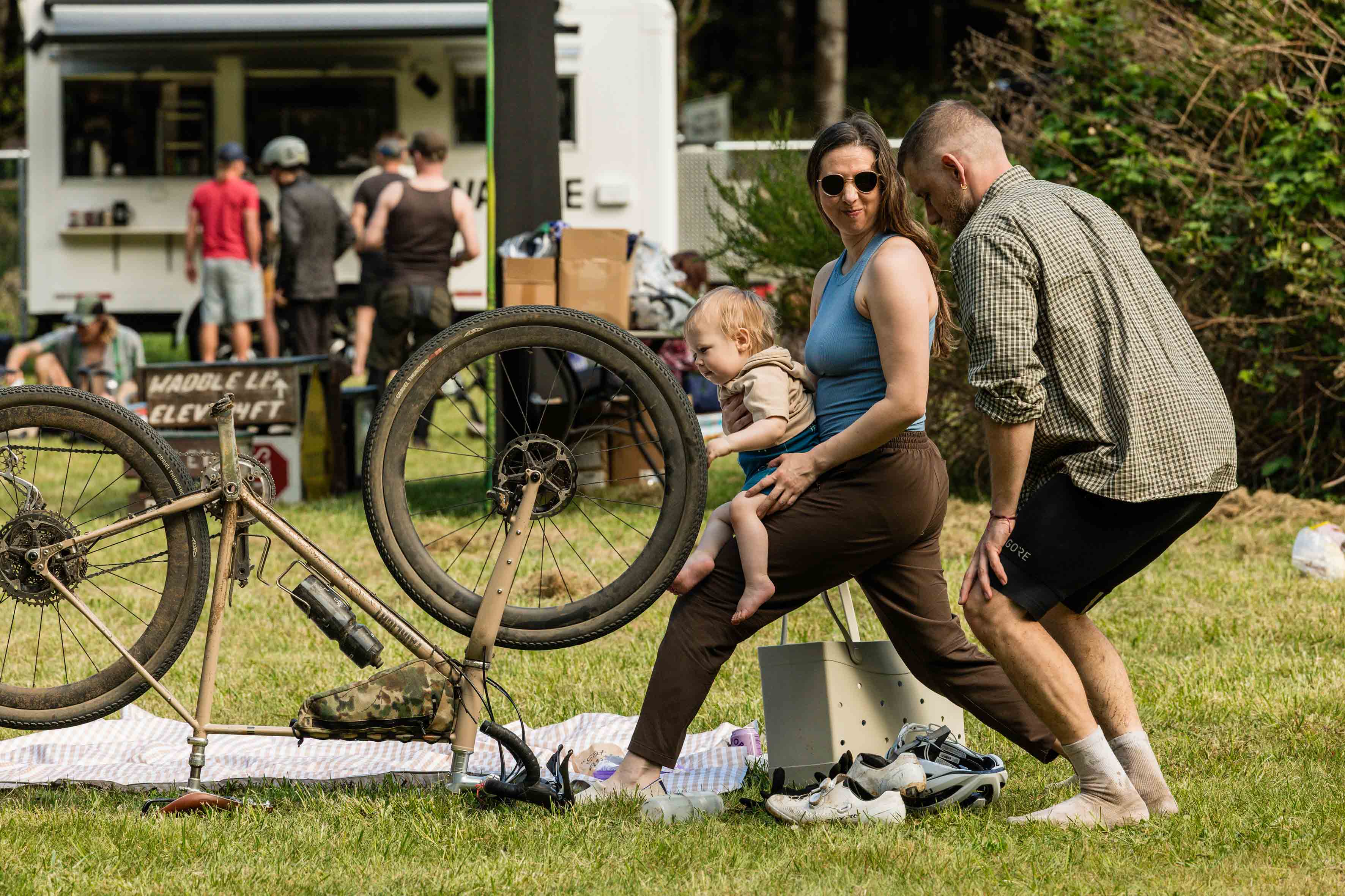
Racers were genuinely stoked to be there. I listened to all the chatter as racers stretched, loosened up and checked over their bikes one last time before the race began. There was anticipation about what kind of course Cam Sloan would cook up this year. All they knew was to expect the unexpected.
Since the weather was forecast to be sunny and in the 70s F, mud and misery were not on the menu this year.
Climbing Into Capitol Forest
Once the final wave of racers took off, I climbed into my SUV and headed onto the course. I quickly caught the pack and graciously passed them, hoping that I didn’t kick up too much gravel dust as I crept by. It was pretty easy to pass since the first obstacle from the get-go was a long, lung-busting climb.
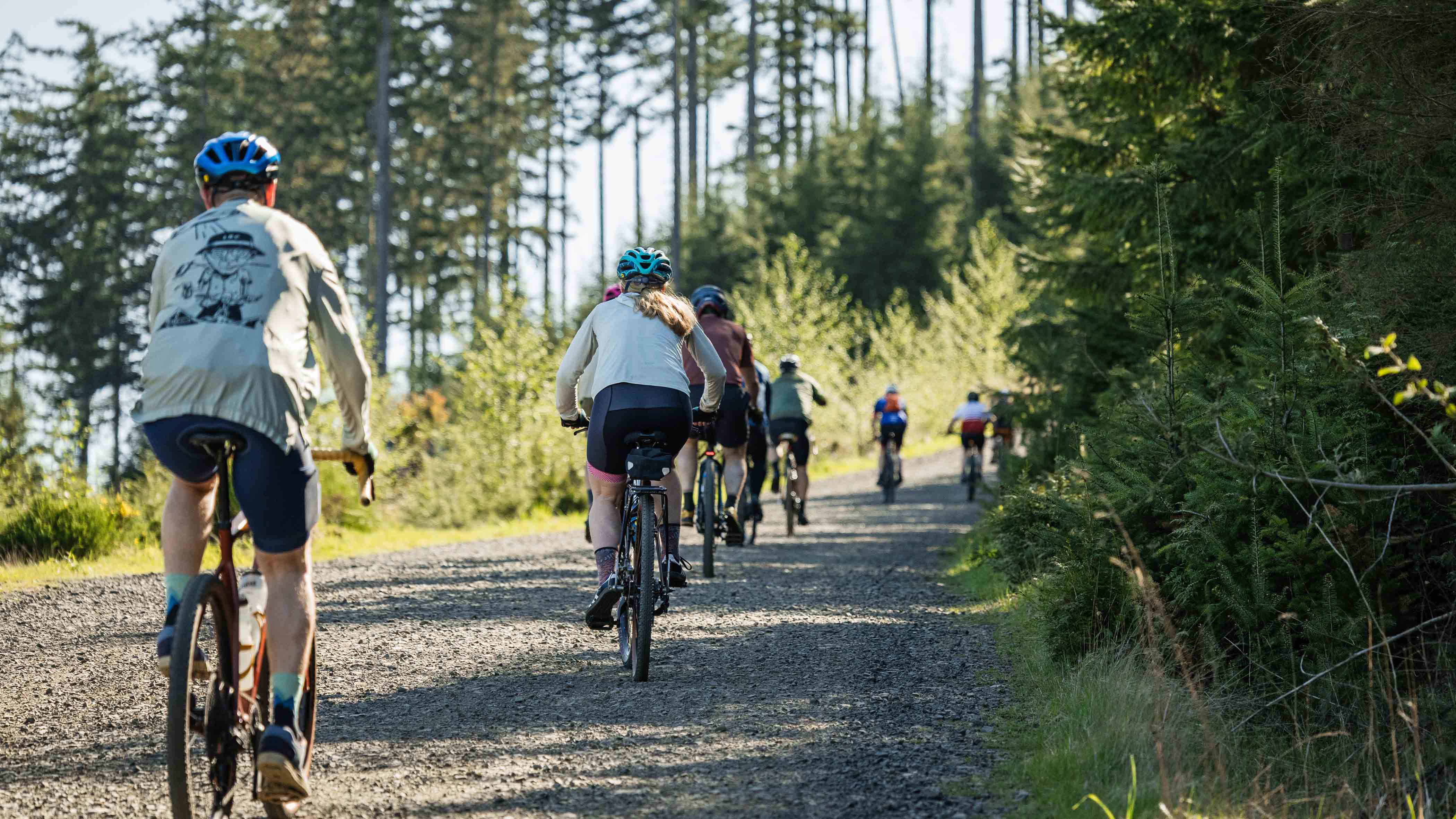
After I got far enough ahead, I pulled over, grabbed my camera and stepped out to take photos. We were maybe a mile into the course and the suffering had already set in. However determined or pained, expressions quickly turned into smiles once racers saw my zoom lens pointed in their direction. More than one racer yelled out: “Yeah, Cam did it again.” “Gosh, he makes these courses so hard, but that’s what I love. It’s nuts!”
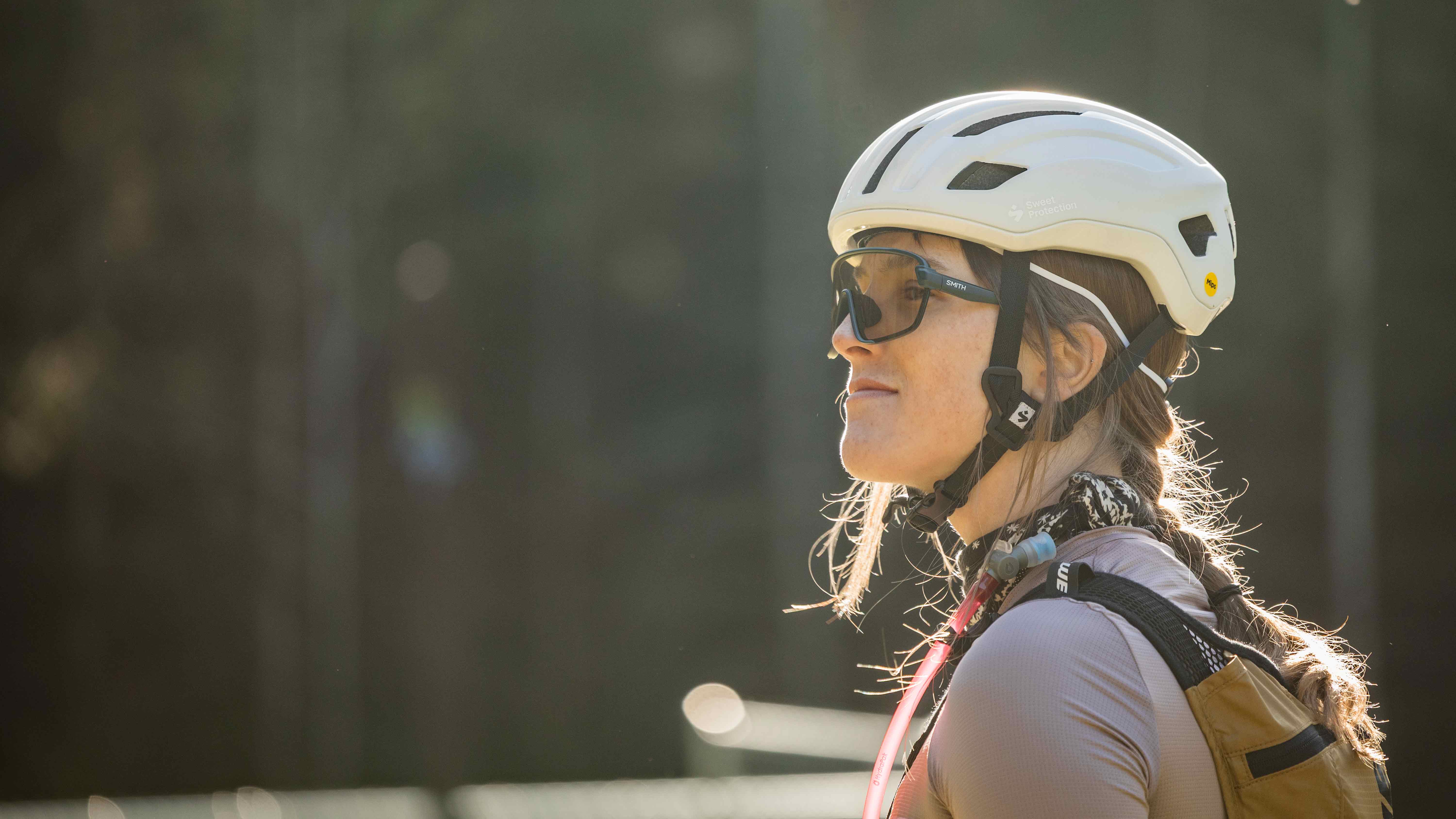
Eventually, the final racers pushing bikes uphill passed by. Since the race was running clockwise in a loop, I began backtracking counterclockwise toward an aid station. Luckily, I had the route downloaded to my phone because before long, I lost all cell reception. It was just me, a bag of sunflower seeds, 70s country music, open windows and my camera sitting on my lap. It was an immersive experience in Capitol Forest.
Riding Through a Working Forest
Like so much of the storyline throughout the Pacific Northwest, the land that became Capitol Forest was heavily logged in the late 1800s and early 1900s. Large portions were eventually acquired by the state through tax foreclosures during the Great Depression. The forest was then intentionally managed as state trust land to generate revenue, particularly for public institutions like schools.
"Gravel riders are repurposing industrial infrastructure for recreation, adventure and community."
The gravel roads carrying these racers were not built for recreation. They were built for extraction. For felling trees and moving them to market. Now, gravel riders are repurposing industrial infrastructure for recreation, adventure and community. That transformation is fascinating to me.
Races like Cascadia Super Gravel do not exist in a vacuum. They exist because of a complicated relationship between land management, logging history, public access, recreation and stewardship. You feel that when you’re out there.
The Most Unique Aid Station I’ve Ever Seen
After what felt like an eternity working backwards along the course, I arrived at the final aid station … if you can even call it an “aid station.” It was more like a taco stand meets whiskey bar meets bike shop meets rest stop meets dance party. The most medicinal substance I saw administered was a shot of whiskey paired with pickle juice. I’ve been to plenty of races and passed through plenty of aid stations. It’s not that they were forgettable. They just weren’t memorable. This one was different.
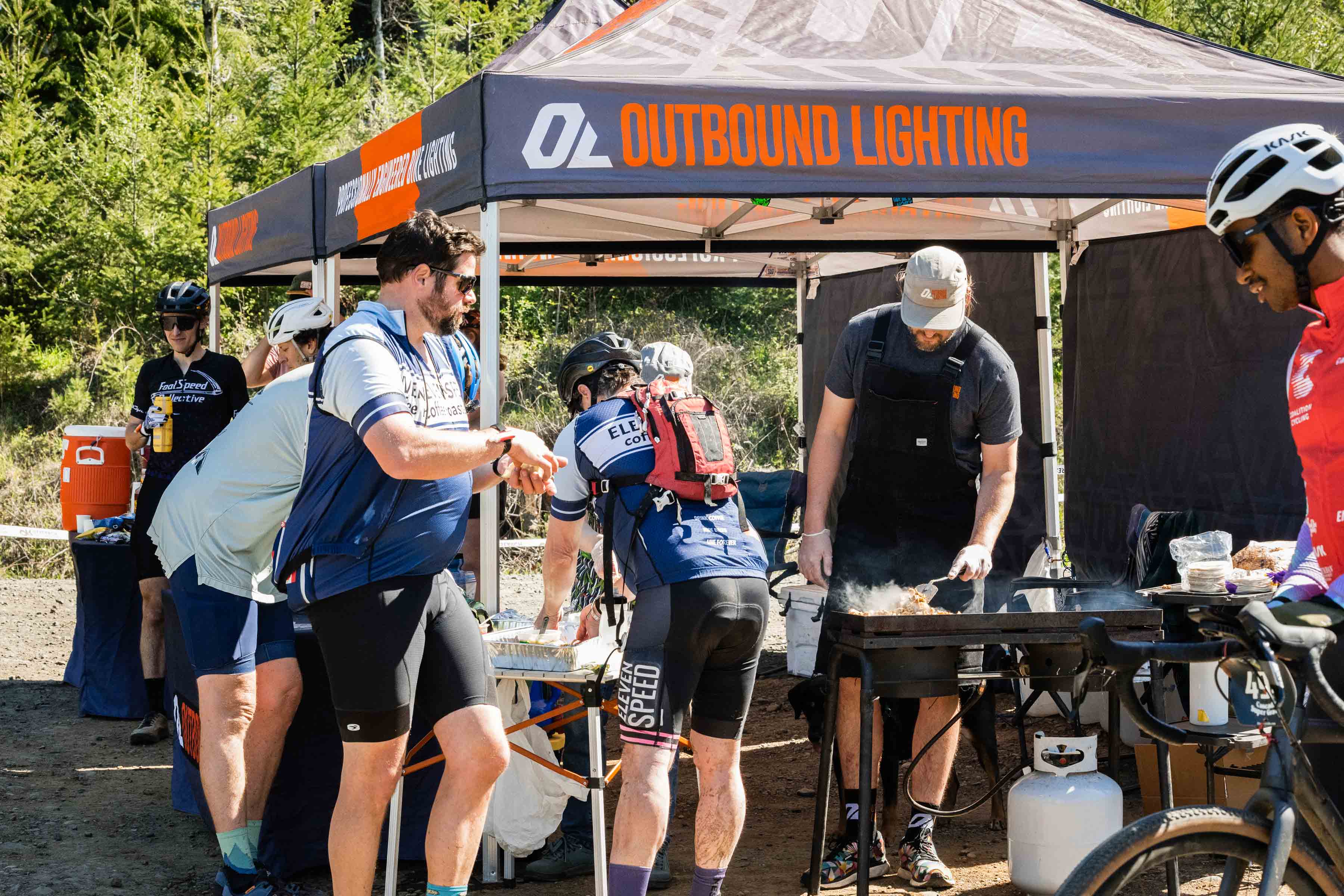
A unique timing feature made the aid-station-party a place where racers could genuinely hang out. Each racer passed through a timing gate that stopped their race clock. Whether they stayed three minutes or an hour, the clock wouldn’t start again until they crossed back through the exit timing gate.
Some racers hung out for quite a while. Yes, this was a race, but it was also undeniably fun. At one point, the leader of the 50-mile course came careening into the pit stop and stayed for a good while. Soon, the racer currently in second place rolled in as well. I watched the two of them talk, laugh and soak up what makes this race so special.
What Makes a Gravel Race Memorable?
Back to my roadside reflection. I left my SUV parked at the aid station and continued backtracking on foot with my camera in hand. This time, I was walking along the 50-mile course. Even more time to watch and think.
"Why do some races explode in popularity while others struggle to gain traction?"
It’s easy to say that races with some kind of nebulous “It factor” attract riders and strong registration numbers. It’s a whole different challenge to understand why. Why do some races explode in popularity while others struggle to gain traction? It can’t just be scenery. No offence, but have you ever been to Emporia, Kansas? As a native Iowan, I’m fully aware of the endless miles of gravel roads throughout the Midwest. We’re talking about K-A-N-S-A-S. I could say the same thing about Iowa.
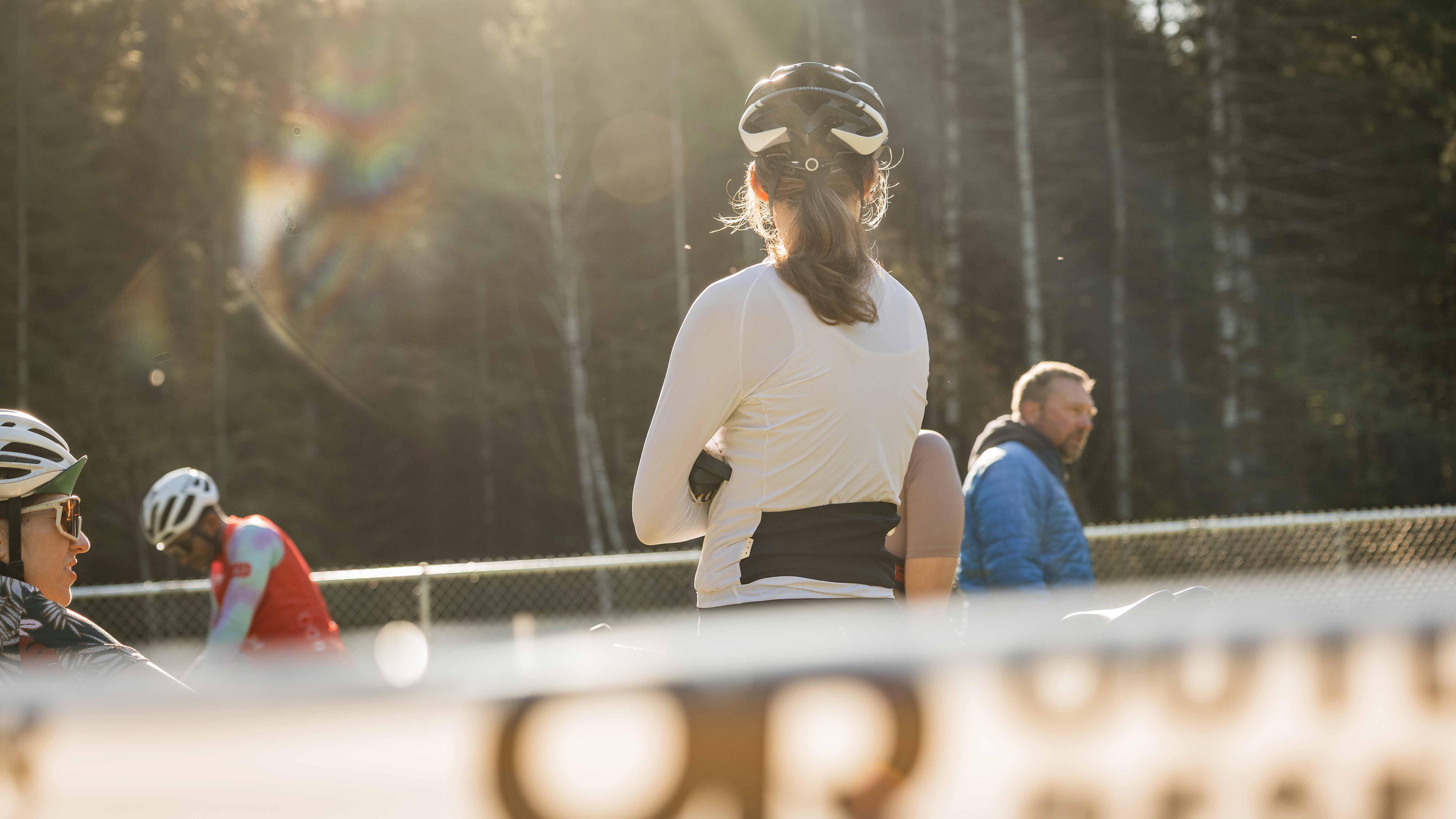
Meanwhile, racing beneath the volcanic and glaciated peaks of the Cascade Mountains in the Pacific Northwest is spectacular. Circumnavigating the San Francisco Peaks outside of Flagstaff, Arizona, on a gravel bike is mesmerising. But what makes races like UNBOUND Gravel unforgettable is not just scenery, it’s the experience. That same energy exists at races like Spirit World 100, the Oregon Trail Gravel Grinder and now, in my opinion, Cascadia Super Gravel. These races offer something worth travelling for. Kids today would say it has “aura.”
Beyond the Finish Line
In any given race, only a tiny handful of riders have a legitimate shot at the podium. That’s not why most people sign up. Thirty thousand people line up each year for the Boston Marathon, not because they think they’re going to win. They’re chasing a bucket-list experience.
"The races and events that understand how to create and harness that energy are the ones that stand out among their peers. "
Those were the thoughts bouncing around in my head as I stood alongside dusty gravel roads in Capitol Forest, photographing racers giving everything they had. As the race wound down, I climbed back into my SUV and headed toward the finish line, where food, drinks, high-fives and podium celebrations awaited.
At one point, the trees suddenly cleared, revealing a panoramic view of the Olympic Peninsula and its craggy, snow-capped mountains. I immediately pulled over, parked, stepped out and simply stood there with the wind whipping up from the valley below. I was in awe.
It doesn’t matter how many times I see a mountain range. I’m still just as struck as the first time I laid eyes on one of these rock behemoths. It felt like the perfect final stretch back toward the festivities. A picture-perfect moment that captured what this race is all about. Cascadia Super Gravel is Pacific Northwest gravel racing at its finest.