According to route creator extraordinaire Timo Rokitta, his latest creation, The Rheinhessen Gravel Giro“ takes you through the “land of a thousand hills”, past endless vineyards, over rough pavé sections, fast gravel tracks, and through small, authentic villages. Here, athletic challenge meets pure landscape magic.“ If that sounds like your perfect gravel adventure, then keep reading….
The marketplace of Nierstein is still quiet on this morning. A few chairs sit outside the cafés, a delivery van unloads bread somewhere - and right in the middle, a gravel bike that looks as if it doesn’t yet realise that today is going to be a pretty big day.
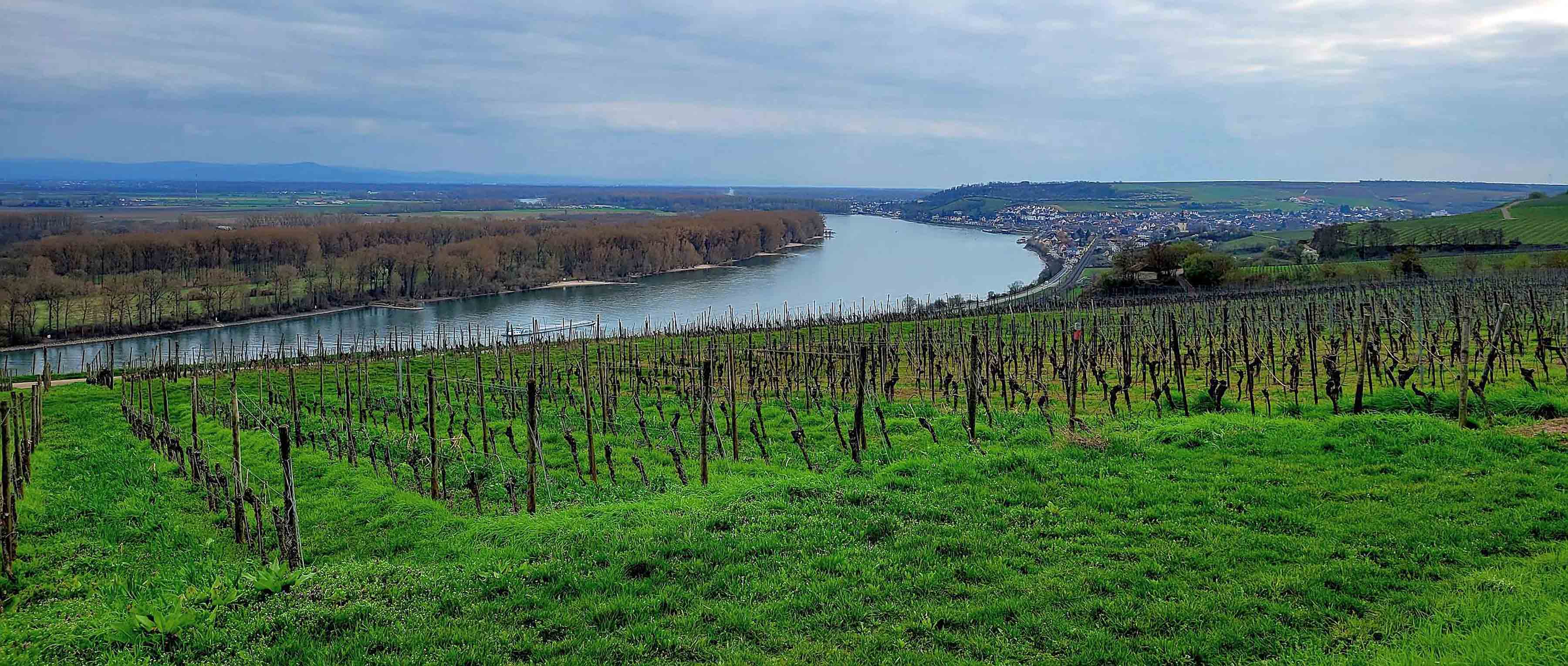
The route of the Rheinhessen Gravel Giro begins unspectacularly, almost politely. From the marketplace, you roll out onto the old railway cycle path, which once carried trains and now carries cyclists through the vineyards. The asphalt soon turns into gravel, your pulse rises slowly and at the old radio hut the stage suddenly opens: below us lies Nierstein, behind it the wide flow of the Rhine drifting lazily through the plain. Somewhere in the distance, almost unreal, the skyline of Frankfurt am Main flashes into view - a distant slip of glass and steel in a landscape of vines and loess [Ed - a fine, fertile windblown soil]
Above the vineyards, the first major landmark soon appears - high above Oppenheim stands the ruin of Landskron Castle, as if someone decided this landscape urgently needed a dramatic backdrop. Oppenheim itself feels like a town that has spent several centuries deciding to preserve everything that ever happened to it. Especially underground: the famous Oppenheim cellar labyrinth. A tangle of corridors and vaults that once kept wine cool and now gives the impression that a medium-sized adventure story could easily take place down there. Visitors can even join a guided tour “beneath the surface.”
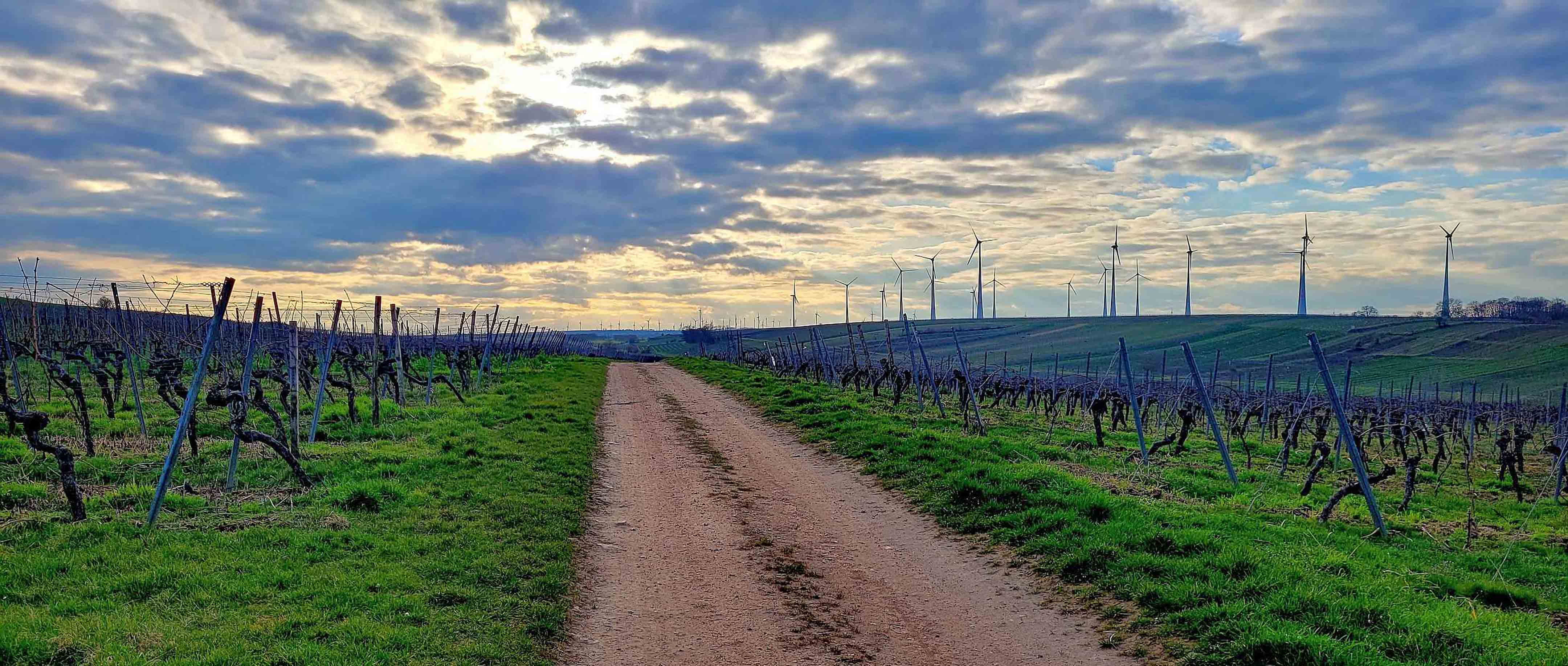
The rolling Rhine terrace path is perfect for warming up: small undulations, short climbs, long views over the vineyards. Exactly the kind of terrain where a gravel bike purrs quietly and the rider wonders why they ever stuck to riding smooth asphalt. A few kilometres further on, you spot the distinctive silhouettes of the Saracen towers of Guntersblum - two strange, almost oriental-looking towers in the middle of Rheinhessen’s wine country. They feel a bit as if someone accidentally dropped a piece of Arabia among the Riesling vines.
Shortly afterwards, near Alsheim, the path suddenly turns wild. Sunken lanes carve deeply into the loess soil, forming a small labyrinth of curves, edges and dusty channels. For a gravel bike, this is pure joy - you dive in, accelerate, slide a little through the corners and come out with a big grin on your face.
Beyond Osthofen, the terrain calms down. The landscape becomes wider, flatter and an old gravel railway path leads straight toward the historic imperial city of Worms. But before reaching it, there’s a short detour to Herrnsheim, where the elegant Herrnsheim Palace lies to the right of the track in its spacious park. The park, once shaped by landscape architect Friedrich Ludwig von Sckell, feels like a romantic pause in the gravel adventure: old trees, winding paths.
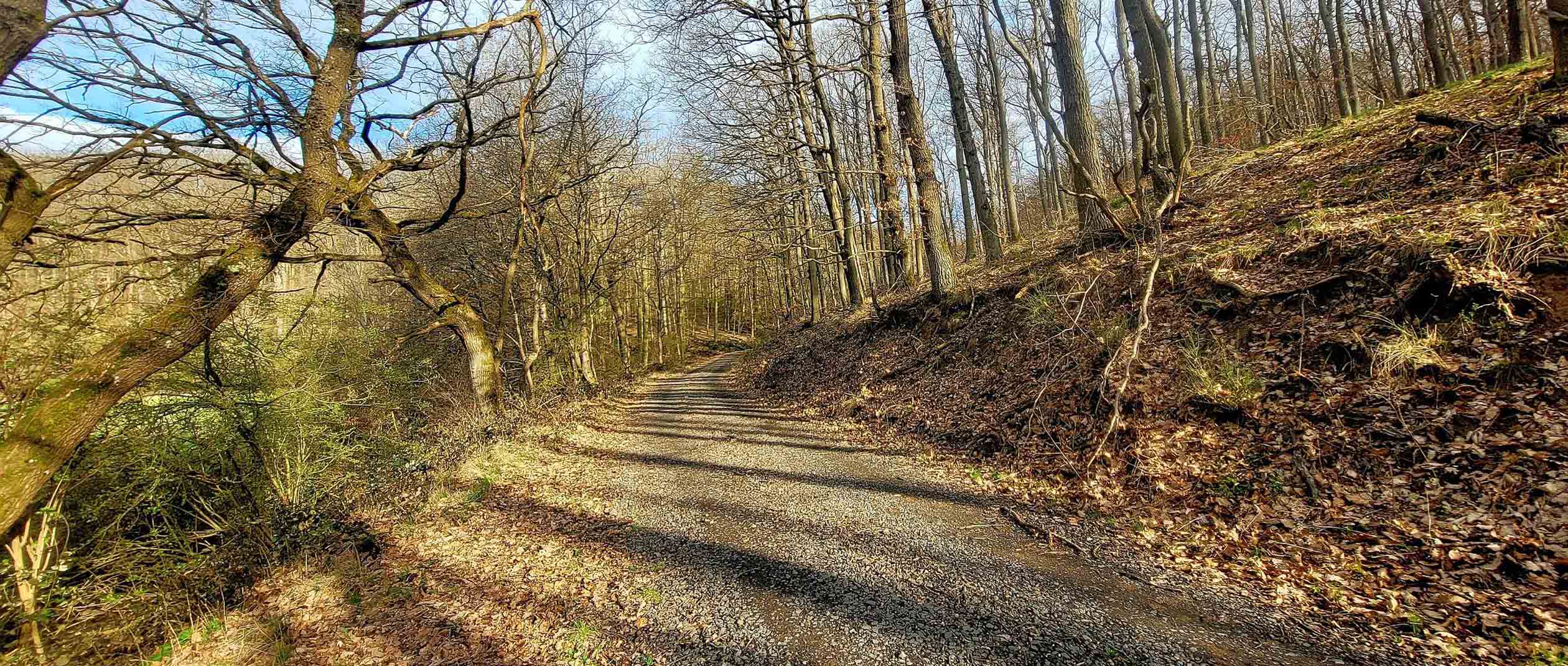
But the route doesn’t linger on history for long. It quickly finds its way to the Pfrimm, an inconspicuous yet surprisingly perfect companion for gravel tyres. Along gravel paths, we follow the small river westward. The city slowly disappears behind us, fields and meadows take over again and eventually one of Rheinhessen’s quiet beauties opens up before us: the Zellertal. Everything feels a bit wider, a bit brighter here. Vineyards climb the hills, small villages are scattered through the valley. In the background rises, like a patient guardian of the landscape, the Donnersberg. The highest mountain in the Palatinate waves from afar, as if to say: “You could ride up here too.” Fortunately, the track has other plans. Before the legs get nervous, it turns north into expansive forests. The ground becomes softer, the shade denser and suddenly the hum of the tyres echoes like in a cathedral of beech and oak.
Near Wendelsheim, the landscape opens again. The path leads across fields, through vineyards and finally up to one of Rheinhessen’s most distinctive landscapes: the Siefersheim heath. Up here, the heath feels almost Nordic. Barren soils, low shrubs and juniper bushes that look as if they have withstood centuries of wind. In summer, everything buzzes and the view stretches far across hills and valleys. It’s one of those places where you stop briefly, not because you have to, but because you simply want to look.
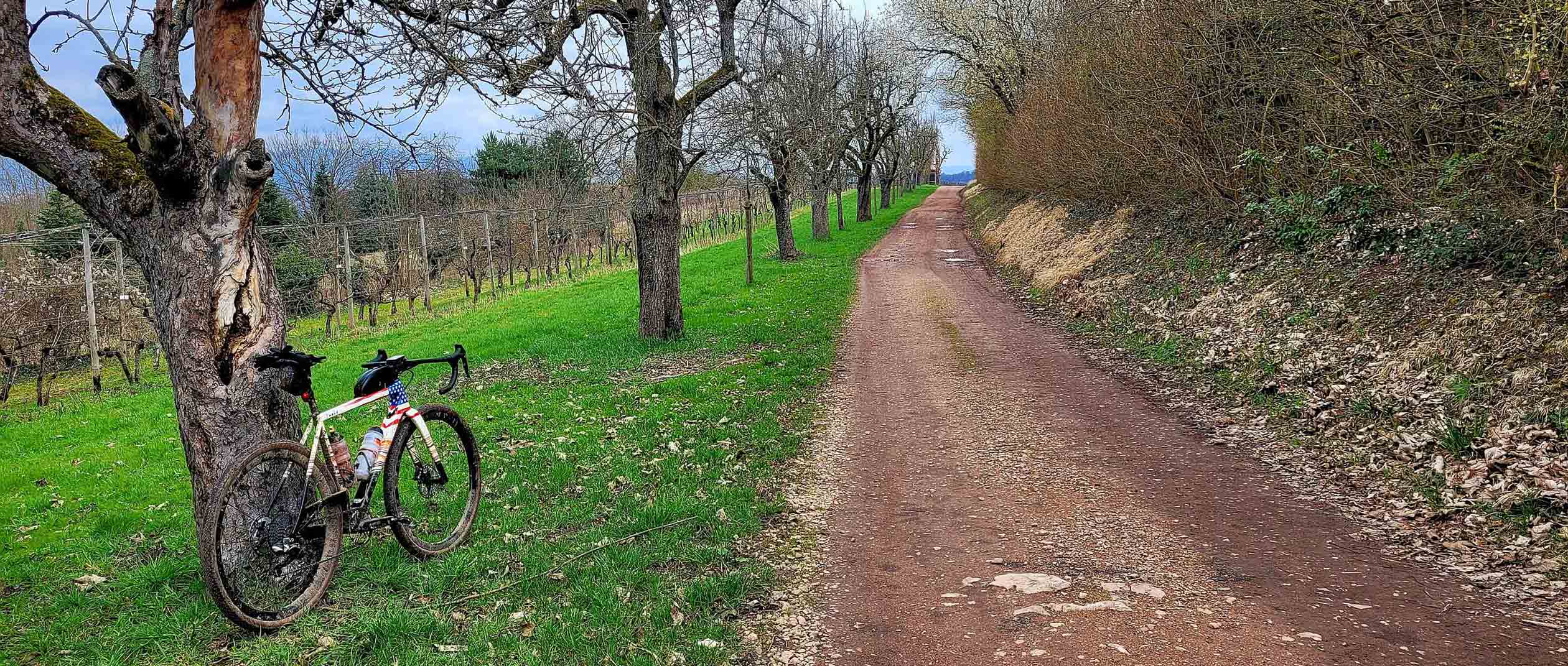
The descent that follows quickly demands full concentration again. The old Roman road down to the Appelbach is rough, rocky and wonderfully bumpy. The gravel bike hops over the stones, arms working like shock absorbers, and at the bottom of the valley, you’re certain: this is exactly what this bike was built for.
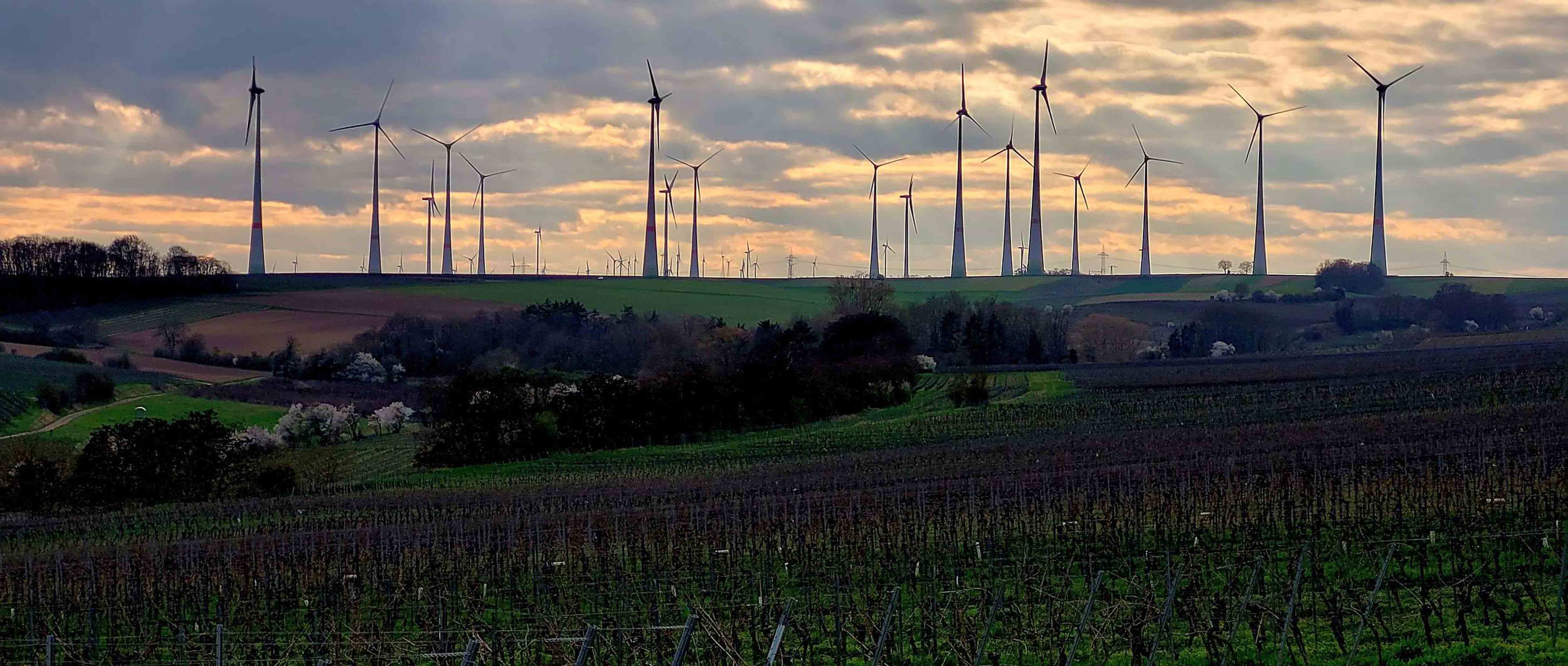
Soon after, large rotors turn on the horizon. Near Gumbsheim, the track passes through a wind farm whose white towers rotate calmly. There’s something slightly absurd about it, as if riding through a modern version of Don Quixote’s famous windmills. Luckily, no one is carrying a lance here and the turbines remain peaceful.
From Gau-Bickelheim begins one of those climbs that looks harmless at first and later turns out to be quite serious. The path winds up to the striking Kreuzkapelle Gau-Bickelheim, whose bright silhouette is visible from afar. But the uphill isn’t finished yet. It continues up to the Wißberg - the roof of Rheinhessen. At the top, a fresh wind blows and the view is simply spectacular. They say you can see forty villages from up here. Among them lies Gau-Weinheim, famous for a tower so crooked that it actually made it into the Guinness Book of World Records.
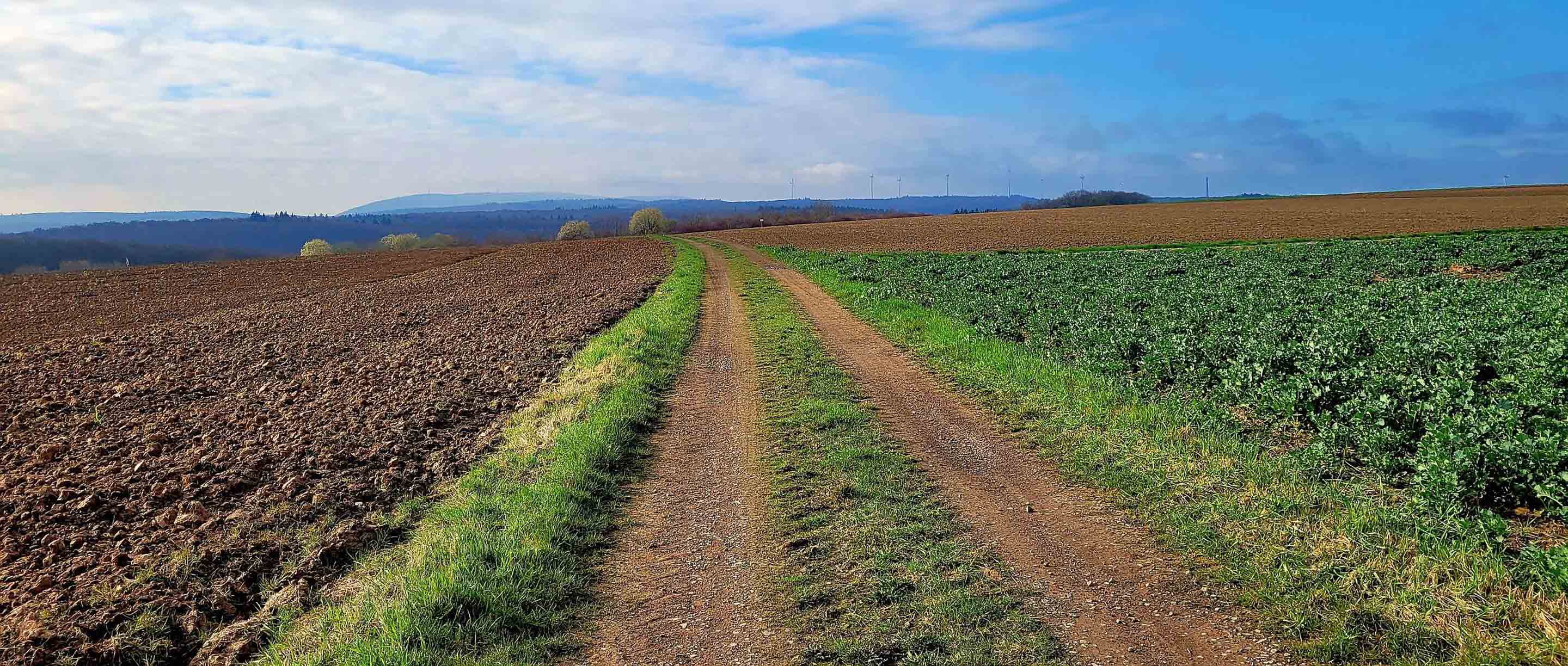
From the Wißberg, the track rolls over the open plateau above the Nahe valley. Up here, Rheinhessen suddenly feels vast. The wind sweeps freely across the fields, birds of prey circle overhead and the paths are fast - so fast that for a few minutes you might feel like a rather ambitious pro, even if reality usually looks a bit more relaxed.
On the horizon, a special place soon appears: Jakobsberg Monastery. Perched high above the valley, the former Benedictine monastery feels almost like a small fortress of tranquillity. Today, Trappist monks live here, enjoying an enviable combination of silence, vineyards, and magnificent views. For cyclists, however, Jakobsberg mainly means one thing: a short pause to take in the view over the Nahe valley before things get serious again. Because what follows is anything but gentle.
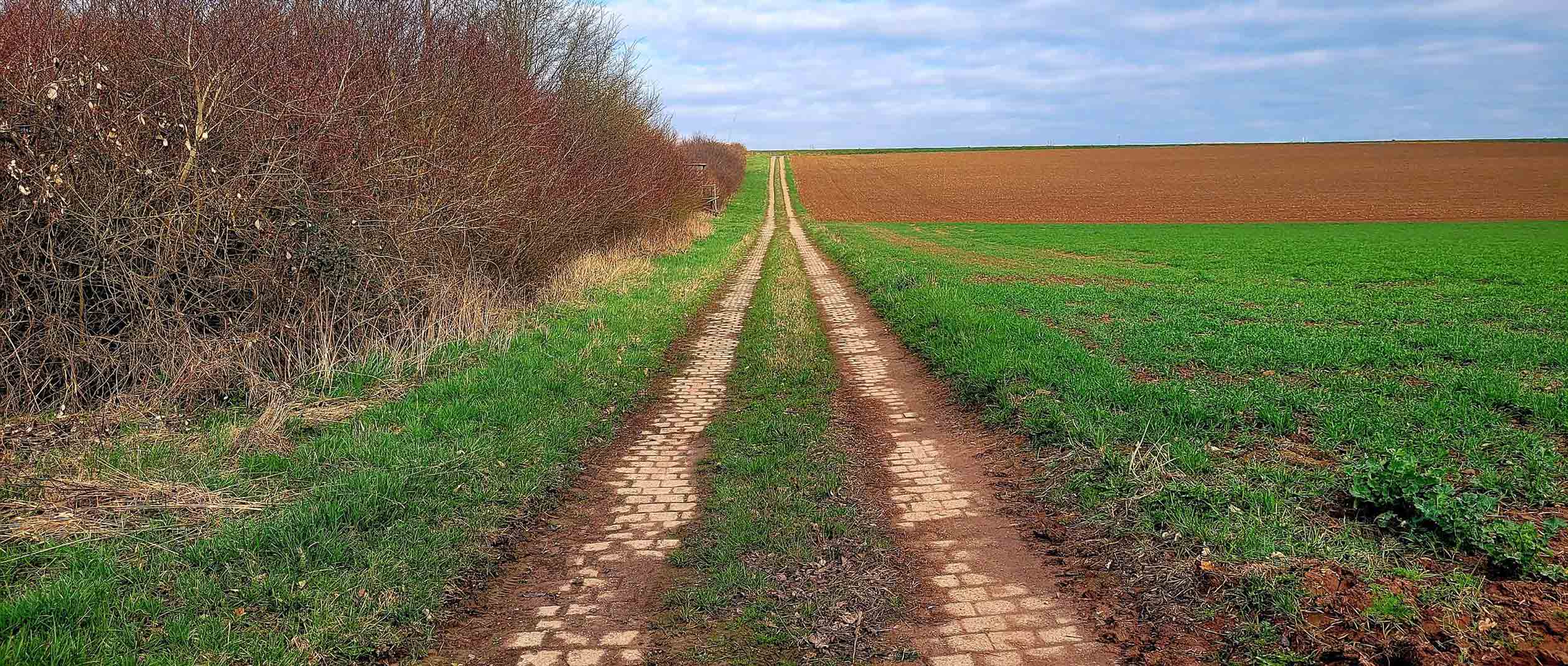
A brutal cobblestone (pavé) section plunges downhill toward Gau-Algesheim. The stones are rough and unforgiving, shaking every bike to its core. Bottles rattle, hands tingle and somewhere in your mind, you briefly suspect this section was probably invented in northern France. At the bottom, the counter-attack begins immediately: the climb to the Gau-Algesheimer Kopf. But at the top, the reward comes in the form of wonderful forest trails. The paths are fast, firm and flow beautifully - perfect gravel terrain where you can finally pick up speed again. As the pace increases, the forest flies by until suddenly a relic from another era appears: the former Mainz-Finthen airfield. The old runways are now used as wide cycling tracks and farm paths where the wind blows straight at you, as if testing whether there’s still strength left in your legs.
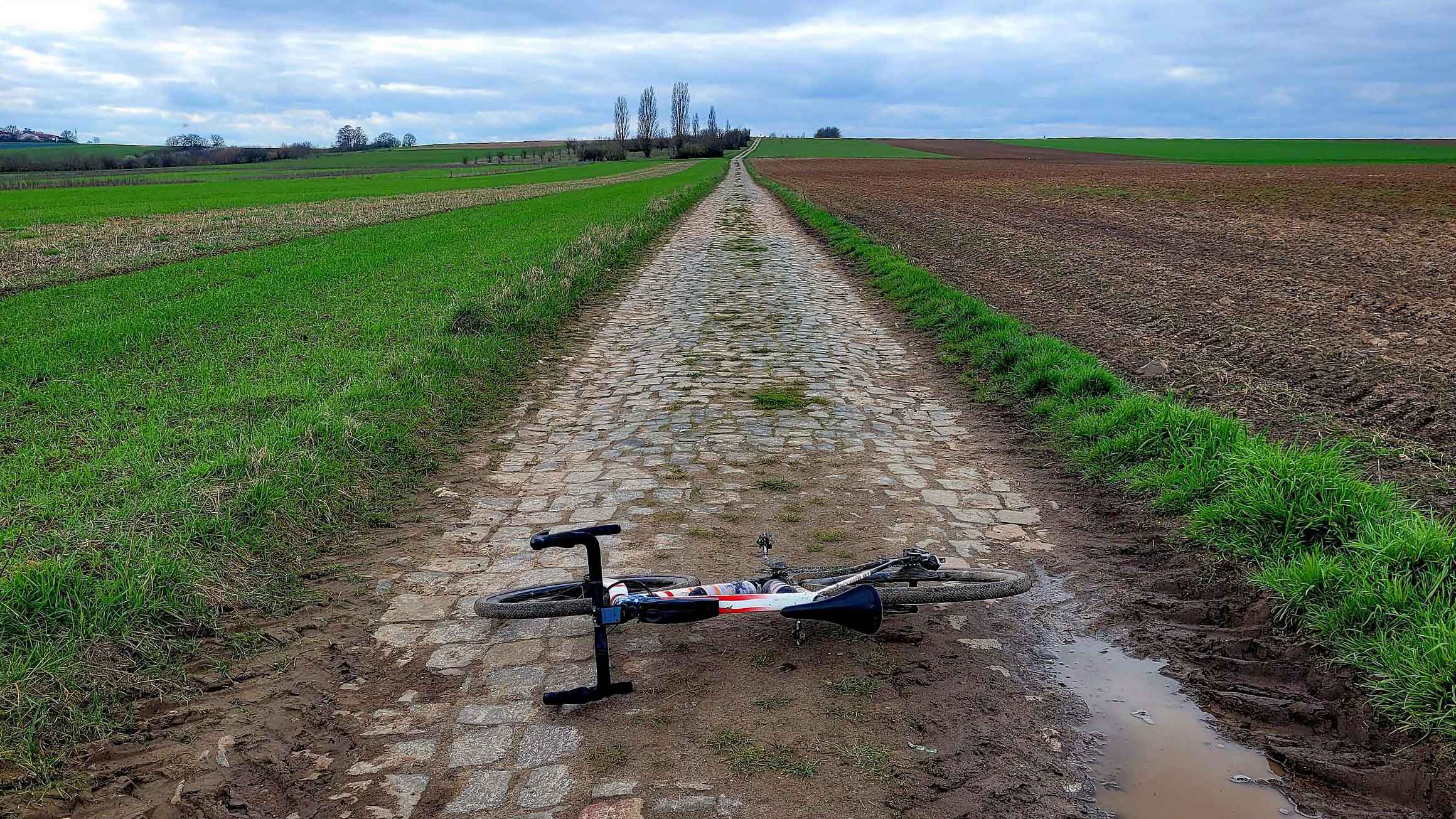
Shortly after, a complex appears in the forest on the left that almost every German recognises: the ZDF broadcasting grounds at the edge of the Ober-Olmer Wald. You might almost expect the “Mainzelmännchen” to pop out from between the trees, wave cheerfully and motivate you for the final sprint. The route gratefully accepts this motivation and immediately serves up the next highlight: the legendary Ebersheim pavé. The rough stones feel like a loving homage to Paris–Roubaix. The bike bounces, dust flies and for a brief moment, Rheinhessen actually feels a bit like northern France - just with more vineyards.
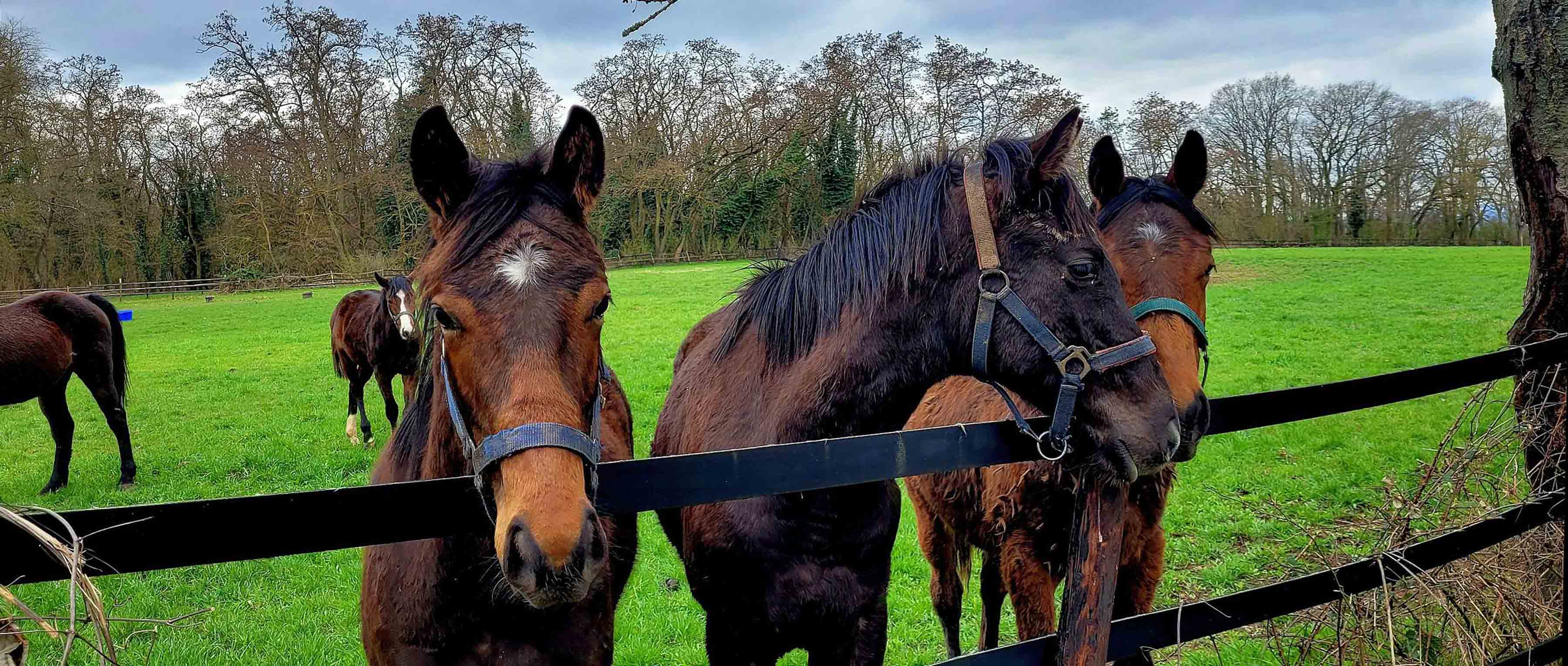
Beyond Laubenheim, we finally reach the great river again: the Rhine. After all the hills, the old towpath feels almost meditative. For kilometres, it runs flat along the water, the current sparkles in the sun and somewhere a cargo ship chugs along leisurely. Up to Nackenheim, it almost rolls by itself. But the Rheinhessen Gravel Giro wouldn’t be itself if it let us get home without a sting in its tail.
The final climb leads once more up over the famous “Roter Hang” vineyard. By now, the legs protest audibly, but at the top, the panorama awaits once again: the bend of the Rhine, the wide plain and far in the distance, once again, the skyline of Frankfurt am Main.
One last look, one last sip from the water bottle and then we roll back into the marketplace of Nierstein. The Rheinhessen Gravel Giro is complete.
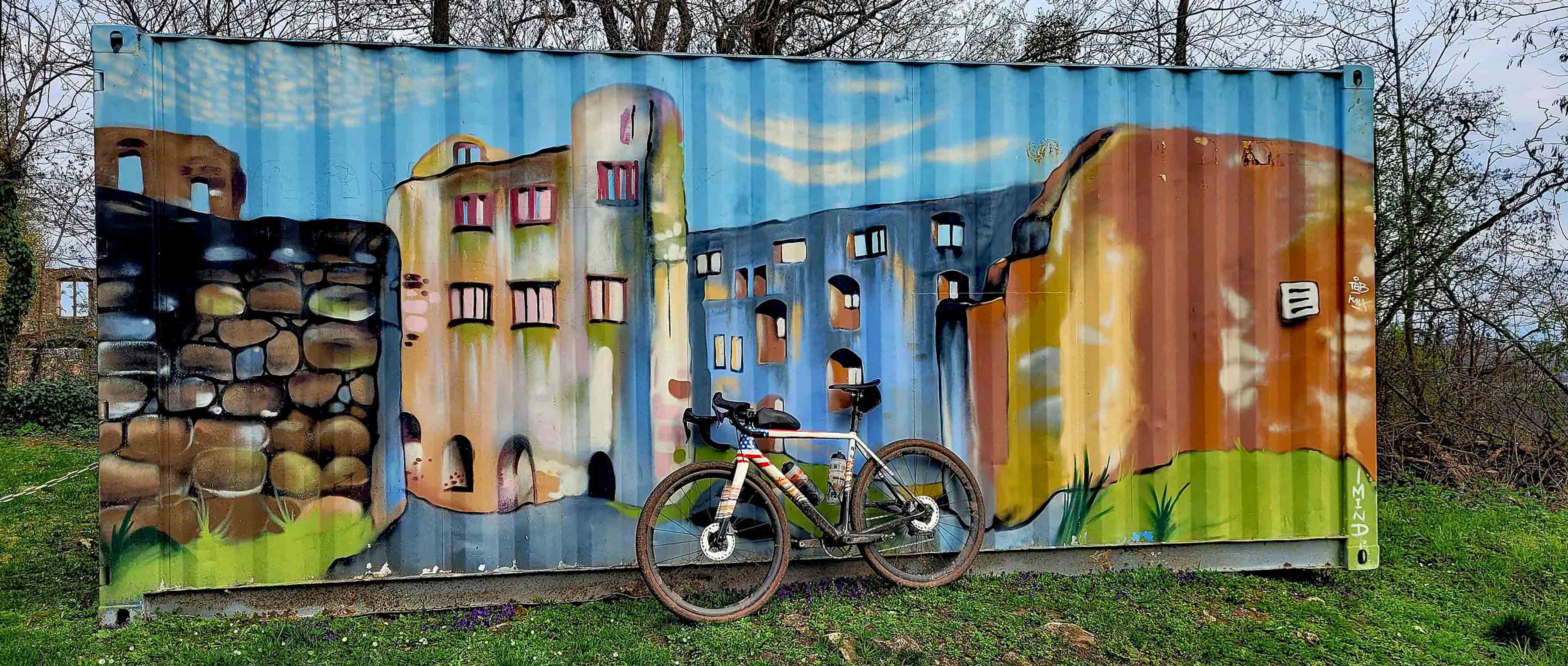
And as the gravel bike quietly leans against a house wall, a suspicion arises: this is one of those rides that people will talk about for a long time - usually with slightly exaggerated climbs and definitely too many cobblestone sections. This Gravel Giro is not just a gravel bike tour; it’s a fully embodied gravel challenge. It’s a journey through a landscape that constantly balances between history, wine and a touch of adventure.
Your challenge – your medal
Complete the 200 km Rheinhessen Gravel Giro in:
- 1 day → 🥇 Gold
- 2 days → 🥈 Silver
- 3 days → 🥉 Bronze
Get your exclusive finisher’s medal made of metal as visible proof of your adventure.
Information and registration:
The Rheinhessen Gravel Giro is a self-supported gravel tour. This means you can choose your own start time between April 1 and October 31, 2026. There is the option to complete the route in 1, 2, or 3 days. After registration, you will receive the GPX track and upon successfully completing the route, you will receive your finisher’s medal in gold, silver or bronze.
The Rheinhessen Gravel Giro takes you through the “land of a thousand hills”, past endless vineyards, over rough pavé sections, fast gravel tracks, and through small, authentic villages. Here, athletic challenge meets pure landscape magic.
You can find out more details and sign up at the Rheinhessen Gravel Giro website.