What drives cyclists to keep pushing their limits? We could always take the easier route — choose shorter rides, linger a little longer in cafés, or stick to gentler terrain. But where's the challenge in that? Olly ventures into the rugged Cheviot Hills on the England–Scotland border to explore what compels us to test our physical limits and discover why the toughest rides are often the most rewarding.
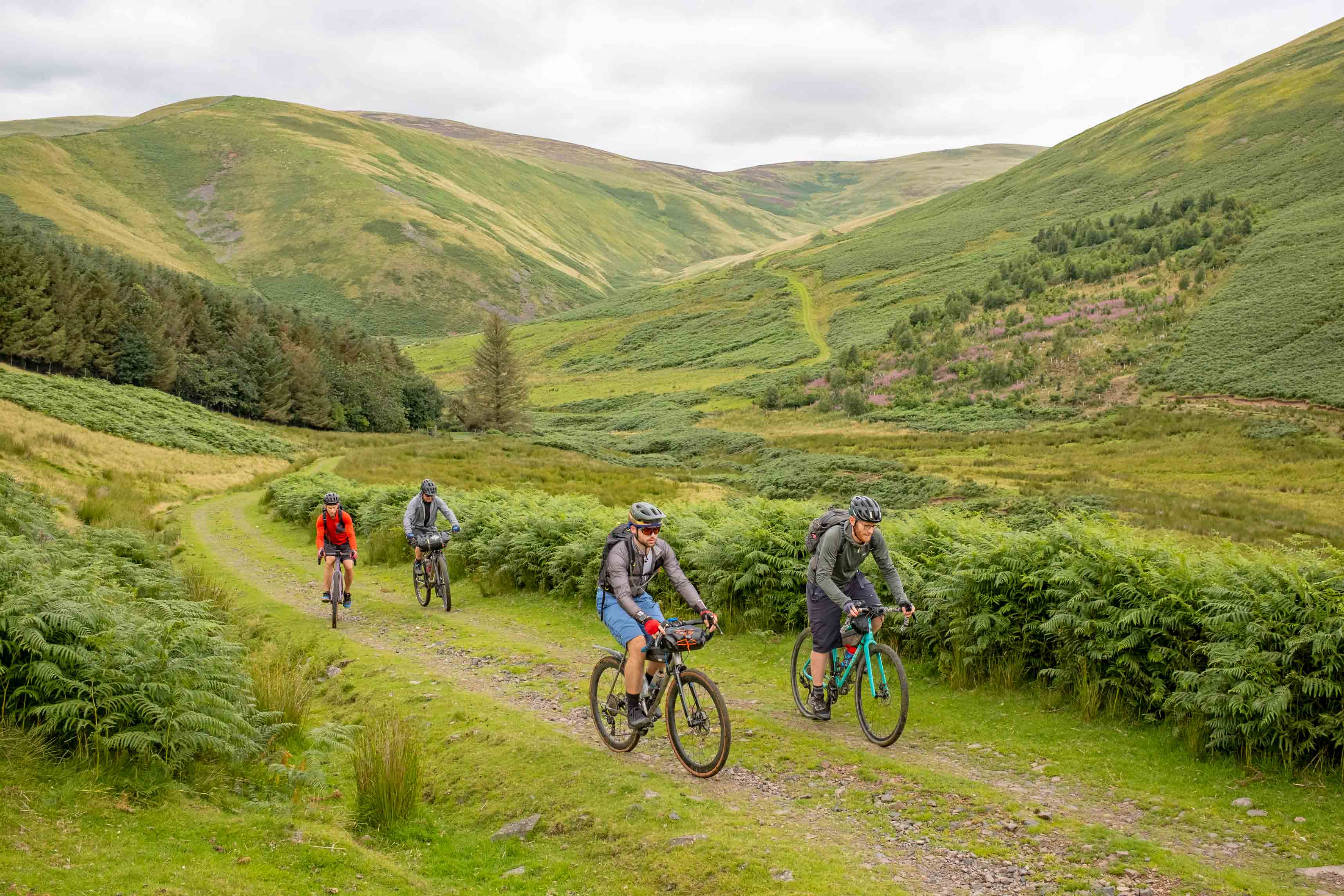
Image courtesy of @Phil Thomas
“Why don’t you just do something easier instead?” asked my wife. In just eight words, she managed to get to the crux of something that had been bouncing around inside my head for a while – why do many cyclists choose to push ourselves? What is it about a big ride, a tough event, a multi-day trip or even just a long climb that some of us (myself included) find so appealing? If you look at it from the perspective of a non-cyclist, we must appear to be completely mad. We expend a vast amount of effort to get back to exactly where we started off from. In the process, we burn through a ton of energy; it costs us money (whether it’s just a coffee shop bill or fuel to get to the start of the ride/event/trip), it wears out the components on our bikes and we end up getting home semi/completely exhausted and often good for nothing for the next few hours/days! Why do we do it? The answer for many of us is that being a cyclist is a core part of who we are. It likely governs many of the decisions we make in our wider lives – everything from holidays, to planning meals, to the layout of our homes. For me, of course, my love of riding a bike is even more enmeshed in my life as it’s my job as well as my passion.
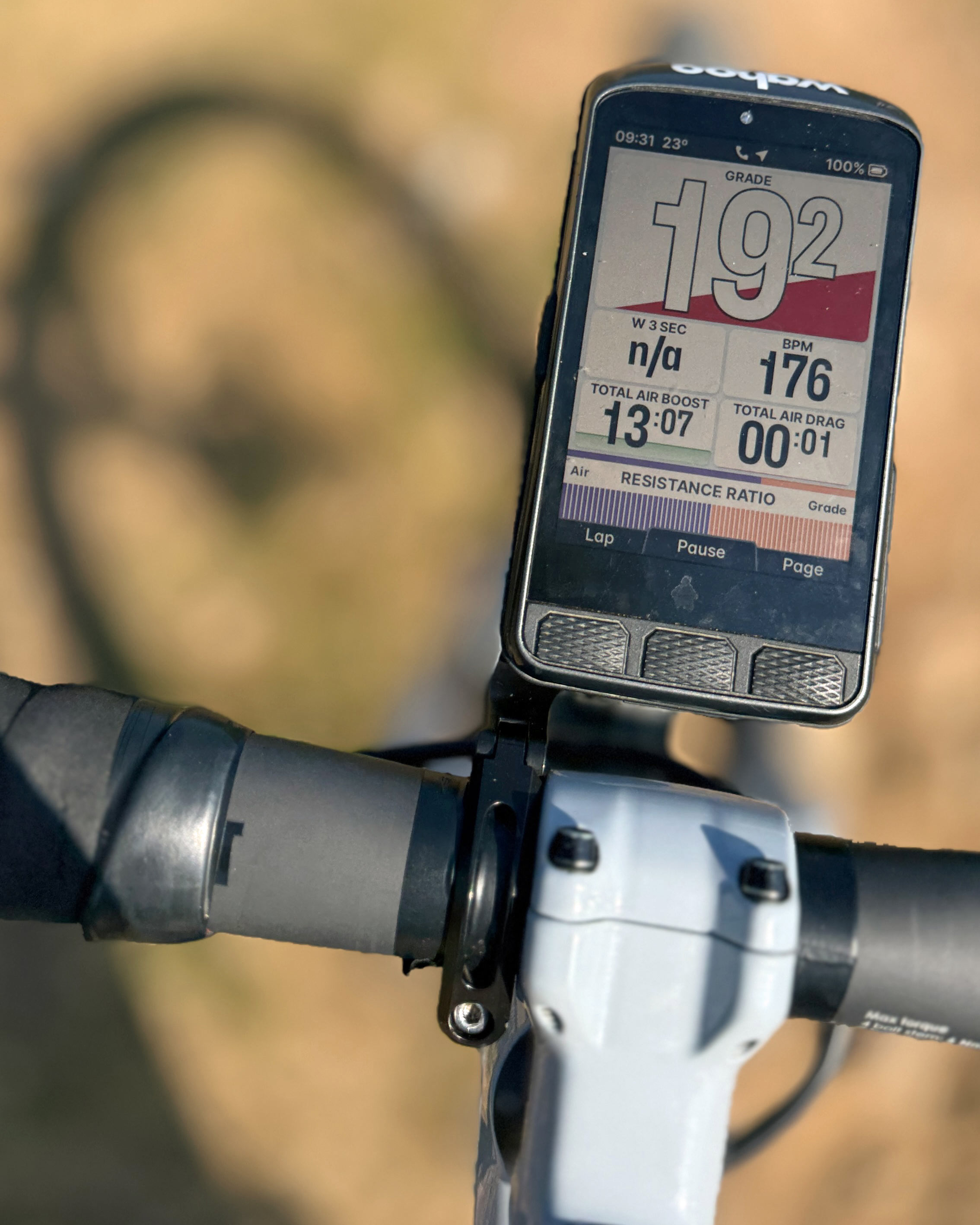
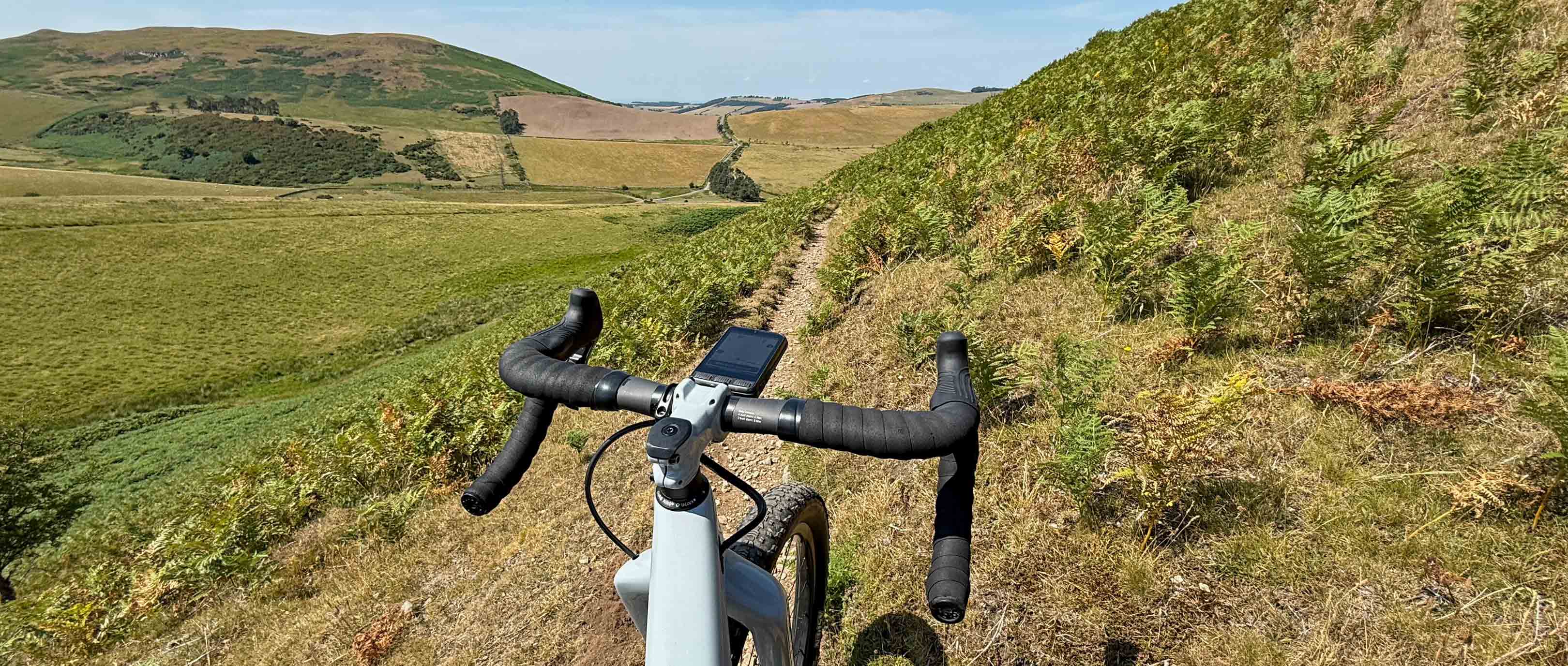
All of this waffly soul-searching helps explain why a few weeks ago I found myself desperately trying to keep my front wheel on the floor as I grovelled my way up a 19.2% gradient off-road climb in the Cheviot Hills. I’d already been climbing hard for thirty minutes at this point, initially on a fantastic hairpinned tarmac singletrack road, but then on a vehicle-width gravel track. The steepest part of the climb, of course, coincided with the loosest, roughest surface and I was having to search for that extremely thin line between finding traction with my rear tyre while also keeping the front end of the bike down on the floor. Don’t ask how I also managed to take a photo of my bike computer at the same time, as that would just add fuel to the fire of “but why do you always make things so hard for yourself?”
My plan for the day had been to tackle the ‘Cheviot Orbital by gravel bike’ route from Jordan Matthews’ Gravel Rides Northumberland book. The route had been inspired by local route planning guru Ted Liddle, who has been riding in the area for many decades. Due to the remoteness of the location and the strenuous nature of the riding, Ted had designed the route with mountain bikers in mind and had considered that the route was best split into two, with an overnight stop halfway round. However, if you looked at the pure stats – 104.3km/64.8 miles with 2200m of climbing, some of you might think “Pah! I could easily do that kind of distance in a single day ride.” For some other parts of the world you might well be right, but I knew from experience of riding in the Cheviots that the climbs can be long (some take well over an hour and will push your heart rate through the roof) and the location is pretty wild/remote if something goes wrong. I also thought though, that the route would make a perfect, challenging big-day-out ride. I’d ridden pretty extensively in the area before and figured that with a combination of good weather, dry trails, some well-planned food stops and a bit of luck, I’d be able to get round in a single day without too much bother.
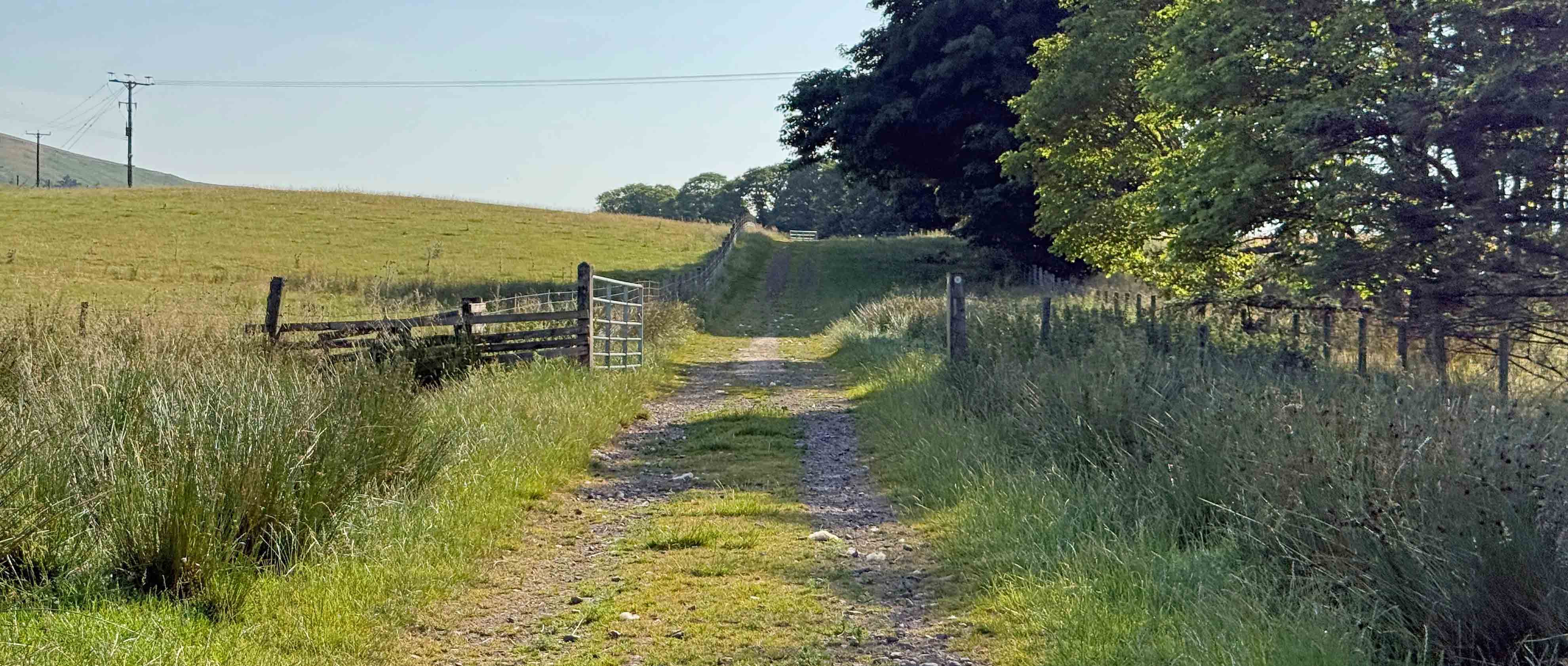
My normal riding buddies were all otherwise occupied, so I knew from the start that it would be a solo effort. In some ways this made the ride easier – it meant I could set a pace that suited me, I could stop when/where I wanted and perhaps most importantly, I was confident that with my lizard-like tendencies, I would cope fine with the predicted low-mid 30s centigrade temperatures that were forecast for the second half of the day. The omens for the ride were immediately positive. Anyone who has ridden in Northumberland will know that the number one cause for cyclists’ complaint is gates – there appear to be approximately 25 trillion of them and they can really spoil the flow of your ride. Obviously, I appreciate that if you a farmer/landowner, you need to stop your valuable livestock from escaping, so gates are a necessity, but from the selfish perspective of an adventurous gravel rider, they are a total PITA. Fortunately, on the first climb, all but one of the gates were already open. I hoped this offered good portents of what I would experience later on.
The route that Jordan has created is, to coin a phrase, a doozy. Northumberland holds the record for the English county with the lowest population density and this translates on the ground to it feeling wild and remote. You will encounter WAY more sheep and cattle than you will people. Even the sections of road included in the loop are generally quiet, but you will need to be aware of the chance of meeting a tractor, quad-bike-riding farmer, or a battered Landrover towing an Ivor Williams trailer full of sheep at points during the route. The trails vary from minor backroads (some with the ideal-for-gravel-riders marker of having a strip of grass growing up the centre), good quality gravel roads, grassy moorland singletrack and ancient drove roads. The variety in terms of scenery and of trail is part of the appeal. This is not, however, an easy day out – I lost count of the number of times I was climbing on gradients hovering around the 20% point and even with the lowest gears and the strongest legs, you may well find yourself having to get off and push a few times during the loop.
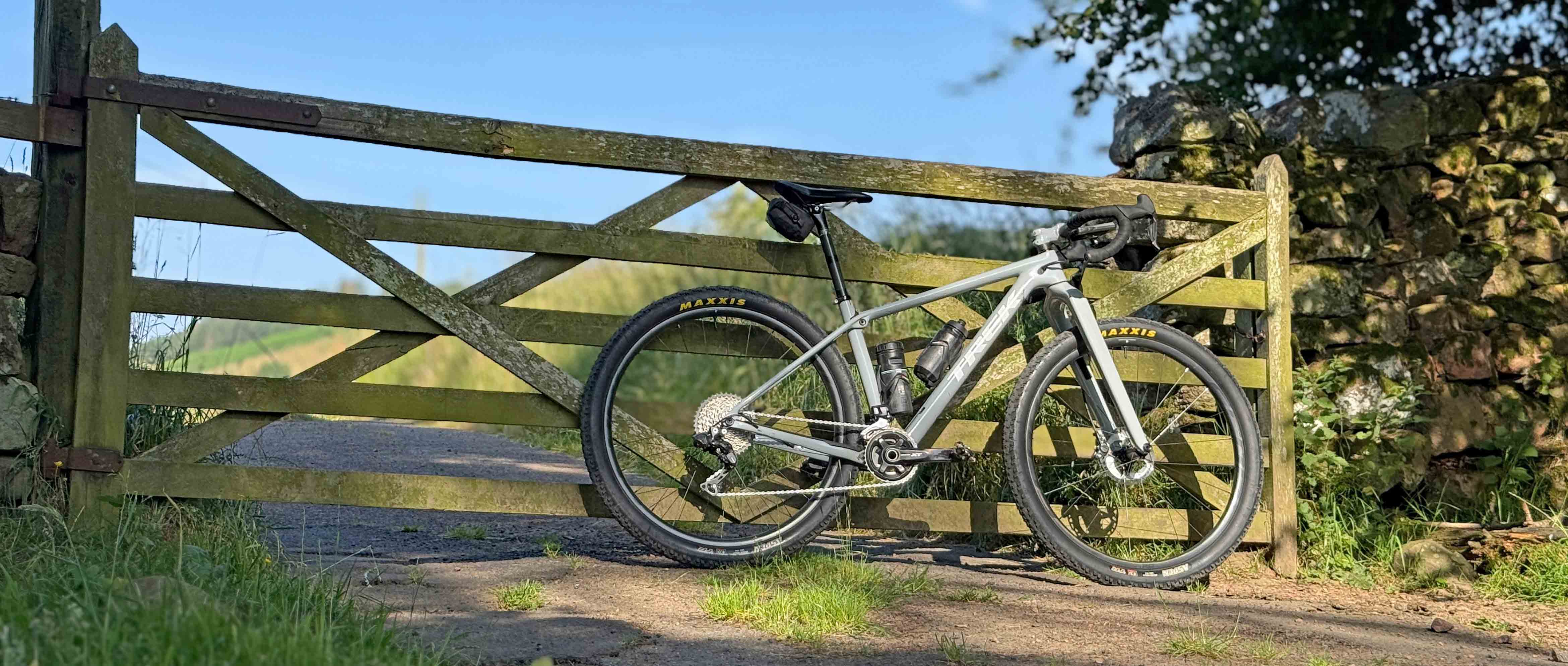
The original Ted Liddle version of this route had been aimed at mountain bikers. In Jordan’s book, he described the route as “adventure gravel at its finest”. I figured that super-low gears and big volume tyres to soak up the expected sections of chunky gravel were the order of the day, so dusted off the cobwebs from my scandalously underused #monstercross and got it ready for the ride. I spent significantly more time than I was expecting in my lowest (26-42) gear, so it’s worth thinking about this if you plan on following this route yourself – a super low climbing gear will pay dividends.
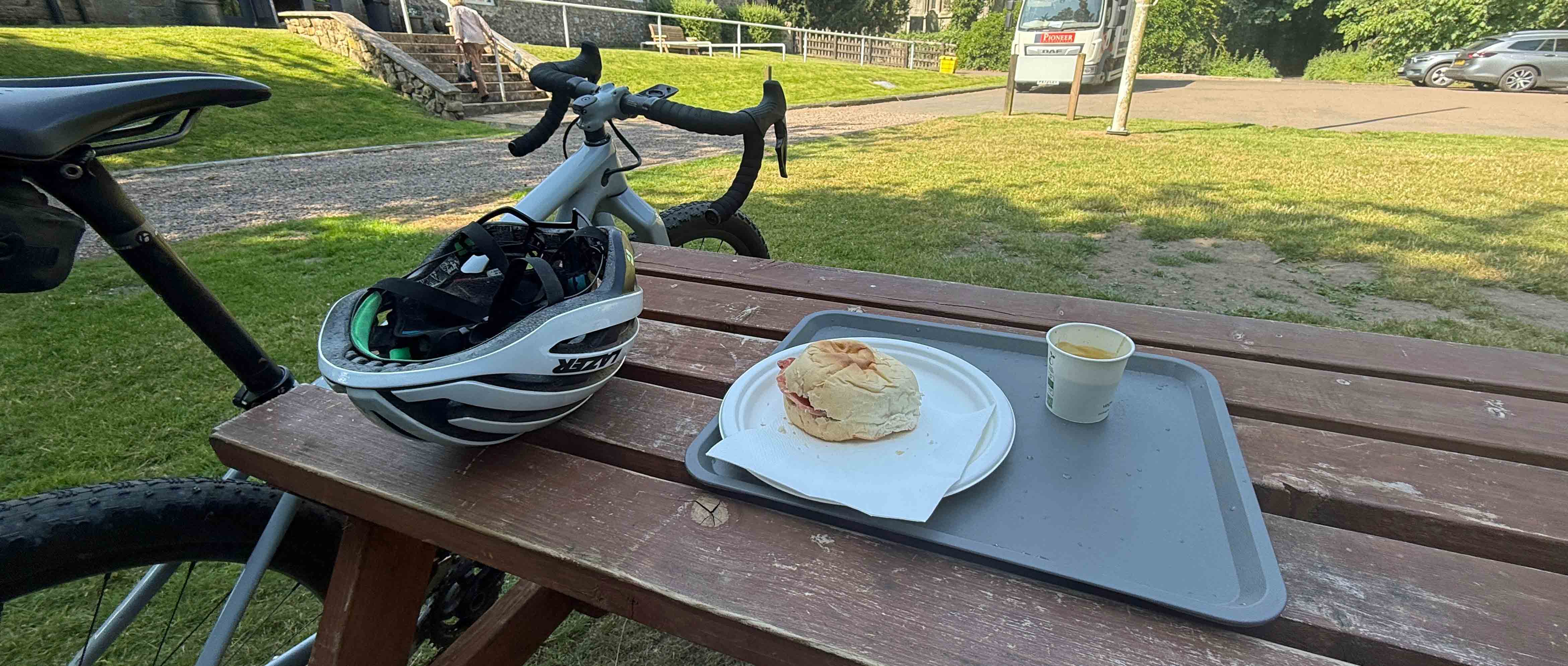
Efficient fuelling is vital for any big ride, but when your route contains large sections of remote trails with no opportunity to re-supply (or even find water), then you have to plan your stops accordingly. I knew there was a good café in Ingram, a range of shops/cafes in Wooler and a brilliant community-run village shop in Town Yetholm, so as long as I carried plenty of supplies to use between these points, then I figured I would be fine. I used my trusty Restrap hydration vest to carry 2 litres of water at all times, had a stash of energy products (including a significant number of Torq gels) and then topped up my energy/caffeine levels at each of the opportunities too.
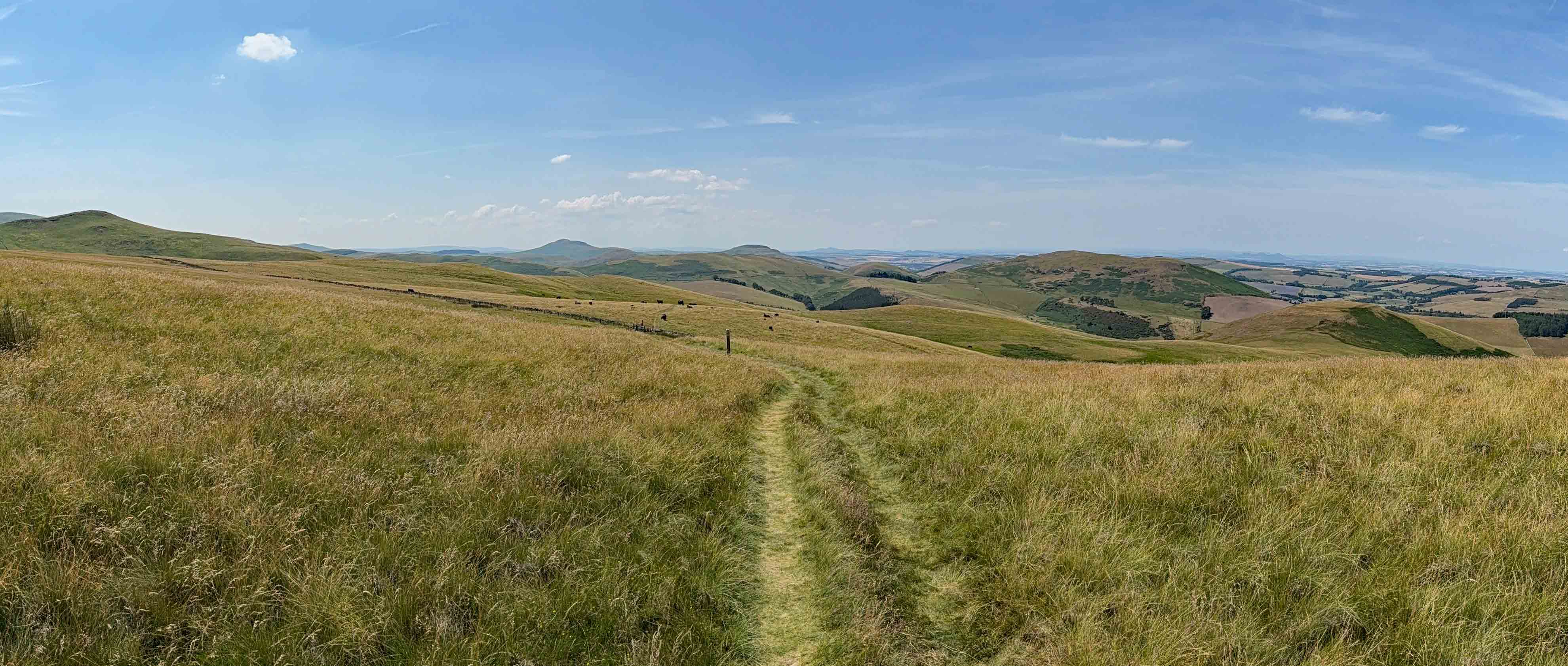
Ooops, I strayed onto the wrong trail
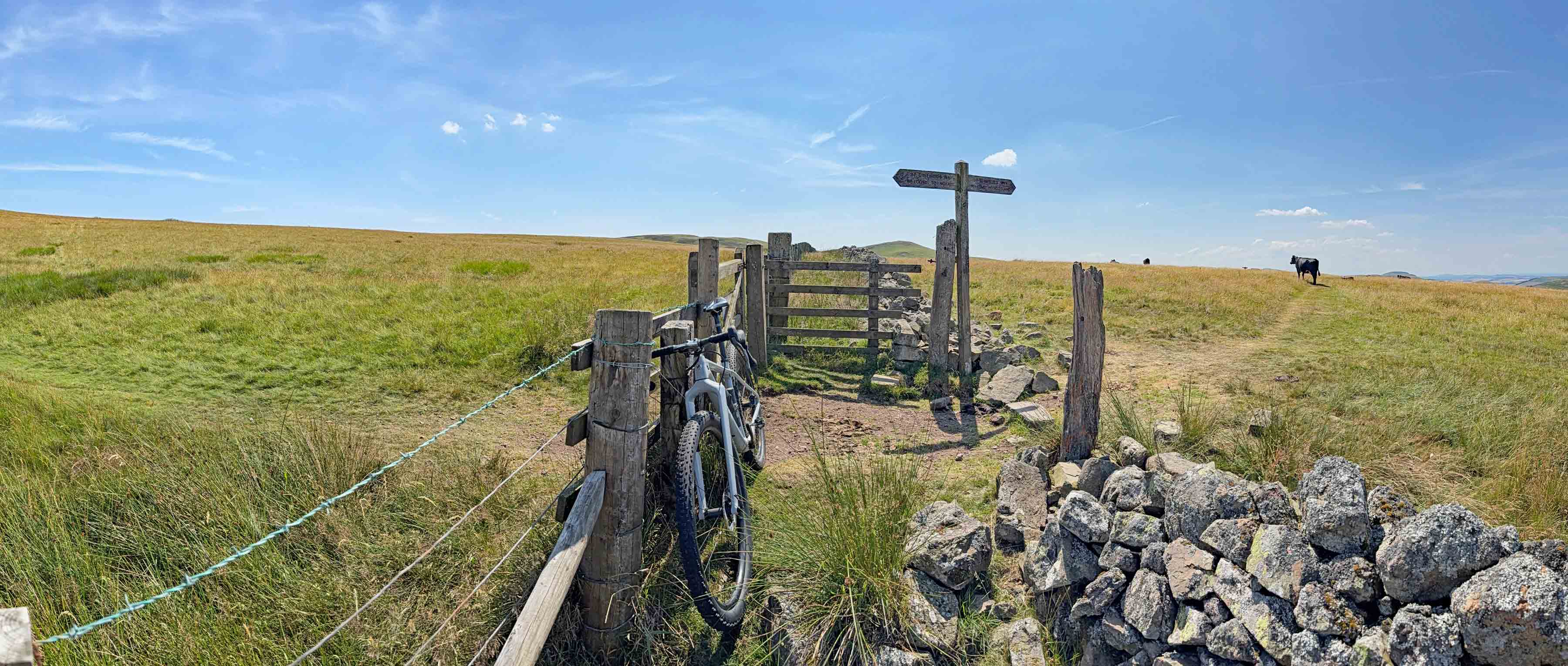
Which then changes legality as soon as I cross the border
And in Scotland, pretty much everything is fair game.
Although the majority of my route was taken straight from Jordan’s book, I supplemented the official route with my own local knowledge, gleaned from previous rides and many hours spent poring over maps/aerial photographs. The Cheviot Orbital loop is interesting because the northwestern portion is located in Scotland. While it’s great to add a border crossing to any route, the relevance for gravel riders is how enlightened the Scottish authorities are when it comes to access. With very few exceptions, any trail that you can physically ride in Scotland is legal. Unfortunately, on the English side of the border, the land access regulations are still stuck in the dark ages.
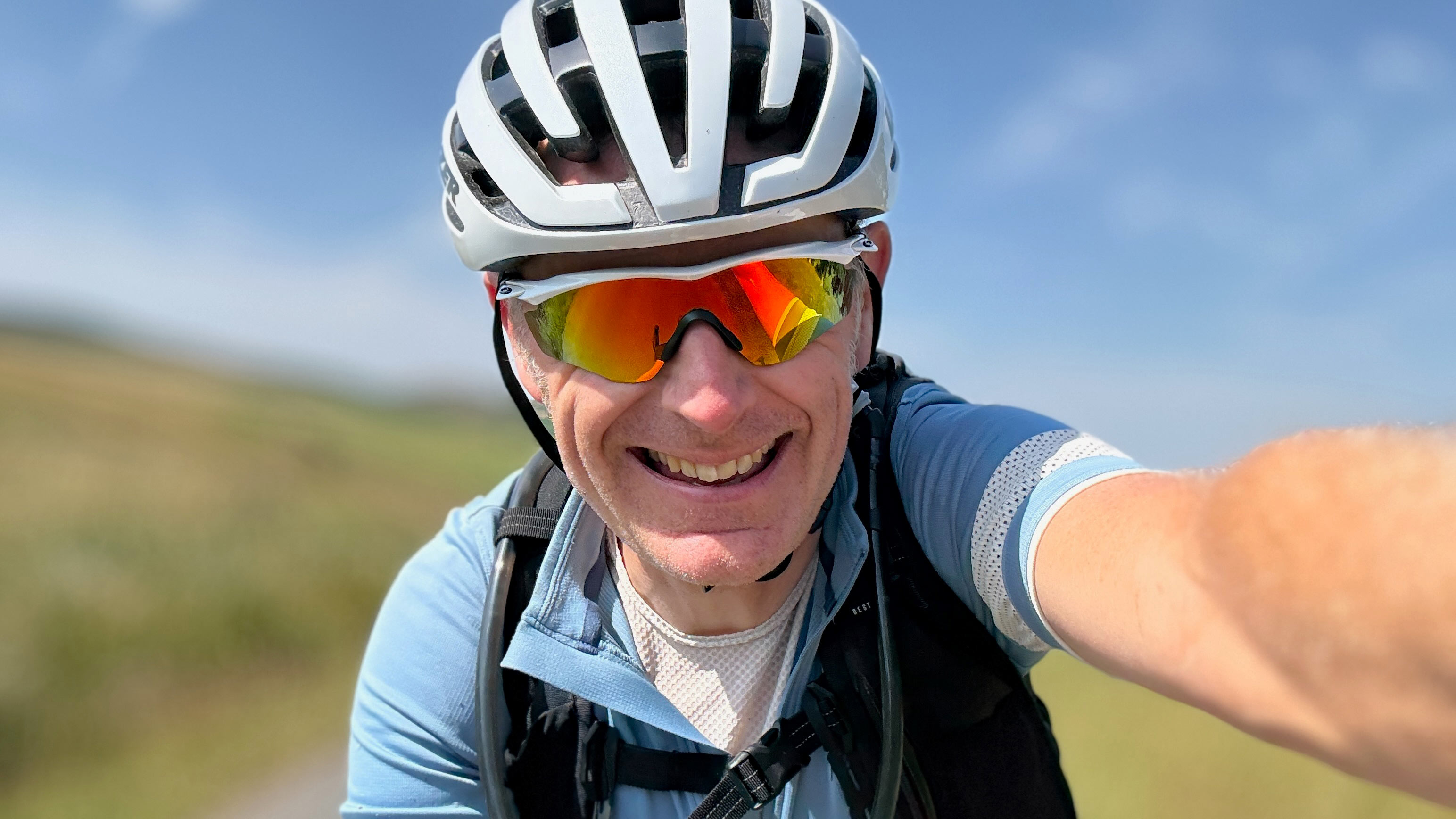
English public rights of way were largely ‘fixed’ in the late 1940s when the post-war government asked every local authority to decide whether existing rights of way should be classified as footpaths, bridleways or byways. Often these decisions were taken at parish level by unpaid parish councillors who were a) overworked and b) sometimes had a vested interest in regulating access to land they might have been associated with. The effect for us as gravel riders is that, 80 years later, trails can change in legality partway along their length (often at a parish boundary), which makes researching and recommending potential trails a legal minefield. In his book, Jordan had to stick 100% to legally accessible trails. I on the other hand, have a slightly more ‘flexible” attitude and, although clearly I can’t condone breaking the law, there might be times when I inadvertently stray onto the ‘wrong’ trail. Ooops. When I had been creating my route for the day, I spotted a potential way of adding in an extra trail, the benefit being that it cut down on some of the tarmac miles included in the official route. I decided to try it out, even though I knew that a small section in the middle wasn’t strictly legit. Despite some careful map/aerial photo research, the section that I included ended up being too steep to ride in a couple of places, was partially overgrown and was exposed to the full heat of the sun, so I wouldn’t include it in a future version of the loop. It did, though, mean that I got to ride an outrageously fun singletrack descent that I would have otherwise missed out on. Swings and roundabouts….
Just before I arrived in Town Yetholm, which marked the 70% completed point of the loop, my Wahoo displayed a temperature of 34 degrees. Very unusually for me, I could feel the effects of the high temperature, so I decided to stop for some R&R under the shade of a big tree in the centre of the village. Fortunately, the combined impact of shoving in some food, downing a bottle of super cold Coke and resting in the shade seemed to do the trick and I was soon feeling a lot happier. For the final section of my route, I deviated quite significantly from the trails included in Jordan’s book. My logic was that I already knew of a fantastic route back over the border from Town Yetholm, but also because I had backloaded my route with an extra twist – one more climb and descent than Jordan had included. With the temperature climbing up in the mid-30s, the first section after lunch was pretty tough and I made the most of a few scraps of trailside shade before heading out onto the more exposed ridgeline.
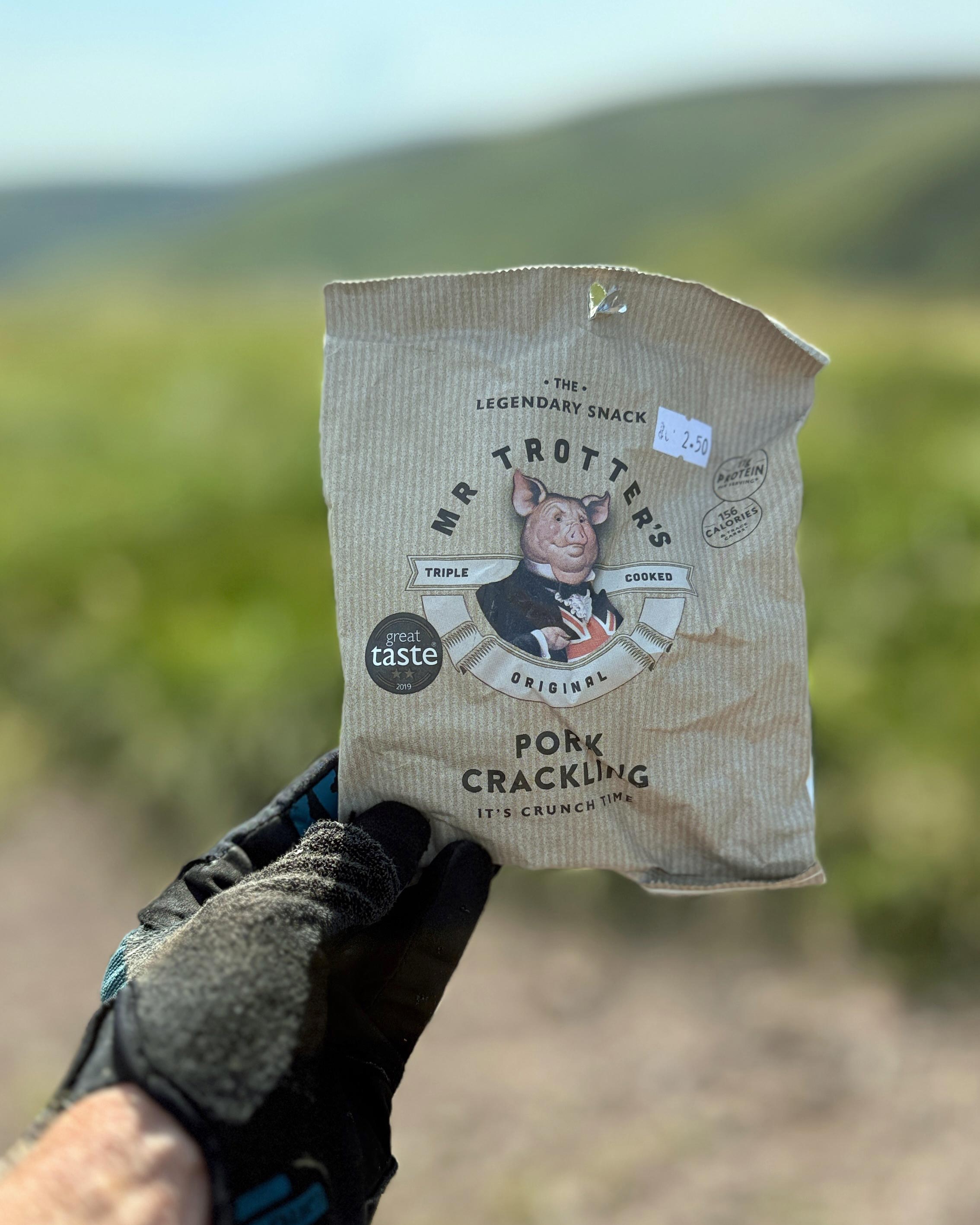
As I reached the high point of the day at 508m and entered back into England (boo) the temperature had dropped slightly, but I knew based on the salt marks on my clothing and kit that I was still working super hard. I decided to break out my secret weapon – a bag of pork scratchings. This will undoubtedly make many people recoil in horror, but the combination of fat and salt was exactly what I needed. I can imagine that Matt Hart would have had some quite stern words about my appalling taste in mid-ride snacks, but it did the job and even though I had already climbed well over 2000m by this point, my legs felt somewhat rejuvenated.
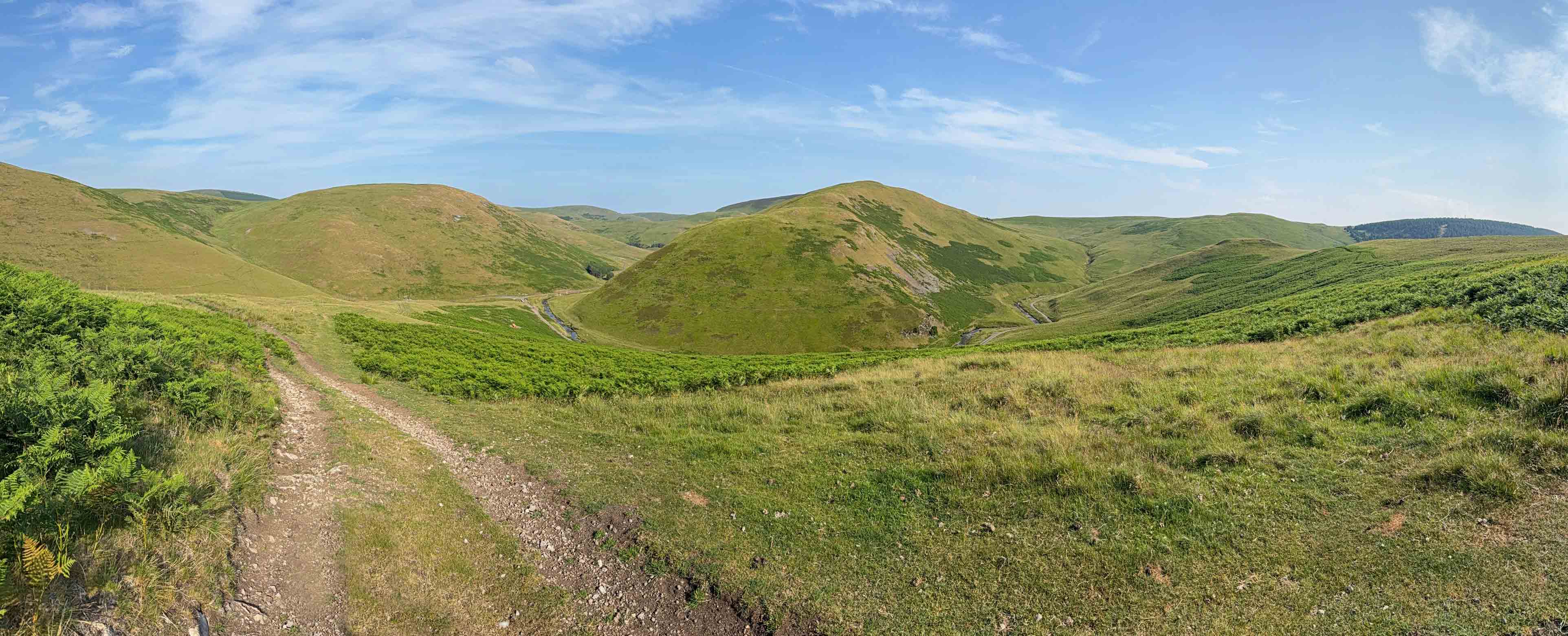
The final part of my route included one pretty hideous climb and then a fantastic descent back to my start point. I shoved in some extra final calories and started to climb. It’s all somewhat of a blur, but the views with the late afternoon sunshine lighting up the surrounding hills made it worthwhile. At one point I passed a small group of people, who seemed as amazed to see me as I was to see them. They were the first people I had encountered in nearly four hours and were in the middle of nowhere! The remainder of my ride was people-free, but was accompanied by the typical Northumbrian soundtrack of skylarks, curlews, lapwings and sheep – seemingly all tweeting or bleating as loudly as they possibly could.
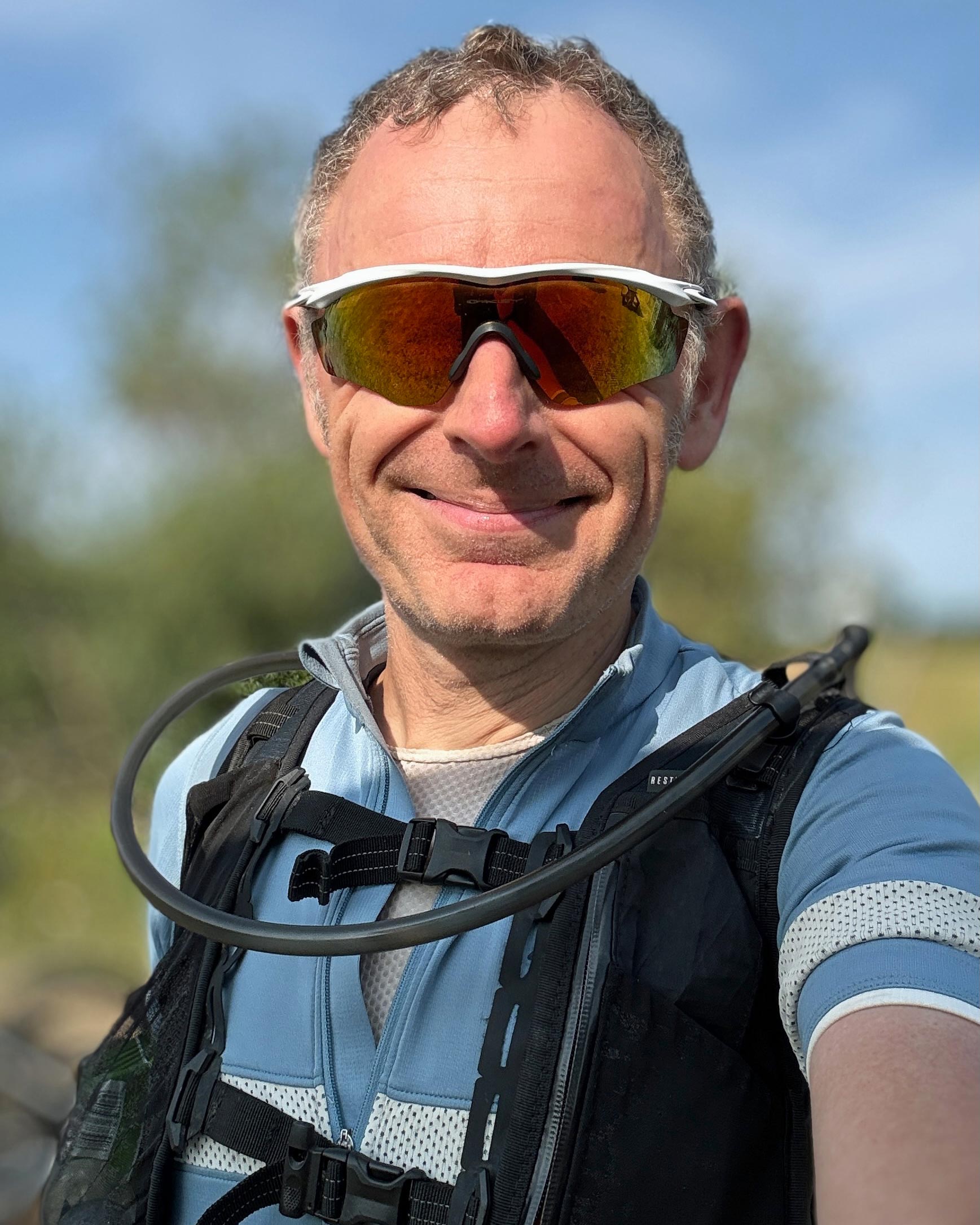
As I arrived at the finish point of the loop, I had ridden just over 100km and climbed nearly 2500m. It was a perfect example of a ride where the stats don’t do justice to just how tough it was. According to my Wahoo, based on my heart rate, I’d spent 25% of the time riding in Zone 5, which probably explained why I felt so shattered. It took quite a while, just sitting in the sunshine enjoying a cold drink and some more salty snacks, before I had the energy to do anything else. Fortunately, there was a pub nearby and after some proper food and another cold Coke, I was ready for the drive home.
“How was your ride?” asked my wife. “Ace. Hot. Hard” was the best reply I could come up with. “You know you could always just do something a bit easier next time” was her obvious response.
Yep.
I could.
But I’m not sure that I will.
You can find all the details about the Cheviot Orbital loop in Jordan Matthews’ Gravel Rides Northumberland guidebook.