You might think that an ancient railway line, which had been converted into a shared-use trail, would be the perfect destination for a gravel riding trip. Gentle gradients, beautiful scenery, perfect conditions under tyre and easy access to food, drink and accommodation. Timo Rokitta thought this too, but as he discovered on a recent bikepacking trip along the Ojos Negros, a former railway path can be more challenging than you think.
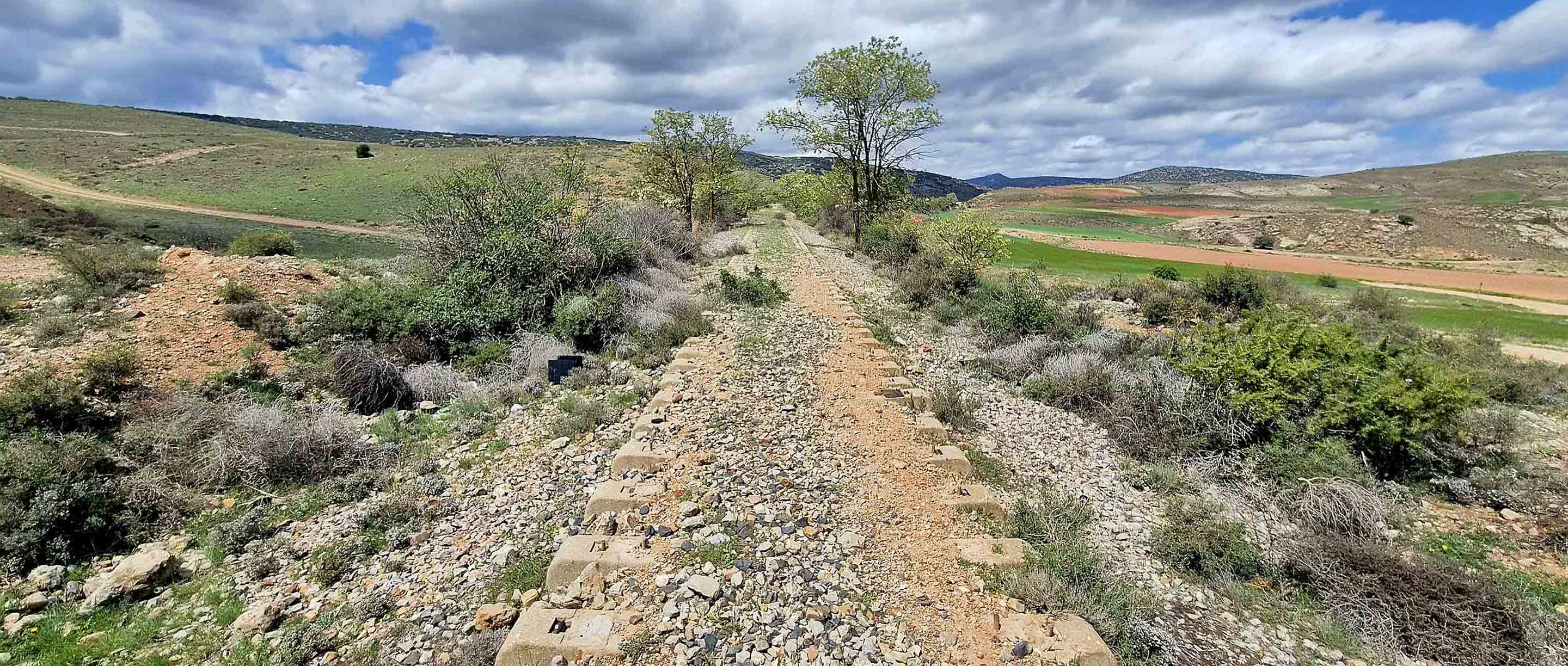
It begins the way so many great cycling adventures begin: with a good idea and the quiet conviction that “former railway line” automatically means “easy riding.” The decision was made to tackle the Vía Verde Ojos Negros on a gravel bike.
But before getting lost in the crunch of gravel beneath the tyres and the romanticised notion of surviving on energy bars, it’s worth looking back to where it all starts — Ojos Negros. A village whose name (“Black Eyes”) sounds either deeply concerning or like the beginning of an excellent story. In reality, it’s the latter. This was once a major iron mining town, extracting enough ore to keep entire industries alive.
To transport that ore toward the Mediterranean, a railway line was carved through the Spanish hinterland — an almost perfectly straight, stubborn corridor cutting through hills, valleys and occasionally through common sense itself. When the mining industry disappeared, the route remained. And as so often happens in Spain, someone had the brilliant idea of turning something highly practical into something genuinely beautiful. The old railway became a cycling path — more than 160 kilometres all the way down to Sagunt on the Mediterranean coast.
Where rusty freight wagons once rolled, cyclists with wildly overambitious daily mileage goals now take their place. And this is exactly where the gravel bike enters the story — that marvellous hybrid between a road bike and a mountain bike that pretends it can do everything and almost convinces you that you can too.
Objectively speaking, the Vía Verde Ojos Negros is nearly perfect for this kind of bike. The surface is mostly fine gravel: compact enough for speed, rough enough to make you feel like you’re doing something adventurous. None of those perfectly paved bike paths that make you wonder whether you should just mount an espresso machine to the handlebars — no, here the gravel crunches properly beneath your tyres, exactly as it should.
From Sagunt Into the Hinterland
The sky hangs low over Sagunt, as though someone decided to wrap the entire day in cotton wool. Shades of grey everywhere, with a light drizzle that threatens more than it actually delivers — exactly the kind of weather that makes a gravel ride feel pleasantly hardcore.
Above us towers the castle of Sagunt, that endless wall of history where even El Cid supposedly once wandered about. You look up briefly, think about the Reconquista, glory, honour — and then climb back onto the gravel bike because today turning the pedals matters more than history.
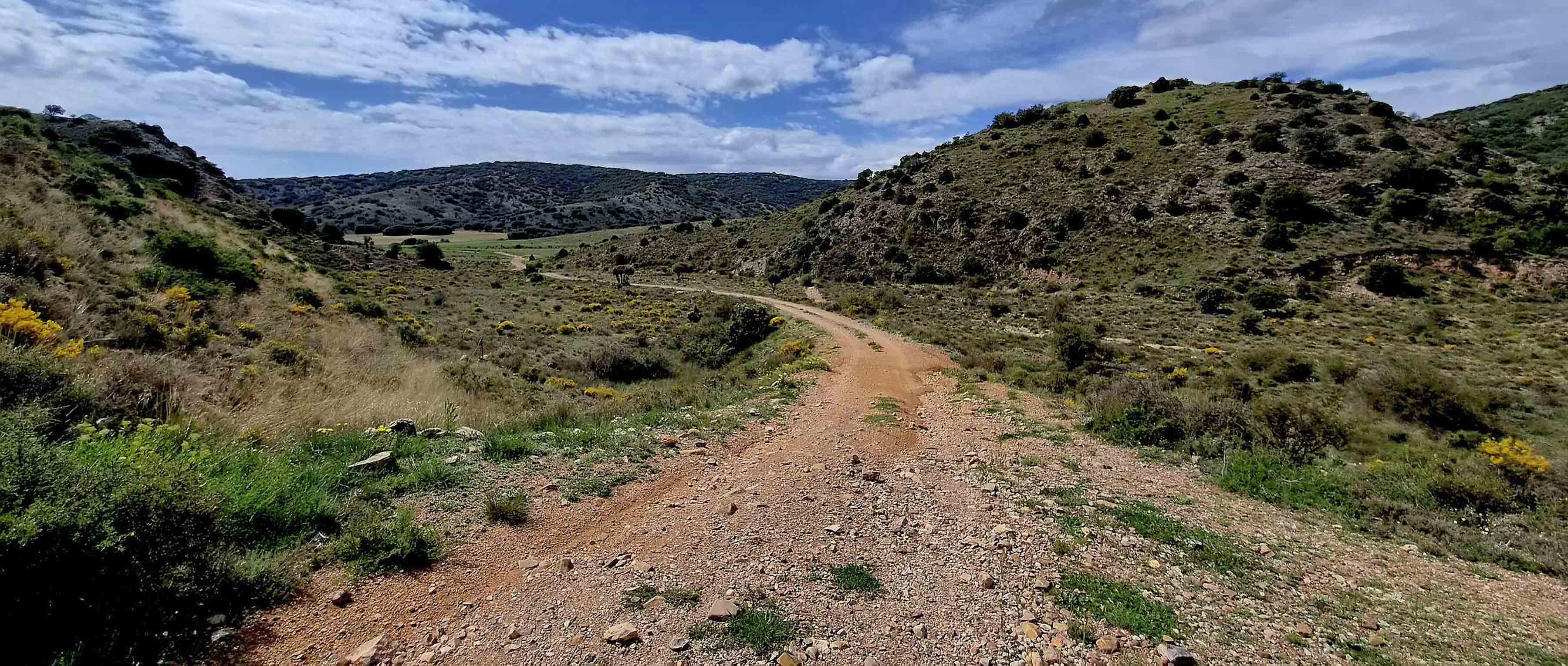
The first kilometres pass surprisingly easily. Maybe it’s the cool morning air, maybe the body simply hasn’t realised yet what lies ahead. The route leaves the city behind and enters a sea of orange groves. On both sides, the trees stand perfectly lined up as if waiting for a photo shoot. The scent of citrus hangs in the air — or perhaps we only imagine it because it fits the story so perfectly.
There’s something deeply meditative about gravel riding through orange orchards: the constant crunch beneath the tyres, no cars, only rustling leaves and the occasional quiet curse when you hit another section of deeper gravel.
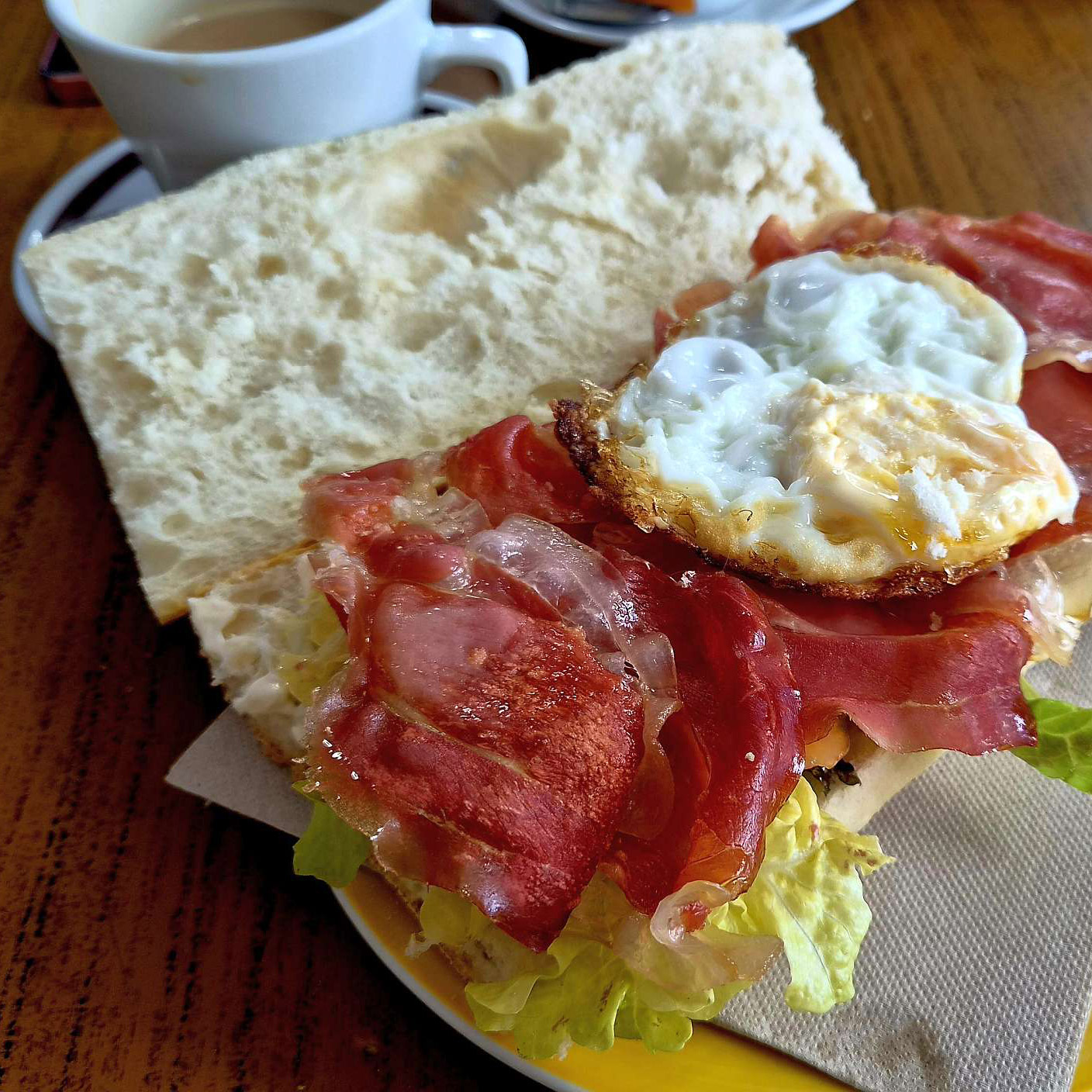
After a while, we reach Algimia d’Alfara. Time for the true highlight of every long bike ride: the bocadillo break. The bread crackles, the filling is generous and slightly chaotic and the café con leche is exactly the right temperature — hot enough to be taken seriously, but not so hot that it burns your tongue. You sit there, slightly sweaty, deeply content, absolutely convinced: this is exactly why you do this.
And then it happens. As we get back on the bikes, the sky suddenly opens up. At first cautiously, then decisively. The sun breaks through as though someone flipped a switch and suddenly everything changes. The colours become richer, the landscape wider, the atmosphere shifts dramatically toward viva España, viva Vía Verde Ojos Negros.
The route now glides gently through the countryside, revealing a little more of itself with every kilometre. After roughly 50 kilometres we arrive in Jérica. Suddenly, these ancient villages appear, clinging to hillsides with towers, walls and winding alleys that look as though they haven’t hurried for centuries.
Of course, we stop — “just for a photo” — and let our eyes wander. Here, the Vía Verde shows its best side: gentle gradients, old railway alignments and those long straight stretches that make you feel like you could ride forever. Maybe that’s exactly the point. Not faster. Not farther. Just right here.
Thunderstorms Over Jérica
As we roll into Jérica, clouds pile up above us like they have a personal issue with our existence. The town itself seems completely unfazed — approaching thunderstorms apparently count as part of the daily theatre here.
For us, the slightly frantic search for accommodation begins. That familiar wandering somewhere between hope and the creeping realisation that perhaps we should have booked earlier. But just before the sky truly commits to disaster, we actually find a room. A door opens, we rush inside — and barely have we reached safety when thunder starts rumbling outside. Perfect timing. Almost suspiciously perfect.
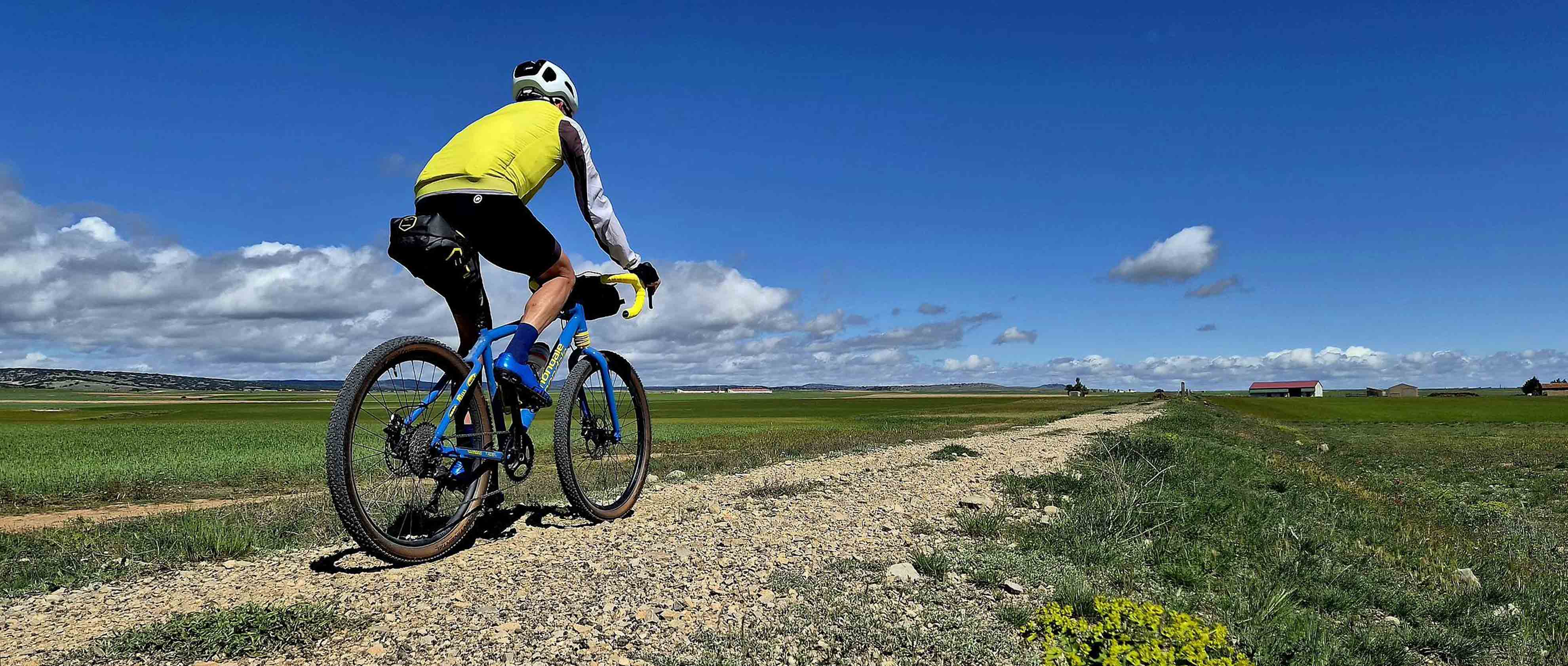
The next morning presents a completely different world. Clear, cold air, as though someone had rebooted the planet overnight. The sun shines brilliantly and the landscape blooms with an almost exaggerated beauty. We stand there for a moment, look at each other and know instantly: this is going to be a good day.
Tunnels, Elevation Gain, and the Descent to Teruel
The Vía Verde begins modestly — and that’s precisely its charm. A former railway line, gently climbing, reliable, almost calming. Above all: gravel. Endless, honest gravel crunching beneath the tyres, carrying us into a steady rhythm.
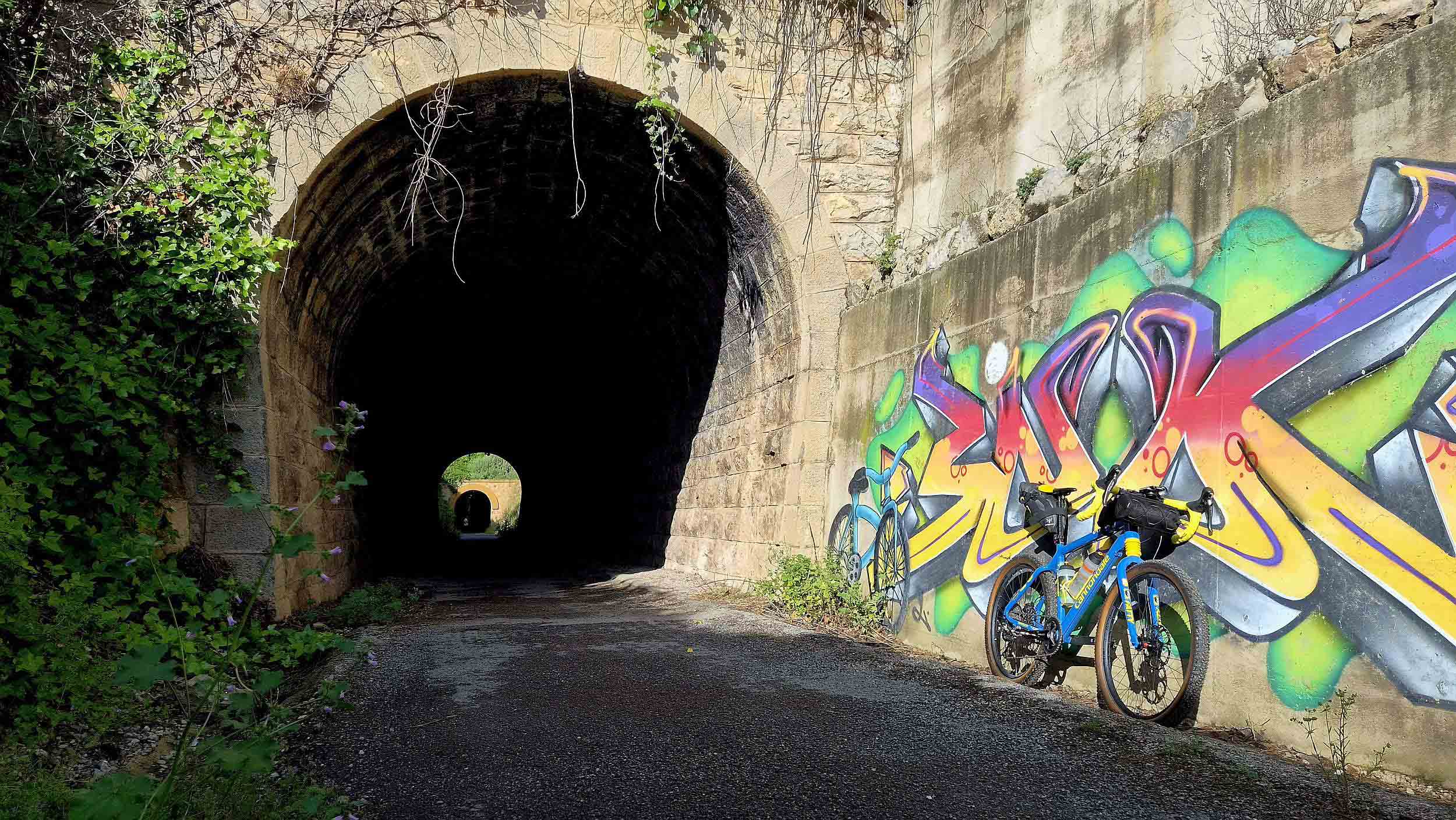
Then come the tunnels.
These old rock tunnels are more than simple passages — they are little theatrical productions. We ride in, instantly swallowed by cool darkness, aiming toward the light at the far end that somehow feels more promising each time than it really ought to.
The route keeps flowing pleasantly without ever becoming boring. Eventually, we reach Albentosa — exactly in time for a break. Halfway. We sit down, eat something, drink, and realise our legs are tired. But in that good, satisfying way. The kind that quietly says: keep going.
And so we continue — slowly, steadily uphill. Barely noticeable, yet relentless. Until we finally reach the highest point of the route: more than 1,200 meters above sea level. No grand spectacle. No dramatic summit moment. More like a quiet understanding between us and the trail: we made it.
And what comes afterwards is the reward. The descent toward Teruel. Fast, flowing, with that subtle feeling of freedom that appears when you can simply let the bike roll. Wind, speed, the soft humming of the tyres — suddenly the calm ride transforms into a small celebration.
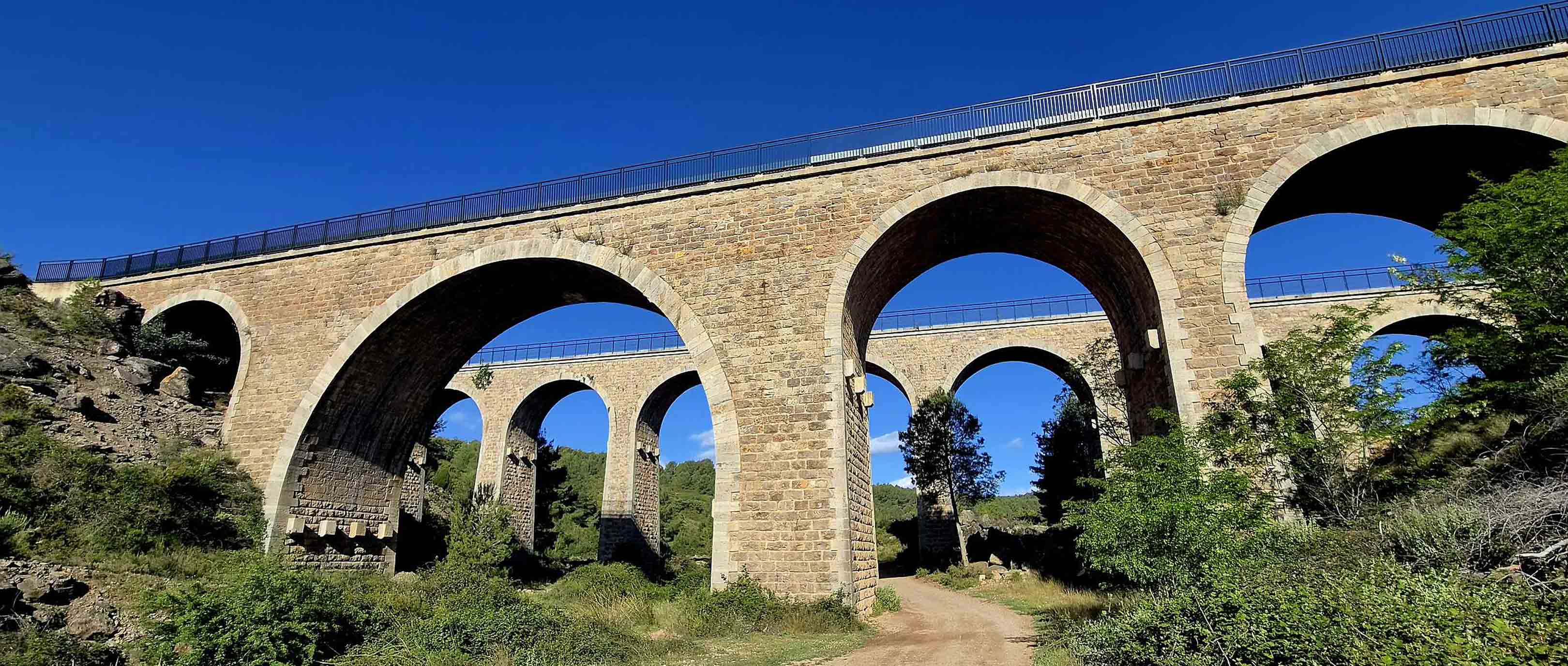
Teruel lies ahead. Not a city that imposes itself. More one that slowly unfolds. Brickwork, towers, Mudéjar architecture — everything feels slightly eccentric, but in a charming way. We roll in, drift through the streets and quickly get the feeling that Teruel doesn’t want to impress anyone; it simply wants to be discovered.
We park the bikes, sit somewhere in the sun and glance at each other briefly. A thunderstorm the night before, a crystal-clear morning, tunnels, gravel, 1,200 meters of climbing and this city at the end — remarkable how little it takes to turn something into a genuine little adventure.
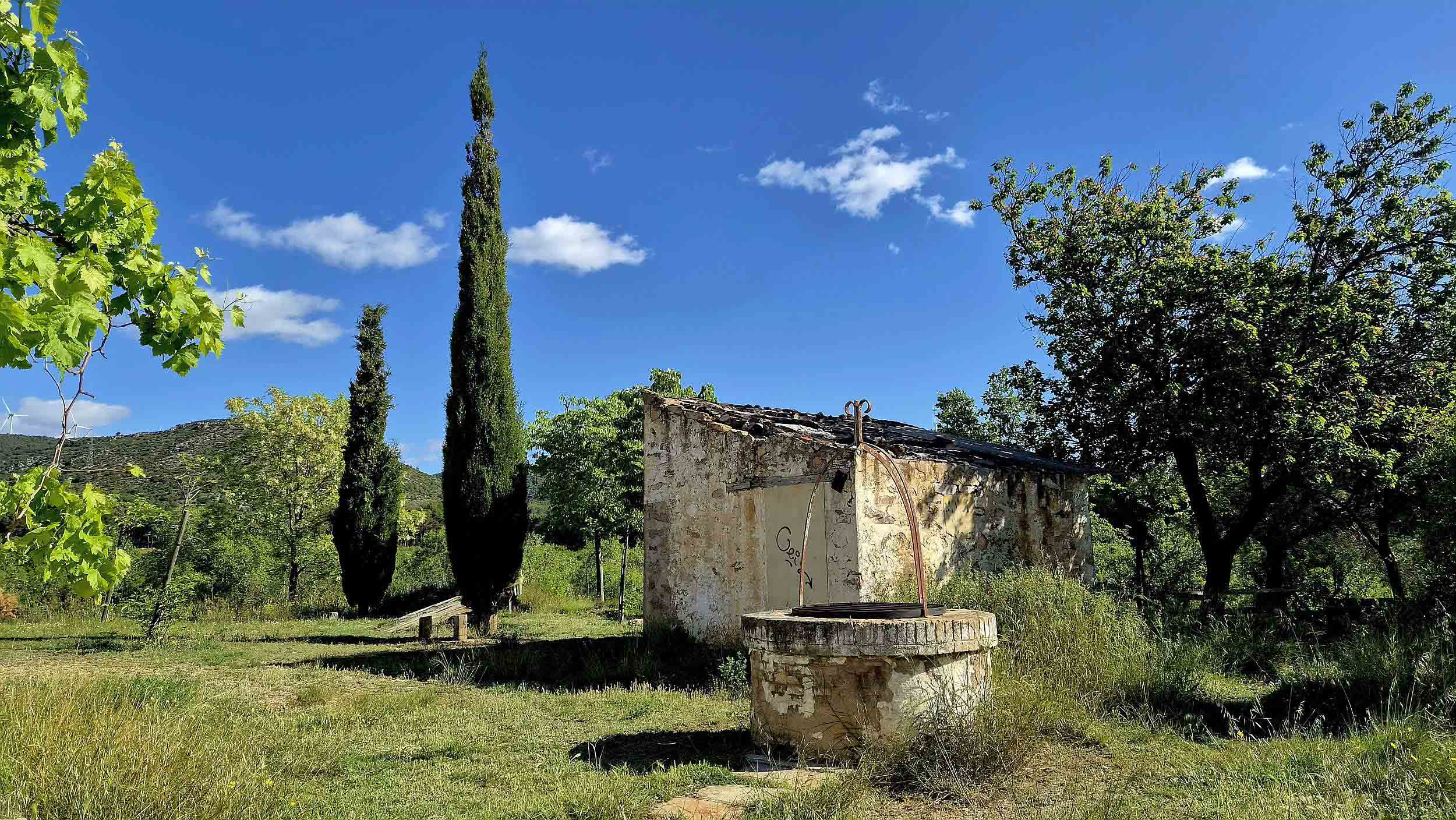
The Long Road to the Mines
The next morning in Teruel has all the warmth of a freezer. Five degrees Celsius. Five! A temperature at which even we briefly wonder whether gravel tours might be better enjoyed theoretically — indoors, with coffee and without the risk of frostbite. Our fingers feel like badly insulated cables and the first rumble of our tyres sounds less like departure and more like a discreet warning.
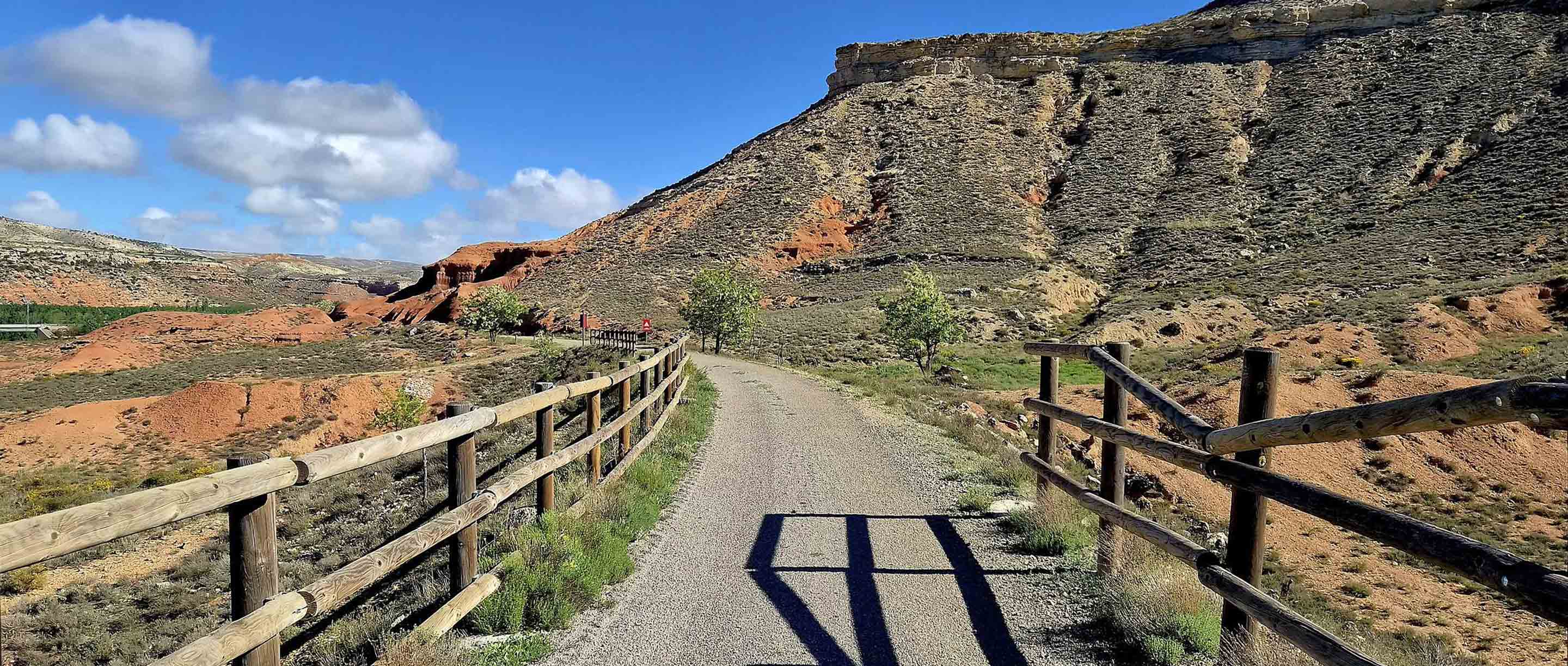
Back on the Ojos Negros route, an entirely different Wild West scenery unfolds. Vast emptiness, dust, rusty relics — all that’s missing is a lone gunslinger on horseback. The landscape looks deliberately staged for maximum drama. Every hill a backdrop, every bend a promise.
And then — no more bends. Instead: long, ruler-straight sections. And headwind. Of course, violent headwind. For kilometre after kilometre, we pedal while progress feels largely theoretical. The kind of wind that collectively reminds you that you control nothing here — except your willingness to keep pedalling.
At some point, an airport appears on the left. Parked aeroplanes stand around as though participating in a silent protest. We envy them. They don’t have to go anywhere. We do. Relief arrives in Santa Eulalia: coffee, warmth, caffeine. We clutch our cups and slowly thaw out again — physically and mentally. For a moment, everything is good.
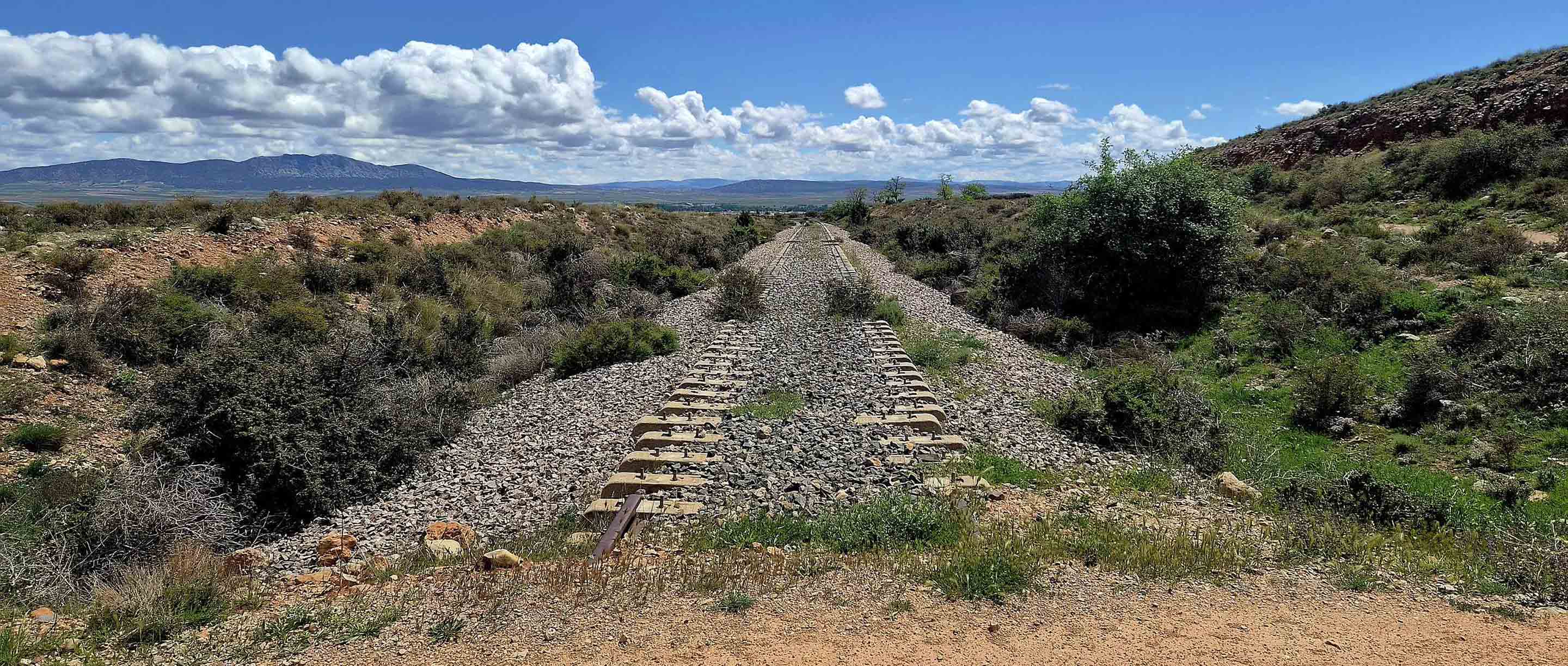
Refreshed, we continue. Until the Ojos Negros decides to reveal another side of itself. Coarse gravel. So coarse that for several kilometres we retreat onto the small parallel road.
But before Peracense, everything becomes good again. The track transforms into exactly what we had hoped for all along: firm, fast, smooth gravel, almost elegant beneath the tyres, the destination firmly in sight. Suddenly it flows. Suddenly, we’re flying.
The detour to Castillo de Peracense feels only natural at that point. Through spectacular rock formations that look as though someone created them with slightly too much imagination. We stop, stare, marvel — and unanimously agree that every extra meter of climbing was worth it.
And finally, after another twelve kilometres, we stand at kilometre zero beside the mines of Ojos Negros. No grand finale. No pathos. More a quiet arrival in the middle of nowhere. We stand there, slightly exhausted — and deeply satisfied.
In the end, what remains is the feeling that the destination was never really kilometre zero, but the road leading there. And that road had plenty to offer.
If you would like to follow in Timo’s tyre prints, you can find his route here: