If you asked a speaker of the Catalan language what Ranxo is, they would probably reply that it’s “traditional, slow-cooked winter and carnival stew native to the rural towns of Catalonia made from a mix of pork, beans, potatoes, carrots, chickpeas, and sometimes butifarra (Catalan sausage).” If you asked a gravel racer the same question, however, they would tell you it’s one of the best gravel races in the European calendar. At least, that’s what Jorge Padrones thinks.
Ranxo is the name of one of the typical dishes from the area in which this race is held. This simple detail reveals a lot about this race - it’s not only about gravel, it is also about culture, about the place where the race happens, about mixing with the people and the area. Ranxo is one of those events trying to be something more than just a gravel or a bicycle race.
Ranxo has positioned itself as one of the best and most prestigious races in the world. The event offers a perfect combination of course, surfaces, landscape, area, culture and organisation and has been growing in prestige since it was first held in 2021. Back in 2022, Ranxo was the first UCI Gravel World Series in Spain and later was a main race of the Gravel Earth series. Last year, the Ranxo event was the grand finale of the Gravel Earth series.
This year was my first time participating in Ranxo. For various reasons, it was a race that, despite being on my bucket list for some time, I could not attend in the past. A good friend of mine, Antonio Ortiz, who is an ex pro-racer, introduced me to the ‘dark side’ of gravel [racing]. He knows a lot about bikes, racing and gravel and described Ranxo as “The Perfect Gravel Race”. Let me tell you about the race and see at the end if I have the same opinion.
The race takes place in Ponts, a small village in Lleida in the heart of Catalonia, a rural area bisected by the Segre river. The venue for the race was a canoe slalom venue located just beside the river. From Ponts we can see the Pyrenees in the distance, but the area the race covers is more like Tuscany - full of hills with castles or old houses and palaces on top. It is a very rural area filled with fields of arable crops and covered with some of the best gravel tracks you could ever wish to find.
On arrival, there was a cosy village created for the event in a campsite, where we were even able to sleep or consume a generous portion of Ranxo, among other foods. Fresh fruit, sports nutrition items and good speciality coffee were also awaiting us, making it feel overall an experience, rather than ‘just’ a race and helping to create a feeling of gravel community with all the needed services.
It is common at these types of events that you have a choice of three distances to choose from, depending on your level of fitness/expertise and on how many hours you want to stay in the saddle. At Ranxo, you had a choice of 160 km with 2000 elevation meters, 96 km and 1500 metres and the little sister with 68 km and 1020 elevation meters. Everybody could find a distance which fitted them and be part of this party, which is Ranxo.
Given its notoriety on the international gravel race scene, many of the main actors were present at the event - from Mads Würtz Schmidt (straight from winning Unbound )to Hans Becking, Lukas Baum and Axelle Dubau-Prévot. Top riders in the women’s field included Célestin Guillon, Sophie Wright, Elena Hartmann and Rosa van Doorn.
But Ranxo is not only about elite-level racing - it is about enjoying one of the best Spanish areas for gravel riding and also spending some time away from big cities, enjoying the rural and quiet life that this part of Catalonia has to offer.
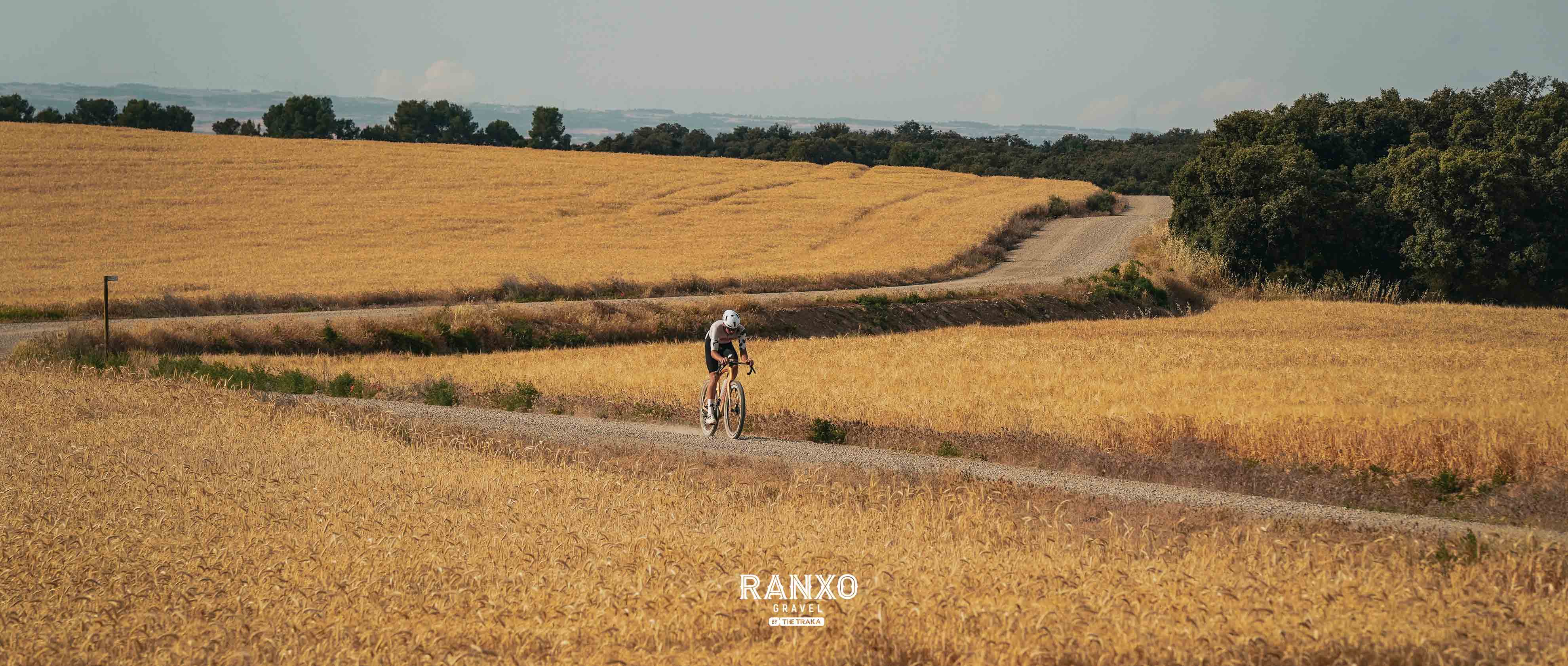
If there is something that I have to highlight about the course, it is the surface and tracks we raced on. The parcours included many wide and long tracks that got lost over the horizon in the surrounding hills, edged by fields of golden wheat - something that we all undoubtedly align with pure gravel. But not all the course was like that - there were also some technical descents, some rocky stretches and even some singletrack sections. These were somehow technical, but also very manageable and from my point of view, they added some spice to the course, making it even more fun and more enjoyable. The organisation, as usual from Klassmark, was spotless. It seems as though they added an extra safety layer to the event, as you could see staff on every difficult corner or road crossing point.
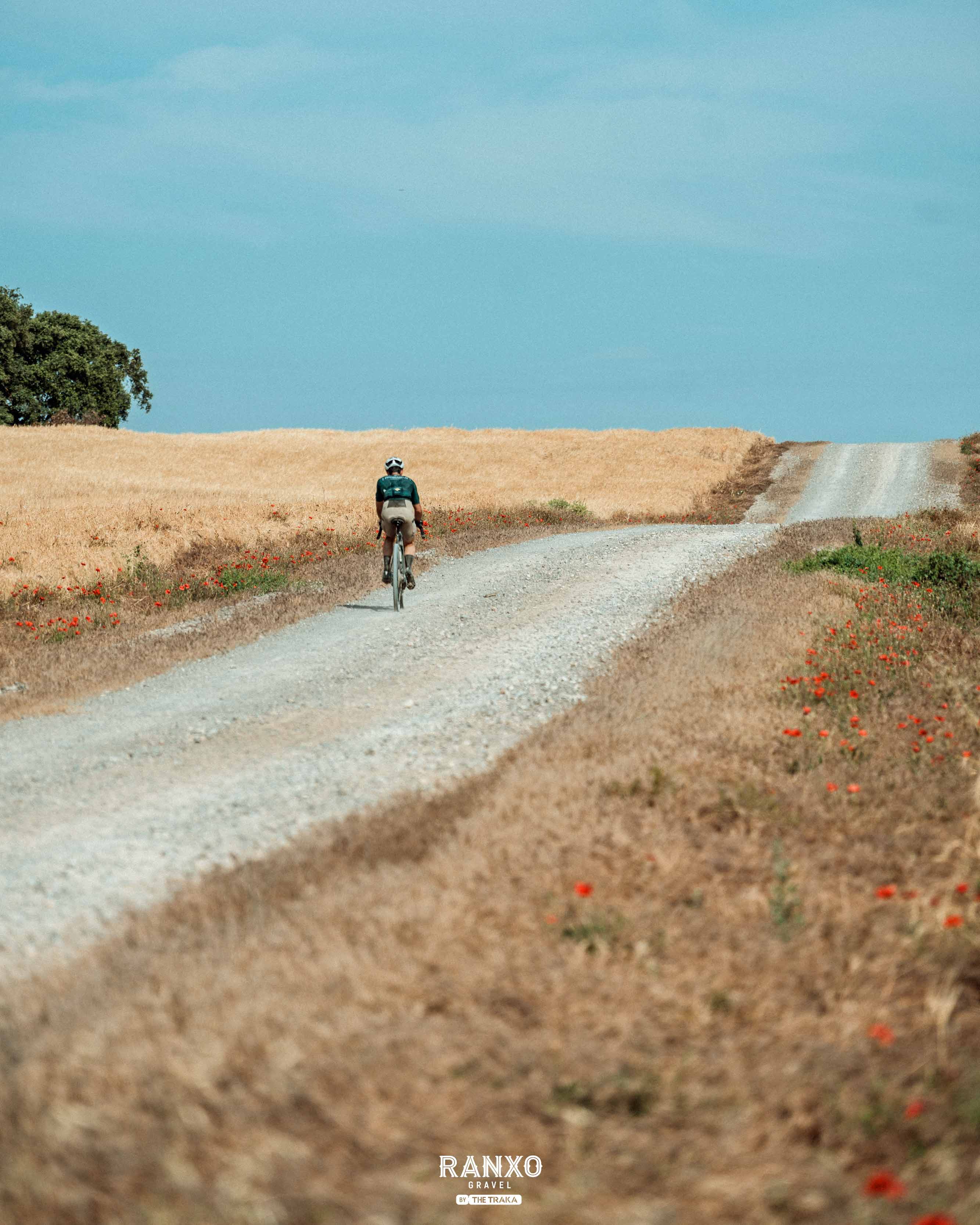
Also, we have to take into account that the course was not flat - the profile had continuous ups and downs. In total, I spent 36% of my time on the race climbing. The climbs were generally not too long, but they were punchy and you certainly felt the pain in your legs.
But it was a fast course! The elite men’s winner, Mads Würtz Schmidt, recorded an average speed of almost 35 km/h despite riding alone for the majority of the race. The fastest amateurs got close to the 30 km/h mark, while the rest sat around and above 25 km/h.
Taking part in this year’s Ranxo leaves in my memory the feeling of cruising with my gravel bike alongside fields of wheat, seeing dust in the air from the previous group and feeling like I am rolling in perfect harmony with my bike. Ranxo was a combination of the perfect gravel, the perfect scenery and the perfect amount of “spicy” sections to the course.
I do not feel I have the authority to say this is the perfect gravel race, but if there is a perfect gravel race, it must be very similar to this one!
Images courtesy of Ranxo Gravel