Hydration vests are designed to allow the wearer to carry water, spare layers of clothing, snacks and anything else that you don’t have space for in your jersey pockets or on your bike. They are now seemingly de rigueur in ultra-distance racing and in multi-day packing events, but do they work for ‘normal’ gravel riders as well as for racers? Restrap launched their Race Hydration Vest back in 2024 and we loved it. Back in June of this year, they launched an updated version, the Lightweight Race Hydration Vest, which we gave to our hydration vest sceptic, Graham Hatt, to see if it would win him over. Read on to find out how he got on.
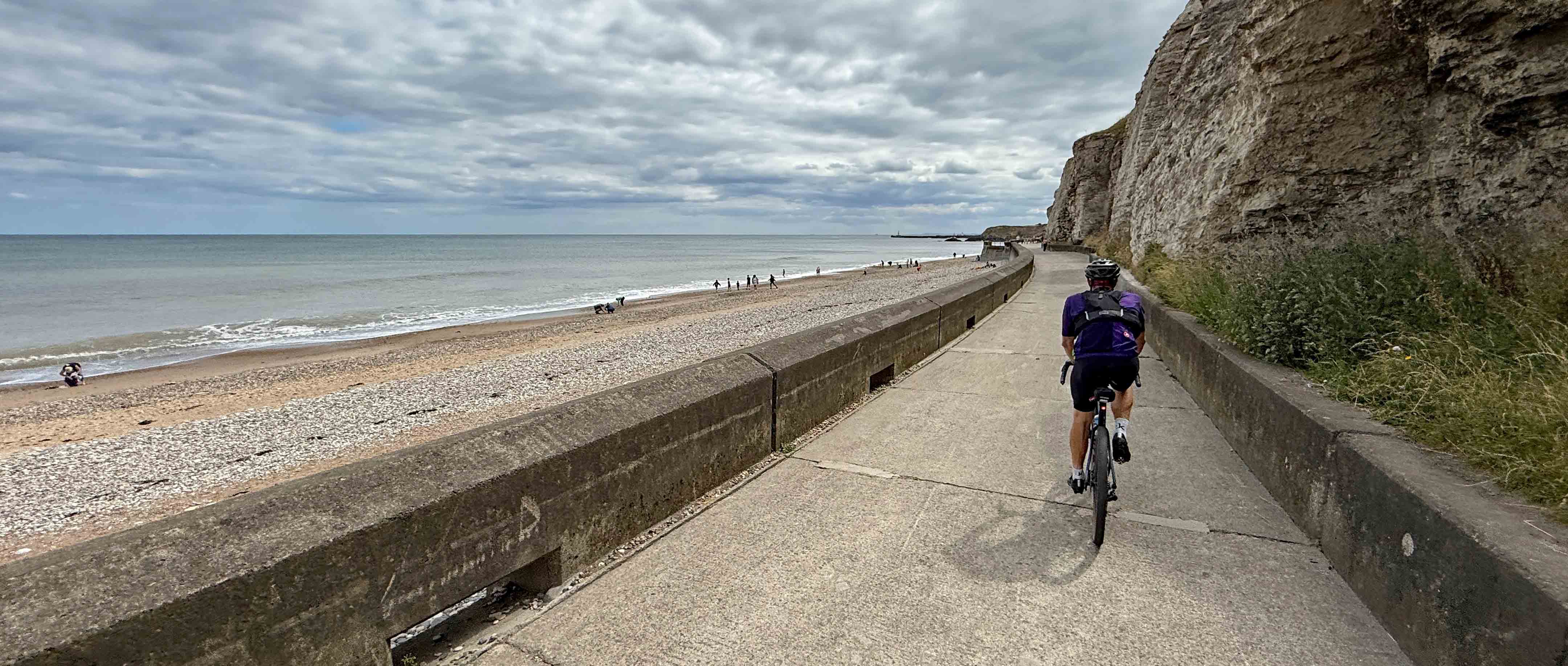
I’ll start this review with a confession: over the past few months of testing this hydration vest, I’ve come to realise that I’m not really a hydration vest kind of person. I’ve found that carrying water on my back presents several drawbacks compared with using traditional bottles mounted in bottle cages. For starters, the extra weight feels more noticeable on my back than it does on the bike, while body heat quickly warms the water and leaves my back considerably sweatier during a ride. Cleaning the bladder is another issue, particularly when using electrolyte drinks, as it can be difficult to remove all the residue. As a result, I tended to avoid using electrolytes altogether, potentially increasing my chances of suffering from cramps on longer rides. There’s also a concern for those of us who treasure our Shakedry waterproof jackets: wearing anything over the top risks abrading the delicate fabric. With that in mind, I found myself opting for a heavier-duty waterproof jacket whenever I used the vest.
All of this puts me in a slightly awkward position as a reviewer. I suspect I’m not exactly the target audience for this type of product, but I wanted to give it a fair chance and see whether, over time, I could learn to love it.

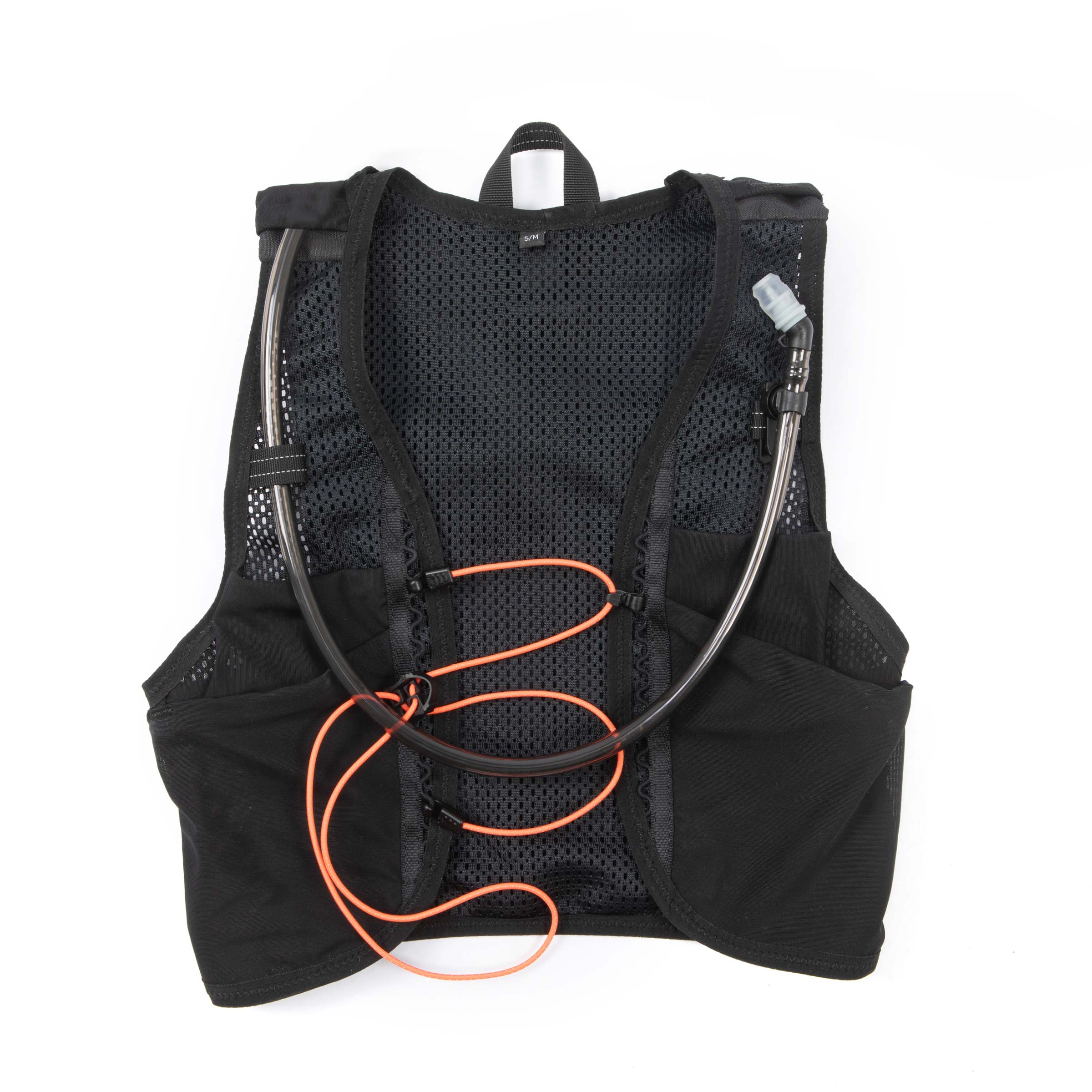
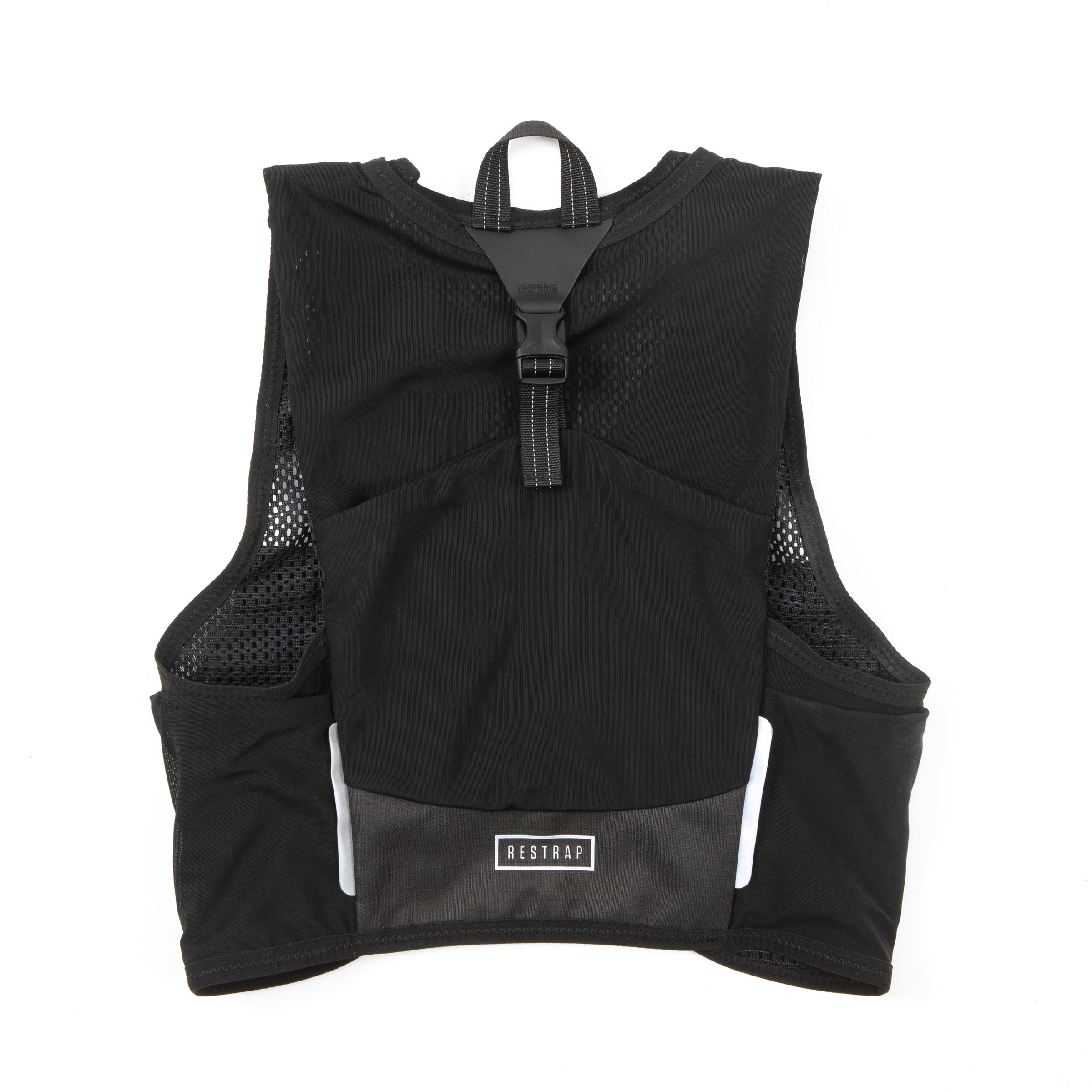
I tested Restrap’s Lightweight Race Hydration Vest over several months this summer, using it alongside the brand’s ‘standard’ Race Hydration Vest to compare the two. Restrap describes the Lightweight model as a ‘stripped-back’ take on its original ‘award-winning’ Race Hydration Vest. The redesign reduces storage capacity from 7.4 litres to 4 litres, while also cutting weight and improving breathability. Despite these changes, both vests come supplied with a 2-litre hydration bladder. The Lightweight version also undercuts its bigger sibling on price, retailing at £149.99 compared with £159.99 for the standard model.
The vest is amazingly light, weighing just 215 grams (without the bladder), versus the standard race hydration vest, which weighs 368 grams (without the bladder). That’s an impressive 42% reduction and I think if you were a long-distance racer looking for marginal gains, this alone could be a compelling reason to go for this vest.
Most of the time, I used it (without the bladder) for carrying extra food and clothing on longer rides and I think it’s an excellent solution for this – particularly if you’ve run out of space in your jersey pockets and on-bike storage.
Images courtesy of Restrap
Restrap’s ‘standard’ race hydration vest has some brilliant front pockets that are immediately logical to use; a zipped front pocket is perfect for a smartphone, and the other pockets work well for gels and snack bars. In comparison, the lightweight race vest is more unstructured than the standard version, which makes it more breathable and less sweaty, but I also found the pockets less intuitive to use.
There are two front-and-side-facing mesh pockets (Pocket 1) and two front-facing mesh pockets (Pocket 2), along with a larger rear pocket (Pocket 3), plus there’s an additional dedicated sleeve in the rear for holding the 2-litre bladder.
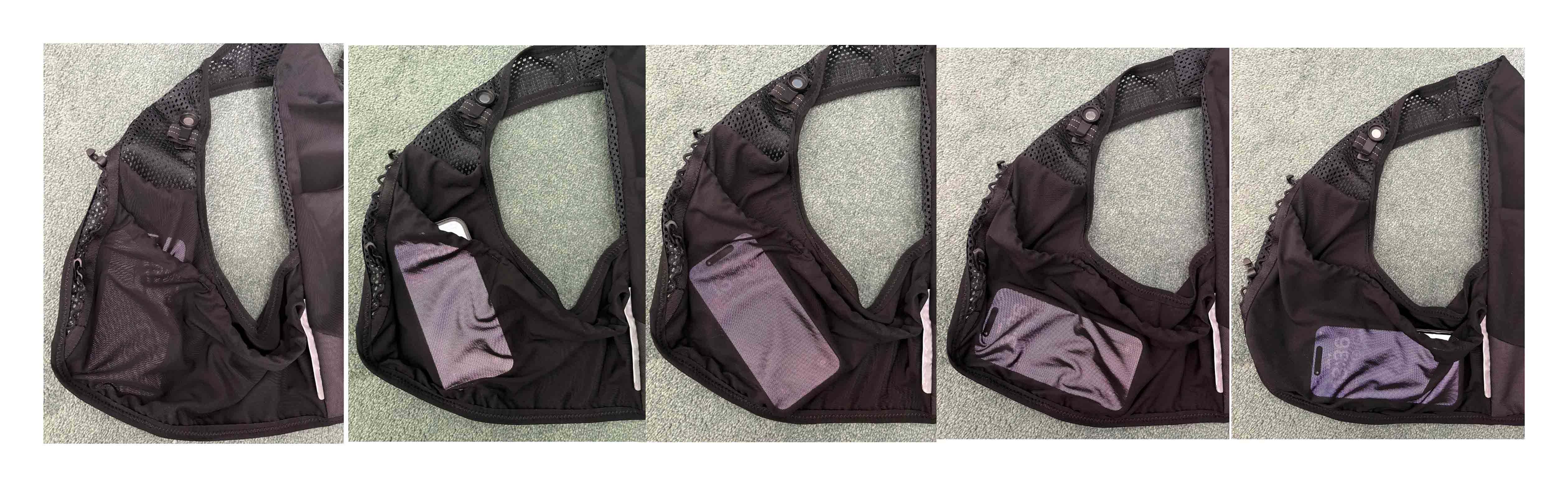
Anything I put into the front part of Pocket 1 would end up migrating into the under arm space
In use, I found Pocket 1 frustrating, as anything stored in the front section had a tendency to migrate sideways into the underarm area, making it harder to reach. I’d like to see some additional vertical stitching to divide the forward-facing and side-facing sections of the pocket, preventing items from shifting out of place. Pocket 2 seemed the obvious choice for carrying a smartphone, but its tall, narrow shape wasn’t ideal for this purpose. With my iPhone 16 inside, the top of the phone sat around 60mm below the pocket opening, making it awkward to retrieve, particularly when wearing gloves. Perhaps this pocket is better suited to other items that fit its dimensions more naturally, rather than a smartphone. Pocket 3, by contrast, worked well and had enough room to accommodate several additional lightweight layers. Reflective tabs on either side of the pocket were also a welcome addition, providing an extra element of visibility and safety when riding in low-light conditions.

Images courtesy of Restrap
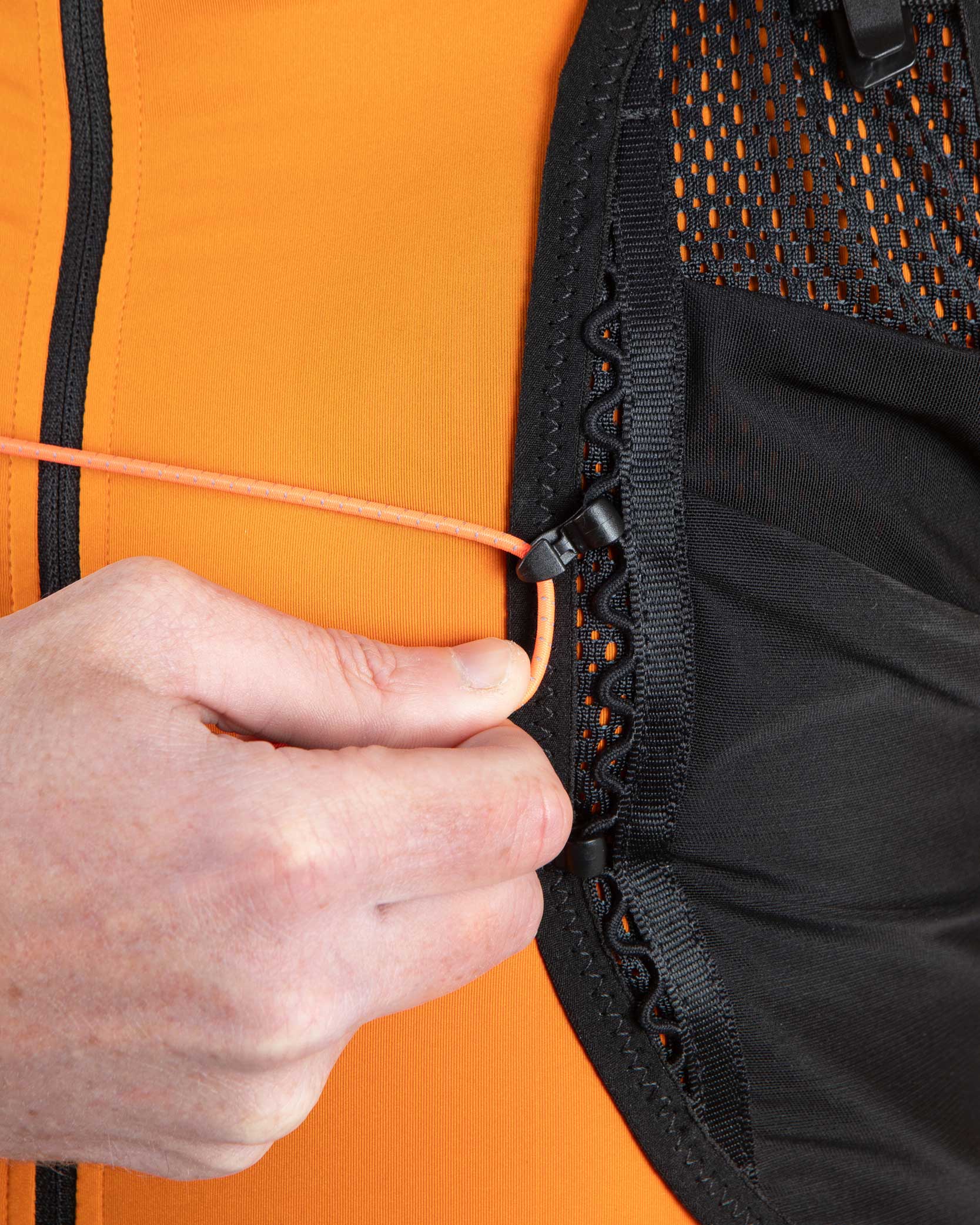
There is an orange ‘minimalist elastic chest retention’ cord at the front, which can be adjusted and unclipped with one hand (with some practice), which has been designed for ‘fast changes at feed zones’. This works well once you get the hang of how the cord is supposed to be threaded.
The two litre bladder is well designed and works perfectly. The main section opens completely for full access for cleaning and drying out and there is a black plastic slider on a retention cord at the top, which is a positive and simple way to securely open and close it. The hose has a quick release at the base of the bag, which allows it to be disconnected when the bag is full, which worked well. There is a toggle at the top of the pack that hooks into the top of the bladder to keep it upright in the bladder sleeve. The hose can then be routed along either the left or right shoulder as required and there’s a magnetic catch which keeps the end of the hose securely connected to the opposite shoulder strap.

In conclusion, I think hydration vests clearly have a place in gravel riding and some people seem to get on with them very well; however, I think I will continue to overstuff my rear pockets and top tube pack to avoid having to wear one. I usually really like Restrap bike bags as they are well designed and well made, but I think this lightweight race hydration vest is a highly specialised item most suited to racers and gram-counters and I therefore think that if you are interested in trying a hydration vest, the standard ‘race hydration vest’ would be a better solution for most ‘regular’ gravel riders.

Image courtesy of Dave Jones
The Editor’s (contrary) view
I’ve used the original Restrap Race Hydration Vest for more than two years and I absolutely love it. Like Graham, I was a bit of a sceptic of the idea of a hydration vest initially, but I’m now fully converted and have used it everywhere from taking part in this year’s Paris-Roubaix Challenge to big day rides in the hills and most things in between. Graham and I ride together most weeks, so we decided to swap hydration vests for a recent big day out and try the alternate version. Graham and I are quite different sizes – he is significantly taller and has a rock climber’s upper body shape, whereas I’m more of a lightweight, so our hydration vests weren’t quite the right size for each other. For me, this meant the vest was too long and partially blocked access to my jersey pockets. For Graham, my size small/medium vest was very snug and sat quite high on his torso. The principle of testing out each other's vests seemed like a good one, though, as it would give a second opinion and a different perspective.

Image courtesy of Graham Hatt
Despite the difference in size, the two vests share the same basic functionality, so we felt it was fair to put them through a comparative test. After riding 100 hilly kilometres in the Lightweight vest, I found that several of my observations echoed Graham’s exactly.
- The vest feels exceptionally light, with an almost ‘barely there’ sensation when worn.
- It’s remarkably comfortable and offers ample space for a waterproof jacket, along with a small mountain of energy bars, gels and other ride essentials.
- The reduced amount of material between your back and the hydration bladder means the water heats up noticeably faster than it does in the standard vest.
- I spend a considerable amount of time taking photos while riding, so having my phone readily accessible is important. Unfortunately, I found the pocket layout on the Lightweight vest considerably less practical than that of the standard version, eventually opting to carry my phone in a jersey pocket instead.
- The elastic strap closure worked perfectly, keeping the pack securely in place despite the vest being too large for me. However, during the six hours I spent riding with it, I never quite mastered re-lacing the front after taking the vest off. I’m sure it would become second nature with practice, but the process certainly isn’t intuitive.
Overall, my experience was more positive than Graham’s. However, if I had to choose between the two vests for my particular riding style and needs, the standard Race Hydration Vest would win my vote.

Image courtesy of Graham Hatt
Restrap’s Lightweight Race Hydration Vest retails for £149.99 (or the equivalent in local currency). You can find out all the details about it on Restrap’s website.
After Graham finished his review, we heard from Restrap, who said, "We have updated the Lightweight Hydration Race Vest slightly. The side pockets (pocket 1 on Graham's diagram) now have stitching to separate them from the front pockets (pocket 2). This was thanks to feedback from a few riders noting what Graham did about items having a tendency to slide around."