If you’ve been keeping an eye on the professional gravel race scene over the last year or so, you will have noticed one dominant trend more than any other – big volume, fast rolling, XC MTB tyres shoehorned onto every single bike. However, just because the pros are doing it, does that mean that ‘normal’ riders should try it too? The consensus is that larger-volume tyres offer a better riding experience, but how big is too big? Olly decides to dive into the rabbit warren of fitting XC tyres on gravel bikes and tries out a set of Schwalbe Thunder Burts, this season’s tyre du jour. How did he get on? Read on to find out.
TL;DR – If you can get the Schwalbe Thunder Burts to fit on your gravel bike, they may well be the best single upgrade you’ve ever made. They are incredibly fast-rolling, but are also surefooted. They offer a level of grip and comfort that other bike tyres can only dream of. In short, if they fit and you can afford them, you will not regret fitting a set on your gravel bike.
Ever since I first rode a gravel bike, I’ve tried to fit the largest-volume tyres I could. Even back in 2019, I managed to fit a set of 700x50mm tyres onto my 'work bike' at that time. The set-up was decidedly homemade and probably invalidated every possible warranty on the frame and fork. The tyres also weren’t all that great. They rolled super well, but the sidewalls had all the strength of a wet cardboard box and the grip, in anything other than bone-dry conditions, was best described as ‘exciting’. Despite their shortcomings, however, they did get me totally hooked on the lovely floaty feeling that a big volume tyre brings to a gravel bike. Big tyres add a smoothing quality to the ride, you get better traction, you will (hopefully) get fewer impact punctures and, if I’m honest, I think that big tyres just make a gravel bike look ‘right’ too. There is a balance to be struck though. While bigger is better (most of the time), it isn’t a panacea for every situation and indeed there is definitely a point where you can go too big and it will cause you problems.
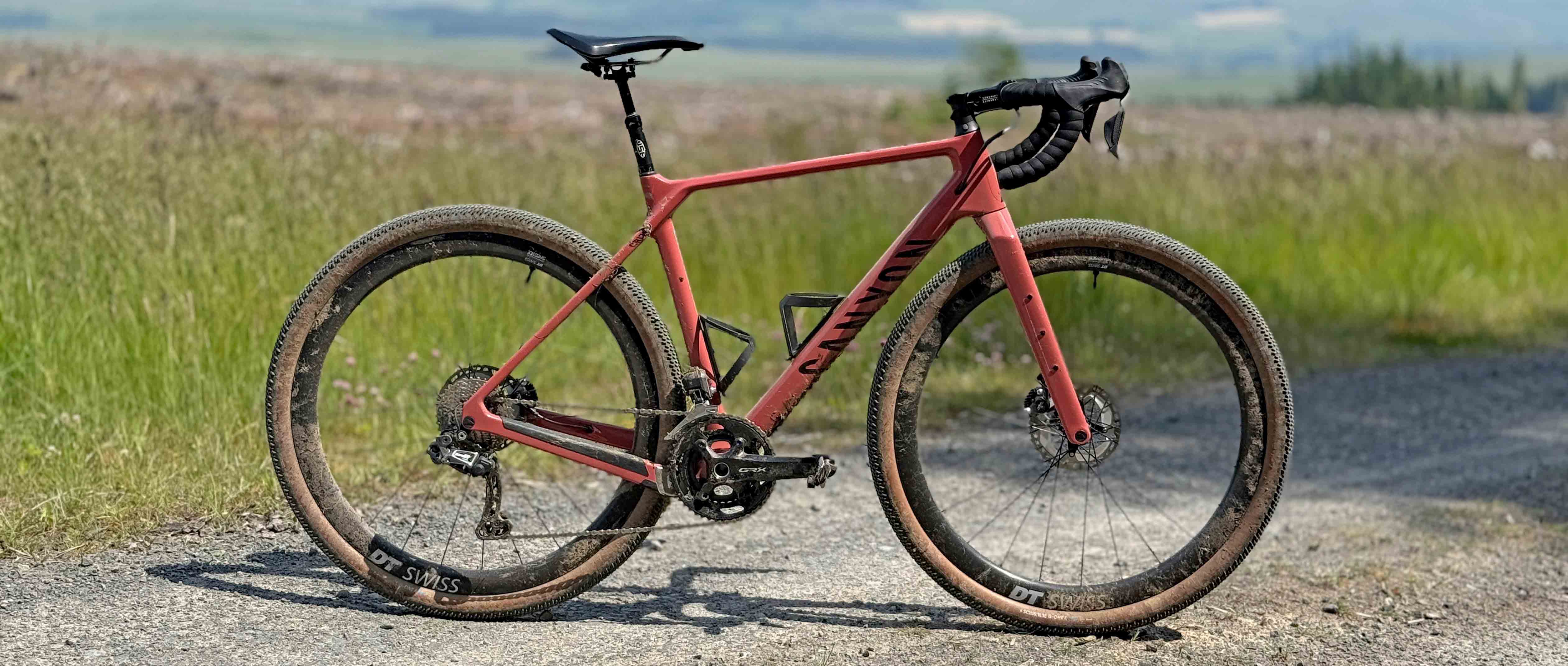
My ‘go-to’ gravel bike is a 2024 model Canyon Grizl which, based on Canyon’s own data, has capacity for a 700x50mm tyre and a 2x chainset. Since 2022, I’ve run almost exclusively Schwalbe G-One R tyres and have used the 700x40, 700x45 and the 700x50 Pro variants on a variety of different bikes. I absolutely love these tyres, as they seem to do everything pretty much perfectly. They’re surefooted, fast rolling, durable, supple, can cope admirably with a huge range of trail conditions and are also decently light.
So, if I love the G-One R tyres so much, why did I want to try something different? Partly because I’d also fallen in love with Thunder Burts. I’d run them for 18 months on another bike in the 29x2.25” variant and they were incredible. For such a big volume tyre, the rolling resistance seemed to be minimal and they helped make my bike feel like a rocket ship. I’d hammered the hell out of them on the rocky trails of northern Nepal and they took all the abuse I dished out without flinching. They’re surprisingly light for such a big volume tyre (615g in the version I was using). After I had ridden them so much that I wore them out, I swapped to a competitor brand, which on paper were similar, but which were being sold online for roughly half the price. I soon realised why I should have stumped up the extra cash for the Thunder Burts – the replacement tyres felt like I was riding in treacle. On the first ride, I actually stopped to check whether my brakes were rubbing as I felt so sluggish. Lesson learned.
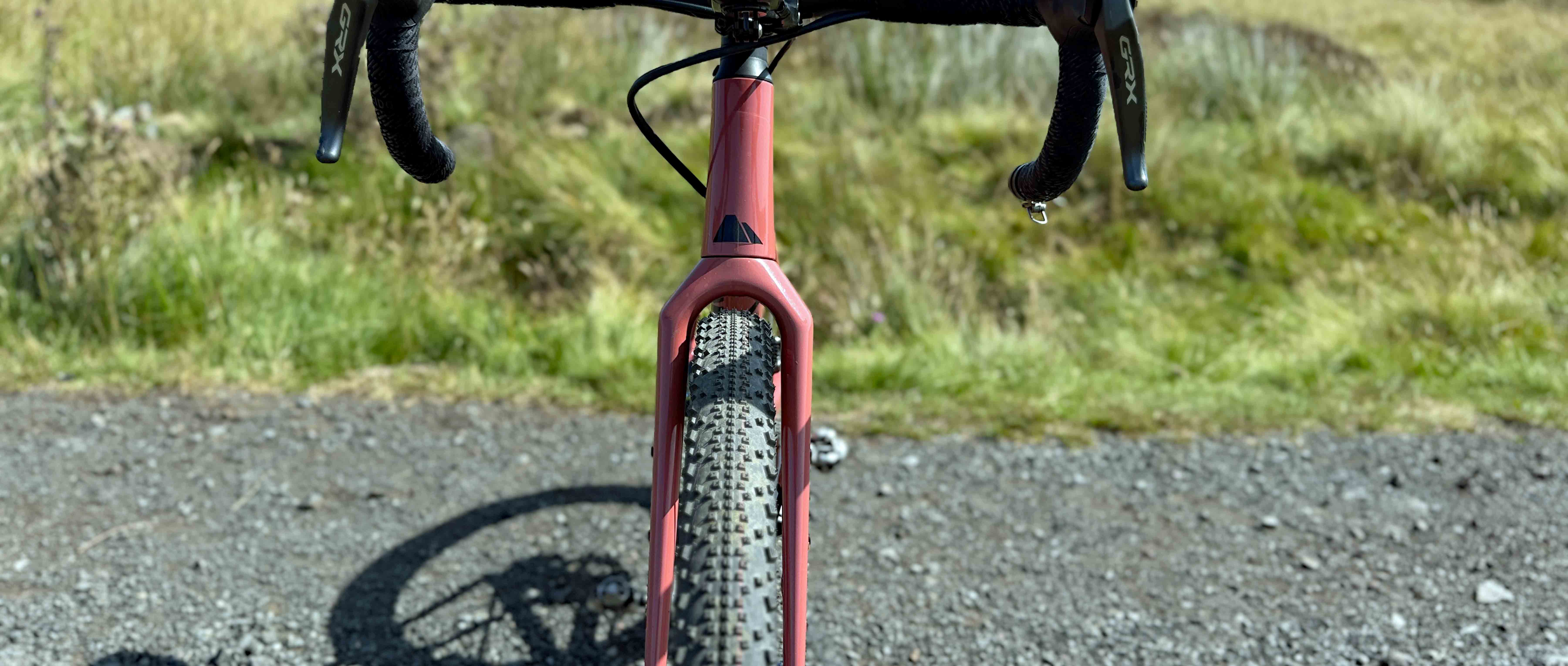
You might be wondering if the Thunder Burts are so good, why hadn’t I tried them sooner on my Grizl? The honest answer is that I didn’t think they would fit. The UK has a somewhat odd system where we interchangeably use both imperial and metric measurements (even though the metric system was officially introduced in 1965). Anyone middle-aged or older will happily use either measurement system and we manage to bludgeon the two systems together. The bike industry is, of course, the same – after all, the width of MTB tyres are generally quoted in inches, but the width of gravel bike tyres are generally quoted in mm (or in the official ETRTO measurement). I knew that the smallest size that Thunder Burts came in was 29x2.1”, but I hadn’t mentally converted this to millimetres, and, perhaps more importantly, realised that they come up slightly smaller than their official ETRTO designation (54-622) would lead you to believe.
For the last year or so, pro gravel racers have been using increasingly large-volume tyres on their race rigs and two different ones seemed to be the racers’ tyre of choice – Continental’s Dubnital and Schwalbe’s Thunder Burt. The tyre-spotting nerds amongst you will recognise that both these tyres are nominally aimed at XC MTB racers. However, with gravel courses like The Traka and The Rift becoming increasingly technical, racers looking for every possible way of finding extra speed & reliability were shoehorning big volume, fast-rolling XC MTB tyres into their gravel bikes. There were numerous social media posts of mechanics and racers themselves re-cutting or trimming the tread on the edge of the tyre enough so that they could fit their wheels into the frame with an acceptable amount of mud clearance.
Obviously, sponsored racers aren’t all that concerned about the longevity of their machines – their main focus is speed. I, on the other hand, was paying for my own kit and if I fitted tyres that were too big and then rubbed holes in my frame, there would definitely be some tears afterwards. The International Standards Organisation (ISO) produce guidance which bicycle manufacturers are required to comply with and one document, ISO 4210-2:2023(en), states that a minimum tyre clearance of 4mm is required on the frame and forks. I knew this, but I also knew that many gravel bike manufacturers err on the side of caution when stating the frame/fork clearance of their bikes.
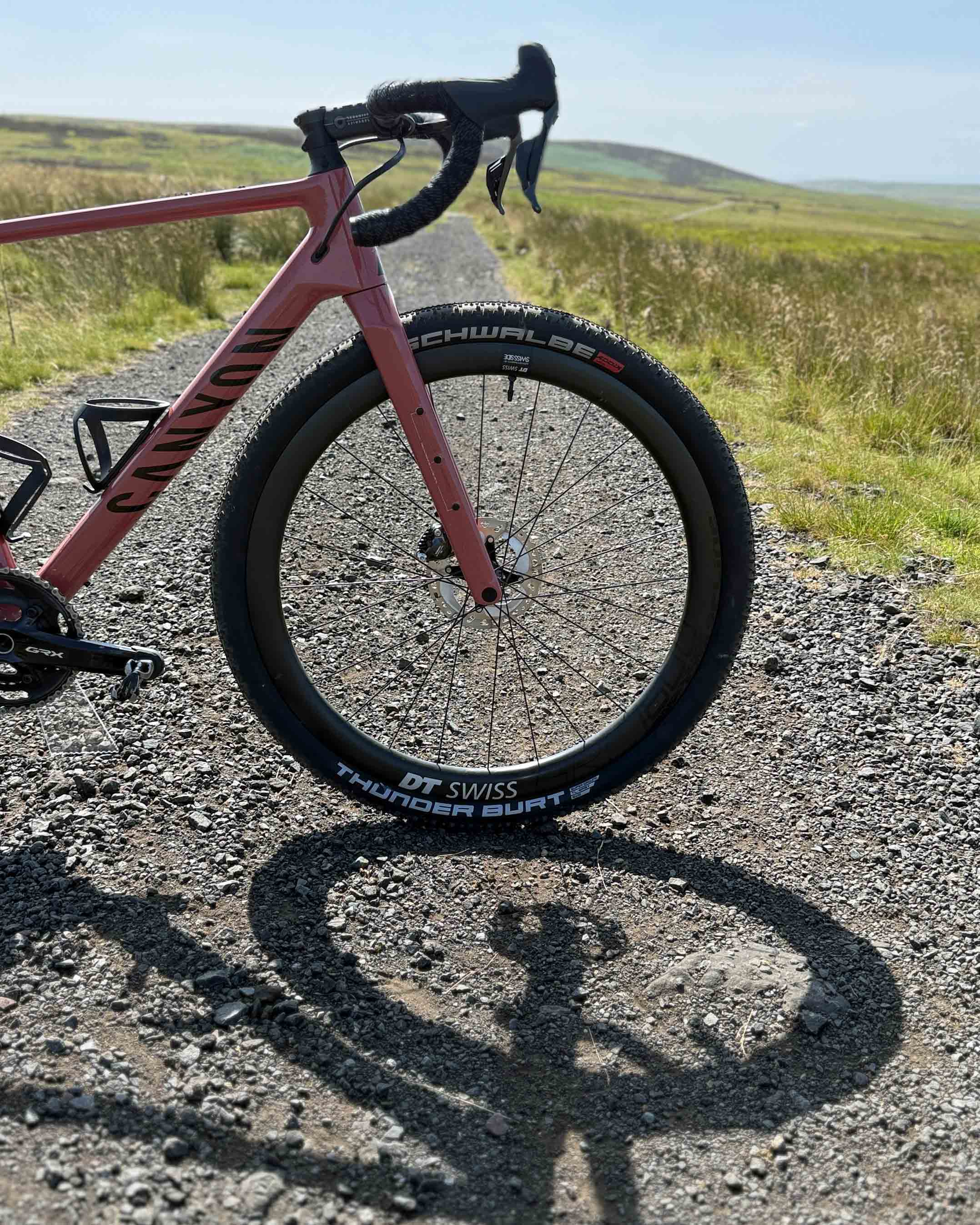
So, despite knowing that Canyon officially recommend a maximum tyre size of 700x50 (or ETRTO 50-622), I took a bit of a gamble and fitted the Thunder Burts, which are nominally 54-622. When I fitted them on my 24.34mm internal width DT Swiss GRC1600 wheels, the Thunder Burts inflated to 52.36mm when first seated and inflated to 40 psi (2.76 bar) and then 51.97mm when adjusted to my normal running pressure of 17 psi (1.17 bar). That meant that when inflated, the Thunder Burts were around 2.5mm larger than my G-One Rs. That might not sound like a significant difference, but it meant the clearance, particularly around the chainstays, is TIGHT.
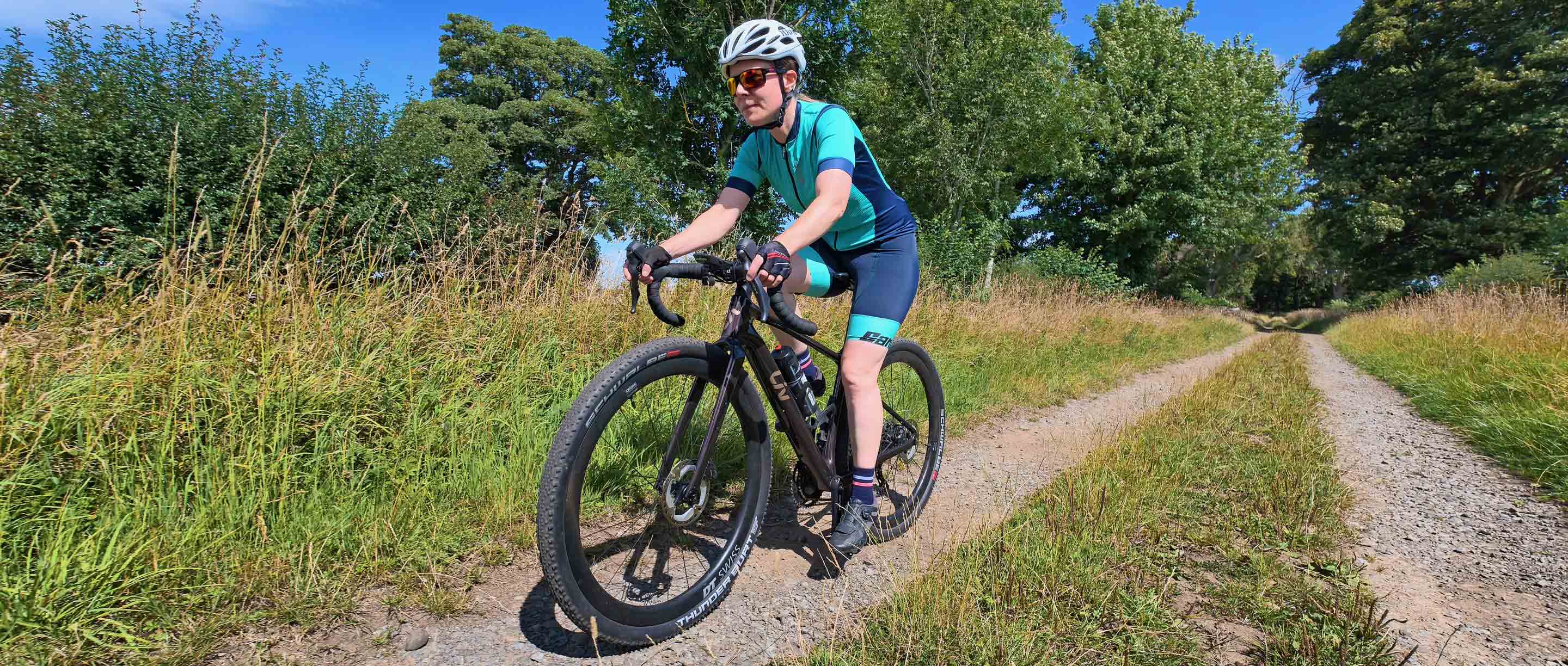
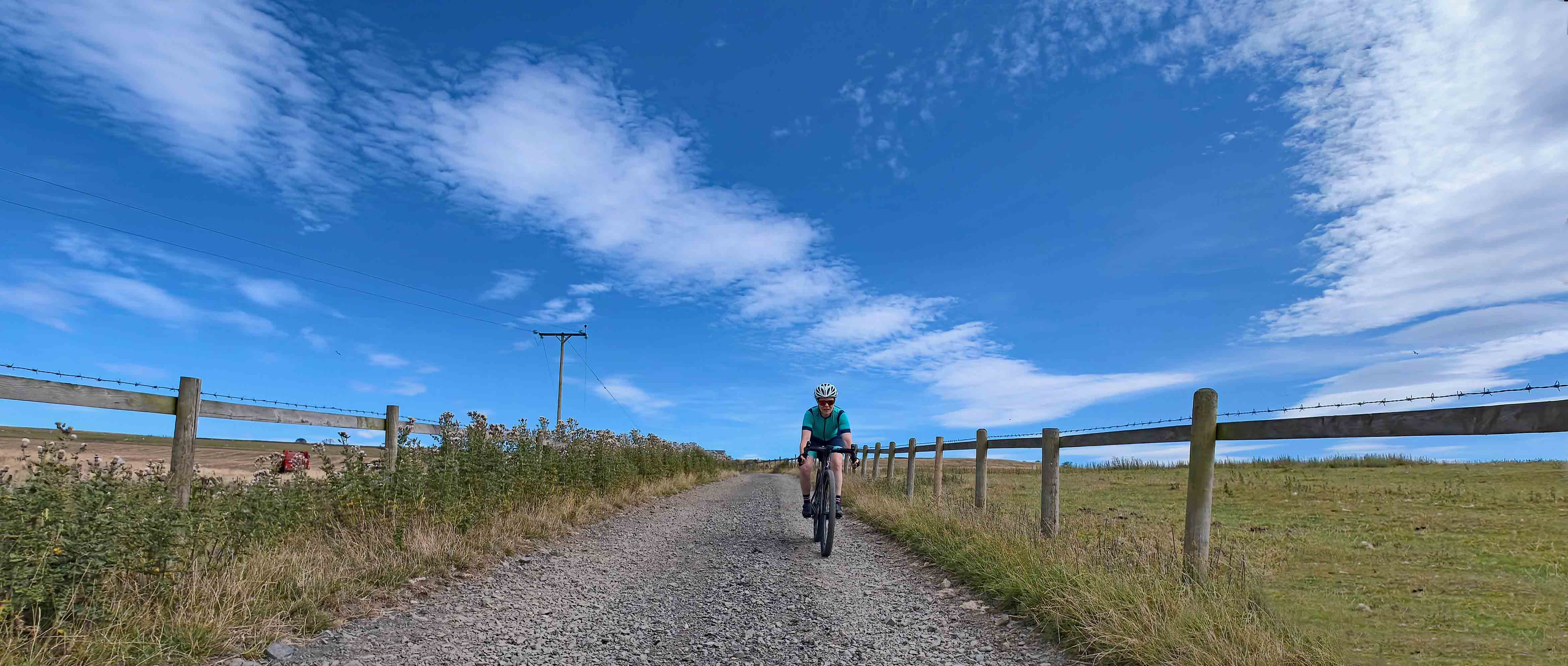
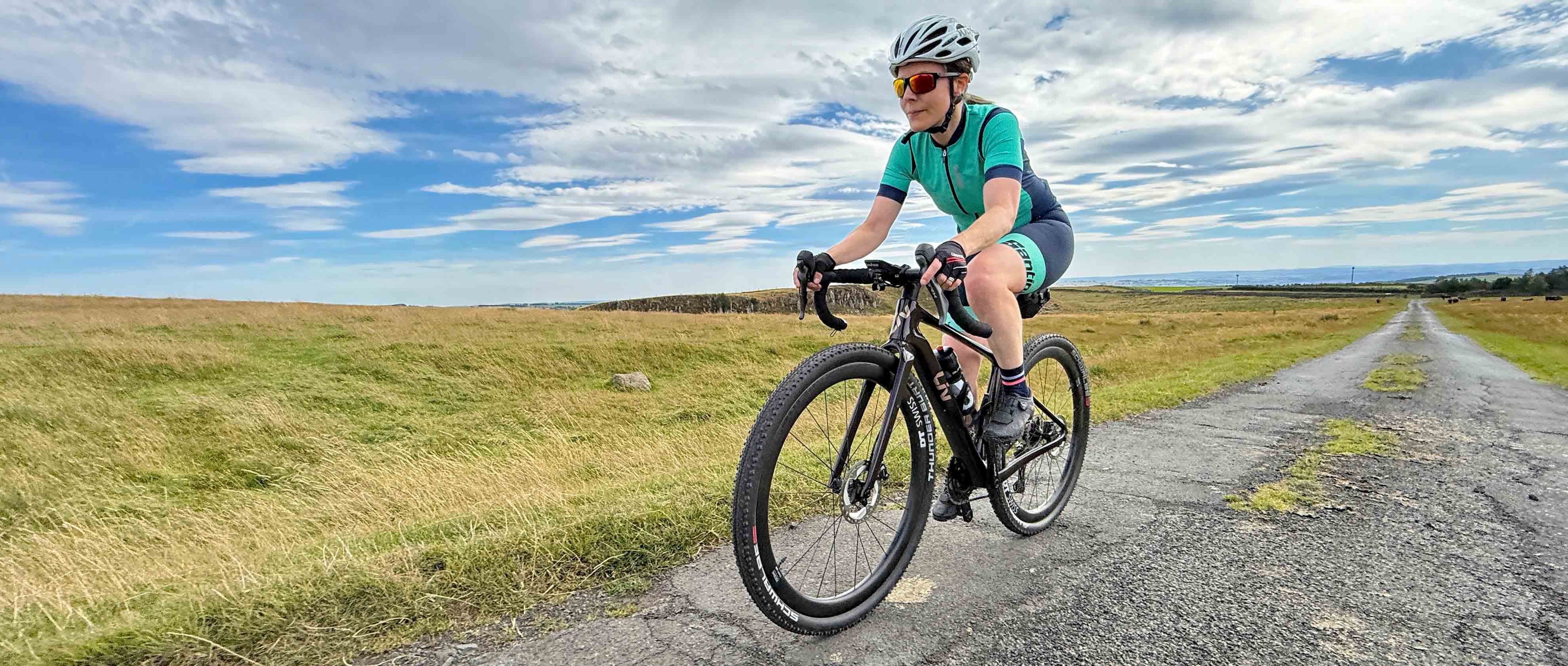
Capturing photos of me testing out the Thunder Burts is not easy, so I roped in a model to star in some riding shots instead.
By virtue of some serendipitous timing, I fitted the Thunder Burts exactly when my local trails were at their driest. Even trails that generally remain boggy had been sucked dry by the combination of hot weather, strong winds and no rainfall for months. The dry trails meant I was pretty confident about using my Grizl, even with minimal spacing around the chainstays.
So, what are they like to ride? Schwalbe say that the “low weight and extremely low rolling resistance [of the Thunder Burt] makes it Schwalbe’s fastest MTB tyre” and they’re not wrong – fitting a set to your gravel bike (assuming that they will fit) will make it feel like you’re riding a rocket ship. What you might not expect though is how confidence-inspiring they are. Schwalbe say that they’ve included “Edged shoulder studs for good grip and control in curves; multiple small, flat studs for fast and quiet rolling; and numerous grip edges for hard ground.” That combination of straight-line speed and tenacious grip in all but the wettest/muddiest conditions makes the Thunder Burts inspirational to ride.
It's perhaps cornering that generates the most impressive feedback. While Schwalbe’s G-One Rs are utterly fantastic to ride, if the trail you are tackling has a loose upper layer (which, in the current dry conditions, probably means most trails…) then they tend to scrabble for grip on corners. Where the trail has a decent camber you will be fine, but where the trail is flat, or worse, where the camber goes the wrong way, you might well find yourself drifting outwards on successive corners. The Thunder Burts, on the other hand, have significantly more pronounced shoulder lugs and this helps aid grip on all but the loosest corner. I’ve really pushed them to try and find the limit of grip and while they will eventually slide, they tend to do it in a predictable manner and you get enough warning that it’s going to happen to allow you to unclip your inside foot.
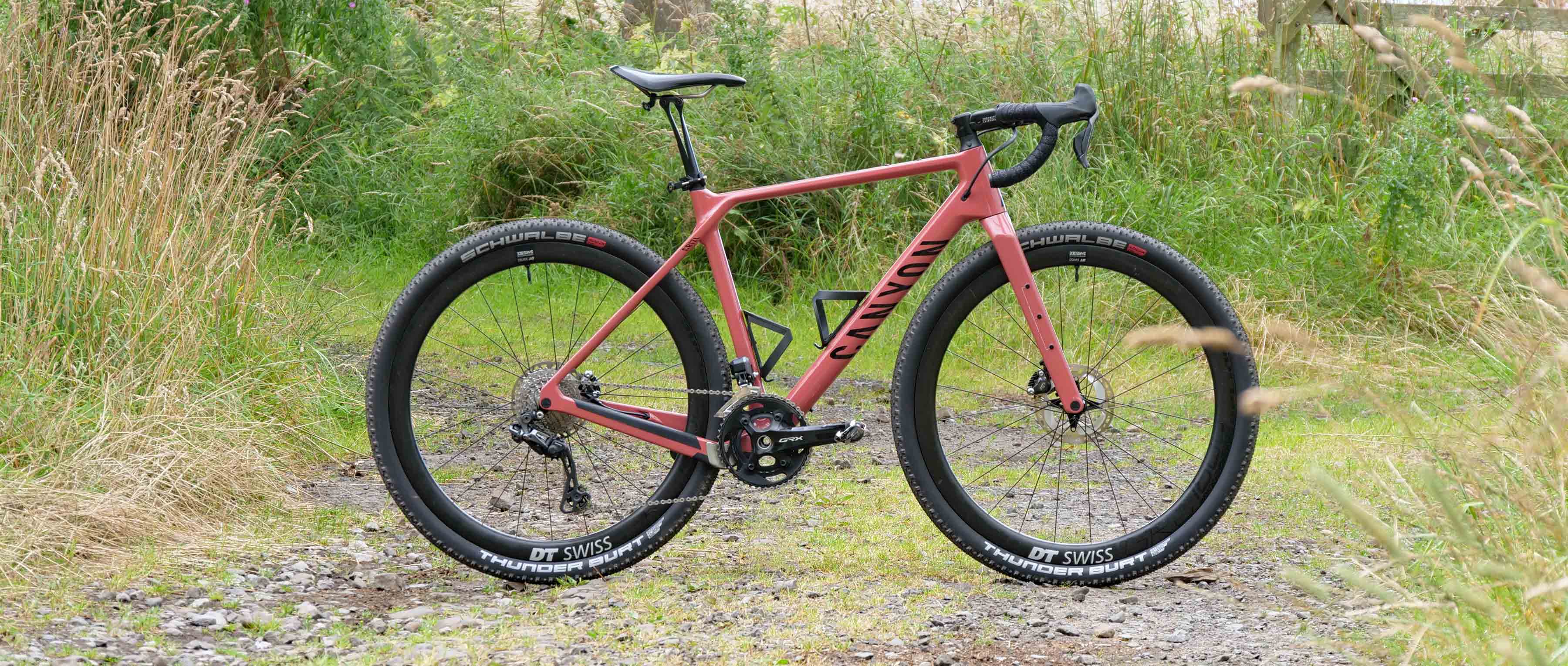
My summary for Thunder Burts would be that if you can get them to fit, they are (in my view) the best single upgrade you can make to your gravel bike. For many of us they might still be a little too large (and I, sadly, will be having to take them off once the autumn rolls in and the trails turn muddy), but if you can get them to fit and your trails are dry, they will flatter your riding to the point you might consider turning pro and I can’t think of a bigger compliment than that.
Schwalbe Thunder Burts are available in 29x2.10 (54-622), 29x2.25 (57-622) and 29x2.35 (60-622). They come in black or tan wall colour options and weigh between 545g and 710g depending on which size/sidewall/rubber compound you go for. The RRP is €72.90 per tyre and you can find all the information on Schwalbe’s website.