Can a gravel event without accreditation from the sport’s governing body legitimately call itself the “National Championships”? Having competed in the 2025 UK National Gravel Championships recently, professional gravel racer Caroline Livesey believes it can. She delves in the history and the future of the event, providing some fantastic insight from event organisers, Red On Sports.
What truly makes a championship race worthy of its title? This question buzzed about in my mind when I signed up for the British Gravel Champs 2025 and discovered it remains outside the official British Cycling umbrella. Having competed recently in the brilliant Scottish National Championships, where Scottish Cycling joined with Outsider Events for the first time, I had some insight into the challenges of gaining official national championship status for a new cycling discipline. So, I sat down with Maximilian Wussler, co-founder of Red On Sports, to discuss how their event has flourished and what lends it legitimacy in the absence of formal federation backing.
Our conversation took place during the lively weekend at Dalby Forest, this year’s venue for the 2025 British Gravel Champs, now in its 5th edition. Red On Sports first hosted the Championships in King’s Forest, Suffolk, back in 2021. Since then, the sport has boomed, with entries increasing annually - a testament to gravel’s growing appeal and the reputation of the event. The venue has shifted several times, from moving from Suffolk to Galloway Forest in 2024 and then to North Yorkshire this year, reflecting a deliberate strategy to keep the event fresh and accessible across the country.
Max recounted the origins of their idea for a British Gravel Championship event which took root during COVID. At the time, UK gravel cycling was largely limited to sportives - there were no real races. Sensing an opportunity, Red On Sports set out to create a genuine racing experience, prioritising safety and fairness above all. “We approached British Cycling in 2021 to see if they wanted to get involved,” he recalls, “but they simply couldn’t see gravel as a category worth backing. We believed, though, that a national championship was crucial for the discipline’s growth—a clear pathway from grassroots to elite racing, culminating in the UCI World Championships.”
Although the event isn’t British Cycling affiliated, Max is adamant that legitimacy isn’t something that can simply be bestowed by a governing body. “You have to earn it and that’s what we put first. That’s why we are where we are, without the governing body.” This year 1,000 riders across all categories took part. So, while discussions with British Cycling are ongoing, Max stresses that any future partnership must be mutually beneficial and must genuinely serve the gravel community. “It has to be a two-sided conversation,” he tells me.
The event has grown in stature, now boasting live coverage, significant turnout and improved facilities as well as this year the inaugural British Gravel Time Trial Championships. But the sport itself is still evolving. “Gravel is nowhere near as developed as it could be,” Max observes, “I feel it is just moving out of the infancy phase. There’s still not a comprehensive set of regulations, which is something we, as organisers and as a community, need to shape together.” Red On Sports is keen to help develop these regulations but is also proud of what they have achieved independently.
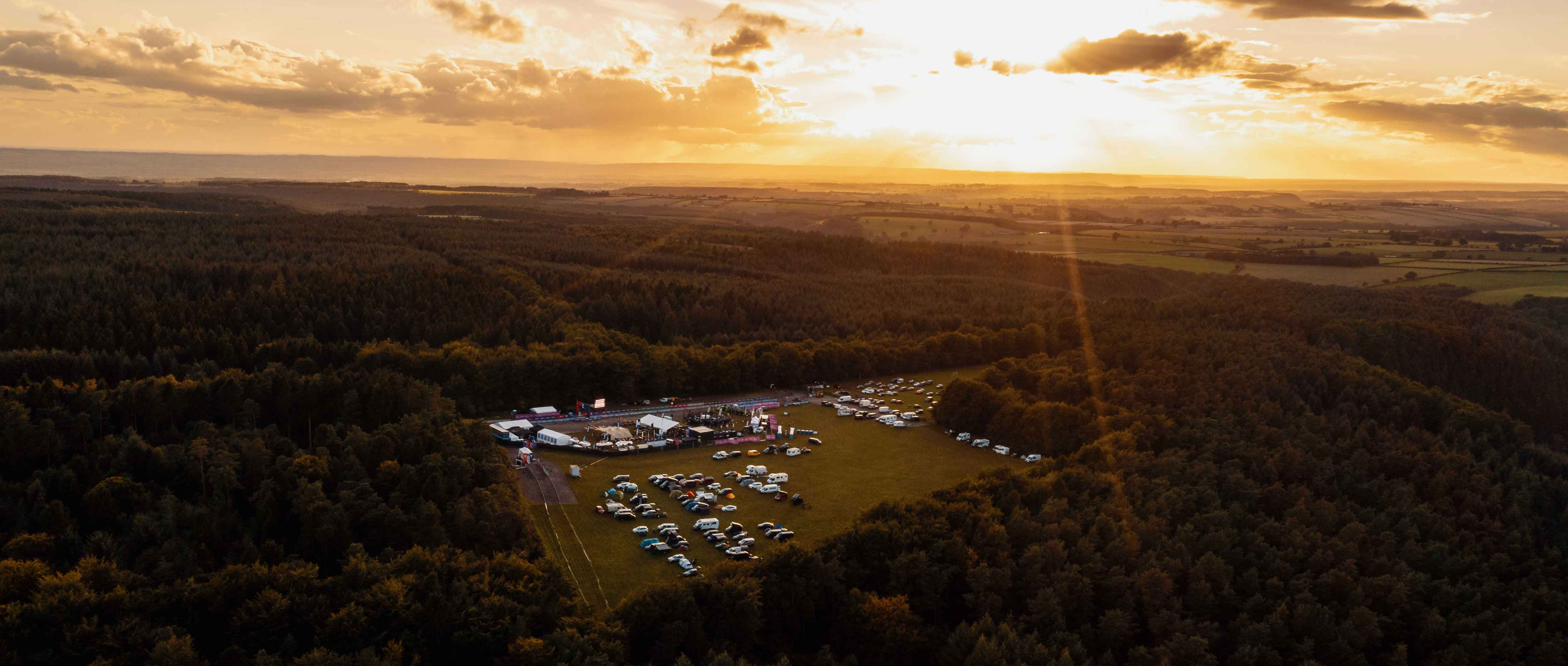
Venue selection has been a particular challenge. After three editions at King’s Forest, the organisers wanted to inject variety and reach new regions - last year in Galloway Forest, this year in Dalby Forest, North Yorkshire. “We’ve looked at lots of venues, but forestry sites offer the best combination of accessibility and event infrastructure,” Max explains. Dalby Forest, steeped in cycling history, provides a fitting backdrop. It was my first time riding there and I agree that it is a bit of a gravel haven. Local support has been high and funding from North Yorkshire Council also helped facilitate live broadcasting of the elite races, showcasing the event to a wider audience and marking a significant step forward in this year’s event.
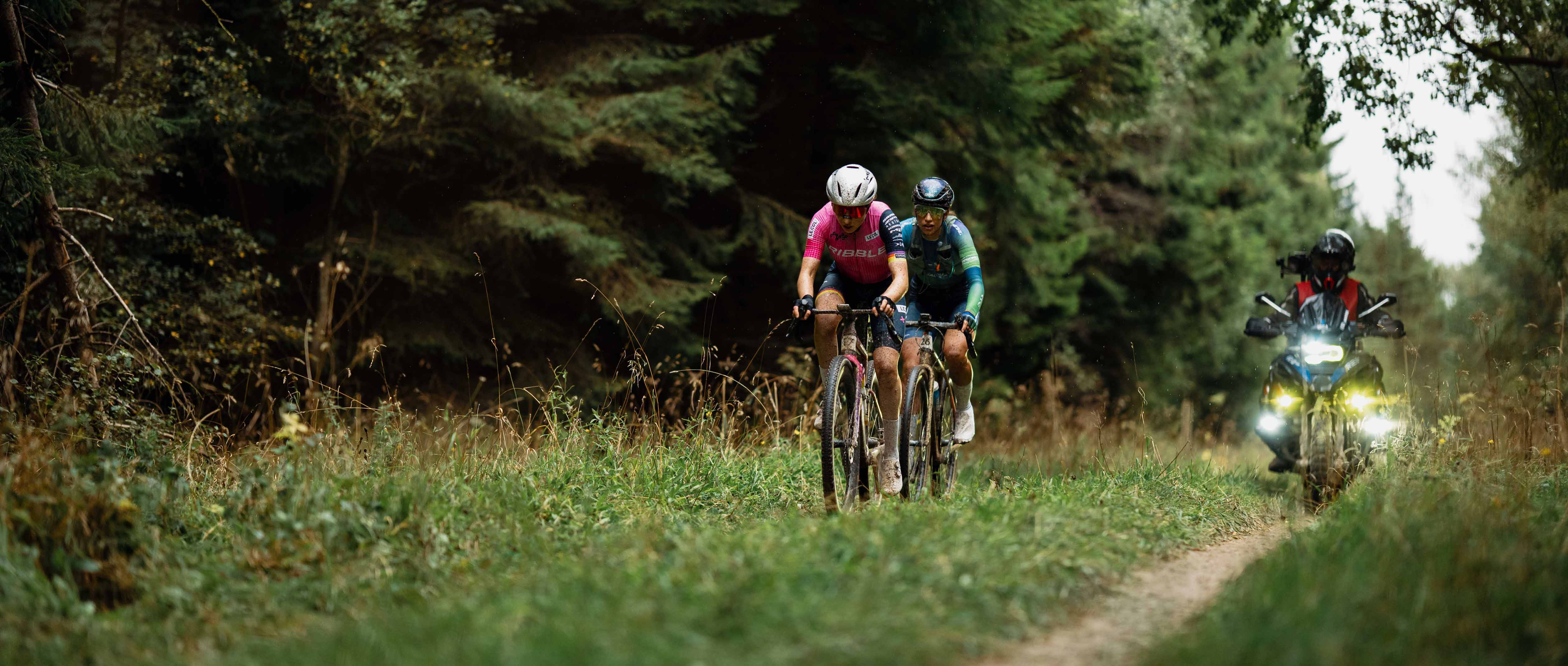
But Max emphasised that delivering high-quality live coverage in such a remote location is not easy. “We have a crew of about 20 to 25 people, dedicated cell networks, motorbike cameras, drones, and a studio with professional commentators. Telling the story of the race - even in poor weather - is hugely important to us.” As it happens, the weather did play a role in the coverage with thick fog creating a longer delay than planned between the live race and the broadcast and eliminating use of drones for camera shots.

Max reflected "The whole production was an even more monumental effort to pull off than we had anticipated and it needed close collaboration between multiple suppliers and production teams to pull it off on the day. We've learned lots and are already mapping out how we can build on this for even better coverage of The Gralloch next May." Red On have already started searching for the right partners and sponsors to enable the coverage for their races next year, with the aim being to have a bigger budget for more cameras/motos and be able to tell more of the story of the whole race, not just the front of the field. With over 33,000 views of the Livestream on YouTube already, there seems to be a demand for this coverage.
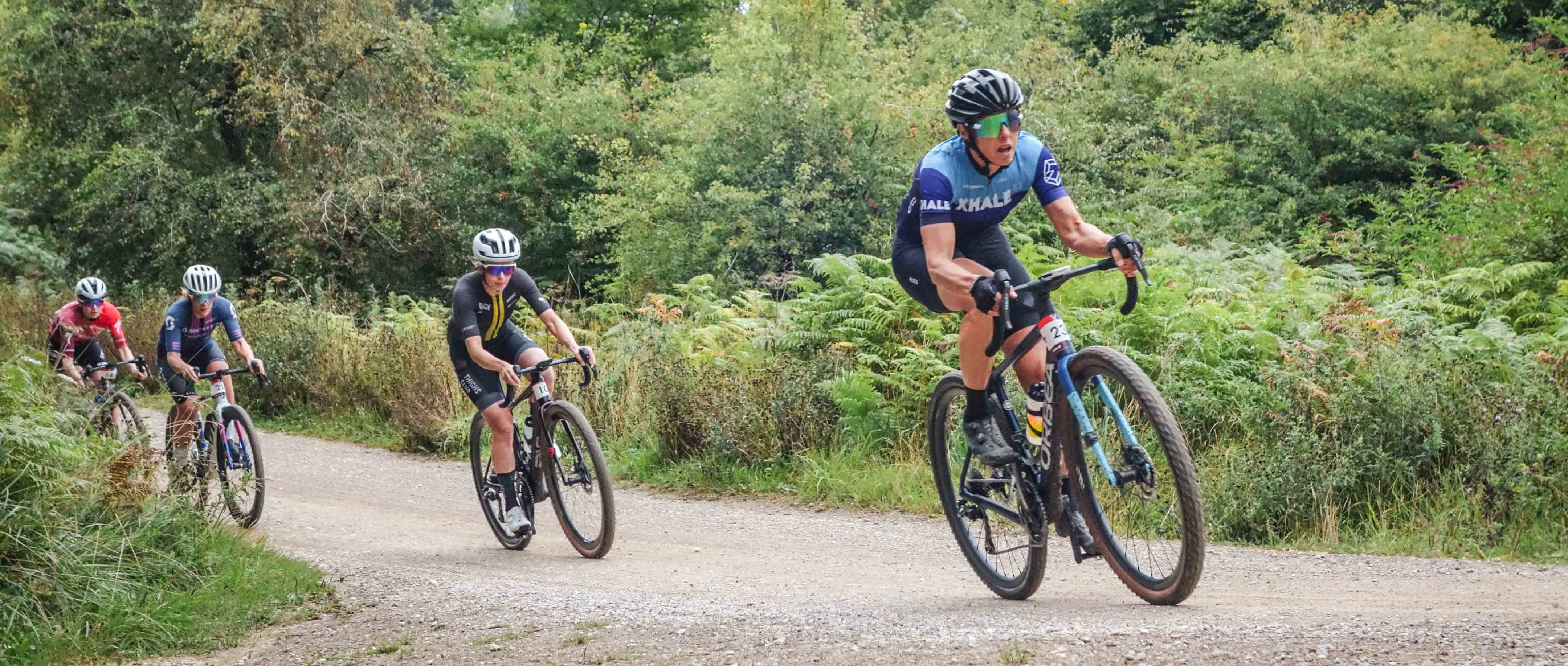
The 2025 British Championships no doubt delivered nail biting racing and the gruelling nature of the course made for entertaining viewing. . With roughly 50km of climbing accumulated in the 114km of the course and 2200+m elevation gain, this was not a course for the feint hearted. It had everything from fast smooth rollers to steep rocky descents and endless climbs. It kept punching, lap after lap. One of the elite women joked before our start that it would be “16 full gas hill reps” and she was not wrong. Each of the four laps contained four repetitions up and down a big forest feature – it was truly brutal and made for exciting racing for viewers. There was nowhere to hide and I like that in a race. I watched the amateur riders racing with guts and determination, battle weary by the end of the day on Saturday before the elite races were held on Sunday.
Looking ahead, Max is optimistic about gravel’s future. The sport continues to grow rapidly and Red On Sports remains committed to a participant-driven approach, constantly seeking feedback and thinking outside the box. “We’re bringing in elements from road racing but not afraid to break convention if it means a better experience. It’s about finding venues that fit our model, not the other way around. Safety and fairness come first.”
Ultimately, the 2025 British Gravel Champs exemplifies what makes gravel racing special: adventure, variety, tough racing and a strong sense of community. By setting high standards and pushing for greater inclusivity and visibility, Red On Sports is helping shape the future of the discipline while also putting on entertaining and engaging events. As the sport matures, perhaps we’ll see British Cycling taking more of a role. But I believe me and the hundreds of other riders who poured their best into the British Gravel Champs feel it already has the legitimacy it deserves.
Images courtesy of Red On Sports