“The suspension of the Vybe reduces the impact of rough terrain on the body, allowing consistent, seated pedalling for increased power and comfort. You’ll finish your ride faster and fresher and ready to ride again.” Adding suspension to a gravel bike might sound like heresy to some – after all, isn’t the challenge of underbiking part of the appeal? But arriving home after a long ride feeling less beaten up does have its attractions. Olly has been putting USE’s Vybe GR suspension seatpost through the wringer and reports back with his findings.
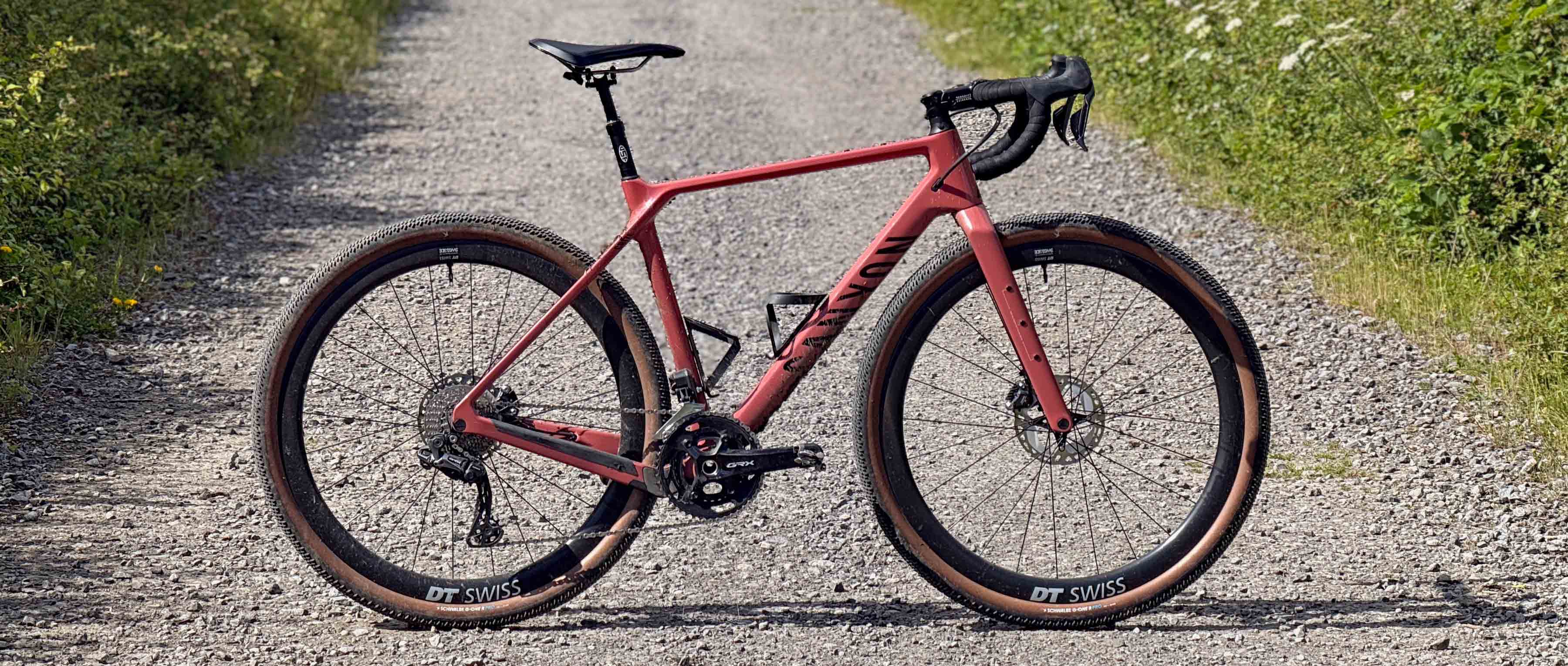
“ A dropper post to show you mean business!!” That comment, which came from a bike industry friend when I sent him a photo of my current gravel bike, was pretty typical. Other friends who saw the silhouette of the bike, particularly if they came from an MTB background, also assumed that I had fitted a dropper post to my gravel bike. It shows how much our collective mindset has moved on from the early days of gravel riding. Initially, the default set-up of a gravel bike was 40mm tyres and a rigid frameset, with perhaps some thicker bar tape as a nod to extra comfort. But skip forward to the present day and the ethos of bigger-is-better seems to be ever pervading. Now, the trend seems to be greater frame & fork clearance, significantly bigger volume tyres and, at least for the more adventurous end of the gravel riding market, an element of suspension.
USE first introduced a suspension seatpost way way back in 1990. The designer/engineer behind USE’s original Shokpost was a goldsmith/silversmith by trade and used the tools and equipment he had in his workshop to produce the initial prototypes. The similarities between the early model (left, above) and the latest Vybe GR are quite remarkable – proof that the “if it’s not broken, don’t fix it” adage is just as applicable in the bike world as anywhere else.
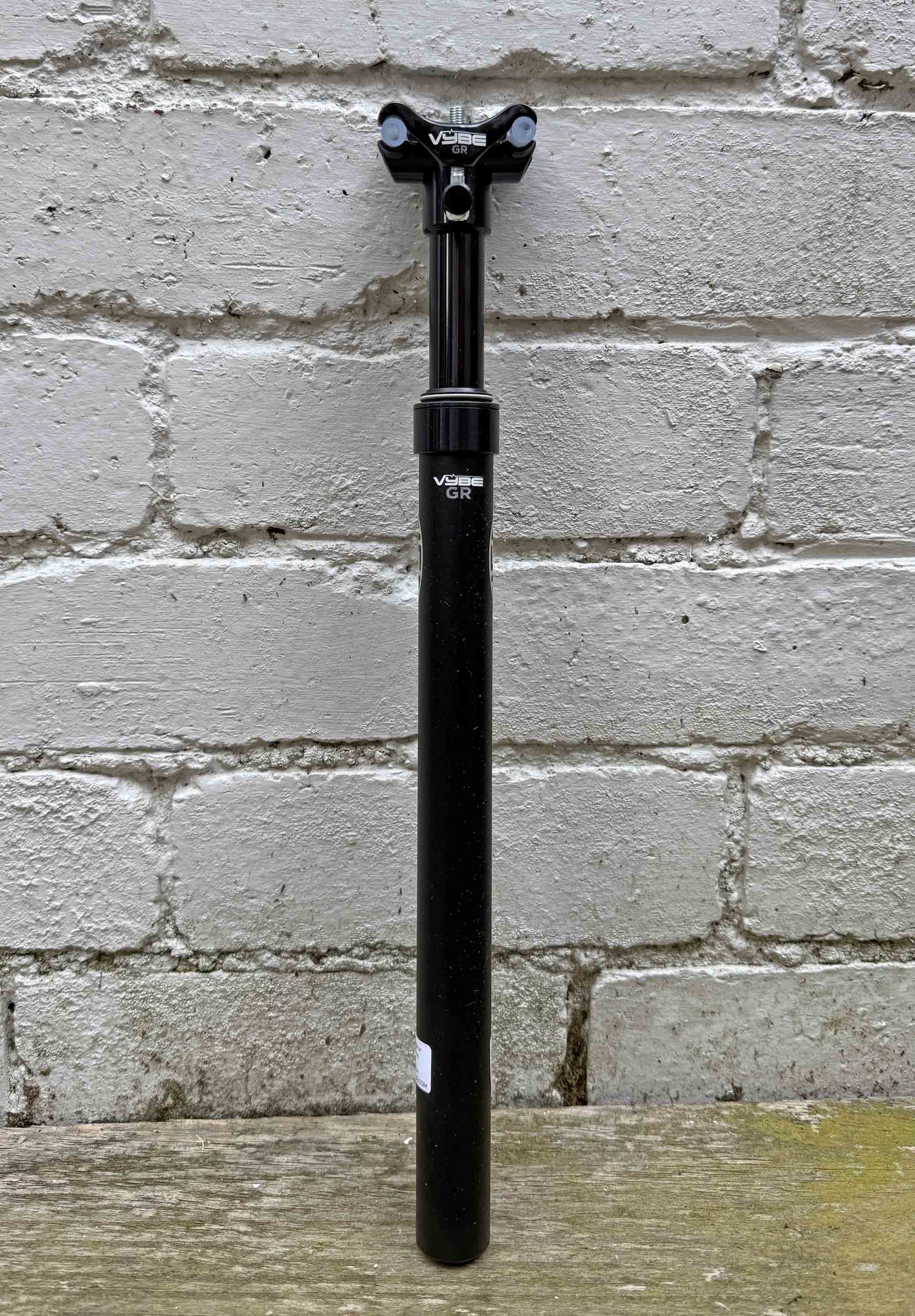
There are two models of the Vybe suspension seatpost available – the Vybe Duro (which features 10mm of layback) or the Vybe GR (which I tested), which is the ‘in-line/zero layback’ version. Both versions come in a choice of 27.2mm, 30.9mm and 31.6mm diameters, so you should be able to find one which fits your gravel bike. You can also buy shims to enable the perfect fit if the stock sizes aren’t right. When you purchase your Vybe seatpost, you have to specify which spring type you would like: soft (for rider weights of between 38-55 kg), medium (for rider weights of between 55-80 kg) or hard (for rider weights of between 80-100 kg). In addition to selecting the appropriate post for your weight, the Vybe GR and Vybe Duro come with a “Pre-Load Adjustment screw at the bottom of the post, allowing you to fine-tune the post to give you the ultimate ride.” USE products have an enviable reputation for reliability and they say that their suspension seatposts are “fully serviceable to give many years of loyal service with comfort, recovery and performance benefits.” I ordered my Vybe GR in a 27.2mm diameter and with a medium spring, which was appropriate for my weight. On the trusty Gravel Union scales, the Vybe GR came in at 460g, compared to USE’s own figure of 452g. That’s just over 200g more than the Canyon VCLS seatpost that I normally run. Assuming that the Vybe GR rides well, then the extra weight isn’t a deal breaker……
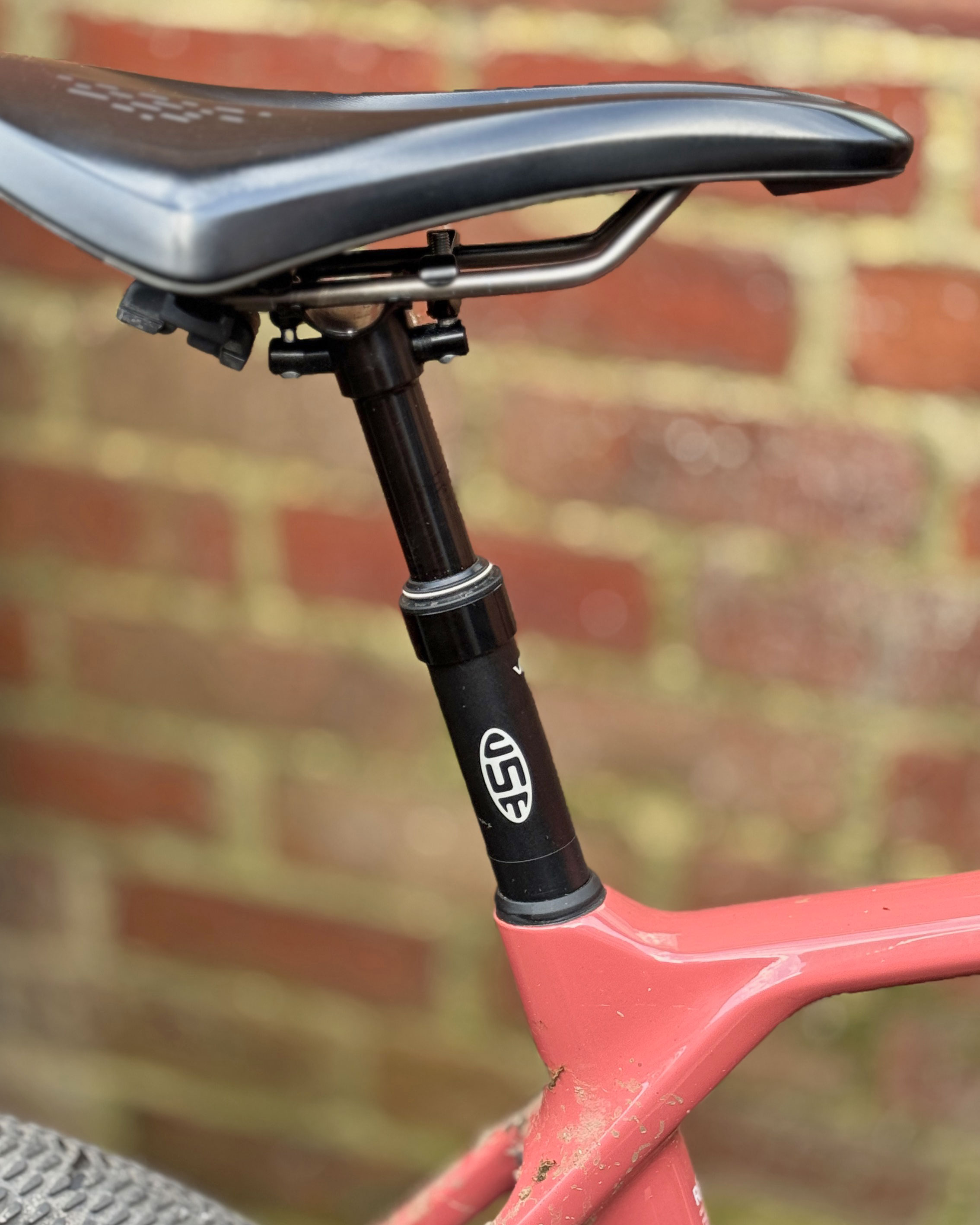
Once you have chosen the correct diameter and spring strength for your bike & rider weight, the Vybe GR is super simple to fit. I set the pre-load adjustment to roughly the halfway point, added a little carbon grip paste to my frame, fitted the saddle (which is a little fiddly when you first do it) and then adjusted the unsprung saddle height to match that of my rigid seatpost. The 4mm Allen key bolts, which make up the adjustment cradle at the top of the seatpost, can be appropriately loosened/tightened to ensure your saddle angle is perfect. Getting the torque right is critical – on the first ride, I either hadn’t tightened them sufficiently or they had worked loose, as I suddenly discovered that my saddle had migrated from my normal forward-mounted position as far backwards as it could go. I couldn’t work out why my bike felt so odd and then realised the reach had grown dramatically. Luckily, with the bolts appropriately tightened, there has subsequently been no hint of movement (or unwanted creaks or side-to-side play).
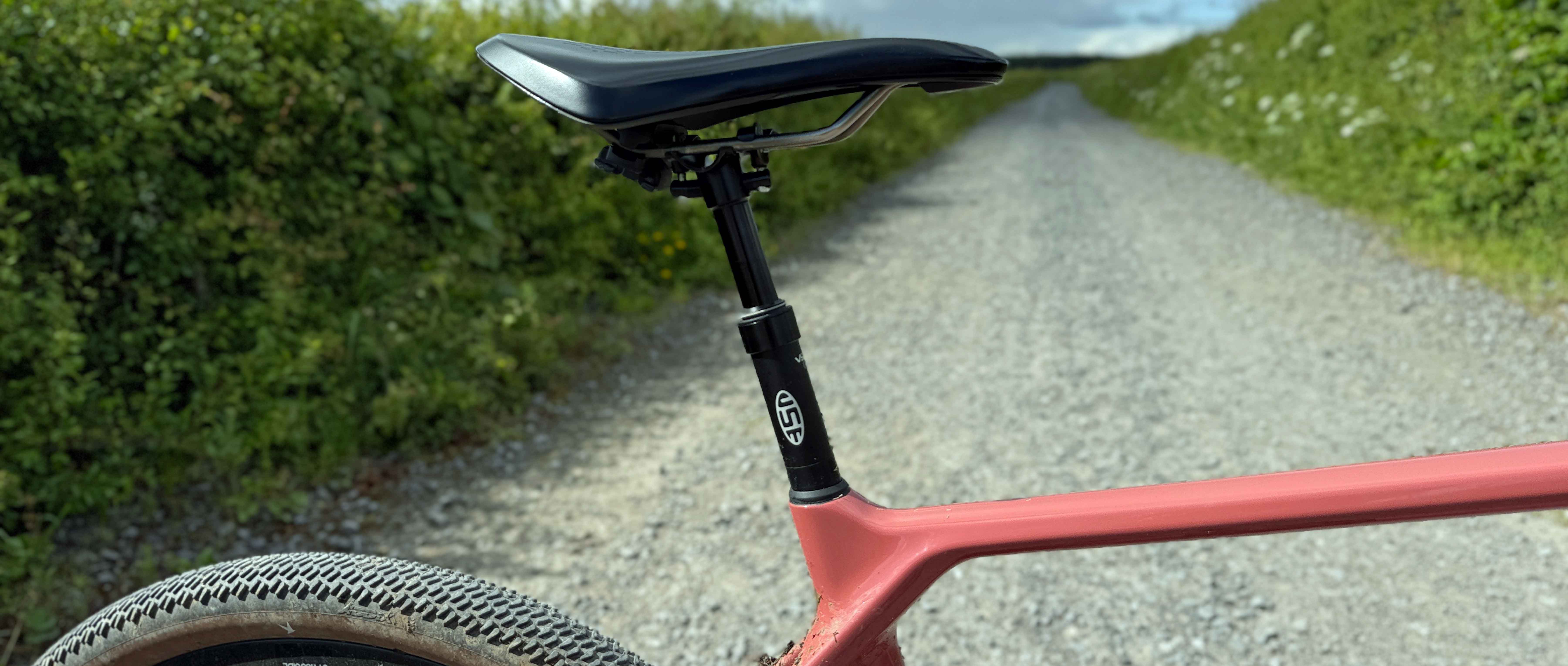
I suspect that everyone who has just fitted a Vybe seatpost will do exactly what I did – they stand next to the bike and then put as much weight on the saddle as they can to see how much it moves! USE say that the Vybe GR offers up to “50mm of Active tuneable travel”. I weigh somewhere around 64/65 kg, so I am quite a lot below the max suggested weight of 80kg for the medium spring set-up that I was running. Even jumping and pushing all my weight hard down on the saddle, I was probably only getting 30mm of travel, but I assumed this would change slightly out on the trail. As the suspension compresses and extends, it makes a gentle pfft-pfft-pfft noise – it’s hard to describe accurately in words, but it’s an endearing sound, rather than an unpleasant noise. It has an almost friendly, cartoon character type feel to it (and when you’re riding, you barely hear it at all.)
You don’t realise quite how difficult it is to film your own saddle moving up and down until you try it for the first time….
So, how does it ride? In a word, faultlessly. For the first few minutes after you start pedalling, you will probably notice the saddle bobbing slightly as the suspension compresses/extends. This will depend on how rough the terrain is that you’re riding on and how smooth your pedalling style is. It’s not unpleasant and I was amazed at how quickly I got used to it. I was initially worried that it would feel as though my saddle height was dropping and increasing, but I didn’t pick up on this. Getting your initial seat height set correctly is crucial, but once that’s done, the slight up/down movement is barely noticeable.
The gravel trails that I typically ride tend to be on the gnarlier side (my MTB heritage makes itself known regularly) and so the suspension of the Vybe GR was most welcome during the test period. It might sound like damming it with faint praise, but the action of the post is almost unnoticeable – all you realise is that after a big ride, you feel less beaten up than you would have expected. If your rides tend to be closer to the all-road end of gravel riding, you might not notice quite such a difference to your comfort, but I suspect the first time you clatter through an unseen (or unavoidable) pothole, your appreciation for the Vybe GR will become immediately obvious. Even on the lumpiest of trails, I never got more than just over 30mm of movement out of the post, but equally, I never managed to bottom it out either. The travel felt smooth, controlled and the appropriate amount for a gravel bike.
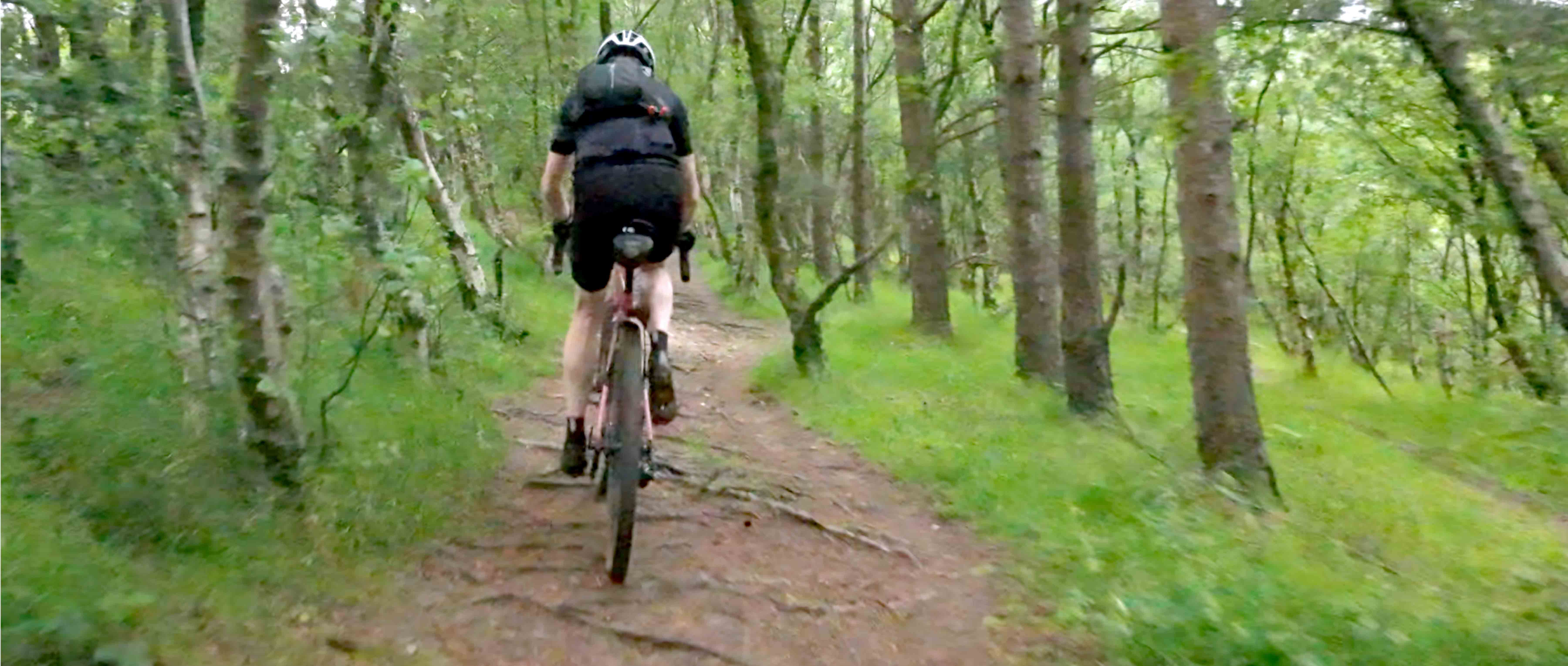
Without doing some rigorous lab-based testing, it’s hard to tell precisely whether the Vybe GR offers any extra grip/traction in the way that a full-suspension MTB does. One of the design principles of some full-suspension MTBs is that as the suspension compresses, it physically forces the rear tyre to ‘bite’ harder into the ground. The Vybe GR is designed primarily as an aid to rider comfort and a means of reducing fatigue. It could be argued, of course, that if the Vybe allows the rider to remain seated for longer on rough terrain, then that adds an element of additional grip. This was my non-scientific feeling from adding the seatpost to my bike – particularly on rooty trails, I was able to remain seated longer, which had some noticeable benefits in terms of additional traction.
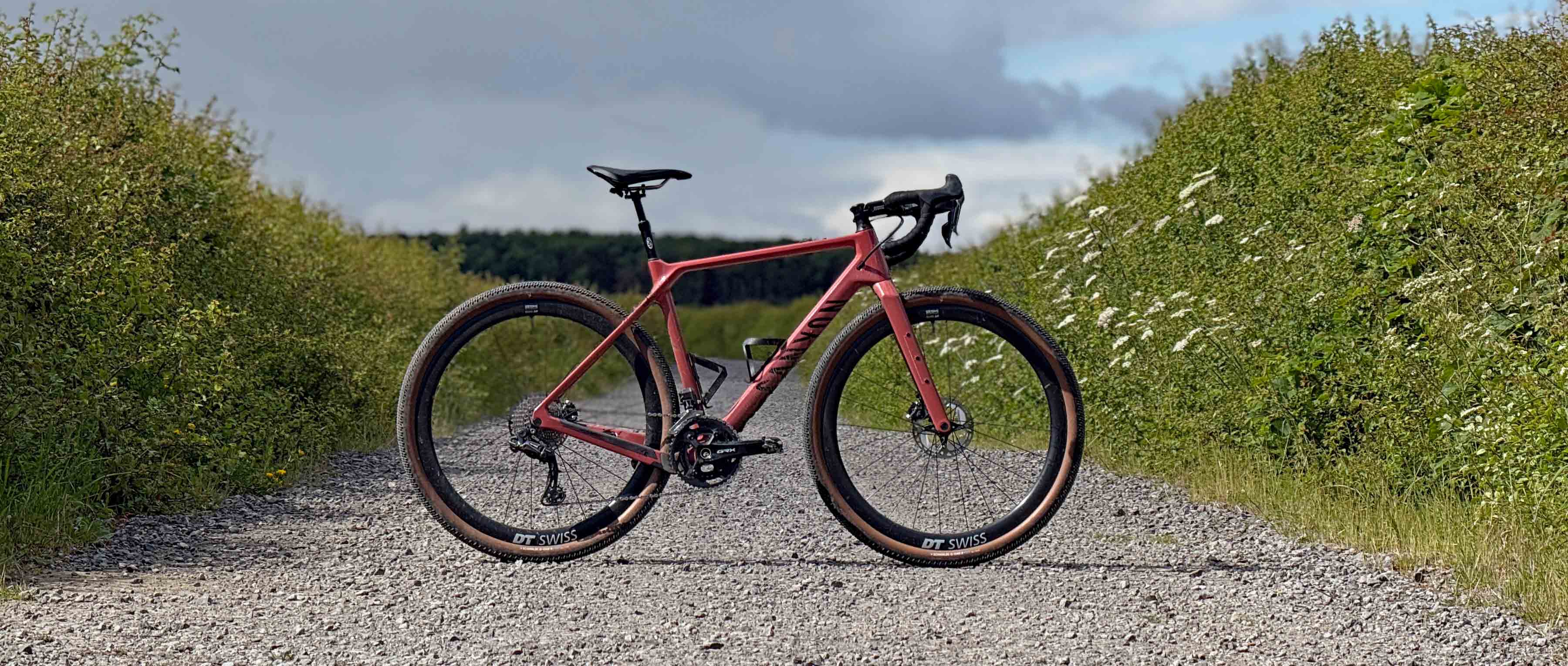
I’ve put in just over 1000km of testing into the Vybe GR so far and my overall summary is that I’m super impressed. Yes, it adds a little unwanted weight to your bike and over the longer term, it will require more servicing than a rigid seatpost would. The benefit, though, is the noticeable extra comfort. Whether you get 30mm of travel or the maximum of 50mm will depend on your personal set-up and how gnarly your trails are, but either way, the suspension movement is smooth and controlled. If you can justify the expenditure, fitting a USE Vybe GR seatpost to your gravel bike is a great way of adding an extra layer of low-maintenance comfort.
The manufacturer’s recommended price for the USE Vybe GR seatpost is £180.00. You can buy them directly from USE via their website or from many good bike shops.