In recent years, Colombia’s fame as a destination perfect for gravel riding has steadily increased. But the majority of riders have tended to head for a number of honeypot sites or bucket list events. Surely there must be more to this amazing country than just the popular locations? Tobias Franz and a select group of friends enlisted help from a local tour operator to try and find the ‘real’ Colombian gravel. Read on to find out how they got on.
"Colombia offers a wealth of experiences for gravel cyclists."
While Colombia has increasingly become known for gravel cycling due to the popularity of the Transcordilleras gravel race, there's still so much gravel to discover beyond the racecourse. From passing over mountains dotted with coffee, banana and avocado farms, to riding through colonial towns of Villa de Leyva or Barichara, to passing high-altitude páramo ecosystems, to gravelling through rugged trails of the Chicamocha Canyon, Colombia offers a wealth of experiences for gravel cyclists.
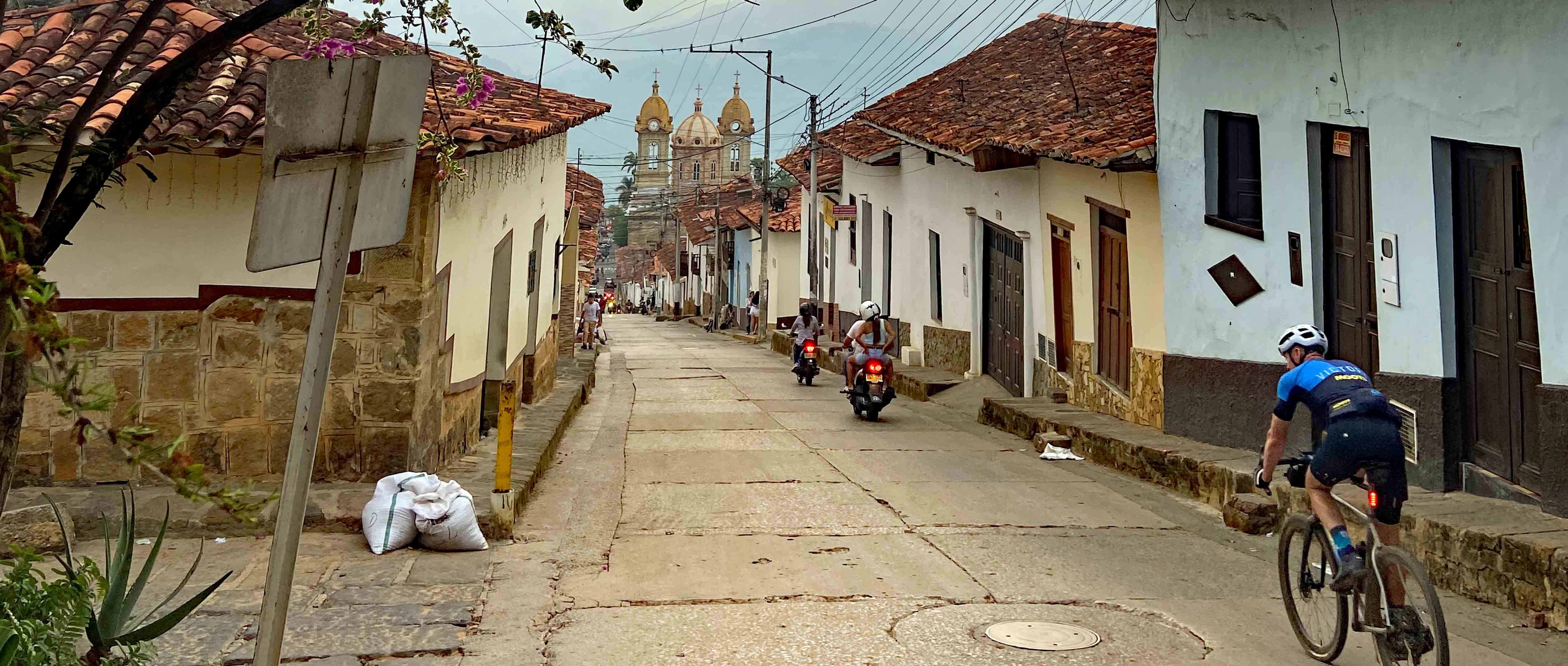
We were lucky enough to experience this true essence and diversity of Colombia during a recent gravel trip organised by Trocha Cycling Tours. The task seemed straightforward enough: 8 days of gravel adventure on two wheels, through Colombia’s diverse landscapes on what locals call trochas (gravel roads). With over 90% of the country’s roads being unpaved, there would surely be enough to discover. And our trip not only lived up to expectations that gravel riding in Colombia holds an adventure of a lifetime. It exceeded them.
"We wanted to be off the beaten track and away from the places normally frequented by tourists."
But let’s start from the beginning. When we planned the route, we wanted to be off the beaten track and away from the places normally frequented by tourists, yet still pass through colonial towns and unique places where we could find comfortable hotels and the best of Colombia’s unique culinary delights. So, rather than going up the famous Letras Climb, or through the Coffee Zone, or the touristy area around Medellin, we planned our trip to start from the capital of Bogotá and pass through the Boyacá region – home of pro cyclists such as Nairo Quintana or Einer Rubio – and the Santander region.
Both of these regions are less famous with tourists but are nonetheless historically and culturally very important places as they are not only steeped in the legacy of indigenous peoples like the Muisca but also played pivotal roles in Colombia’s quest for independence from Spanish rule. And importantly, these regions have some of the most remote and breath-taking mountain landscapes, traversed by a multitude of gravel paths. So, we set off from Bogotá and paddled north, through the towering Eastern Range of the Andes where mountain passes reach over 4000m.
"We were getting to our physical limits in the high-altitude páramo ecosystems that we traversed."
As we journeyed through the diverse landscapes of Boyacá and Santander, imbued with spiritual significance – mountains, rivers and valleys here serve as both natural boundaries and sacred spaces – we not only explored the cultural and historical importance of these places. We were also getting to our physical limits in the high-altitude páramo ecosystems that we traversed. The páramo is a unique and ecologically important ecosystem found in the high-altitude regions of the Andes Mountains. In Colombia, páramos are particularly abundant and diverse, covering approximately 10% of the country’s land area and playing a crucial role in regulating water flow, conserving biodiversity, and providing essential ecosystem services. Characterizsd by its high elevation, cold temperatures and unique vegetation, the páramo is often referred to as the “water tower” of the Andes due to its importance in regulating water supply to downstream communities.
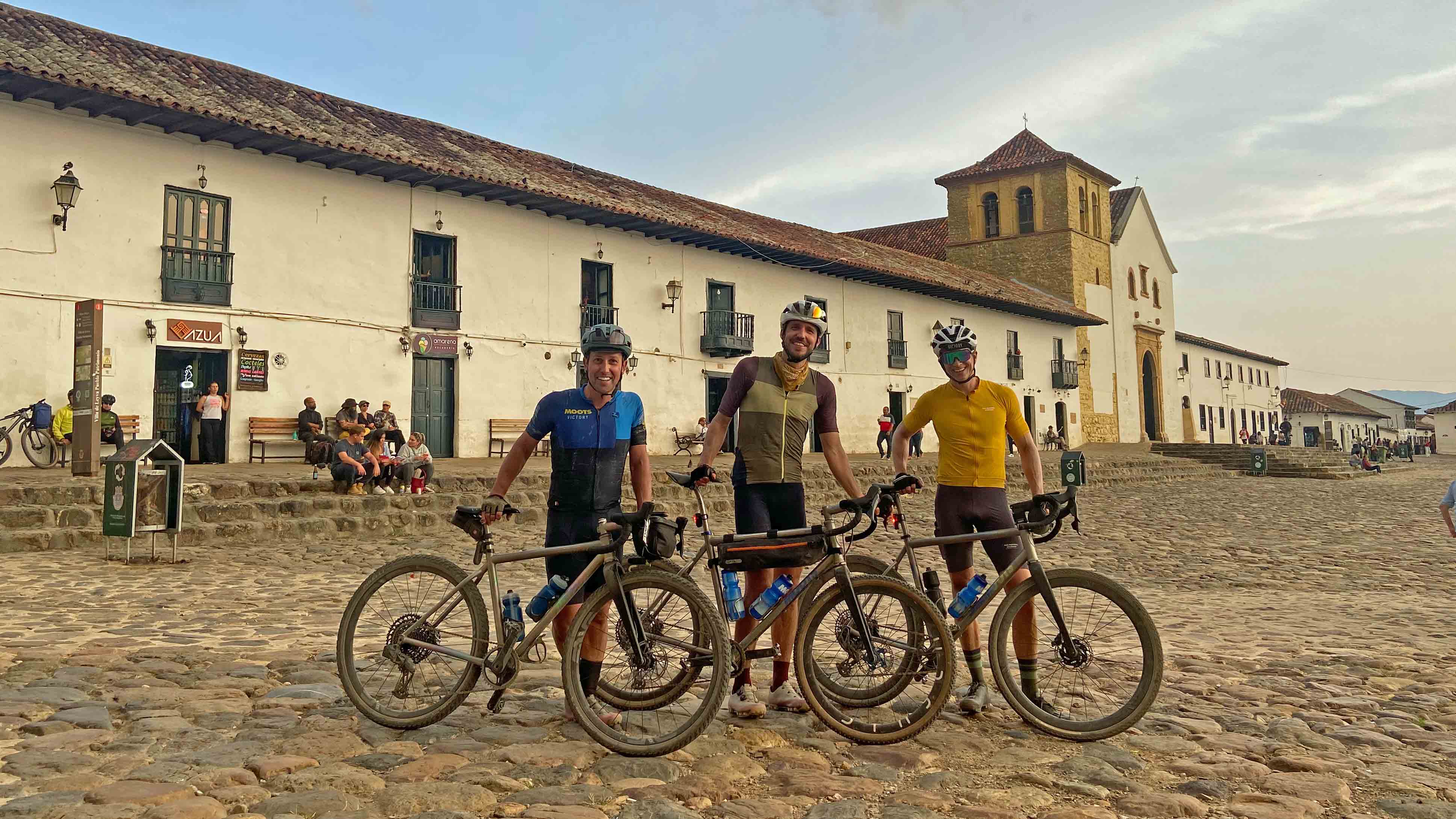
Passing through colonial towns like Villa de Leyva and Barichara with its cobblestone streets and whitewashed buildings evoking the charm of the colonial past was another highlight of the trip. During the colonial period, these towns flourished as important agricultural and commercial centres, their fertile lands and strategic location attracting settlers and traders from far and wide. Today, many of the historic buildings in these towns have been lovingly preserved, offering visitors a glimpse into Colombia’s colonial past. One of the most iconic landmarks in Villa de Leyva is its expansive main square, known as the Plaza Mayor. Spanning an impressive 14,000 square meters, the plaza is one of the largest in South America and serves as the heart of the town’s social and cultural life. Barichara's architectural treasures include the majestic Iglesia de Santa Bárbara, a colonial-era church adorned with intricate stonework and crowned by a graceful bell tower.
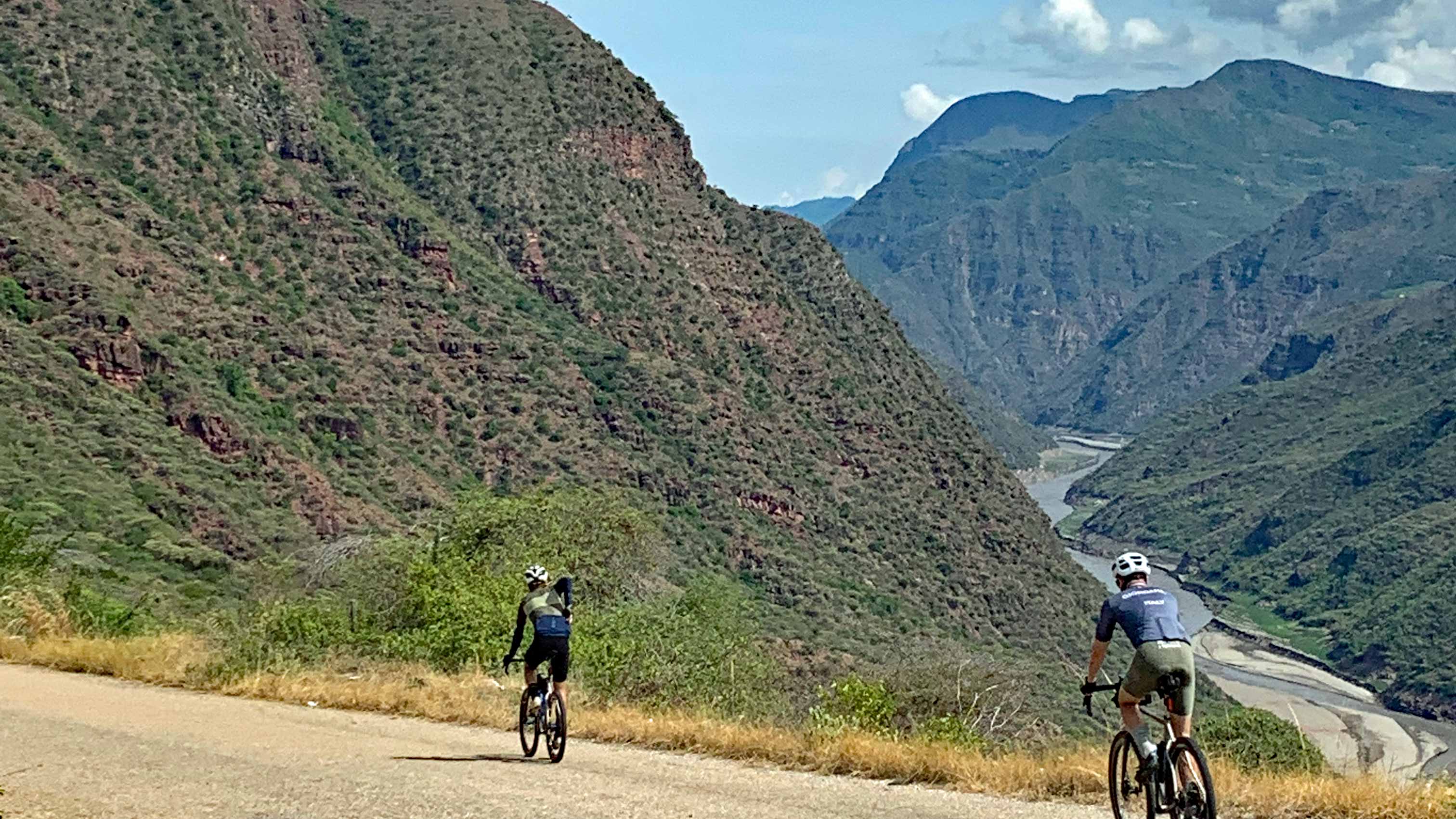
"Seriously one of the most amazing days on a gravel bike any of us ever had."
Further north on our route, the mighty Chicamocha Canyon awaited. Also referred to as the “Grand Canyon of Colombia”, the Chicamocha is one of country’s most awe-inspiring natural wonders. Carved by the Chicamocha River over millions of years, this dramatic canyon stretches for over 370 kilometres and reaches depths of up to 2000 meters, offering unparalleled views of sheer cliffs, rugged rock formations and verdant valleys below. Steep gravel roads descent into the canyon, which provided us with the adrenaline rush we surely needed to get back up the steep slopes again. Seriously one of the most amazing days on a gravel bike any of us ever had – despite suffering up the steep climbs and with the scorching heat.
"Throughout our journey, we were welcomed with open arms by the local communities."
But Colombia's appeal goes beyond its natural beauty, colonial towns and the physical challenges we all look for when gravel cycling. Throughout our journey, we were welcomed with open arms by the local communities. From sharing meals with Colombians in local restaurants or in the kitchens of elderly señoras who cooked us much-needed lunches, to exploring artisan workshops and cultural landmarks, every interaction with locals was a testament to Colombia's warm hospitality.
While Colombia's reputation as a gravel cycling destination continues to grow, it remains a hidden gem waiting to be discovered. Despite its rising popularity, vast stretches of pristine wilderness offer endless opportunities for exploration and adventure on a gravel bike. And we can only appeal to all gravel cyclists to unlock Colombia's potential as a world-class gravel cycling destination.
So, whether you're seeking epic climbs, scenic vistas, or cultural immersion, Colombia has it all. We can’t recommend Colombia highly enough.
"We can’t recommend Colombia highly enough. "
If you need more information or inspiration on gravel riding in Colombia, check out Trocha Cycling on Instagram. Their team is super supportive and friendly and are more than happy to answer any question about gravel riding in Colombia.
See you out there on the trochas!