Perhaps the most appealing feature of a gravel bike is its simplicity. Compared to an XC MTB – especially a full-suspension model - a gravel bike has none of the pivots, bushings, nitrogen-pressurised cannisters, oil baths or air cartridges which make owning them such a potentially costly experience when it comes to maintenance. The flip side of course, is that riding a gravel bike can be pretty unconformable at times. Is there a happy compromise between the comfort of a full-suspension MTB and a rigid gravel bike? Redshift think so and their ShockStop suspension stem is designed to offer you the best of both worlds. Olly has been putting one to the test and reports back on how he got on.
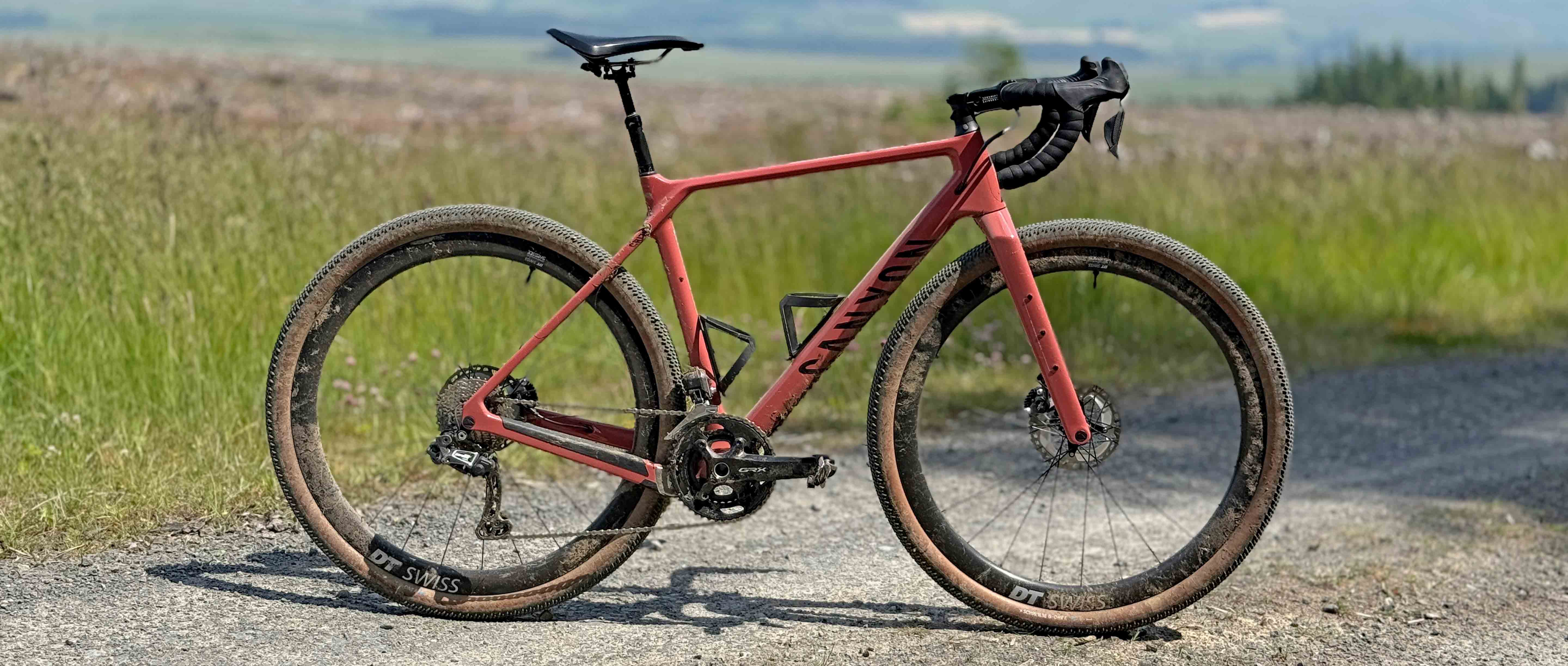
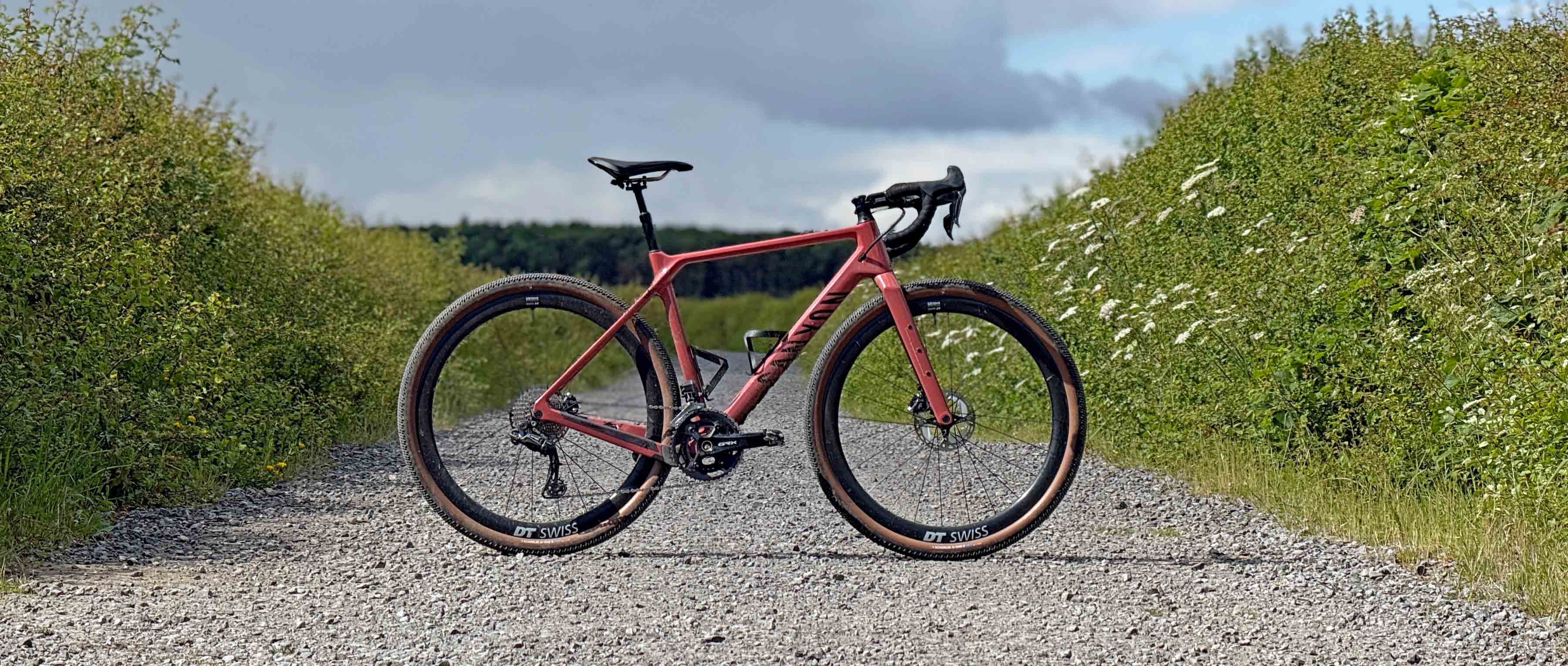
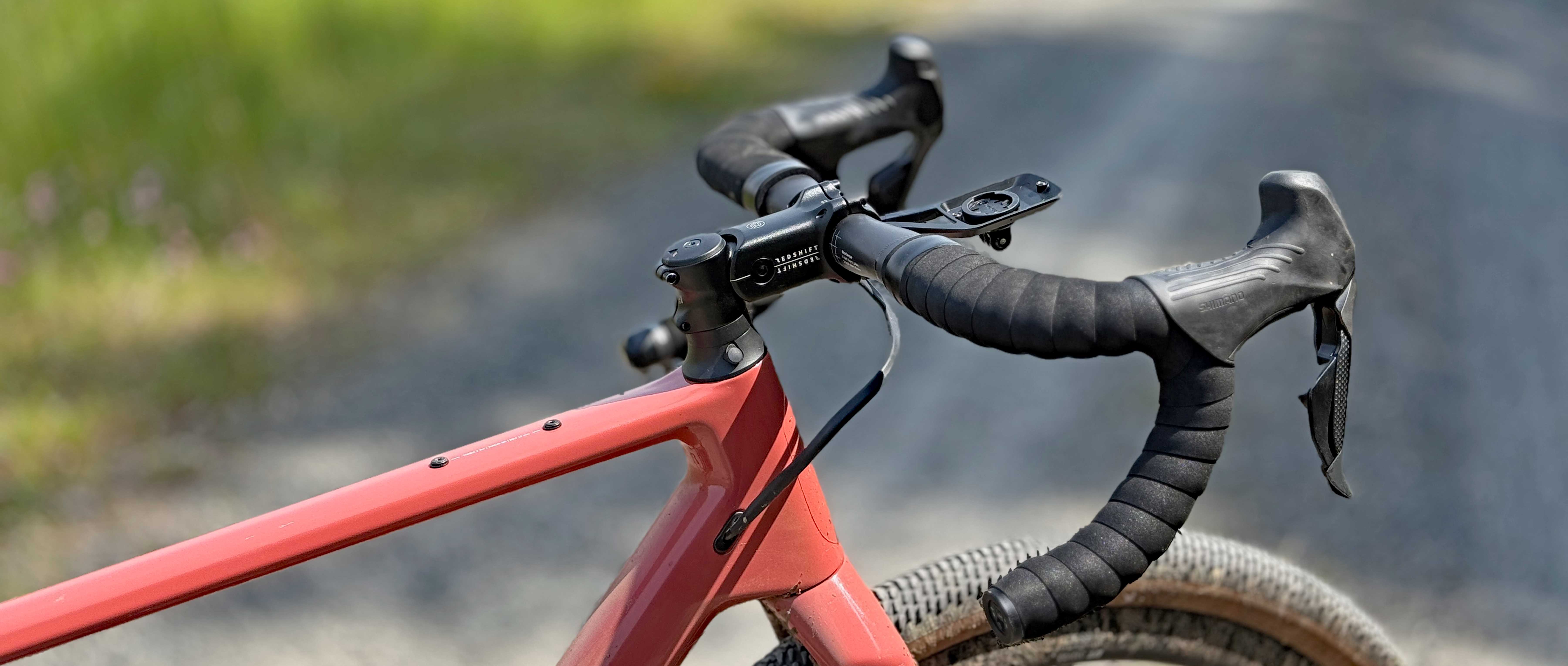
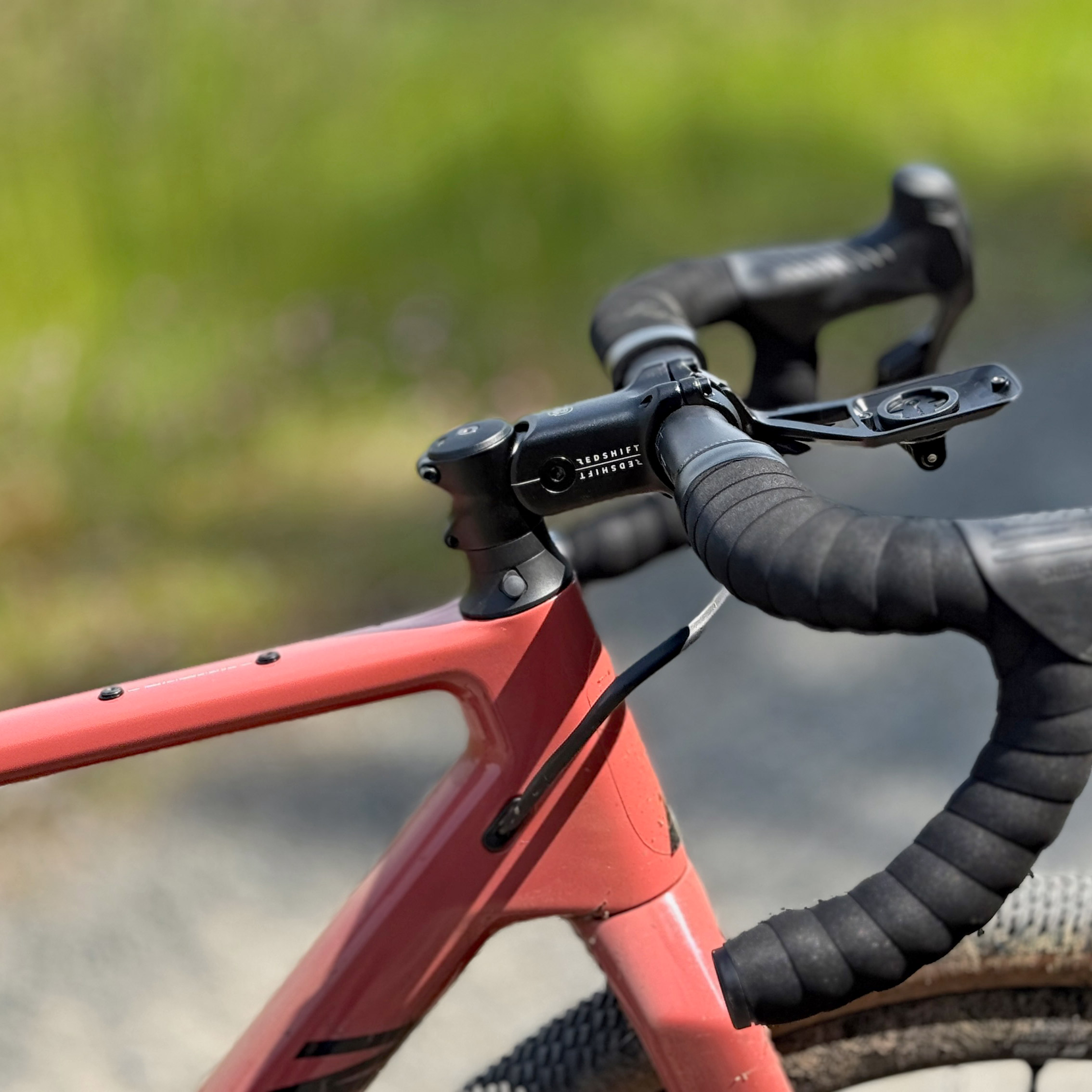
If you looked at my gravel bike from even a short distance away, I don’t think you’d spot the fact that it is fitted with a suspension stem offering “Up to 20mm of effective suspension travel.” Even up close, the anodised black colour scheme and subtle white graphics don’t really give anything away. But if you were to push down on the bars you would instantly realise there is something interesting going on. Having used a Girvin Flexstem back in the early 1990s and more recently a USE VYBE stem, I knew I was a fan of suspension stems already, so Redshift didn’t really need to ‘sell’ their product to me. However, the major difference between Redshift’s ShockStop Suspension stem and USE’s stem is that the former is available in either standard 1 1/8" steerer tube fitting or for ‘oversized’ 1-1/4" steerer tubes as found on some Canyon, Giant and Scott bikes. Although I absolutely love my Canyon Grizl, the oversized steerer and rigid box section stem that came as standard meant the ride was a quite a bit stiffer than I would have liked. When I realised that Redshift offered a suspension stem that would fit, it seemed like an absolute no brainer to try one out.
The oversized version of the ShockStop stem comes in a choice of seven lengths from 60mm to 120mm (in 10mm increments), all of which can be run at either a positive or negative 6 degree angle. The shorter two lengths (60 and 70mm) are designed only for use with drop bars, whereas the other lengths can be run with either drop bars or flat bars. Claimed weights are from 200g for the shortest model up to 307g for the longest – this is likely to add around 50-100g to your bike compared with the weight of an equivalent length rigid aluminium stem. The ShockStop stem is rated for riders up to a total rider weight of 135kgs and is designed for “on and off-road riding and drops less than 15cm”
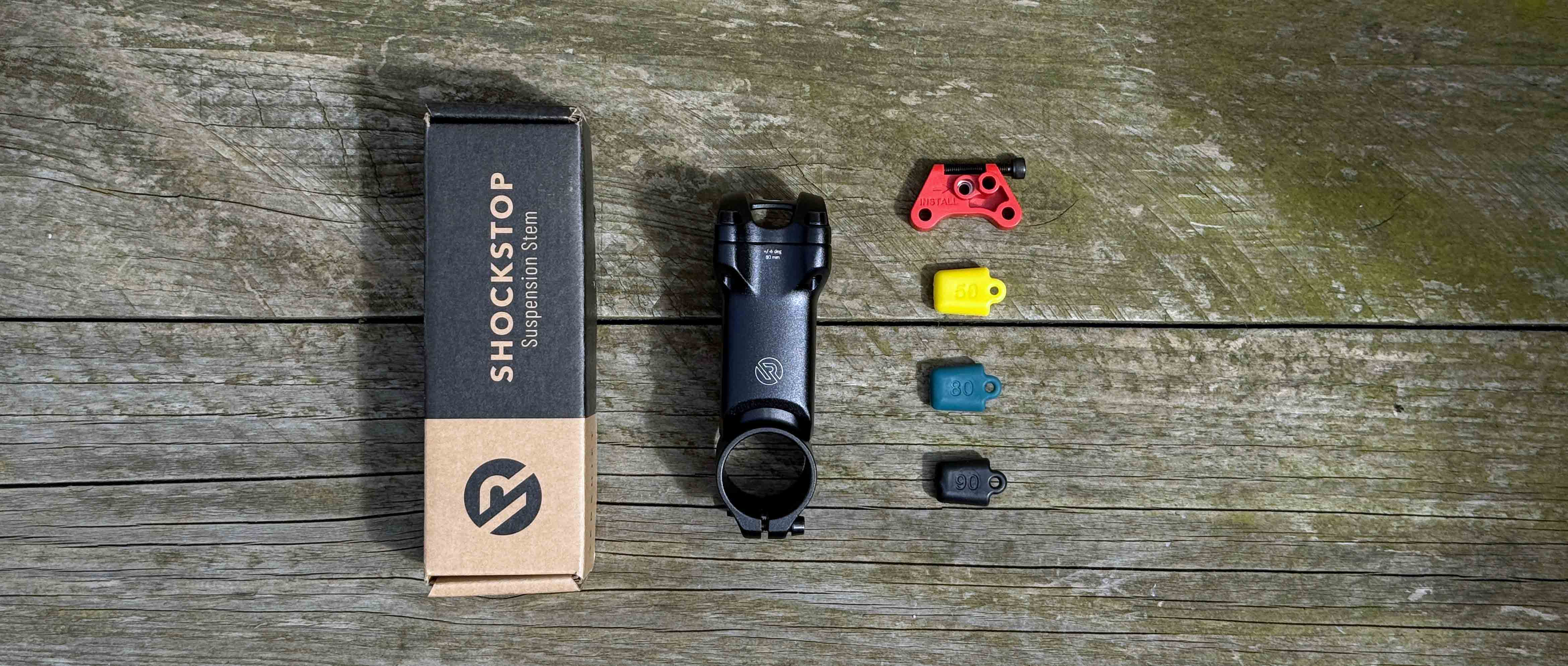
The ShockStop stem is delivered set up in the +6 degree position and comes with a total of five elastomers of different stiffness ratings. The stem is delivered with orange (60) and blue (70) elastomers pre-fitted, which based on Redshift’s recommendations, is the appropriate setting for a rider weighing between 61 and 70kgs. I weigh around 65kg, so this sounded ideal. I generally like my cockpit set up quite low compared to my saddle height, so once I had photographed the freshly unboxed stem, I set about changing the set-up to the -6 degree setting. The stem comes with a set of detailed printed instructions and a plastic tool (with captive bolt) that is designed to help you remove/replace the pre-load wedge which is the key to making the system work. You use the faceplate bolts from the stem and the included tool to remove the pre-load wedge. Then you can reverse the location of the elastomers and finally re-assemble the stem using the tool again. I managed to brilliantly not read the instructions carefully enough and I didn’t flip the tool from the ‘remove’ side to the ‘reassemble’ side, which resulted in me cracking the tool. Luckily it was easily fixed with some judiciously applied epoxy resin glue, but it was a salutary lesson in always reading the manual before starting any work! With the stem successfully rotated to the -6 degree setting, I fitted it to my bike and headed out for the first of many test rides.
We should say a big thank you to @DJI for the loan of the Osmo Action 6 and Neo2 cameras, which were used to create this video
As with any type of suspension, your initial temptation is to jump up and down on it to see how much travel you can achieve and what it feels like. I know from experience however, that this isn’t representative of what the suspension will feel like in real life, so after checking that everything was torqued up appropriately, I headed straight for the trails instead. In comparison to the USE VYBE stem that I had tested previously, the suspension movement of the Redshift stem felt quite a bit stiffer and it seemed to resist diving when braking much better. When I rode out of the saddle and made a hard effort, there was no sideways twisting or other unwanted movement of the bars, which was great.
What was noticeable though, particularly on trails with projecting lumps/irregularities such as tree roots, was a distinctive ‘top-out’ clunk as the stem returned to the neutral position after having gone through its travel. The clunk could both be felt through the handlebars and was audible too. It was initially so distinctive that I assumed that something had shaken loose. I stopped, hopped off my bike and tested the tightness of all of the bolts. I hadn’t thought to bring a torque wrench with me, but even using a multi-tool it was obvious that the bolts were all still tight. To try and simulate the sensation, rather than pushing down on the bars, I pulled up on them and as they moved slightly upwards, there was the distinctive clunk feel and the quiet, but still audible, accompanying sound. Having checked that nothing had shaken loose, I continued on my ride. The suspension action of the stem was lovely and it soaked up trail chatter admirably. The 20mm of movement is not so significant that you feel like your weight is thrown too far forwards, but is enough to remove a huge proportion of the ‘sting’ from any trails with an imperfect surface.
When I got home after my first test ride, I contacted Erik de Brun, the co-founder of Redshift and passed on my initial thoughts. Erik replied straight away and told me this: “The short answer is that you can remove some of this top-out feeling by going stiffer on the setup. The main functions of the stem are vibration reduction and adding time from when impacts hit the bike to when they hit your body. Both of these functions lead to feeling more comfortable, reducing fatigue, reducing effects on nerves, etc. And if you go stiffer, you don't really reduce vibration or high-frequency absorption. The vibration issue is also a lot more important than most people realise - that is the one that really adds up over long rides and repeated days in the saddle. The lower frequency impact reduction is more noticeable in the moment, but a small reduction in that movement doesn't make a huge difference in comfort or control - the act of any attenuation is the main thing. So my suggestion would be to try one or more levels stiffer and see what you think. At the same time, it's worth remembering that when the stem tops out, it is not damaging anything and it is a normal part of the operation of the stem.”
Based on Erik’s advice, I took the faceplate off the stem and switched the elastomers so that I was now running green (80) and yellow (50) stiffness elastomers, which is one level ‘up’ from my previous set up and would be appropriate, based on Redshift’s guidance, for a rider weighing between 70 and 84kg. This is quite significantly stiffer than I would need based on my bodyweight, but Erik’s advice was that a slightly stiffer set-up would reduce the feeling of topping out, without significantly reducing the vibration damping benefits of the stem. His advice was perfect and with a stiffer set-up, the top clunk was dramatically reduced. It hadn’t disappeared altogether and on trails with significant surface imperfections you will both feel the top out and hear it, but it’s much reduced and interestingly over time I’ve actually stopped noticing the top out.
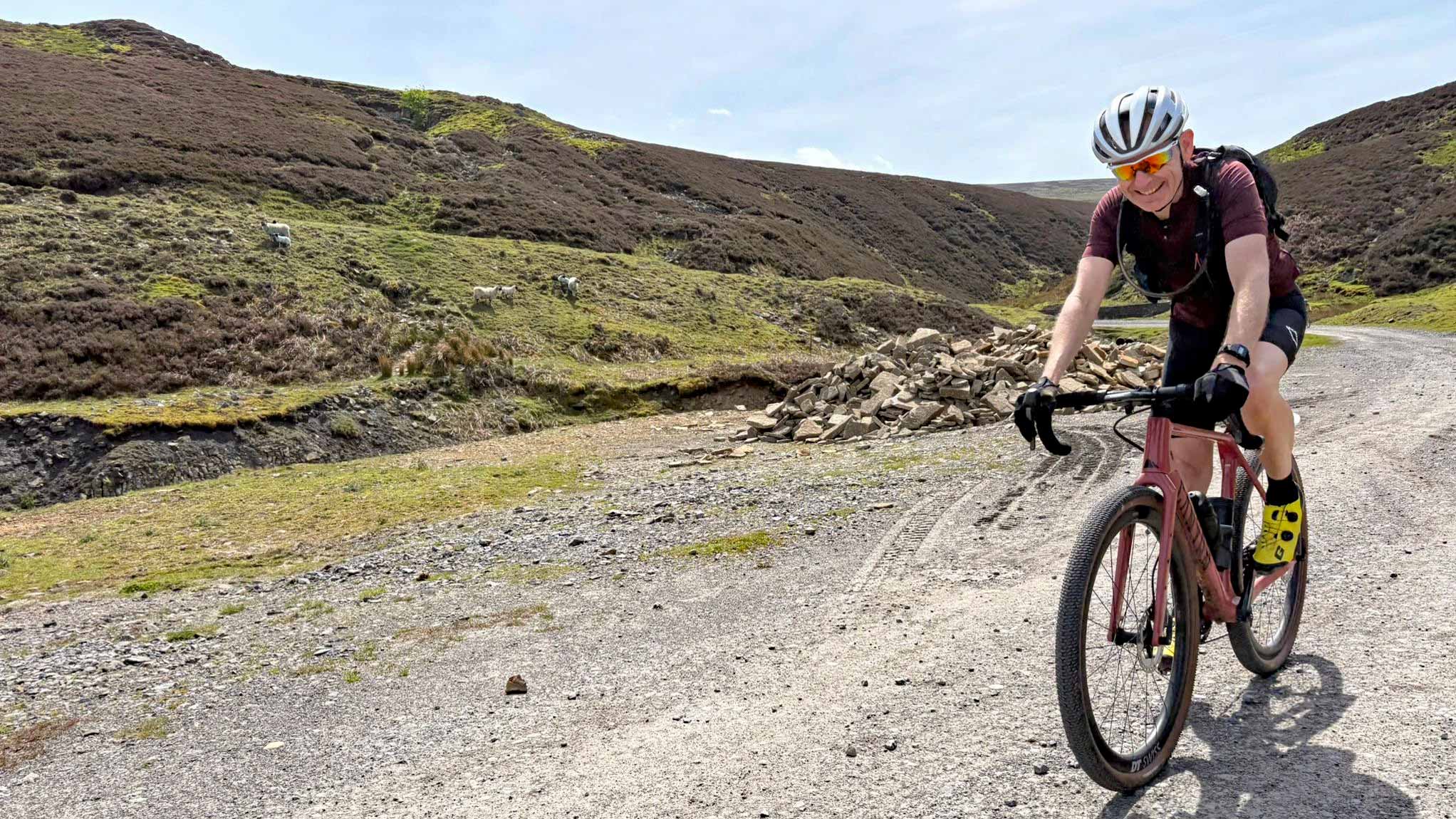
Since I first fitted the Redshift ShockStop suspension stem, I’ve covered nearly 2000km. I’ve ridden everything from root-infested woodland singletrack, to buttery smooth gravel roads to potholed tarmac. After following Erik’s advice and stiffening up the set-up, the benefits of the ShockStop stem seem to remain, while the top-out issue has significantly reduced. I can’t make any super accurate claims about exactly what percentage of vibration has been reduced, or how my level of fatigue has been reduced by a specific amount, but my overall riding experience has noticeably improved and there’s a definite sensation of getting to the end of a big day out on the bike with a definite reduction in tiredness and a bigger smile plastered across my face. While it won’t turn a gravel bike into a full-suspension magic carpet ride, the Redshift stem does a brilliant job of minimising the impact of vibrations on the rider and from that perspective alone, it is worth every single penny.
The Redshift ShockStop suspension stem is available direct from Redshift or from many good bike shops priced at £189.99 (or equivalent local currency). You can find all the details about it here.